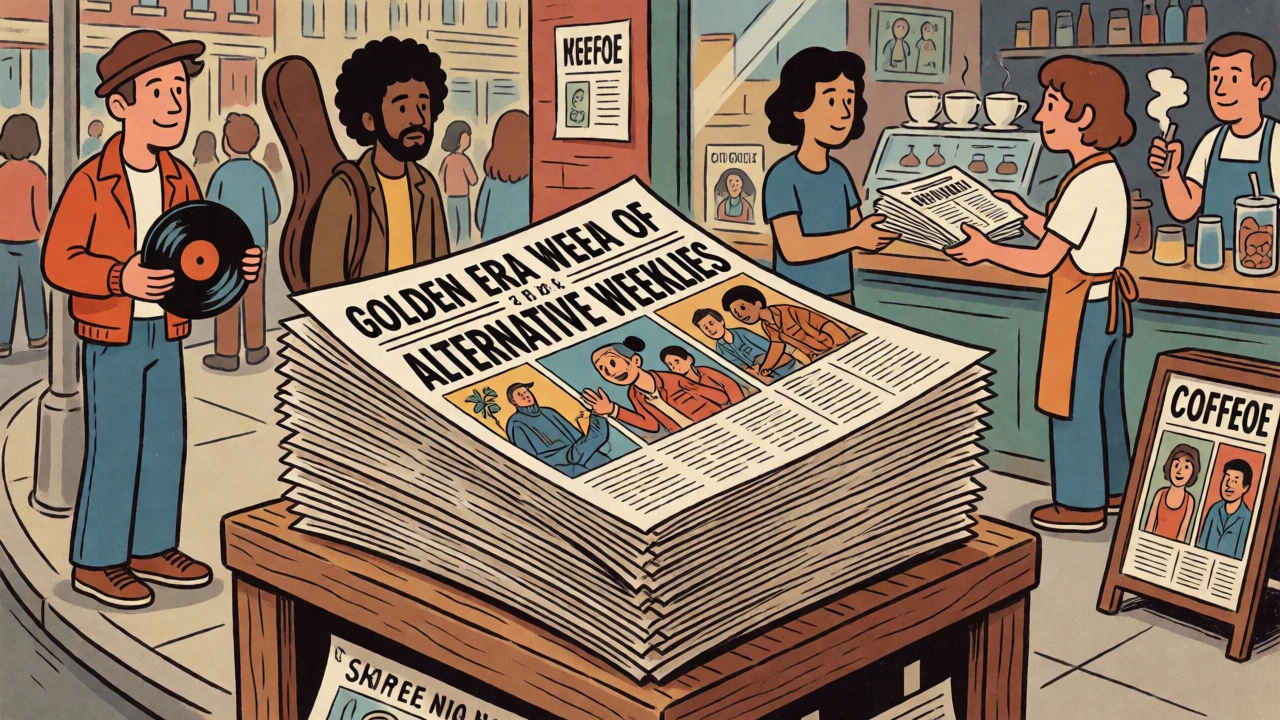

You pick up a paper on a street corner in Portland or Brooklyn. It’s free. It’s thick with ads for dive bars you’ve never heard of, and the lead story isn’t about the mayor-it’s about a noise band playing in a basement three blocks away. This was the daily reality for millions of Americans from the 1970s through the early 2000s. These weren’t just newspapers; they were alternative weeklies, also known as alt-weeklies. They were the lifeblood of local music scenes, the training ground for legendary critics, and the primary way communities understood their own cultural identity.
Today, many of these iconic papers are gone. The Village Voice closed its print edition in 2017. The Boston Phoenix died in 2013 after 47 years. The San Francisco Bay Guardian folded in 2014. But asking if alt-weeklies are dead misses the point. Their DNA is everywhere. If you’ve ever read a Substack newsletter about your city’s underground hip-hop scene, or followed a hyper-local Instagram account reviewing new venues, you’re consuming the digital descendants of this genre. Understanding how regional press shaped music journalism helps us understand why local criticism matters now more than ever.
The Birth of the Alternative Weekly
To get where we are, you have to go back to New York City in 1955. Novelist Norman Mailer, psychologist Dan Wolf, and publisher Ed Fancher launched the Village Voice. They used money Mailer made from his bestseller The Naked and the Dead to fund a paper that ignored the mainstream. Instead of covering Wall Street, they covered Greenwich Village bohemians, jazz clubs, and avant-garde theater. This was the blueprint.
By the late 1960s, the counterculture movement exploded. Underground papers popped up in every major US city. They were radical, messy, and often poorly printed. But by the 1970s, they evolved into something more sustainable. The turning point came in Chicago in 1971 with the launch of the Chicago Reader. Its innovation wasn’t just editorial; it was economic. The Reader gave the paper away for free. Readers picked it up at coffee shops, record stores, and newsstands. Advertisers paid for the privilege of reaching those readers. This "free distribution" model became the industry standard.
This shift changed everything. Because readers didn’t pay, circulation numbers soared. In 1995, the Association of Alternative Newsweeklies reported combined revenues of roughly $300 million and a circulation of six million copies. For local musicians, this meant visibility. You didn’t need a national label deal to get reviewed; you just needed to be interesting enough for a local critic with a deadline.
Why Alt-Weeklies Loved Local Music
Mainstream daily newspapers had strict rules. They covered politics, sports, and maybe one big concert a month. Alt-weeklies had no such constraints. Their business model relied on selling space to local businesses-bars, clubs, record stores, art galleries. To keep those advertisers happy, they had to cover what those businesses offered. That meant extensive listings calendars and serious criticism.
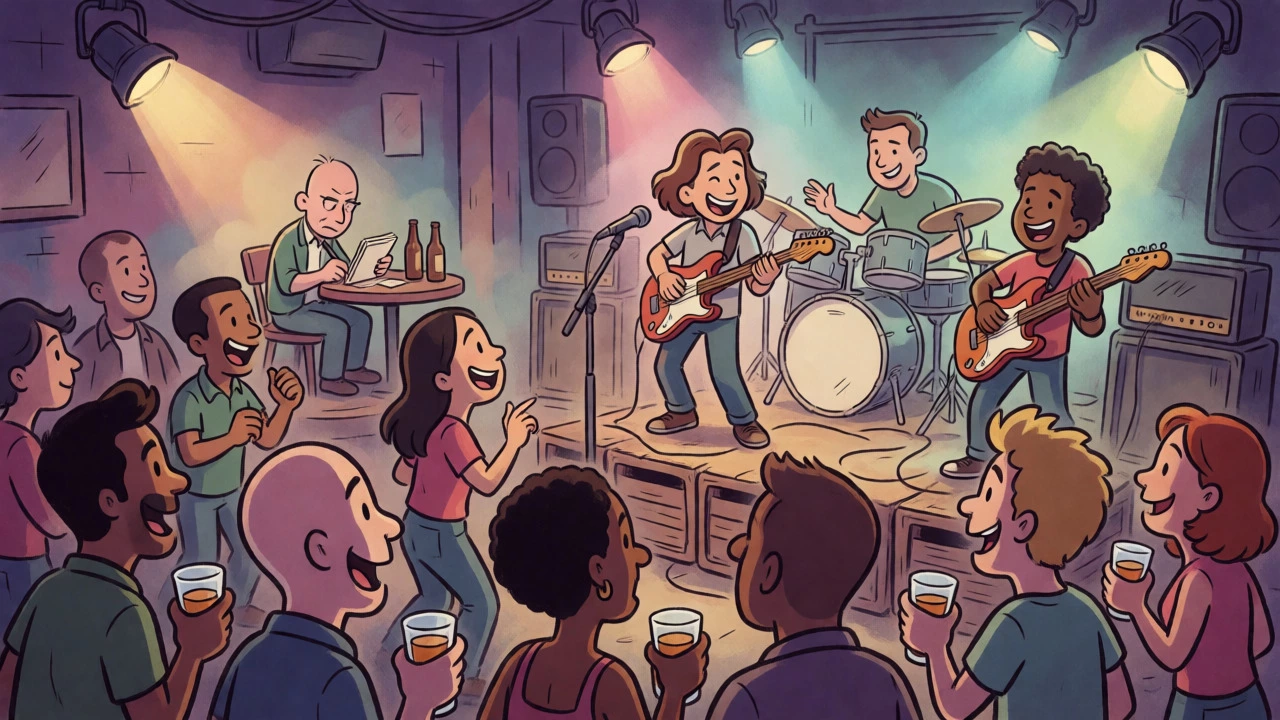
If you look at the page counts from the 1990s, arts and culture often took up 30 to 50 percent of the publication. Compare that to a typical metro daily, where arts might get two pages a week. Alt-weeklies treated local music not as entertainment fluff, but as civic engagement. A review of a punk show in Detroit wasn’t just about the guitar riffs; it was about who was in the room, what the community was feeling, and how the venue contributed to the neighborhood’s vibe.
This approach created a feedback loop. Bands played because they knew they might get written up. Critics wrote because there was always something happening. Venues advertised because they knew the audience would read the reviews. It was a self-sustaining ecosystem that documented the raw, unpolished energy of a city.
Critics Who Became Legends
You probably know some of the names without realizing where they started. The alt-weekly system was an incubator for talent that later dominated national media. It allowed writers to experiment with voice, length, and subject matter in ways that traditional dailies wouldn’t allow.
| Writer | Key Alt-Weekly Outlet | Later Career Focus |
|---|---|---|
| Ta-Nehisi Coates | Baltimore City Paper | National essayist, novelist |
| Susan Orlean | Los Angeles Times (via LA Weekly roots) | New Yorker staff writer, author |
| David Carr | Minneapolis Star Tribune (early career context) | NYT Media Columnist |
| Katherine Boo | The Washington City Paper | Pulitzer-winning investigative journalist |
| Jonathan Gold | LA Weekly | First food critic to win Pulitzer |
These aren’t just random examples. Ta-Nehisi Coates began writing for the Baltimore City Paper in the mid-90s. His pieces on Black masculinity and urban life in Baltimore were raw and personal. He didn’t write like a detached observer; he wrote like a resident. That voice eventually landed him at The Atlantic and made him a household name. Similarly, Katherine Boo’s reporting on poverty in Washington D.C. started in the City Paper. The freedom to spend weeks embedded in a community, rather than filing a quick news brief, defined her style.
For music specifically, critics like Ann Powers (who wrote for the Village Voice) set the standard for contextualizing pop culture within social movements. They didn’t just rate albums out of five stars. They explained why a certain sound mattered to a specific demographic at a specific time. This depth is what modern algorithmic playlists struggle to replicate.
The Economic Collapse: Craigslist and Beyond
If alt-weeklies were so successful, why did so many close? The answer is simple: classified ads. For decades, job postings, apartment rentals, and car sales generated massive revenue for print papers. When Craigslist launched in the late 1990s, it offered these services for free. By 2005, many alt-weeklies had lost 30 to 50 percent of their ad revenue.
Unlike daily newspapers, which had subscription income and large display ad bases, alt-weeklies relied heavily on small local businesses. When the 2008 recession hit, bars and clubs cut marketing budgets first. The combination of losing classifieds to the internet and losing display ads to the recession broke the financial backbone of the industry.
Then came consolidation. Large media chains bought up profitable alt-weeklies, treating them as cash cows. They standardized layouts, cut staff, and reduced local focus. The rebellious spirit got diluted. Eventually, when the cash flow dried up, the chains sold or shuttered the papers. The Boston Phoenix, once a fierce independent voice, ended up owned by a conglomerate before closing in 2013. The loss wasn’t just financial; it was cultural. Without the paper, the critical infrastructure that supported local arts weakened.

The Digital Afterlife of Regional Press
Are alt-weeklies truly dead? Not exactly. The Columbia Journalism Review argued in 2025 that while the print giants are gone, the mission lives on. Look at outlets like Willamette Week in Portland or The Stranger in Seattle. They still publish weekly, still cover local politics aggressively, and still maintain robust music sections.
But the format has changed. Many successful successors are digital-first. They use newsletters to drive traffic. They rely on membership models instead of pure advertising. Some operate as non-profits, funded by grants and donations. This shifts the dynamic. Instead of pleasing advertisers, they please readers directly. This can lead to even more niche, passionate coverage of local scenes.
However, the scale is smaller. A single national blog might cover indie rock across the country, but it lacks the granular knowledge of a local critic who knows which bartender puts on the best Thursday night shows. The loss of thousands of local jobs means fewer eyes on the ground. We have more content, but less context.
Why Local Criticism Still Matters
In an era of Spotify algorithms and TikTok trends, do we really need human critics telling us what to listen to? Yes. Algorithms optimize for retention, not discovery. They show you more of what you already like. A local critic challenges you. They might push you toward a weird experimental jazz trio playing in a church basement, simply because it’s part of the city’s fabric.
Regional press creates a sense of place. It tells you who you are as a community member. When a newspaper covers a local band breaking up, or a venue closing due to gentrification, it’s documenting the changing soul of the city. That documentation is fragile. Without dedicated journalists walking the streets, attending the shows, and talking to the owners, that history disappears.
If you care about music, care about local journalism. Subscribe to your local digital outlet. Buy a ticket to a show featured in a local blog. Share the work. The alt-weekly model proved that people want to know about their neighbors’ art. The challenge now is building a sustainable economy around that desire in a digital world.
What is the main difference between an alt-weekly and a daily newspaper?
Alt-weeklies typically focused on cultural criticism, local arts scenes, and investigative journalism with a distinct editorial voice, whereas daily newspapers prioritized hard news, politics, and broader regional events with a stricter adherence to objectivity. Additionally, most alt-weeklies were distributed for free, relying entirely on advertising revenue, while daily newspapers usually charged a cover price and relied on subscriptions.
Why did so many alternative weeklies close in the 2010s?
The primary cause was the collapse of the classified advertising market, which migrated to online platforms like Craigslist starting in the late 1990s. This was compounded by the 2008 financial crisis, which reduced spending by local businesses on display ads, and corporate consolidation that stripped resources from local newsrooms.
Did alt-weeklies actually influence national music journalism?
Yes, significantly. Many prominent national critics and writers, including Ta-Nehisi Coates, Katherine Boo, and Jonathan Gold, began their careers at alt-weeklies. These publications allowed for longer-form storytelling and subjective criticism, styles that later became dominant in national magazines and online media outlets.
Is there a modern equivalent to the classic alt-weekly?
While few print equivalents remain, digital-first local news sites, subscriber-based newsletters, and hyper-local blogs serve similar functions. Outlets like Willamette Week and The Stranger continue the tradition, though many newer entities operate as non-profits or cooperatives rather than ad-supported commercial enterprises.
How did the free distribution model work for alt-weeklies?
Papers like the Chicago Reader pioneered giving copies away for free at high-traffic locations like cafes, bars, and newsstands. This maximized circulation numbers, which allowed publishers to charge higher rates to advertisers who wanted access to that broad, engaged audience. The cost of printing was offset by the volume of advertising sold.


