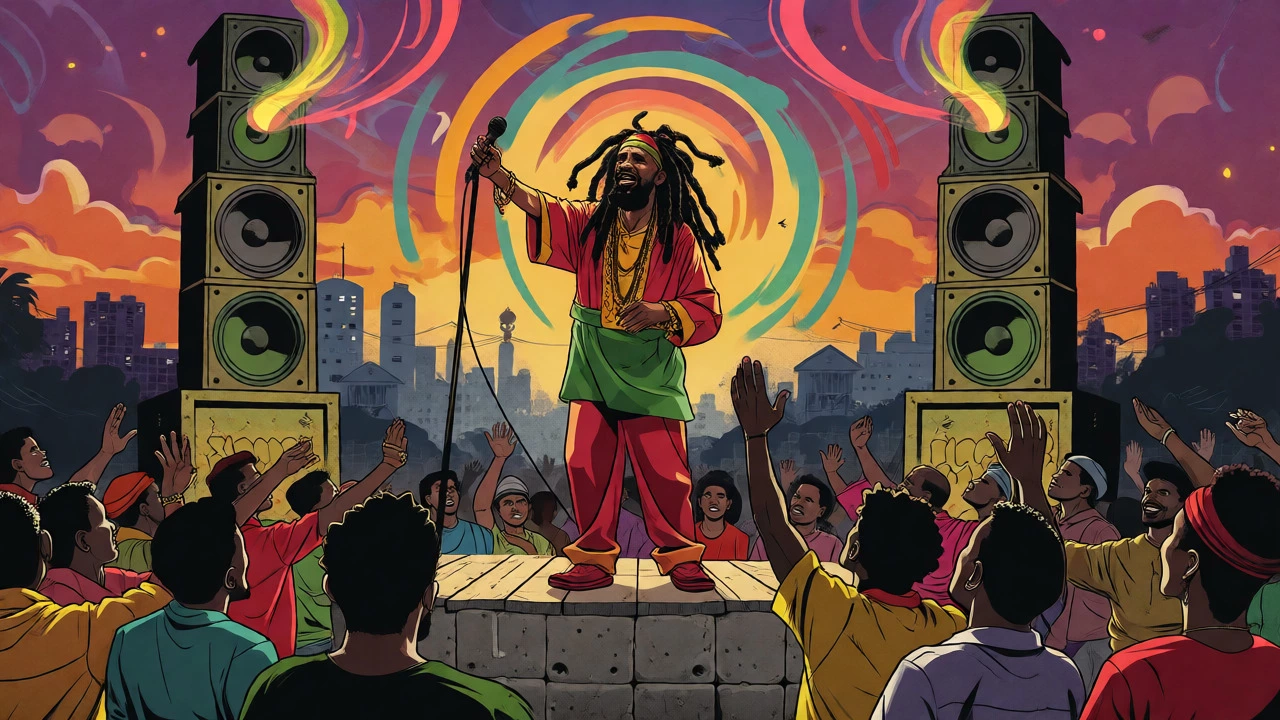

You might think the 1990s in Jamaica were all about gun talk and slackness. But if you listen closely to the tracks that defined the decade, you hear something else entirely. A spiritual renaissance was happening. Artists like Buju Banton and Sizzla weren't just making hits; they were preaching theology over digital riddims. This wasn't a return to the slow roots of the 70s. It was a fierce, modern fusion where Rastafari doctrine met hardcore dancehall energy.
The result? A new kind of community. One built not on church pews, but on sound system culture and shared resistance. If you've ever wondered how sacred texts ended up in club bangers, or why dreadlocks became a badge of honor for street toughs, this is the story. We're looking at how lyrics shaped identity, how rhythm created belonging, and why the 1990s remain the most spiritually charged decade in reggae history.
The Rasta Renaissance: Why the 90s Were Different
By the late 1980s, Jamaican music had drifted. The global dominance of Bob Marley had faded, and local charts were dominated by Christian performers or secular dancehall acts focused on partying and violence. Rastafari imagery seemed old-fashioned. Then came the shift. Artists like Luciano, born Jepther McClymont, brought back explicit references to Jah (Haile Selassie I) and Zion.
This wasn't just nostalgia. It was a response to social decay. Listeners were tired of "urban harshness." They wanted moral clarity. Luciano’s song "One Day" wasn't just a melody; it was a promise of divine justice. Alongside him, Garnett Silk, who tragically died in 1994, offered a tender, devotional voice that appealed to those seeking peace amidst chaos.
What made this different from the 70s was the delivery. These artists didn't wait for acoustic guitars. They used fast, aggressive digital beats. They proved you could chant psalms while dancing. This accessibility brought Rastafari consciousness to a younger generation that might have skipped the older records. The pendulum swung back hard, creating what critics call the "Rasta Renaissance."
Lyrics as Sacred Texts: Decoding the Message
If you look at the lyrics from 1990 to 1999, you see a direct line to biblical prophecy and Marcus Garvey’s teachings. The words weren't just poetry; they were instructions for living. Take Buju Banton’s album 'Til Shiloh (1995). It marked his official conversion from a dancehall hitmaker to a Rasta prophet. Songs like "Untold Stories" and "Love My Life" aren't just romantic ballads; they are meditations on faith and redemption.
Key themes recurred constantly:
- Babylon: Not just a place, but any oppressive system-government, police, capitalism-that suppressed black truth.
- Zion: Ethiopia, the spiritual homeland, representing both a physical return and a mental liberation.
- Jah: Haile Selassie I, revered not just as a king but as the living God.
- Fyah Bun: Fire burning away evil, corruption, and false prophets.
These terms created a coded language. When Sizzla shouted about "Babylon," he wasn't naming a city. He was identifying the enemy of the soul. For listeners, understanding these lyrics was an act of initiation. You learned the vocabulary, and in doing so, you joined the community of the "I-and-I," a concept emphasizing the divinity within every person.
| Theme | Traditional Roots (1970s) | 1990s Conscious Dancehall |
|---|---|---|
| Musical Style | Acoustic instruments, one-drop rhythm | Digital synthesizers, fast tempo, hip-hop influence |
| Lyrical Focus | Pan-Africanism, labor struggles | Personal morality, street survival, immediate judgment |
| Audience | Global hippies, older Jamaicans | Youth, urban dwellers, global youth culture |
| Spiritual Practice | Nyabinghi drumming, meditation | Sound system dances, public chanting, fashion as statement |
Identity Formation: From Street Tough to 'Chosen'
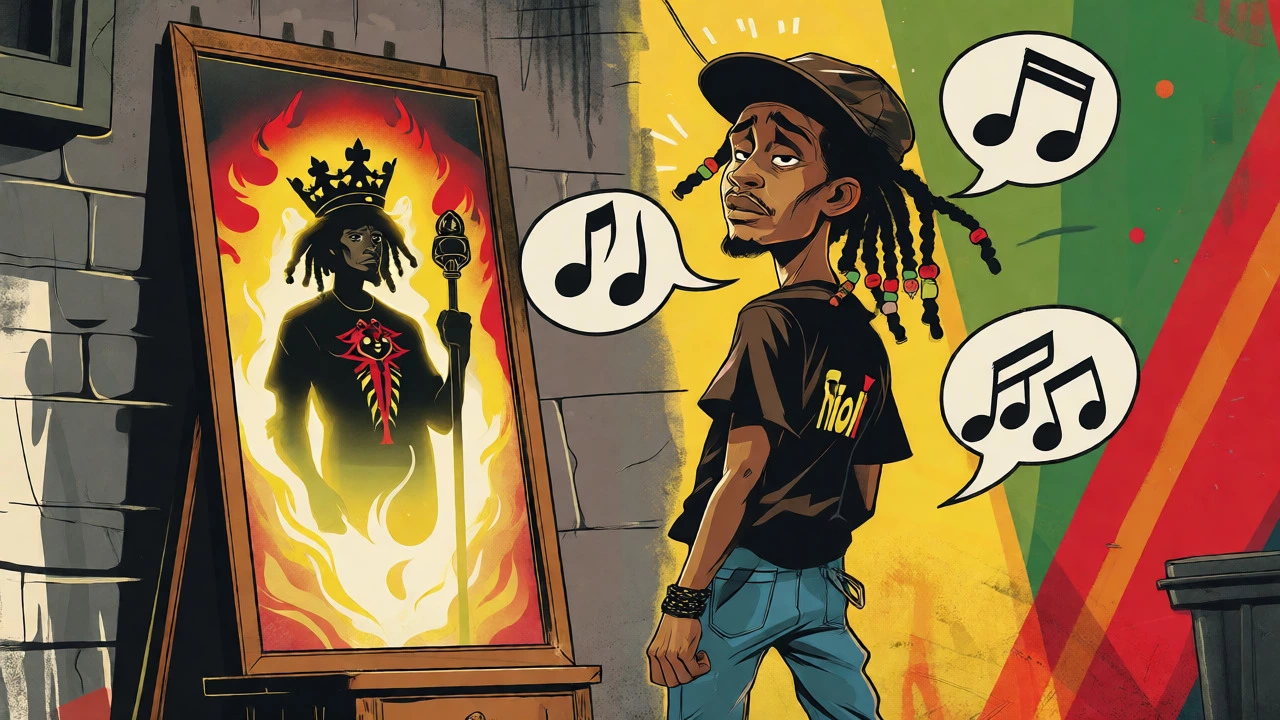
How did a kid from Kingston’s inner city find dignity in a society that often marginalized him? Through reggae. In the 1990s, adopting Rastafari symbols became a powerful tool for identity construction. Growing dreadlocks, known as "locksing," wasn't just a hairstyle choice. It was a public declaration of allegiance to Jah and rejection of Western beauty standards.
Artists like Capleton and Anthony B embodied this transformation. Capleton, once part of the duo Black Uhuru, emerged as a solo artist with a fiery persona. His lyrics demanded respect not through guns, but through spiritual authority. He positioned himself as a messenger, warning that Babylon would fall.
This shifted the power dynamic. Young men no longer needed to be just "bad boys." They could be "righteous rulers." The music offered a narrative where suffering wasn't pointless-it was a test. And victory wasn't just material wealth; it was spiritual alignment. This resonated deeply in communities facing economic hardship and political instability. The lyrics provided a framework for self-worth that schools and churches sometimes failed to deliver.
Community Building: The Sound System as Church
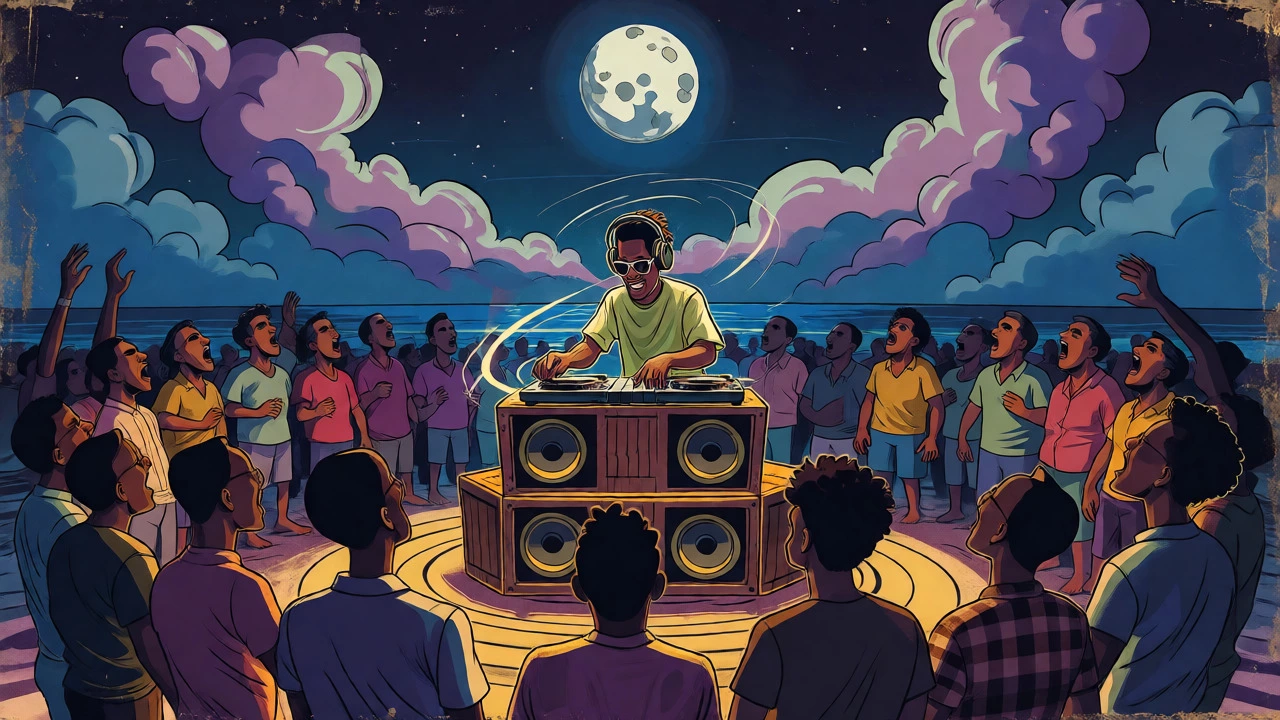
You don't experience 1990s reggae spirituality alone. It’s communal. The venue wasn't a cathedral; it was a yard, a beach, or a concrete block with massive speakers. The sound system culture replaced traditional religious gatherings for many.
Think about the bass. Studies on sonic spaces suggest that low frequencies create physical resonance in the body. In a dancehall, when the bass hits, you feel it in your chest. This shared physical sensation creates a bond among listeners. It’s a collective trance. During these events, the DJ isn't just playing songs; they’re curating a spiritual experience. The MC chants prayers, calls out scripture, and leads the crowd in affirmations.
This environment blurred the lines between entertainment and worship. The nyabinghi kete drum, traditionally used in solemn Rasta reasoning sessions, found its way into commercial tracks. Beenie Man’s "Freedom" (1996) is a prime example. It uses the rhythmic pulse of nyabinghi to drive a message of liberation. Fans singing along weren't just karaoke-ing; they were participating in a ritual of freedom.
Tensions and Authenticity: Who Was Really Rasta?
Not everyone agreed on what this revival meant. Some traditionalists argued that mixing sacred messages with secular dancehall rhythms diluted the theology. Others worried about "quasi-Rastas"-people who wore the colors and smoked ganja but ignored the strict dietary laws (ital) and behavioral codes.
This tension was real. Juan M. Floyd-Thomas notes that after Bob Marley’s death, there was a risk of commodifying spirituality. Did buying a t-shirt make you righteous? Probably not. But the cultural impact was undeniable. Even if someone didn't convert fully, the exposure to concepts like "Black Superiority" (in the sense of inherent worth, not supremacy) and anti-colonialism changed their worldview.
Moreover, the 1990s saw the rise of the "Gangsta Ras." Figures who maintained street credibility while embracing Rasta ideology. This hybrid identity allowed individuals to navigate two worlds: the harsh reality of the ghetto and the hopeful vision of Zion. It was a pragmatic spirituality, adapted for survival.
Legacy: How the 90s Shape Today
The models established in the 1990s still dominate reggae today. Artists like Chronixx and Koffee cite this era as foundational. The idea that a reggae song must carry a message, a moral compass, remains central. The fusion of digital production with conscious lyrics paved the way for modern genres like reggaeton and Afrobeat influences in Caribbean music.
More importantly, the community aspect persists. Global festivals, online forums, and local dancehalls continue to use reggae as a space for dialogue and identity formation. The 1990s proved that spirituality doesn't need a building. It needs a beat, a voice, and a crowd ready to listen.
What defines the "spirituality" in 1990s reggae?
It refers to the integration of Rastafari theology-specifically reverence for Haile Selassie I, the concept of Babylon as oppression, and Zion as salvation-into mainstream dancehall and roots reggae. Unlike earlier decades, this spirituality was delivered through faster, digital rhythms, making it accessible to younger, urban audiences who sought moral guidance amid social turmoil.
Who were the key artists of the 1990s Rasta Renaissance?
Key figures include Buju Banton, whose album 'Til Shiloh marked a major pivot to Rasta consciousness; Sizzla, known for his prolific output and militant theological lyrics; Capleton, who blended fire-themed apocalyptic warnings with dancehall beats; Luciano, recognized for his melodic devotion; and Garnett Silk, who offered a gentler, devotional perspective before his untimely death.
How did sound systems contribute to spiritual community?
Sound systems functioned as alternative churches. The physical vibration of bass created a shared bodily experience, while DJs and MCs led communal chants and scriptural readings. This transformed passive listening into active participation, fostering a sense of collective identity and resistance against societal marginalization.
Did all 1990s reggae artists practice Rastafari religion?
No. While many adopted Rasta imagery, lyrics, and symbols like dreadlocks, not all adhered to the strict doctrinal requirements such as ital (natural diet) or full theological acceptance. Many were "cultural Rastas" who used the symbolism to express black pride and social critique without necessarily committing to the religious lifestyle.
Why was the 1990s considered a revival rather than a continuation?
In the late 1980s, Jamaican music shifted toward secular dancehall and Christian gospel, moving away from Rastafari themes. The 1990s marked a deliberate return to conscious lyrics and Rasta identity, driven by artists who felt the previous era lacked moral substance. This resurgence reintroduced spiritual discourse to the forefront of popular culture.


