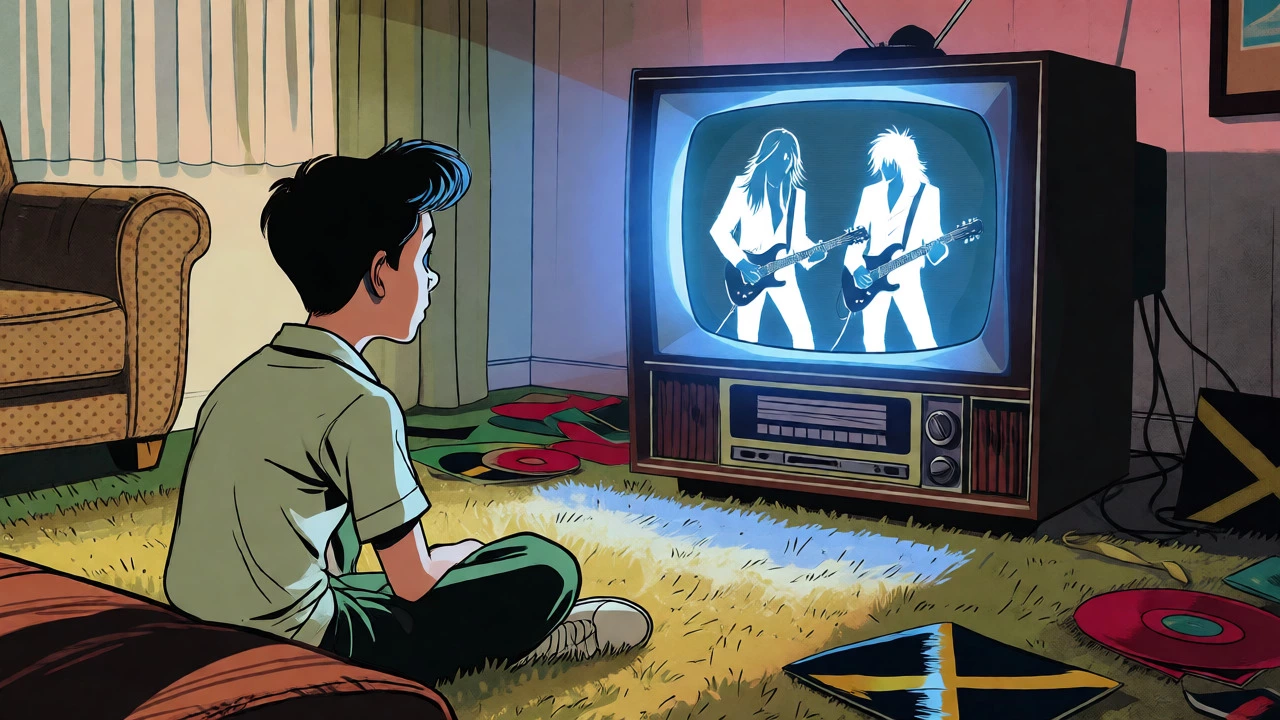

Imagine turning on your TV in 1982 and seeing almost exclusively white rock stars. That was MTV, which launched in August 1981 with a playlist that was nearly 99% white. For reggae fans, this meant a deafening silence from Jamaica’s biggest sounds. Yet, despite these rigid barriers, a handful of reggae videos slipped through the cracks. These few slots didn’t just play songs; they cracked open the cultural floodgates for black diasporic music in America.
The Rock-Only Gatekeepers
MTV’s early strategy was built on an album-oriented rock (AOR) radio model. Executives believed their core audience-suburban white teenagers in the Midwest-wouldn’t connect with funk, R&B, or reggae. This wasn’t just a hunch; it was policy. From 1981 to roughly 1984, only a select group of black or multiracial acts received meaningful rotation. David Bowie famously told MTV VJ Mark Goodman he was “floored” by how few black artists appeared on the channel. He noted that the few clips that did air were often relegated to the graveyard shift between 2:30 a.m. and 6:00 a.m.
This exclusion created a Catch-22 for reggae labels. Record companies hesitated to fund high-quality music videos because they assumed MTV wouldn’t play them. Without videos, reggae artists couldn’t prove their visual appeal. Without proof, MTV kept them off the screen. Rick James, whose hit “Super Freak” was refused by the network, publicly accused MTV of “blatant racism.” His frustration mirrored that of many reggae and dancehall artists who felt invisible in the most powerful marketing machine of the decade.
Musical Youth Breaks the Barrier
Before Michael Jackson’s “Billie Jean” became the story we all know, another video paved the way. In late 1982, Musical Youth released “Pass the Dutchie,” a upbeat pop-reggae track by Black British teenagers of Jamaican heritage. Their video entered heavy rotation on MTV weeks before Jackson’s breakthrough. This moment is often overlooked, but it was critical. It proved that reggae-inflected pop could resonate with MTV’s demographic if packaged correctly.
“Pass the Dutchie” worked because it smoothed traditional reggae rhythms into a catchy, youthful pop structure. The imagery was vibrant but non-threatening. It avoided the overtly revolutionary symbols of roots reggae, making it palatable for advertisers and conservative broadcast standards. This success showed MTV executives that reggae wasn’t inherently “too foreign” for their audience-it just needed the right wrapper.
UB40 and the Long-Tail Effect
If Musical Youth opened the door, UB40 walked through it with a cover of Neil Diamond’s “Red Red Wine.” Released in 1983, the video featured the multiracial British band performing at a party, blending ska energy with mellow reggae vibes. Initially, the song had modest success in the U.S. But sustained, intermittent rotation on MTV kept the track alive in the public consciousness.
Five years later, in 1988, “Red Red Wine” finally hit number one on the U.S. charts. This delayed explosion illustrates the long-tail impact of MTV exposure. A single reggae-styled video, given strategic slots on a rock-leaning channel, could generate decades of relevance. UB40 helped rebrand reggae in the American mind as a safe, mellow party genre compatible with mainstream aesthetics, distancing it from the political radicalism associated with Bob Marley’s earlier work.
The Marley Paradox
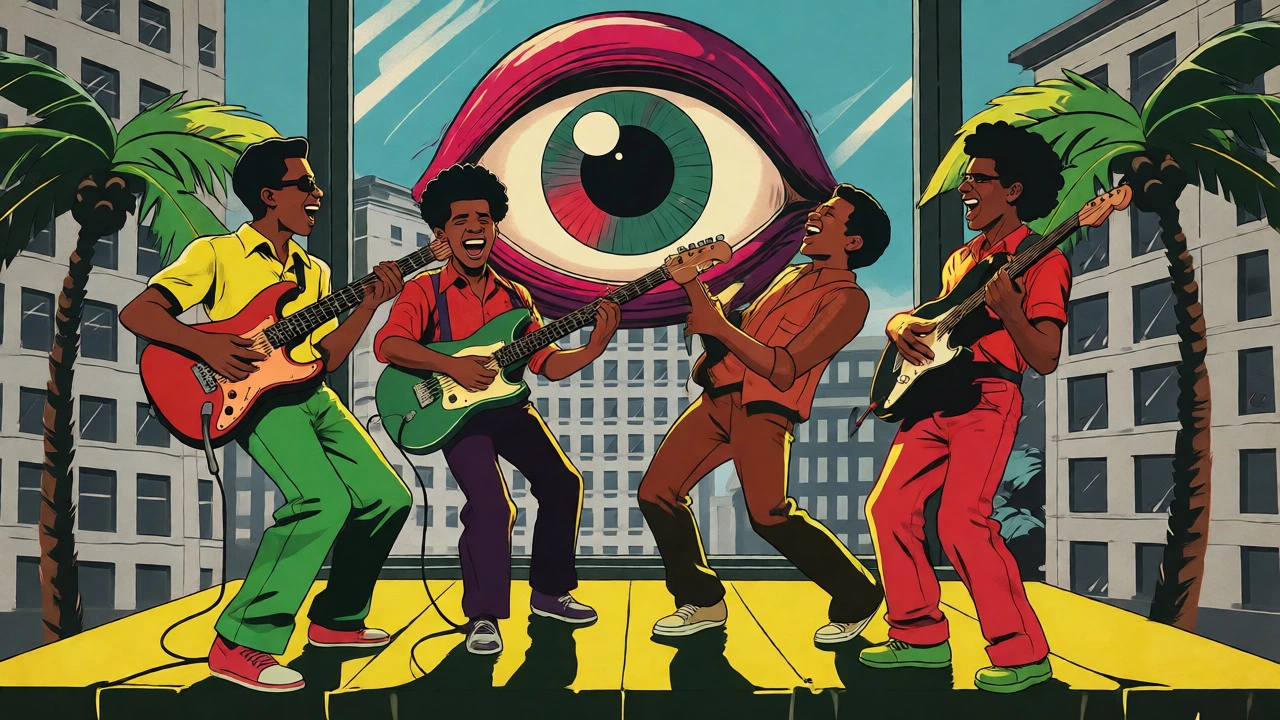
You’d think Bob Marley would be everywhere on MTV. You’d be wrong. Despite being the world’s most famous reggae artist, Marley had virtually no presence on the channel during its first decade. His live performance videos were rarely played, deemed too archival or politically charged for MTV’s contemporary, polished aesthetic. The network preferred new, visually slick productions over historical footage.
The shift came with his son, Ziggy Marley. His video for “Tomorrow People,” released in the late 1980s, was colorful, pop-leaning, and directed by Paula Greif. It became the first Marley family video to receive significant MTV airplay. This highlights a harsh reality: reggae artists had to tailor their sound and imagery to fit MTV’s visual economy to gain access. Roots reggae’s raw authenticity was often filtered out in favor of crossover polish.
Censorship and the Missing Voices
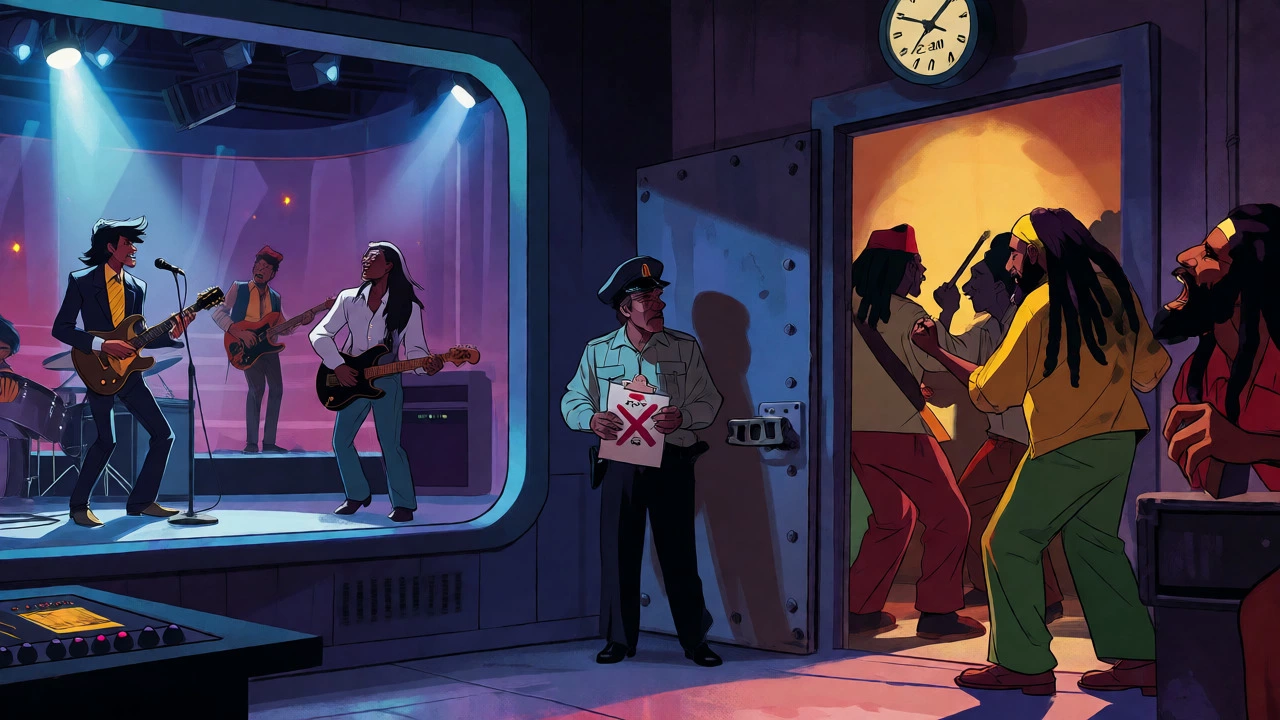
For every “Pass the Dutchie” that aired, dozens of powerful reggae videos were banned or ignored. Artists like Burning Spear, Steel Pulse, and Peter Tosh produced clips with strong anti-racist, anti-colonial, or Rastafarian messages. These themes clashed with MTV’s commercial priorities. Parental watchdog groups pressured networks to avoid controversial imagery, and MTV complied.
Community documentaries suggest that ten specific reggae tracks from the 80s were effectively censored. While exact numbers are hard to pin down, the pattern is clear: MTV curated reggae to favor non-threatening, crossover material. Radical strands of 1970s and 1980s roots reggae remained off the channel, creating a skewed perception of the genre for millions of viewers who relied on MTV for their musical discovery.
Structural Containment vs. Integration
Even when MTV acknowledged reggae, it often contained it. By the mid-1990s, the network launched “Reggae Sound System,” a thirteen-part series shot in Jamaica. On paper, this looked like progress. In practice, it aired between 1:30 and 2:00 a.m.-a slot that limited reach despite its focus on dancehall and dub. Compare this to “Yo! MTV Raps,” which launched in 1988 and gave hip-hop a dedicated prime-time platform. Reggae didn’t get similar treatment until much later.
| Feature | Mainstream Rock/New Wave | Reggae/Dancehall |
|---|---|---|
| Airtime Slot | Prime time (Daytime/Evening) | Late night or specialty shows |
| Video Budget | High (Label backed) | Low to Medium (Often indie or UK-based) |
| Content Style | Narrative or Performance | Political, Cultural, or Party-focused |
| Chart Impact | Immediate correlation | Delayed or niche breakthroughs |
Why the Few Slots Mattered So Much
It’s easy to look back and see MTV’s reggae presence as negligible. But for the generation watching in 1983, seeing Musical Youth or UB40 was revolutionary. It signaled that their culture existed in the mainstream. These limited slots forced record labels to reconsider their investments. They proved that reggae could sell records in the U.S. without diluting its soul entirely.
The legacy isn’t just about chart positions. It’s about visibility. When Ziggy Marley appeared, he brought the Marley name to a new generation. When UB40 topped the charts, they normalized Caribbean rhythms in suburban living rooms. These small victories accumulated, slowly eroding the “rock-only” wall. Today’s global dominance of Caribbean music owes a debt to those few, precious minutes of airtime in the 80s.
Did MTV completely refuse to play black artists in the 1980s?
No, not completely. While the playlist was overwhelmingly white, acts like Musical Youth, Prince, and Eddy Grant did receive airplay. However, this exposure was rare, often limited to specific crossover hits, and frequently confined to less desirable time slots compared to white rock bands.
Why was Bob Marley rarely seen on MTV in the 1980s?
MTV favored contemporary, polished, and visually modern videos. Bob Marley’s existing footage was largely archival live performances, which didn’t fit the network’s sleek, narrative-driven aesthetic. Additionally, his political messaging was considered risky for MTV’s advertiser-friendly image.
How did UB40’s “Red Red Wine” succeed on MTV?
The video offered a safe, mellow entry point into reggae for rock audiences. Its consistent, albeit intermittent, rotation kept the song relevant for years, leading to a delayed but massive chart success in 1988. It demonstrated the power of long-tail media exposure.
What was “Reggae Sound System” on MTV?
It was a thirteen-part documentary series produced by MTV in the mid-1990s to showcase Jamaican music culture. Despite its intent, it was scheduled in the late-night hours (1:30-2:00 a.m.), limiting its impact and highlighting how reggae programming was still marginalized compared to prime-time genres.
Did reggae videos face censorship on MTV?
Yes. Videos with explicit Rastafarian symbolism, anti-colonial lyrics, or political activism were often rejected or edited. MTV prioritized commercial viability and sought to avoid controversy, favoring pop-reggae hybrids over roots reggae’s more radical content.