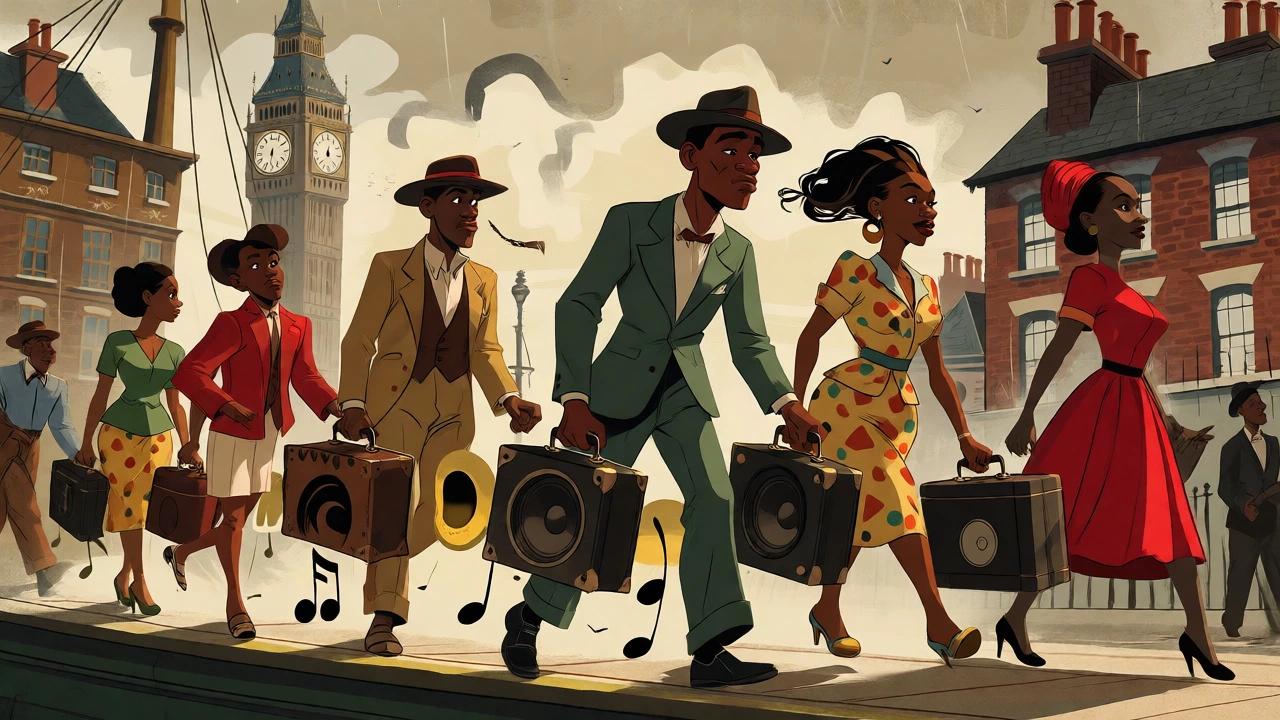

You might think of reggae as purely Jamaican, but if you look at its journey to Britain, you’ll see something far more complex. It wasn’t just imported; it was rebuilt. Between 1951 and 1961, the number of Jamaican-born people in England and Wales jumped from 6,000 to 100,000. These migrants didn’t just bring suitcases; they brought a cultural infrastructure that would eventually dominate the UK charts and birth entire genres like drum and bass. The story of Reggae in the UK is really about how a displaced community used music to survive, resist, and ultimately reshape British identity.
The Windrush Generation and the Birth of the Sound System
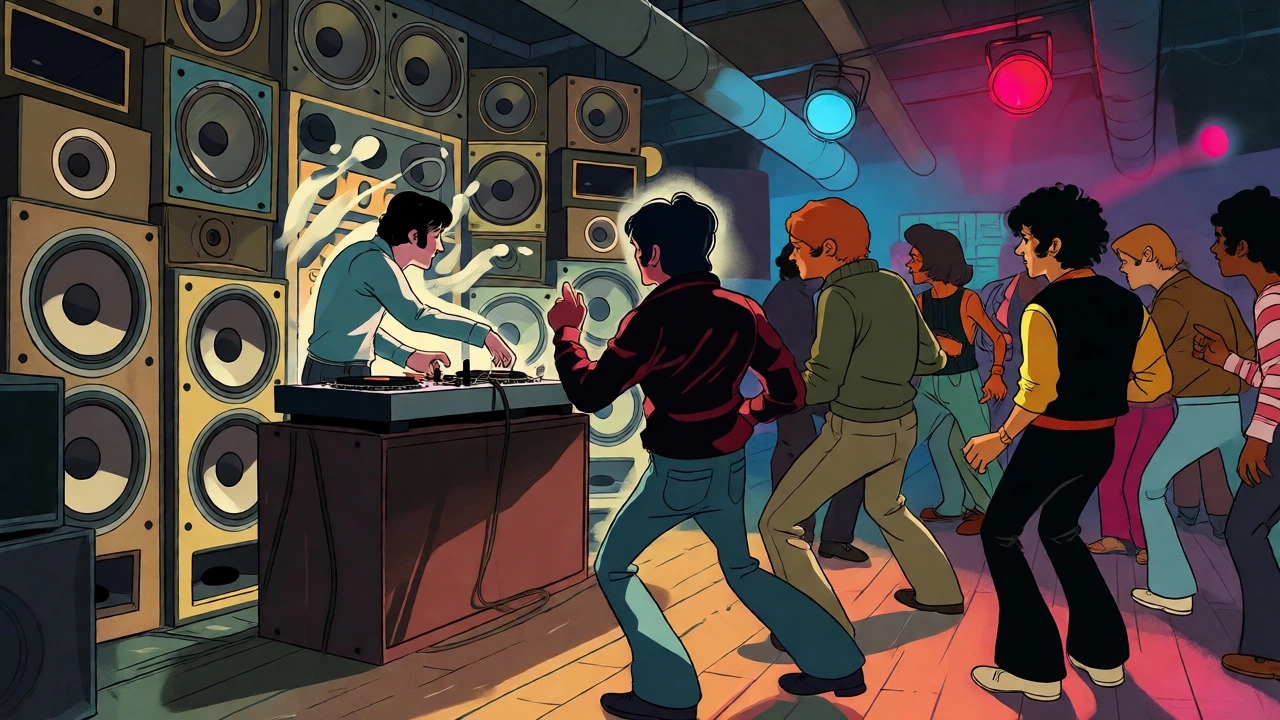
Before you could hear reggae on the radio, you heard it in living rooms. In Jamaica, limited access to electricity and radios meant that large speakers were a luxury. Enter the Sound System. This wasn't just a stereo; it was a mobile social hub with turntables, massive speaker stacks, selectors (DJs), and microphones for toasters (MCs). When Caribbean migrants arrived in Britain after World War II, they faced cold weather, hostile housing markets, and racial prejudice. They needed spaces where they felt safe and heard.
By 1955, operators like Duke Vin were setting up systems in Ladbroke Grove, London. These weren't formal concerts. They were house parties and blues dances where the volume turned up to drown out the noise of discrimination outside. The sound system recreated the social fabric of Kingston in the streets of Notting Hill. It provided entertainment, yes, but also served as an informal news broadcast, a job market, and a political forum. For Black Britons, these gatherings were alternative public spheres where they could be themselves without apology.
From Blues Dances to Trojan Records
In the early 1960s, the music playing on these systems shifted. You’d hear ska, then rocksteady, and finally, reggae. But this culture remained largely underground, circulating through specialist record shops and community venues. That changed when the British record industry woke up. Labels like Trojan Records, Island, and Pama saw opportunity in this vibrant scene. Trojan, launched in the late 1960s, became the bridge between the dancehall and the mainstream pop market.
The shift was dramatic. In 1969, several Jamaican tracks hit the UK charts simultaneously. Tony Tribe’s "Red Red Wine" and Harry J All Stars’ "Liquidator" weren't just niche hits; they were top-ten smashes. Suddenly, white working-class youth, particularly mods and skinheads, were buying these records. This created a unique cross-cultural moment. While racism was rampant, the shared love for heavy bass and rhythmic speech created unexpected alliances. Reggae became a soundtrack for solidarity, even if that solidarity was sometimes fraught with tension.
Chart Toppers: Who Really Made It?
When we talk about "UK Reggae," we have to be precise. Some of the biggest hits were by Jamaican artists who found their largest audience in Britain. Others were made by British bands born to Caribbean parents. Let’s look at the data to clear up the confusion.
| Artist | Record | Peak Position | Year | Origin |
|---|---|---|---|---|
| Desmond Dekker & The Aces | The Israelites | No. 1 | 1969 | Jamaica |
| Dave & Ansel Collins | Double Barrel | No. 1 | 1971 | Jamaica |
| Ken Boothe | Everything I Own | No. 1 | 1974 | Jamaica |
| Musical Youth | Pass the Dutchie | No. 1 | 1982 | UK (Birmingham) |
| UB40 | Red Red Wine | No. 1 | 1983 | UK (Birmingham) |
| Aswad | Don’t Turn Around | No. 1 | 1988 | UK (London) |
| Shaggy | Oh Carolina | No. 1 | 1993 | Jamaica/US |
Notice the pattern? Early hits were imports. By the 1980s, homegrown talent like UB40 and Aswad dominated. UB40, formed in Birmingham, took a reggae-pop approach that appealed to mass audiences. Their version of "Red Red Wine" spent three weeks at No. 1. This marked a transition: reggae was no longer just an immigrant’s music; it was British pop.
Politics, Protest, and Rock Against Racism
You can’t separate reggae from politics in the UK. By the mid-1970s, economic recession and rising unemployment hit Black communities hardest. Police harassment, known as "sus laws," fueled anger. Bands like Steel Pulse and poets like Linton Kwesi Johnson used their platforms to speak truth to power. Steel Pulse won a Grammy in 1986, but their impact started much earlier with albums critiquing Thatcher-era policies.
This political edge sparked the Rock Against Racism movement in 1976. It wasn't just a concert series; it was a coalition. Punk bands like The Clash played alongside reggae acts. White punk kids moshed with Black reggae fans. Was it perfect? No. Critics pointed out issues of appropriation. But it broke down barriers. The Notting Hill Carnival, which grew massively in size during this period, became a symbol of resistance. In 1976, clashes between police and carnival-goers made global headlines, showing that joy and protest were intertwined.
Lovers Rock and the Female Voice
If roots reggae was often male-dominated and politically heavy, Lovers Rock offered a different vibe. Emerging in South London in the late 1970s, it featured smooth production, romantic lyrics, and prominent female vocalists like Janet Kay and Carroll Thompson. This subgenre expanded the demographic reach of reggae, attracting listeners who might not have connected with the harder-edged sounds of Bob Marley or Burning Spear.
Lovers rock proved that reggae could be intimate and polished. It thrived in clubs and on pirate radio stations, creating a parallel economy that bypassed major labels. It gave voice to young Black women navigating life in Britain, offering stories of love, heartbreak, and aspiration that resonated deeply within the community.
The Legacy: From Dub to Drum and Bass
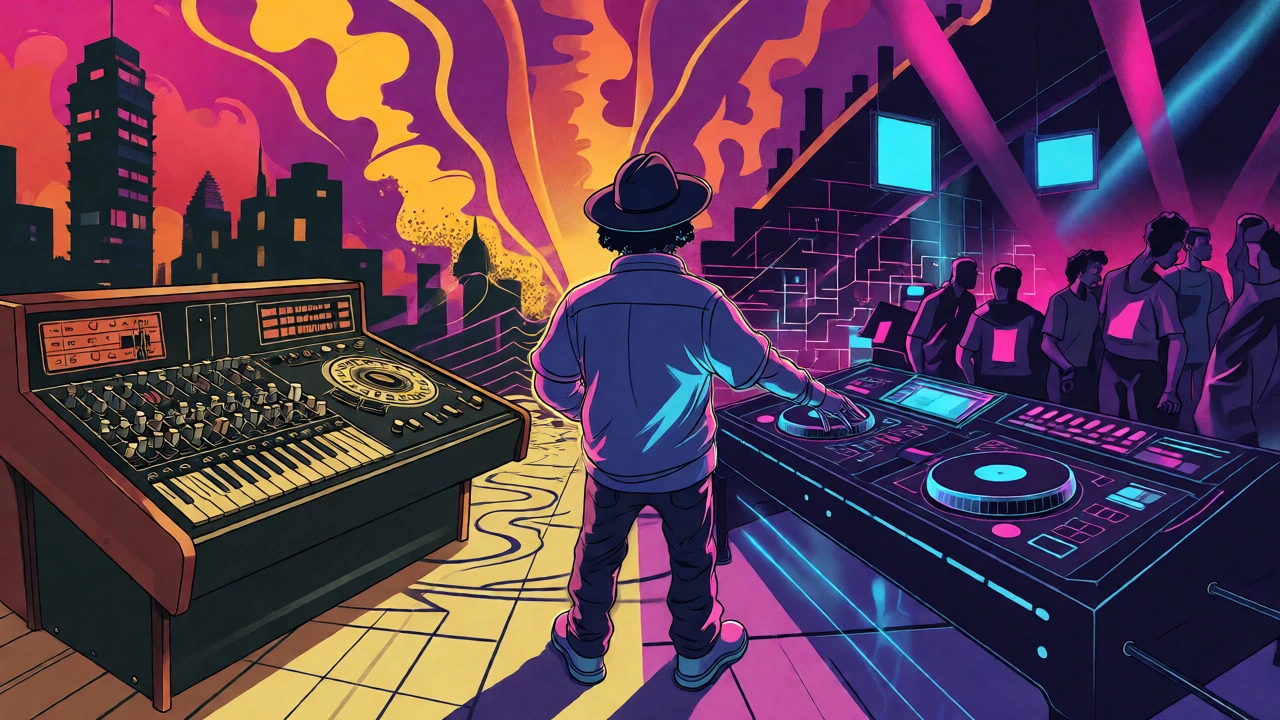
The influence of UK reggae extends far beyond the charts. The technology developed for sound systems-the emphasis on bass, the use of echo and reverb-laid the groundwork for modern electronic music. Dub, pioneered in Jamaica but perfected in London studios, treated the mixing desk as an instrument. This innovation directly influenced the rise of jungle, drum and bass, and dubstep in the 1990s and 2000s.
Systems like Channel One and Jah Shaka kept the tradition alive, appearing annually at Notting Hill Carnival since the 1980s. They preserved the art of the selector and the MC. Today, when you hear a grime track or a dubstep drop, you’re hearing the descendants of those first Jamaican sound systems in London basements. The architecture of British bass music is built on reggae foundations.
Frequently Asked Questions
What was the first reggae song to reach No. 1 in the UK?
"The Israelites" by Desmond Dekker and the Aces reached No. 1 in March 1969. It is widely recognized as the first reggae record to top the UK singles chart, marking a pivotal moment for the genre's mainstream acceptance.
How did migration influence the growth of reggae in the UK?
Caribbean migration, particularly from Jamaica, created a dedicated audience and cultural infrastructure. Migrants established sound systems, record shops, and community venues that allowed reggae to flourish outside mainstream media channels before breaking into the national charts.
What is the difference between roots reggae and lovers rock?
Roots reggae typically features heavier basslines, Rastafarian themes, and political commentary. Lovers rock, which emerged in London, focuses on romantic lyrics, smoother production, and often features female vocalists, appealing to a broader, more diverse audience.
Did any British bands achieve success with reggae?
Yes. Bands like UB40, Aswad, and Musical Youth achieved significant chart success. UB40 had multiple No. 1 hits, including "Red Red Wine" and "(I Can't Help) Falling in Love with You," proving that British musicians could master and popularize the genre.
How did sound systems shape modern electronic music?
Sound systems emphasized heavy bass, remixing techniques, and MC/toaster vocals. These elements became foundational for later genres like jungle, drum and bass, dubstep, and grime, all of which rely on similar technical setups and performance styles.