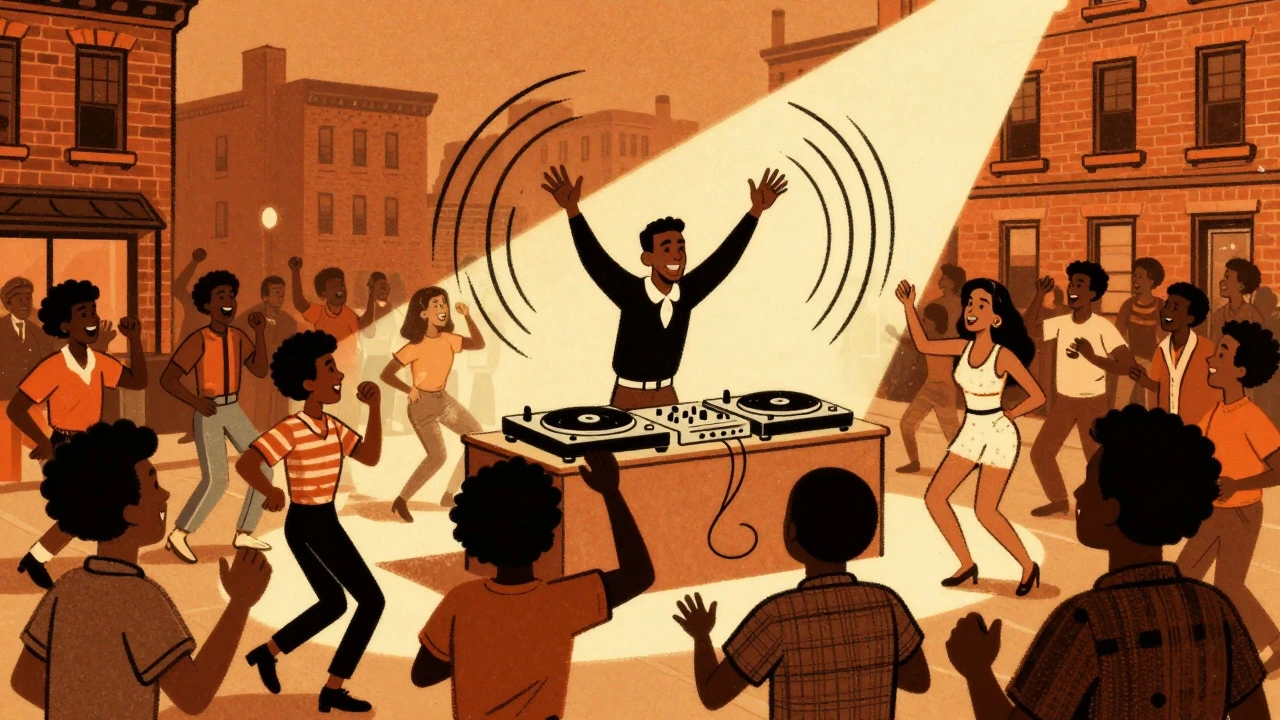

Imagine a party in the Bronx in 1973. The air is thick with smoke and bass. A man named Clive Campbell, known as DJ Kool Herc, stands behind two turntables. He isn't just playing records; he is extending the drum breaks, looping the rhythm until the dancers can't stop moving. This moment is often cited as the birth of hip-hop is a cultural movement and music genre that emerged in the South Bronx during the early 1970s, characterized by DJing, MCing, breakdancing, and graffiti art. But here is what many people miss: Herc didn't invent this from scratch. He brought it with him from Kingston, Jamaica. The reggae impact is the foundational influence of Jamaican sound-system practices, rhythmic structures, and vocal styles on the development of hip-hop culture and music is not just a footnote; it is the structural backbone of the genre.
The Sound System Migration
To understand how reggae shaped hip-hop, you have to look at who moved where. In the late 1960s, thousands of Jamaicans migrated to New York City, settling largely in the Bronx and Queens. They brought their musical traditions with them, but more importantly, they brought their technology. The Jamaican sound system is a mobile audio setup consisting of large custom-built speaker stacks, powerful amplifiers, and turntables used for street parties in Jamaica was a community institution. It wasn't about listening politely; it was about physical immersion. Bass frequencies were pushed so hard that you felt them in your chest. When these migrants arrived in the US, they set up similar rigs in schoolyards and rec rooms. The goal remained the same: create a space where the neighborhood could gather, dance, and compete through music.
DJ Kool Herc was born in Kingston in 1955. He grew up around these sound systems. When his family moved to the Bronx in 1967, he kept the equipment. By 1973, he was hosting parties that became legendary. His specific innovation-using two turntables to isolate and repeat the percussive "break" of a record-was a direct adaptation of Jamaican techniques. In Jamaica, selectors would emphasize rhythmic segments to keep dancers engaged. Herc took that concept and applied it to American funk and soul records. The result was a new kind of party music that prioritized the groove over the song structure.
From Toasting to Rapping
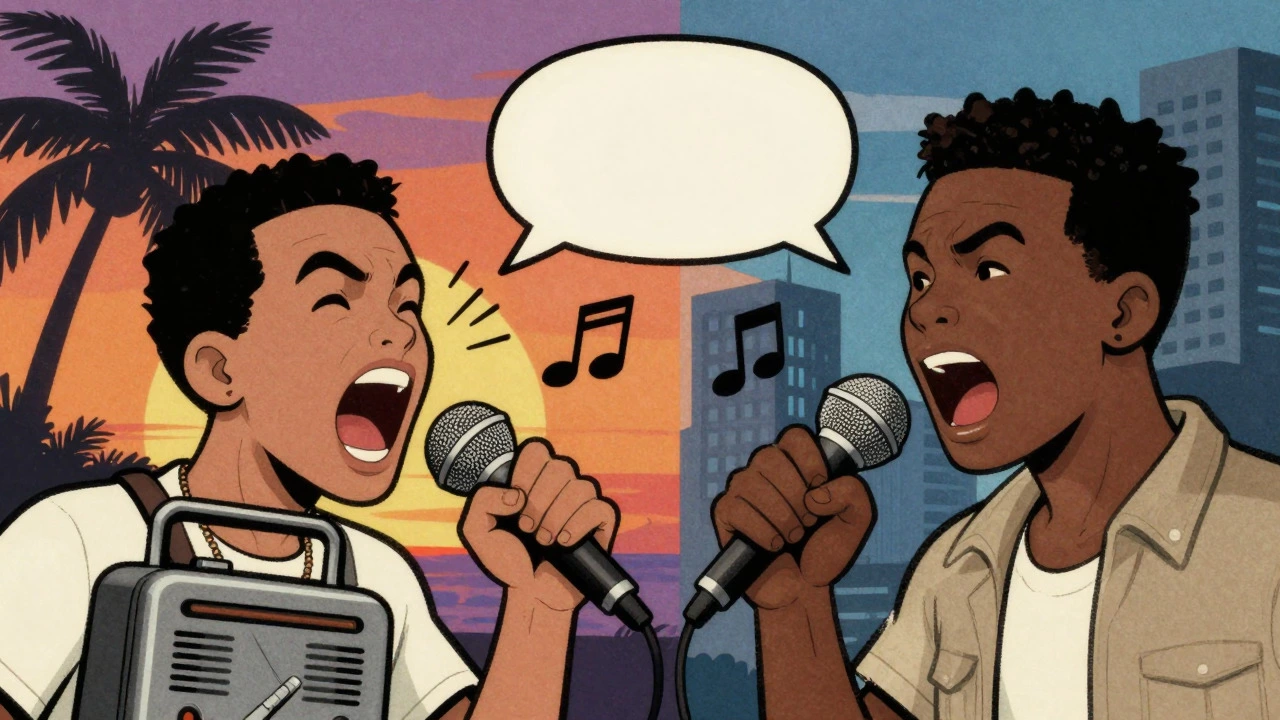
If the sound system provided the body, toasting is a form of rhythmic, often improvised speech delivered over instrumental music, which evolved into the primary vocal style of early hip-hop MCs provided the voice. In Jamaica, the "DJ" was not the person spinning the records; it was the vocalist who talked over them. These toasters, like U-Roy and Big Youth, developed a boastful, rhythmic style. They would hype the crowd, call out names, and rhyme simple couplets to maintain energy. This practice is widely recognized as the direct precursor to rapping.
When Herc's cousin Coke La Rock picked up the microphone at those Bronx parties, he wasn't improvising a new art form. He was doing what Jamaican toasters had been doing for years. He shouted out neighbors, warned rivals, and rhymed over the extended breaks. The linguistic content changed-from Jamaican Patois to African-American Vernacular English-but the structure remained identical. Call-and-response chants, rhythmic phrasing, and crowd engagement were all imported directly from the Caribbean. This connection explains why early rap lyrics often focused on local geography and social dynamics; it mirrored the community-centric nature of Jamaican street parties.
Musical Mechanics: Rhythm and Dub
Beyond vocals, the actual sound of hip-hop owes a massive debt to reggae production techniques. Reggae is defined by its off-beat accents, often hitting the second and fourth beats of a bar, combined with heavy, prominent bass lines. Early hip-hop producers sampled these elements or recreated them using drum machines. The syncopated rhythms found in classic hip-hop tracks often trace back to the "skank" guitar patterns of ska and rocksteady, which evolved into reggae.
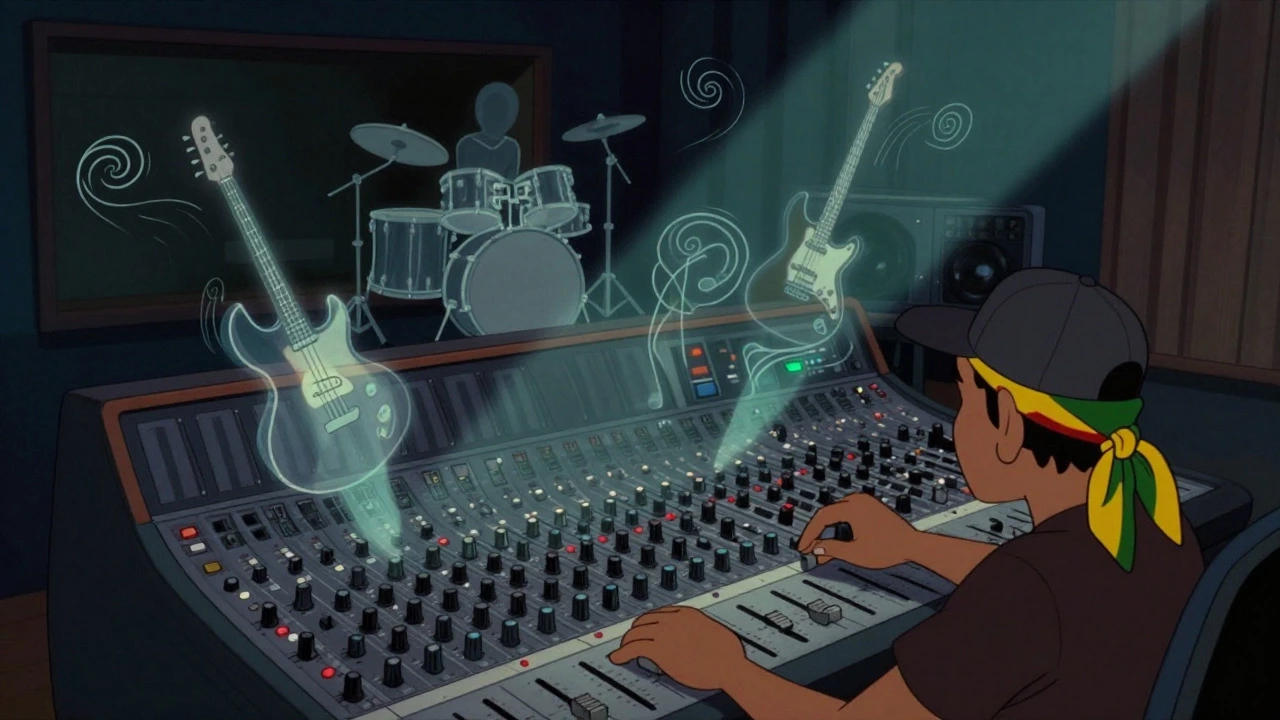
Then there is the studio magic. In Jamaica, engineers like King Tubby pioneered dub reggae is a subgenre of reggae that emphasizes remixing, echo, reverb, and isolation of drums and bass to create atmospheric, spatialized textures. Dub involved stripping tracks down to their bare bones-drums and bass-and adding swirling effects. This approach anticipated hip-hop production's love for looped drum breaks and filtered bass. When early hip-hop producers started using echo on MC vocals or isolating drum kits, they were applying dub aesthetics to a different genre. The idea that the studio itself is an instrument, capable of transforming raw recordings into something new, came straight from Kingston.
| Feature | Jamaican Sound System (1960s-70s) | Early Hip-Hop (1970s-80s) |
|---|---|---|
| Vocal Role | Toasting (rhythmic speech over music) | MCing/Rapping (rhymed speech over breaks) |
| Audio Focus | High-fidelity bass and low-end response | Extended drum breaks and bass-heavy grooves |
| Record Manipulation | Emphasizing "versions" and rhythmic segments | Isolating and looping percussive "breaks" |
| Social Function | Community gathering in open lots/yards | Block parties in schools/streets |
| Competitive Element | Sound clashes between rival DJs | DJ battles and MC cyphers |
Cultural Politics and Identity
The influence wasn't just sonic; it was ideological. Reggae carried a message of rebellion, social commentary, and spiritual consciousness rooted in Rastafarianism. For young Black and Afro-Caribbean youth in the Bronx, dealing with deindustrialization and police surveillance, this ethos resonated deeply. Hip-hop adopted this stance toward authority. Just as reggae artists critiqued colonialism and economic inequality, early hip-hop artists critiqued urban neglect and systemic racism. The visual language also crossed over. Dreadlocks, military-style jackets, and rude-boy imagery appeared in hip-hop circles, creating a shared aesthetic of defiance.
This cultural lineage created a bridge that helped hip-hop expand globally. Because audiences in the Caribbean, UK, and Latin America were already familiar with reggae and dancehall, hip-hop found ready-made markets there. The genre didn't have to be explained from scratch; it felt like a continuation of sounds they already loved. This cross-cultural familiarity accelerated hip-hop's rise from a local Bronx phenomenon to a global force.
Navigating the Historical Debate
It is easy to fall into the trap of saying hip-hop "came from" reggae. That’s an oversimplification. Hip-hop is a hybrid. It drew from funk, soul, disco, and African-American radio traditions. Figures like Frankie Crocker, a radio DJ known for his jive-talking style, influenced early MCs just as much as Jamaican toasters did. However, ignoring the reggae contribution misses the structural foundation. Without the sound system model, you don't get the block party format. Without toasting, you don't get the MC role. Without dub, you don't get the modern production aesthetic.
Today, the relationship continues. Modern producers blend dancehall rhythms with trap beats. Artists code-switch between rap flows and singjay styles. The dialogue is ongoing, proving that the reggae impact is not a closed chapter but a living thread in hip-hop's DNA.
Did DJ Kool Herc invent hip-hop alone?
No, while Kool Herc is widely credited with the pivotal 1973 party that launched the scene, hip-hop emerged from a collective effort involving many DJs, MCs, and community members in the Bronx. Herc's specific contribution was adapting Jamaican sound-system techniques to American records, making him a crucial catalyst rather than a solitary inventor.
What is the difference between toasting and rapping?
Toasting is the Jamaican precursor to rapping, characterized by rhythmic, often improvised speech over instrumental music. While both involve speaking rhythmically over beats, rapping evolved to place greater emphasis on complex rhyme schemes, lyrical storytelling, and structured verses, whereas toasting was more focused on immediate crowd hype and call-and-response.
How did dub reggae influence hip-hop production?
Dub reggae introduced the concept of treating the studio as an instrument. By isolating drums and bass and adding heavy echo and reverb, dub engineers created atmospheric textures. Hip-hop producers adopted these techniques, using loops, filters, and spatial effects to shape their beats, establishing a production style that prioritizes texture and groove over traditional song structure.
Why is the Jamaican sound system important to hip-hop culture?
The sound system established the model for the hip-hop party: high-powered bass, outdoor or informal venues, and a focus on community gathering. It also introduced the competitive aspect of "sound clashes," which evolved into DJ battles and MC cyphers, defining the social dynamics of early hip-hop.
Is reggae still influencing hip-hop today?
Yes, the influence is very much alive. Contemporary producers frequently use dancehall drum patterns and syncopated snares in trap and pop-rap. Many artists blend rapping with melodic singjay styles, showing that the rhythmic and vocal exchange between the two genres continues to evolve in the digital age.


