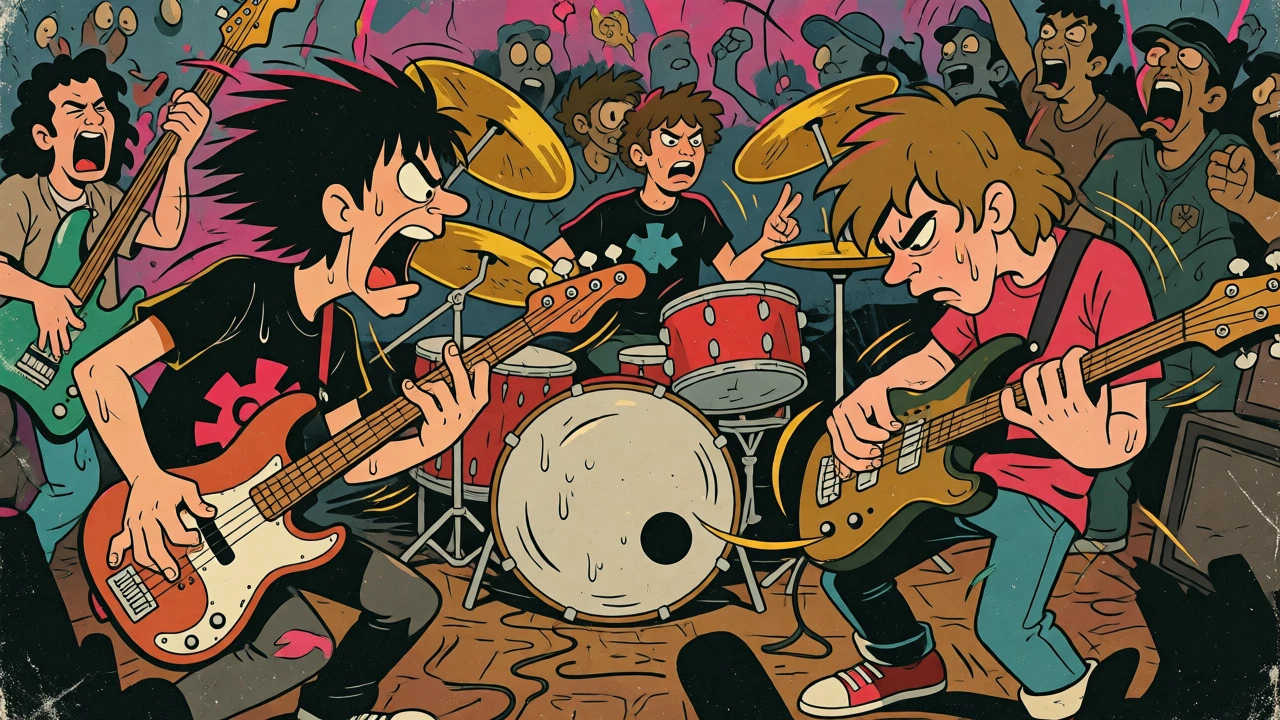

Imagine a band that started out playing sweaty, chaotic funk-punk sets in small Los Angeles clubs, then suddenly found themselves selling 13 million albums worldwide and topping MTV. That’s exactly what happened to the Red Hot Chili Peppers during the 1990s. They didn’t just get popular; they fundamentally changed how major labels viewed hybrid genres. Before them, funk, punk, rap, and hard rock were treated as separate marketing categories. The Chili Peppers smashed those walls down, proving you could mix slap bass with distorted guitars and still dominate the Billboard charts.
This wasn’t an overnight accident. It was a decade-long evolution driven by raw talent, tragic losses, and one specific producer who knew how to capture lightning in a bottle. If you’ve ever wondered how a band known for shouting about sex and drugs became one of the most enduring acts in rock history, the answer lies in three key moments: the breakthrough of Blood Sugar Sex Magik, the turbulent experiment of One Hot Minute, and the polished reinvention of Californication.
The Blueprint: From Cult Favorite to Global Phenomenon
By 1989, the Red Hot Chili Peppers had already built a loyal underground following. Their album Mother’s Milk went gold, signaling that their energy was resonating beyond the club scene. But they needed a bigger push. Enter Warner Bros. and producer Rick Rubin. Rubin was famous for stripping music down to its core elements. He saw potential in the band’s chaotic energy but knew it needed structure to reach a wider audience.
Rubin invited the band-Anthony Kiedis, Flea, guitarist John Frusciante, and drummer Chad Smith-to record in a secluded mansion in Laurel Canyon. For seven weeks, they lived together, wrote songs collaboratively, and captured a live-band feel that previous studio recordings lacked. The result was Blood Sugar Sex Magik, released in September 1991.
Rubin’s genius was in balancing aggression with melody. Tracks like “Give It Away” kept the funky, relentless rhythm that fans loved, while “Under the Bridge” introduced a vulnerable, melodic side no one expected. Kiedis originally wrote the lyrics to “Under the Bridge” as a poem about loneliness and addiction. Rubin found it in a notebook and convinced Kiedis it could be a song. Frusciante crafted the iconic guitar intro, and Flea added the bass line after hearing Kiedis sing it. This combination of personal storytelling and accessible rock structure broadened their appeal instantly.
Visual Culture and the MTV Effect
You can’t talk about the 1990s without talking about MTV. Music videos weren’t just promotional tools; they were essential cultural artifacts. The video for “Give It Away,” directed by Gavin Bowden, was visually confrontational and funky, reinforcing the band’s roots. In contrast, the “Under the Bridge” video showed Kiedis walking alone through Los Angeles streets, highlighting the song’s emotional depth.
This visual duality was crucial. It allowed the band to market themselves not just as a novelty funk-metal act, but as serious artists capable of introspection. “Under the Bridge” became their first top-10 single, cracking open mainstream radio doors that had previously been closed to such eclectic sounds. Meanwhile, “Give It Away” earned them a Grammy Award, validating their artistic credibility within the industry establishment.
The commercial impact was staggering. Blood Sugar Sex Magik peaked at No. 3 on the Billboard 200 and sold over 13 million copies worldwide. This success proved that a band combining funk, punk, and alternative rock could compete with the grunge giants of the era, like Nirvana and Pearl Jam, by offering something different: groove-based energy rather than angst-driven distortion.

The Crisis: One Hot Minute and the Loss of Chemistry
Fame is a double-edged sword. As the Red Hot Chili Peppers’ popularity exploded, internal tensions rose. John Frusciante, whose melodic guitar work had become central to their sound, struggled with the sudden fame and severe drug addiction. He left the band shortly after the tour for Blood Sugar Sex Magik. To fill the void, they hired Dave Navarro from Jane’s Addiction.
The resulting album, One Hot Minute, released in 1995, marked a significant shift. Navarro brought a darker, more psychedelic, and heavier guitar style. While singles like “Warped” and “My Friends” charted well, the album felt less cohesive than its predecessor. Critics noted a loss of the improvisational funk chemistry that defined the Frusciante era. One Hot Minute reached No. 4 on the Billboard 200 but sold significantly fewer copies than Blood Sugar Sex Magik.
| Album | Release Year | Billboard Peak | Key Singles | Certification Status |
|---|---|---|---|---|
| Blood Sugar Sex Magik | 1991 | No. 3 | "Give It Away", "Under the Bridge" | Multi-Platinum (7M+ US Sales) |
| One Hot Minute | 1995 | No. 4 | "Warped", "Aeroplane" | Double Platinum |
| Californication | 1999 | No. 3 | "Scar Tissue", "Otherside" | 6x Platinum (8M+ US Sales) |
Despite maintaining visibility through MTV hits like “Aeroplane,” the period highlighted a critical lesson: the band’s magic relied heavily on the specific creative synergy between Kiedis, Flea, and Frusciante. Navarro was a talented musician, but he couldn’t replicate the unique rhythmic interplay that made the earlier records special. This instability threatened to derail their momentum right when they needed consistency.
The Reinvention: Californication and Mature Songwriting
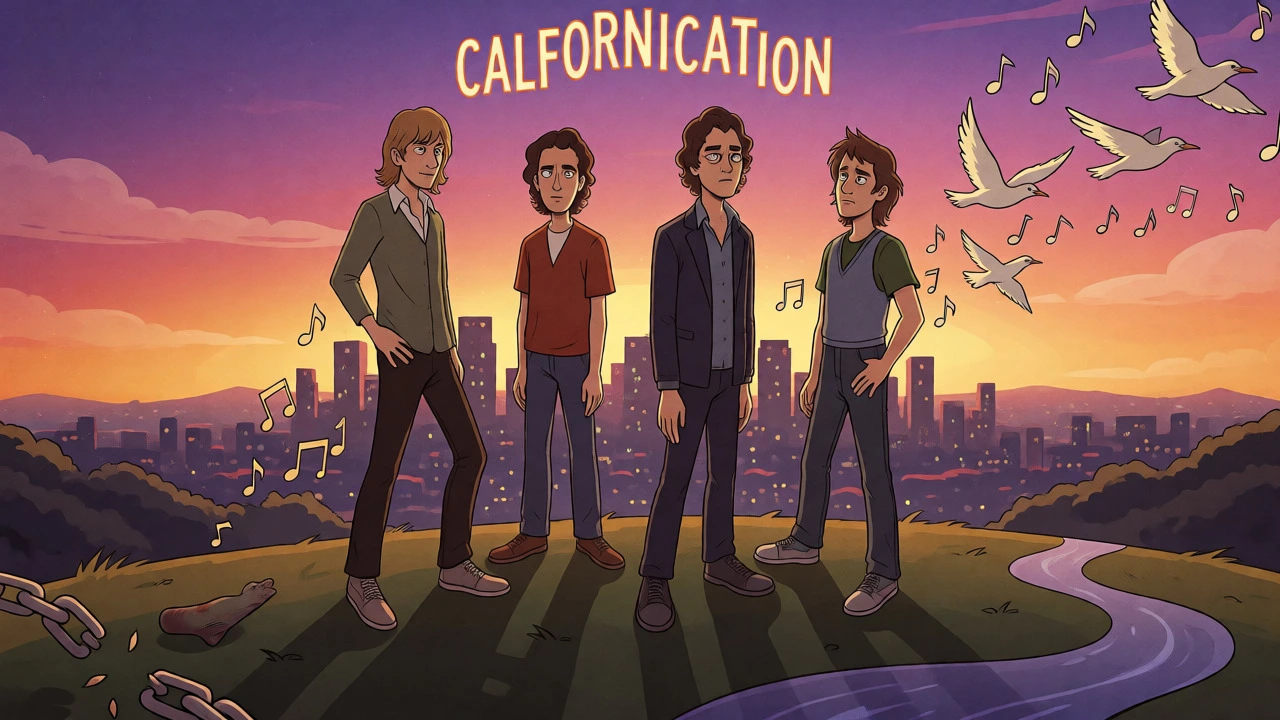
By the late 1990s, Frusciante had recovered from his addiction and returned to the band. They reunited with Rick Rubin to create Californication, released in June 1999. This album wasn’t just a return to form; it was an evolution. The band shifted toward more economical guitar writing and reflective lyrics, moving away from pure shock value toward deeper themes like celebrity culture, environmental anxiety, and technological alienation.
“Scar Tissue” exemplified this new maturity. The song featured a clean, melodic guitar line and poignant lyrics about pain and healing. It won the Grammy Award for Best Rock Song in 2000, cementing the band’s status as serious contenders in the alternative rock landscape. Other tracks like “Around the World” retained their funky propulsion, while “Otherside” offered a darker, radio-friendly alternative-rock structure.
Commercially, Californication was a massive success. It spent 101 weeks on the Billboard 200 and sold over 17 million copies worldwide. Unlike One Hot Minute, which felt like a departure, Californication integrated the band’s funk roots with polished pop-rock sensibilities. It proved that the Red Hot Chili Peppers could adapt to changing musical trends without losing their identity.
Why It Mattered: Bridging Genres
The significance of the Red Hot Chili Peppers in the 1990s goes beyond sales figures. They created a template for hybrid rock that influenced countless bands afterward. By successfully blending slap bass, syncopated rhythms, rapped verses, and melodic choruses, they demonstrated that genre boundaries were flexible. Artists ranging from Limp Bizkit to Dr. Dre drew inspiration from the rhythmic structures perfected on Blood Sugar Sex Magik.
They also differed from their contemporaries. While grunge bands focused on punk-derived distortion and emotional angst, the Chili Peppers centered their sound on funk grooves. This distinction allowed them to attract audiences who might not have connected with heavy metal or traditional rock. Their ability to make complex rhythmic ideas accessible to mainstream listeners was their greatest achievement.
Looking back, the 1990s weren’t just a period of popularity for the band; they were the decade where their hybrid identity was translated into mainstream economics. They turned niche experimentation into arena-filling anthems, ensuring their relevance well into the 21st century.
Why did John Frusciante leave the Red Hot Chili Peppers in the 1990s?
John Frusciante left the band primarily due to the overwhelming pressure of sudden fame and severe struggles with drug addiction. The intense touring schedule and public scrutiny following the success of Blood Sugar Sex Magik took a toll on him, leading to his departure after the initial promotional cycle.
What role did Rick Rubin play in the band's success?
Producer Rick Rubin helped refine the band's chaotic energy into structured, accessible songs. He emphasized groove, melody, and space, reducing clutter while preserving their rhythmic force. His approach on Blood Sugar Sex Magik and Californication was instrumental in making their funk-rock sound commercially viable.
How did 'Under the Bridge' change the band's image?
'Under the Bridge' showcased Anthony Kiedis's vulnerable side, moving away from purely aggressive or sexual themes. Its emotional depth and melodic structure appealed to a broader audience, helping the band transition from a cult funk-punk act to mainstream rock stars capable of heartfelt ballads.
Was 'One Hot Minute' considered a failure?
Not necessarily a failure, but it was less successful than its predecessors. It achieved Double Platinum status but sold significantly fewer copies than Blood Sugar Sex Magik. Critics often view it as a transitional album that lacked the cohesive chemistry of the Frusciante era, though it maintained strong MTV presence.
What makes 'Californication' different from earlier albums?
Californication features more mature songwriting, cleaner production, and lyrical themes focusing on celebrity culture and existential anxiety. While it retains funk foundations, it leans more heavily into melodic alternative rock, reflecting the band's growth and recovery from the mid-90s turmoil.