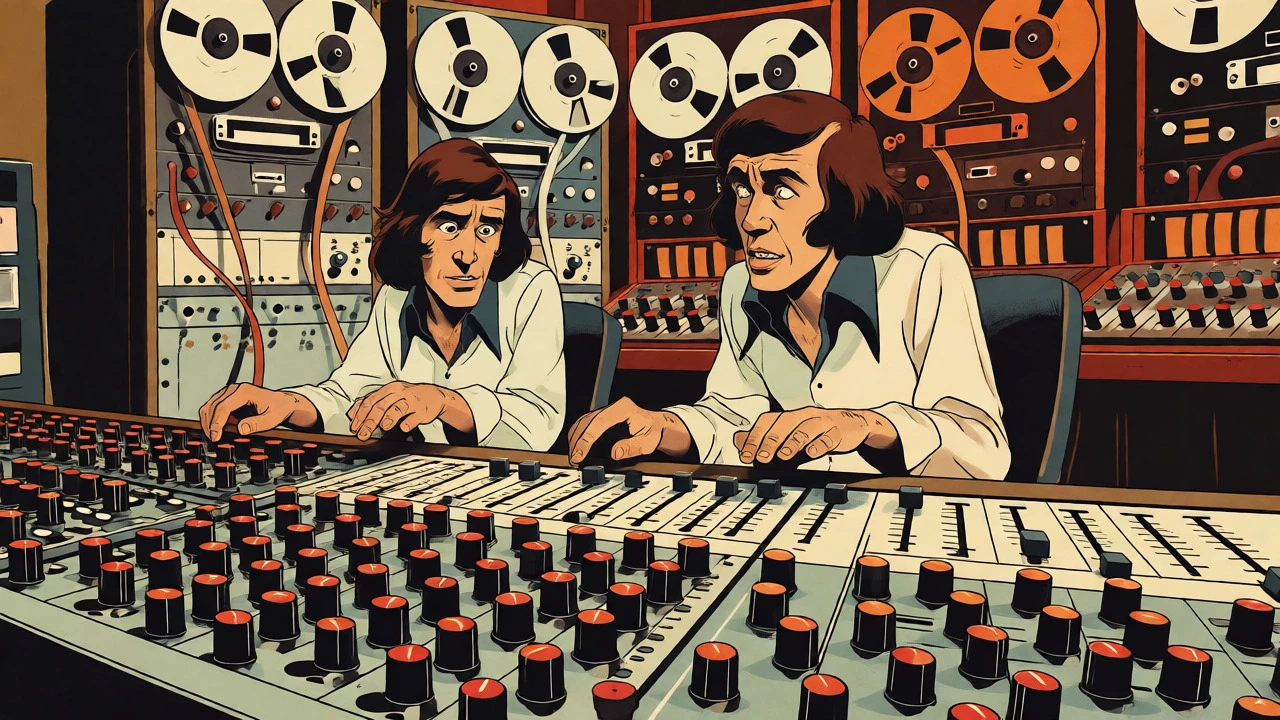

Imagine trying to build a cathedral out of Lego bricks, but you only have twenty-four bricks, and every time you move one, the whole structure might collapse. That was the reality for engineers recording Progressive Rock in the 1970s. This wasn't just about capturing a band playing in a room; it was about constructing sonic architecture where the studio itself became an instrument. Between roughly 1968 and 1978, bands like Yes, King Crimson, and Emerson, Lake & Palmer pushed analog technology to its absolute breaking point. They didn't just record songs; they engineered experiences that were often impossible to replicate live, turning the mixing console into a canvas for complex, multi-section suites.
The shift from the simple two-track recordings of the early 1960s to the massive 24-track machines of the mid-70s changed everything. Suddenly, engineers could isolate every drum hit, guitar string, and vocal harmony. But this freedom came with a heavy price tag: logistical nightmares, track starvation, and the constant threat of tape hiss. If you're curious about how those dense, layered albums like Fragile or Brain Salad Surgery actually got made without digital undo buttons, you need to look at the specific workflows, limitations, and creative hacks that defined the era.
The Multitrack Revolution and Track Starvation
In the early 1970s, the industry standard jumped from 8-track to 16-track, and eventually to 24-track systems. For pop music, this was luxury. For progressive rock, it was survival. Bands wrote music with dozens of instrumental layers, shifting time signatures, and orchestral textures that couldn't be played by five guys in a room simultaneously. Engineers had to treat each track as precious real estate.
This led to a technique known as "ping-pong bouncing." When a song needed more tracks than the machine had, engineers would mix several tracks down onto one or two new tracks on a second machine. It sounds simple, but every bounce added noise and reduced fidelity. You lost headroom, gained hiss, and committed to decisions forever. Once you bounced your drums and bass together, you couldn't go back and turn up the snare without affecting the kick. This forced producers to make critical EQ and compression choices during tracking, long before the final mix.
| Year/Era | Track Count | Primary Workflow | Key Limitation |
|---|---|---|---|
| Mid-1960s | 4-Track | Live ensemble recording | No isolation; bleed is permanent |
| Late 1960s | 8-Track | Basic overdubs possible | Limited layering capacity |
| Early 1970s | 16-Track | Layered instrumentation | Requires frequent bouncing |
| Mid-1970s | 24-Track | Complex suites & synths | High cost; noise accumulation |
Synthesizers and the Monophonic Bottleneck
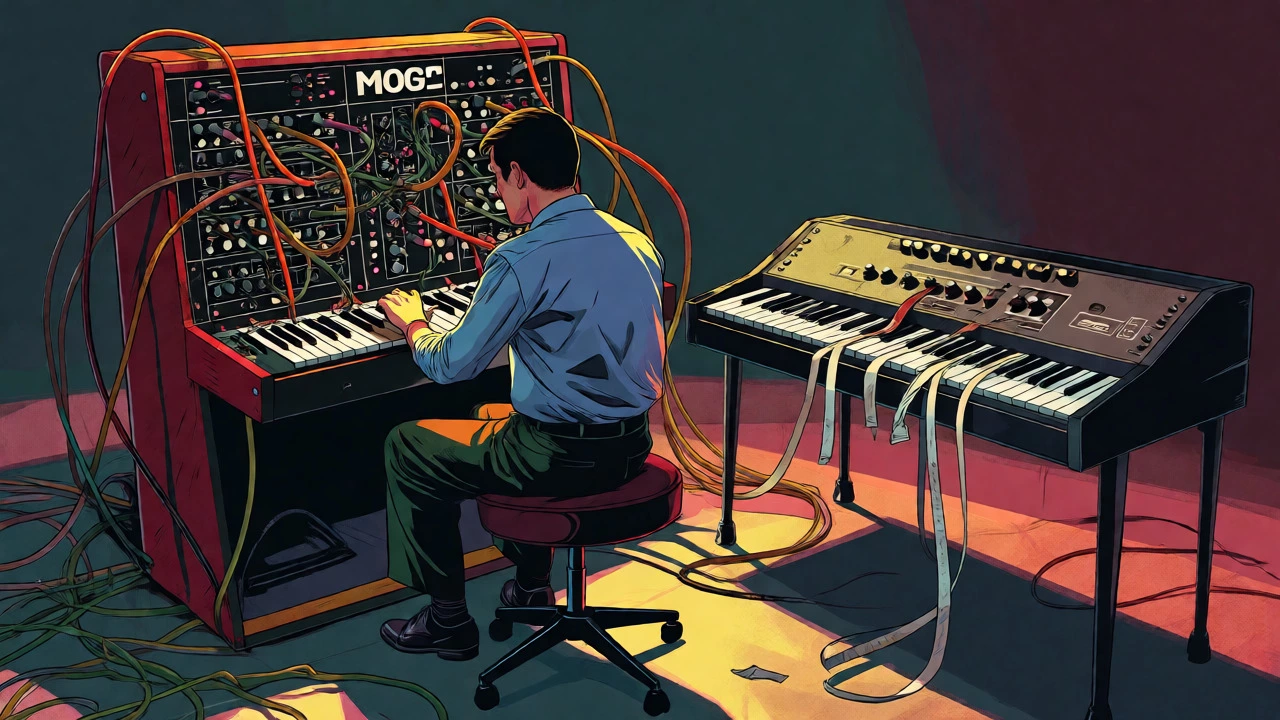
You might think synthesizers made recording easier, but in the 1970s, they made it harder. Early instruments like the Moog Synthesizer were monophonic. That means they could only play one note at a time. Want a lush string section? You can't just play a chord. You have to record six or eight separate lines, one by one, stacking them across multiple tracks. This consumed half the available tape tracks for a single part.
Eddy Offord, the legendary engineer behind Yes and ELP, described this process as painstaking. He and Keith Emerson would spend hours patching cables and tuning oscillators, which drifted out of tune if the studio temperature changed even slightly. The Mellotron, another staple, used physical tape strips under each key. These tapes wore out, stretched, and broke. A bad take on a Mellotron part meant waiting for repairs or risking mechanical failure mid-take. Unlike modern software where you can tweak a synth patch later, these instruments demanded perfect execution in the moment, because fixing them later was nearly impossible.
Tape Loops and Experimental Textures
Not all prog rock relied on traditional instruments. Robert Fripp of King Crimson and Brian Eno pioneered a technique called "Frippertronics," which used two reel-to-reel tape machines connected in a loop. One machine recorded the input, while the other read back previous passes, creating sustained, evolving feedback loops. This wasn't just an effect; it was a compositional tool.
Engineers captured these ethereal soundscapes by feeding the output of the tape loop system directly into the multitrack recorder. This allowed them to layer these abstract textures under solid rock rhythms. It required precise synchronization between the tape machines and the main console. If the speeds drifted apart by even a fraction, the entire texture would wobble or phase out. These sessions were less about playing notes and more about managing signal flow and tape tension, turning the studio floor into a laboratory of accidental beauty.
Mixing Without Automation: The Human Element
Today, you click a mouse to automate a volume fader. In the 1970s, automation was manual. During a mix, multiple people stood around the large-format consoles-like the Neve or API desks-physically moving faders and knobs in real-time. For a complex prog track with sudden dynamic shifts, you might need three or four assistants coordinating their moves perfectly.
If someone missed a cue, the whole take was ruined. There was no "undo." This pressure shaped the aesthetic of the mixes. Transitions were often abrupt or heavily processed because smooth, automated fades were difficult to execute consistently over long periods. Instead, engineers used hard cuts, crossfades done by hand on the tape, or dramatic panning moves to create interest. Panning wasn't just about placement; it was a narrative device. Moving a synthesizer from left to right could signal a change in mood or section, guiding the listener through the musical journey.
Acoustic Control and the "Dead" Room
Contrary to the reverberant, echo-heavy sound of some earlier rock, 1970s prog often favored tight, controlled acoustics. Engineers wanted clarity above all else. They used large studios with movable dividers and gobos to isolate instruments. Drums were often damped with towels or tape to reduce ring, creating the dry, punchy sound characteristic of the era.
Close-miking became the norm. Microphones were placed inches from guitar amps and drum heads to minimize bleed from other instruments. This isolation was crucial for the editing process. If you wanted to splice a guitar solo from one take to another, you needed clean separation so the edit wouldn't reveal background noise from the rest of the band. The goal was precision, not atmosphere. Any reverb or space was added artificially during the mix, giving producers total control over the sonic environment.
Editing Suites: Splicing Tape Like a Sculptor
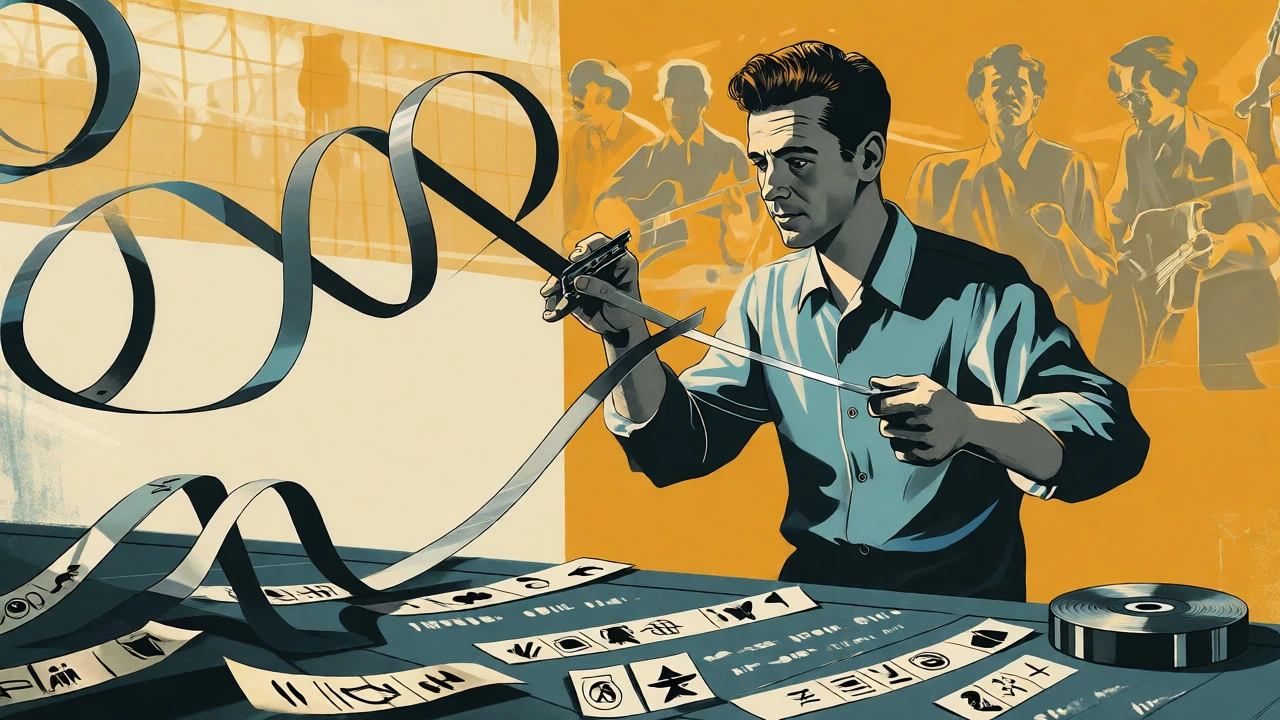
Many prog epics weren't performed continuously. They were constructed from fragments. An engineer might record a 20-minute improvisation, then cut it into ten distinct sections, rearrange them, and splice them back together. This required razor-sharp blades and splicing tape. A bad splice resulted in a click or a dropout, which was unacceptable in a high-fidelity hi-fi market.
Teo Macero, famous for his work with Miles Davis, applied similar methods to jazz-rock fusion, influencing prog producers. They treated tape as editable material, not just a recording medium. Tempo changes within a single song were handled by physically cutting the tape and adjusting the speed of the playback machine. This labor-intensive process ensured that the final product sounded seamless, hiding the fact that it was assembled from dozens of disparate pieces. It was audio collage art, requiring patience and a steady hand.
Legacy and Modern Emulation
The constraints of 1970s recording forced creativity. Limited tracks meant you couldn't hide mistakes, so performances had to be tight. Analog saturation smoothed out harsh transients, giving the music a warm, cohesive glue that digital recordings often lack. Today, plugins emulate transformers, tape saturation, and console coloration, allowing modern producers to recreate this vibe. But understanding the original context helps you use these tools better. You realize that the "sound" of prog isn't just about the notes; it's about the struggle against the machine.
For anyone interested in producing music today, studying these techniques offers valuable lessons. Planning your arrangement before hitting record saves time. Committing to sounds early prevents decision fatigue. And using space and silence as actively as you use noise creates depth. The golden age of progressive rock wasn't just about virtuosity; it was about engineering ingenuity under pressure.
Why did progressive rock require so many tape tracks?
Progressive rock compositions featured complex arrangements with multiple keyboard layers, stacked vocals, and intricate instrumental parts that could not be played simultaneously by a small band. Additionally, early synthesizers were monophonic, meaning each note of a chord had to be recorded on a separate track, rapidly consuming available channels.
What is ping-pong bouncing in recording?
Ping-pong bouncing is a technique where multiple tracks are mixed together and recorded onto one or two tracks on a second tape machine. This freed up empty tracks on the original machine for further overdubs but introduced cumulative tape hiss and generation loss, reducing overall audio quality.
How did engineers manage dynamics without digital automation?
Mixes were performed manually in real-time. Multiple engineers or assistants would physically ride faders and adjust knobs during the mixdown pass. This required precise coordination and practice, as any mistake necessitated restarting the entire mix pass.
What role did the Mellotron play in 1970s production?
The Mellotron provided orchestral and choral textures without hiring a full orchestra. However, it relied on physical tape strips that were prone to wear and mechanical failure, requiring careful handling and maintenance during recording sessions to ensure consistent sound.
Did progressive rock bands record live in the studio?
While basic rhythm tracks were often recorded live to capture interplay, most progressive rock albums were heavily constructed through overdubs and editing. Complex sections were frequently built layer-by-layer, and entire songs were sometimes assembled from edited tape segments rather than continuous performances.