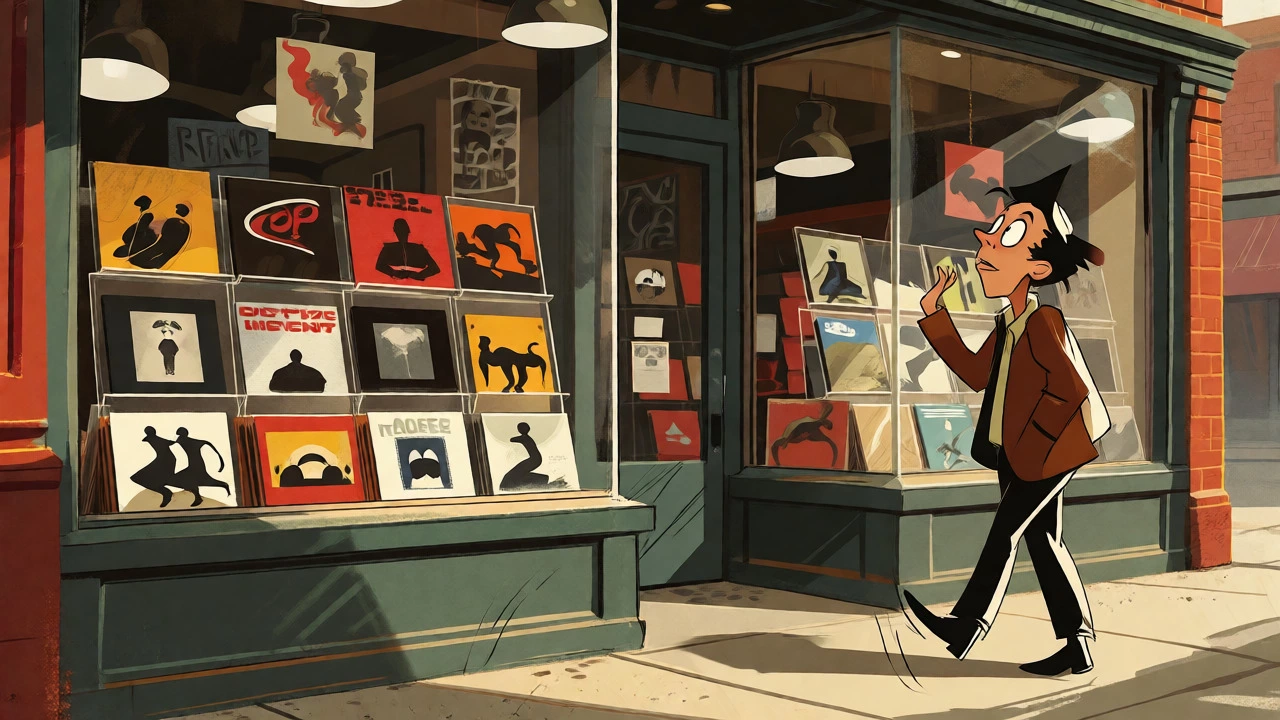

You walk past a record shop in Portland. The glass is clean, but the display inside? It’s just spines. You keep walking. Now imagine that same window filled with full-size album covers, framed like gallery pieces or floating in clear acrylic. You stop. You look closer. You might even go in.
This isn’t magic. It’s visual merchandising. For independent record stores, the windowfront is prime real estate. It’s the first handshake with a potential customer. If you’re running a shop-or thinking about opening one-how you display vinyl records outside can literally change your bottom line. Studies show effective displays can boost sales of featured titles by over 30%. That’s not a small number for a business operating on thin margins.
Why Spines Don’t Sell (But Sleeves Do)
Let’s be honest: nobody buys a record because they liked the font on the spine. They buy it because the cover art spoke to them. When you hide the artwork behind a row of narrow spines, you’re hiding the product’s biggest selling point. This is why face-out presentation is critical in windowfronts.
Think about how you browse online. You click on thumbnails. You judge books by their covers. Same logic applies to physical retail. A 12-inch LP sleeve offers a massive canvas for graphic design. Whether it’s the psychedelic swirl of a 60s classic or the stark minimalism of modern indie rock, the image needs space to breathe. Window displays allow you to turn these sleeves into art installations rather than just inventory stacks.
There’s also the psychological factor. A well-curated window signals taste. It tells passersby, “We know what’s good.” If your window looks cluttered or generic, customers assume the interior is too. But if you treat each sleeve as a piece of collectible art, you elevate the perceived value of every record in the store.
The Hardware: Frames, Acrylic, and Crates
You don’t need a museum budget to make this work. The market for album display hardware has matured significantly. You have options ranging from cheap DIY hacks to high-end professional systems.
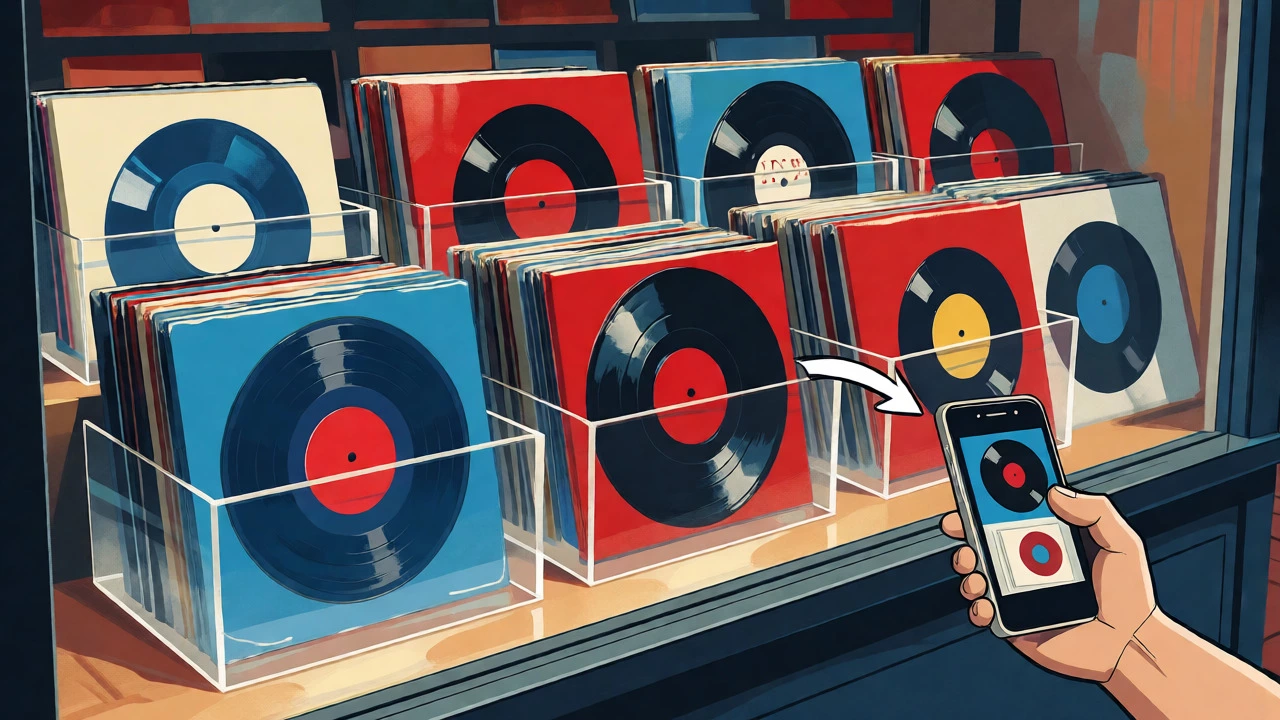
- Clear Acrylic Bins: These are currently the gold standard for window visibility. Look for 5mm optical-grade crystal-clear acrylic. Why? Because it makes the album look like it’s floating. One retailer reported that switching from printed signs to acrylic holders stopped people mid-step. The transparency allows light to pass through, keeping the colors vibrant even in indirect sunlight.
- Museum-Grade Frames: Companies like Rock Art Picture Show supply frames used by the Smithsonian and the Rock and Roll Hall of Fame. The good news? You can buy similar mat-and-acrylic kits for under $20 per frame. Using these creates an immediate sense of prestige. Your window starts looking less like a warehouse and more like a gallery.
- Modular Swap Systems: Products like Art Vinyl’s “Play & Display” system are designed for speed. They feature hinged designs that let you swap albums out in seconds. This is crucial for “What’s Playing Now” sections where you want to sync the window display with the music playing inside the store.
- Wire Racks and Crates: While less “artistic,” these offer flexibility. Custom-sized wire racks can hold LPs at angles that catch the streetlights. They’re lightweight, so staff can reconfigure the entire window layout before opening without needing tools.
| Fixture Type | Best Use Case | Avg. Cost Per Unit | Visibility Impact |
|---|---|---|---|
| Acrylic Bin (5mm) | Hero singles, new arrivals | $15-$30 | High (Floating effect) |
| Standard LP Frame | Classics, local artists | $10-$20 | Medium-High (Gallery feel) |
| Art Vinyl Play & Display | Rotating playlists | $25-$40 | High (Dynamic updates) |
| Wooden Crate | Bulk browsing, deals | $5-$15 | Low (Spine-heavy) |
Curating the Visual Narrative
Don’t just throw records in the window. Tell a story. The most successful displays group albums by theme, color, or genre. This reduces cognitive load for the shopper. Instead of seeing 50 random titles, they see a cohesive collection.
Consider the “Color Block” strategy. Group five albums with predominantly blue covers together. Then place a red cluster next to it. This draws the eye across the glass. Alternatively, use the “Era Grid.” Dedicate one section to 70s soul, another to 90s grunge. This helps customers quickly identify if the store carries their preferred style of music.
Integration with digital tech is also rising. Some forward-thinking shops are experimenting with NFC-enabled records. Imagine placing a special edition LP in the window with a small sticker: “Tap here to hear the B-side.” Customers use their phones to trigger a preview track or a video interview with the artist. This bridges the gap between the physical object and the digital experience, making the window interactive even when the store is closed.
The Economics of Window Merchandising
Is it worth the effort? Let’s look at the numbers. Effective merchandising doesn’t just sell the featured album; it sells the vibe of the store. Data suggests that strategic displays increase average transaction sizes by 5-10%. How? By triggering impulse buys.
When you place accessories-like record cleaning kits or protective sleeves-near the featured albums in the window, you remind customers that vinyl requires care. These accessories often carry profit margins exceeding 100%. So, while the record itself might have a modest margin, the add-on sale boosts overall profitability.
Furthermore, window displays serve as free advertising. A striking window gets shared on Instagram. It becomes part of the neighborhood’s aesthetic. In cities like Portland, where local culture is a major draw, your window contributes to the street’s character. People come for the photo op, stay for the records.
Practical Tips for Implementation
You don’t need to redesign everything overnight. Start small. Here is a simple workflow to get started:
- Audit Your Inventory: Identify your top 10 best-sellers and your 5 newest arrivals. These are your “hero” products.
- Select Fixtures: Buy two acrylic bins for the heroes and three standard frames for the new arrivals. Total cost: roughly $80-$100.
- Plan the Layout: Sketch it on paper. Ensure there is negative space. Crowded windows look desperate; spaced-out windows look curated.
- Lighting Check: Stand outside at night. Is the art visible? Add a battery-operated LED strip behind the shelves if needed. Lighting transforms flat prints into glowing objects.
- Rotate Weekly: Change the display every week or every two weeks. Freshness keeps regulars interested. If you have a “Staff Picks” section, move those picks to the window.
Remember, consistency matters. Align your window branding with your in-store signage. If your logo uses bold sans-serif fonts, use matching price tags in the window. This reinforces brand recognition.
Frequently Asked Questions
How often should I change my record store window display?
Ideally, every two weeks. Monthly is the minimum to keep the store feeling active. During events like Record Store Day, update it daily to highlight exclusives. Frequent changes signal to locals that the store is alive and stocking new inventory.
Do I need expensive frames to make album art look good?
No. While museum-grade frames from suppliers like Rock Art Picture Show offer superior UV protection and clarity, basic 12x12 inch black frames from retailers like IKEA or Target work well for short-term displays. The key is cleanliness and proper alignment, not necessarily the price tag.
How does sun exposure affect vinyl covers in windows?
Direct sunlight fades ink and warps cardboard sleeves within months. Use UV-filtering film on your window glass or position displays away from direct afternoon sun. Rotating stock frequently also minimizes damage. Consider using replicas for long-term static displays if the original is rare.
Can I use CD art in a vinyl-focused window?
Yes, but scale matters. CD cases are smaller (approx. 5 inches). To maintain visual balance, use smaller frames or cluster multiple CDs together. Alternatively, use large-format prints of the CD booklet art to match the size of the LPs, ensuring the grid remains uniform.
What is the ROI on investing in better display fixtures?
While hard data varies by location, industry analyses suggest that improved visual merchandising can lift sales of featured items by 30% or more. Given that display fixtures are durable assets lasting years, the return on investment is typically realized within the first quarter of implementation through increased foot traffic and higher average transaction values.
Final Thoughts: Treat the Window Like a Stage
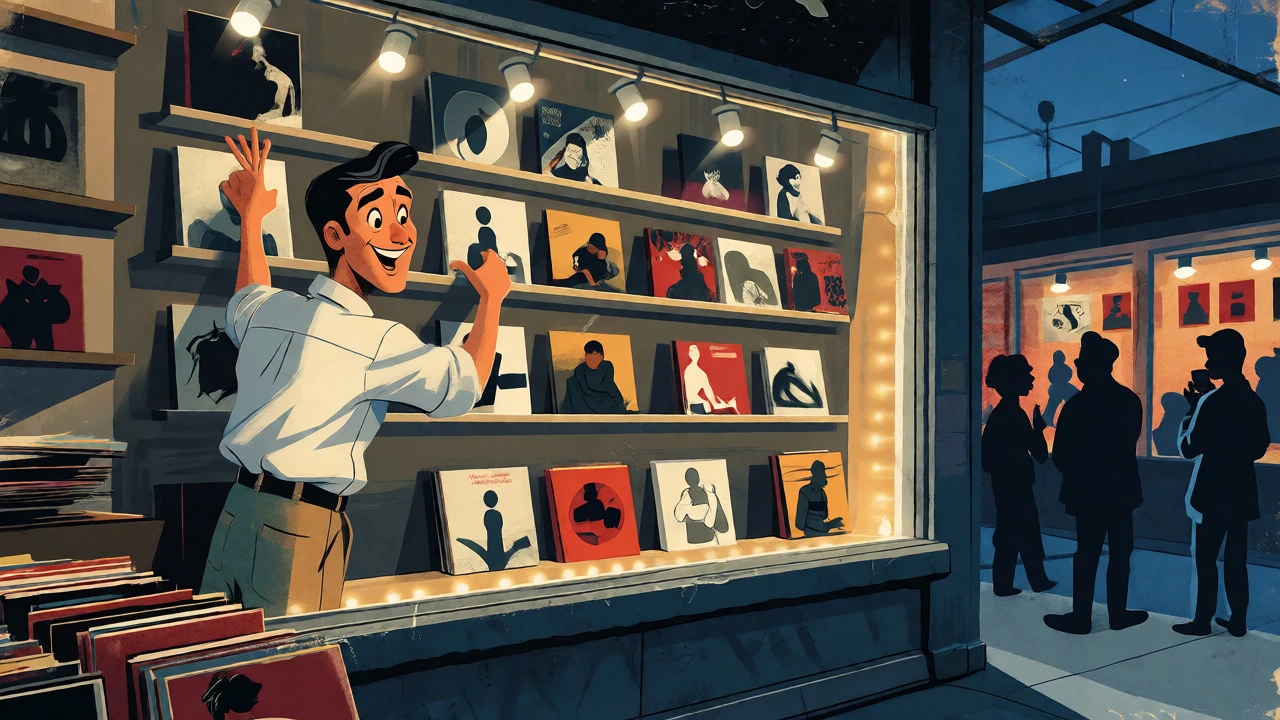
Your record store window is a stage. The albums are the actors. The lighting and fixtures are the set design. You are the director. If the production is dull, the audience walks by. If it’s compelling, they enter the theater.
In an era where streaming dominates, physical media survives on tangibility and aesthetics. People buy vinyl because they want to own the art, not just the audio. By merchandising album art prominently in your windowfront, you aren’t just selling records. You’re selling the desire to own something beautiful. And that is a powerful motivator.