

Imagine opening a record in 1985 and seeing a Playboy model in lingerie staring back at you from the cover. Now listen to the title: Invasion of Your Privacy. It sounds like a warning, but for the fans of Ratt is a Los Angeles-based glam metal band that became one of the defining acts of the mid-1980s Sunset Strip scene, it was an invitation. Released on Atlantic Records, this second studio album didn't just enter your living room; it claimed ownership of your gaze. While the riffs are undeniably catchy and the production is slick, the album serves as a perfect lens through which we can examine the darker undercurrents of 1980s hair metal: objectification, voyeurism, and a culture of excess that masked deep-seated conservatism.
The Sound of Success: A Polished Blueprint
To understand why the imagery stuck, you first have to respect the music. Invasion of Your Privacy is the second full-length studio album by Ratt, released in May or June 1985, which peaked at No. 7 on the US Billboard 200 and was certified double-platinum. Coming just over a year after their debut Out of the Cellar, the band faced immense pressure to repeat their success. They did so by refining their formula rather than reinventing it. Producer Beau Hill worked with the classic lineup-Stephen Pearcy on vocals, Warren DeMartini and Robbin Crosby on guitars, Juan Croucier on bass, and Bobby Blotzer on drums-to create a sound that was punchy, compressed, and radio-ready.
The album contains ten tracks, each designed to be a hit. Songs like "Lay It Down" and "You’re in Love" became staples of MTV rotation. The musical structure is straightforward: verse, chorus, solo, repeat. There’s no experimental noise here. Instead, there is a relentless focus on hooks and melody. This polish is what made the album commercially viable, reaching No. 7 on the Billboard 200 and selling over two million copies in the US alone. But this very polish created a specific aesthetic package where the music, the video, and the cover art had to align perfectly to sell the dream.
The Cover Art: Voyeurism as Marketing Strategy
Here is where the "dark side" becomes visible. The cover features Marianne Gravatte, the 1983 Playboy Playmate of the Year, posing in lingerie in a bedroom setting. She isn’t looking at the camera with defiance or power; she is framed as an object within a private space. When you combine that image with the title Invasion of Your Privacy, the message is clear. The listener is not just buying a record; they are being granted permission to look where they shouldn’t.
This wasn’t an accident. In the mid-1980s, the male gaze was a primary marketing tool for glam metal. Academic analyses of the era note that hair metal videos and album covers routinely depicted women as interchangeable erotic bodies. Individuality was stripped away. Gravatte on the cover isn’t a character with a story; she is a prop that validates the band’s masculine dominance. The "invasion" isn’t done by the band members physically entering her room; it is done by the consumer, who buys the album to satisfy a voyeuristic curiosity. This dynamic reinforced a strict gender hierarchy: men were active agents in public spaces, while women were passive objects in private ones, waiting to be discovered.

Lyrics and Videos: The Narrative of Conquest
If the cover sets the stage, the lyrics and music videos act out the plot. Tracks like "Never Use Love" and "What You Give Is What You Get" frame romance as a transactional game of power. The narrative is simple: the woman is the prize, and the man must win her through charm, aggression, or sheer persistence. In the accompanying music videos, this theme is amplified. Women appear as groupies, temptresses, or silent observers, rarely given dialogue or agency.
Consider the single "Lay It Down." Musically, it’s a banger. Visually, it reinforces the trope of the female figure existing solely for the pleasure of the male protagonist. Scholars have argued that this type of content contributed to the marginalization of women in rock culture. Female musicians struggled to find their footing in a scene where the visual language told them they belonged in the background, not on stage. The "dark side" here isn’t just about bad behavior; it’s about a systemic erasure of female identity in favor of a hyper-masculine fantasy.
Excess as Conservative Rebellion
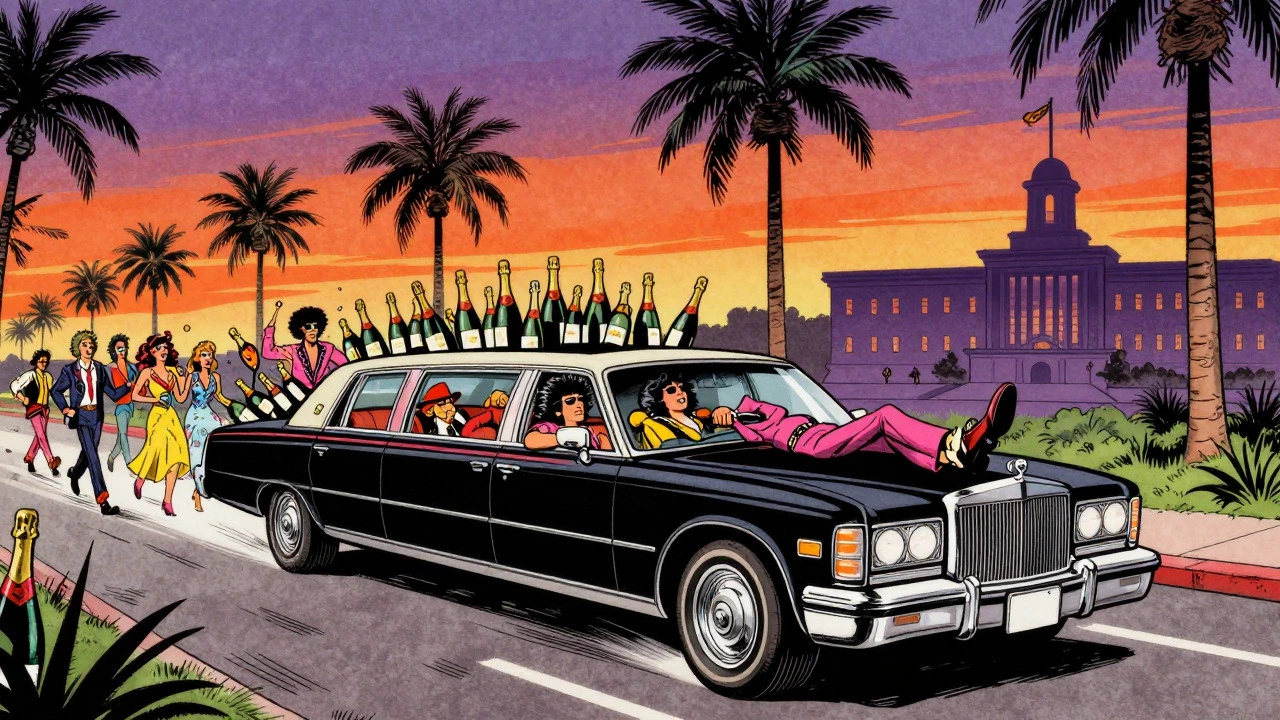
It’s easy to dismiss hair metal as just "fun" or "stupid," but its cultural impact ran deeper. The genre was defined by hedonism: drugs, alcohol, limousines, and endless parties. Yet, beneath this surface of rebellion lay a conservative core. By celebrating conspicuous consumption and traditional gender roles, bands like Ratt were actually reinforcing Reagan-era values. They weren’t challenging the status quo; they were indulging in it.
Hair Metal is a subgenre of hard rock that emerged in the early 1980s, characterized by heavy guitar riffs, high-pitched vocals, and a focus on fashion, partying, and sexual themes. This lifestyle was marketed as freedom, but it was really a celebration of wealth and male entitlement. Bruce Dickinson of Iron Maiden famously called the scene a "big, festering, open sewer," criticizing the "tattooed boys with pricey toys" who lived in a bubble of sin. This critique highlights the disconnect between the music’s rebellious image and its underlying conservatism. Invasion of Your Privacy sits squarely in this middle ground: musically progressive enough to appeal to rock fans, but culturally safe enough to sell to mainstream audiences.
Legacy: Nostalgia vs. Critical Reassessment
Fast forward to today, and how do we view this album? For many, it remains a classic. Fans on Reddit and YouTube still praise its consistency, noting that there isn’t a weak track on the record. It is often ranked alongside other top-tier glam metal releases from 1985. However, the critical conversation has shifted. With the rise of social media and greater awareness of representation in media, the "dark side" is harder to ignore.
The album’s legacy is now double-edged. On one hand, it represents a peak moment in commercial rock history, proving that polished, hook-driven metal could achieve massive success. On the other hand, it serves as a case study in how popular culture can normalize objectification. When we listen to Invasion of Your Privacy now, we aren’t just hearing riffs; we are engaging with a historical artifact that tells us a lot about how gender, power, and commerce intersected in the 1980s. Whether you love the music or hate the message, you can’t deny its impact.
| Attribute | Out of the Cellar (1984) | Invasion of Your Privacy (1985) |
|---|---|---|
| Billboard 200 Peak | No. 7 | No. 7 |
| US Certification | Triple Platinum | Double Platinum |
| Key Singles | Way Cool Jr., Round and Round | Lay It Down, You’re in Love |
| Critical Consensus | Breakthrough energy | Polished refinement |
| Imagery Theme | Youthful rebellion | Voyeuristic luxury |
Frequently Asked Questions
Who is on the cover of Invasion of Your Privacy?
The cover features Marianne Gravatte, who was named the 1983 Playboy Playmate of the Year. She is depicted in lingerie in a bedroom setting, a choice that sparked significant discussion regarding the objectification of women in the genre.
How did Invasion of Your Privacy perform commercially?
The album was a major success, peaking at No. 7 on the US Billboard 200 chart. It was certified double-platinum by the RIAA, representing sales of over 2,000,000 units in the United States alone. It also charted in Canada, Finland, and the UK.
Why is this album considered part of the 'dark side' of hair metal?
Critics and scholars point to the album's heavy reliance on voyeuristic imagery, the objectification of women in both visuals and lyrics, and the promotion of a hedonistic lifestyle that reinforced conservative gender roles despite its rebellious appearance.
Who produced the album?
Beau Hill produced Invasion of Your Privacy. He also worked on Ratt's debut album, helping to establish the polished, radio-friendly sound that defined the band's commercial peak.
Is Invasion of Your Privacy better than Out of the Cellar?
Opinions vary. Some fans argue that Invasion of Your Privacy is more consistent and polished, with no weak tracks. Others feel that Out of the Cellar had more raw energy and creativity. Commercially, the debut sold slightly better, but both albums achieved similar chart peaks.