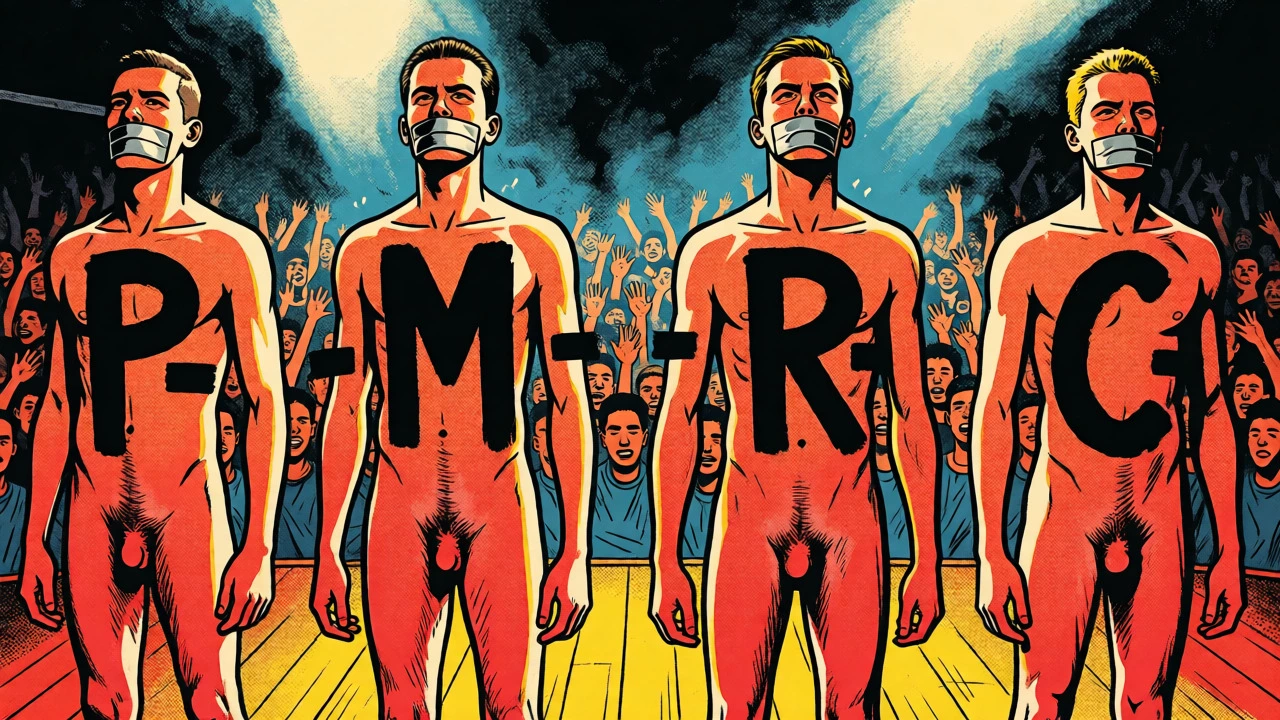

Imagine standing on a stage at Lollapalooza in 1993. The crowd is roaring, expecting noise. Instead, four men walk out completely naked. They have tape over their mouths and "P-M-R-C" painted across their chests. They stand there for fifteen minutes, saying nothing, doing nothing. That was Rage Against the Machine (RATM). It wasn't just a stunt; it was a declaration of war against censorship and the music industry itself. This band didn't just play rock music; they weaponized it. If you think the 1990s were all about flannel shirts and apathy, you haven't heard the sound of anger channeled into perfect rhythm.
The Unlikely Formation of a Political Powerhouse
Rage Against the Machine formed in Los Angeles in 1991, but its members came from very different worlds. You had Zack de la Rocha, a vocalist with roots in hardcore punk and a degree in sociology, and Tom Morello, a guitarist who loved hip-hop and played in a hair-metal band called Lock Up. They met after their previous bands broke up. De la Rocha brought in his childhood friend, bassist Tim Commerford, while Morello recruited drummer Brad Wilk. Their goal was almost comical: they wanted to make music so extreme that no record label would sign them and no club would book them. Obviously, that plan backfired spectacularly.
Their self-titled debut album dropped in November 1992. It wasn't an instant smash hit. In fact, sales started slow. But then something happened. They toured with Lollapalooza in 1993, and people saw them live. The energy was undeniable. By the end of that year, sales jumped from 75,000 copies to nearly 400,000. Eventually, the album went triple-platinum. How do you explain that? It’s simple. People were tired of vague metaphors. De la Rocha shouted directly about police brutality, prison systems, and corporate greed. He named names. He pointed fingers. And Morello’s guitar made those words feel like physical blows.
Morello’s Guitar: No Samples, Just Noise
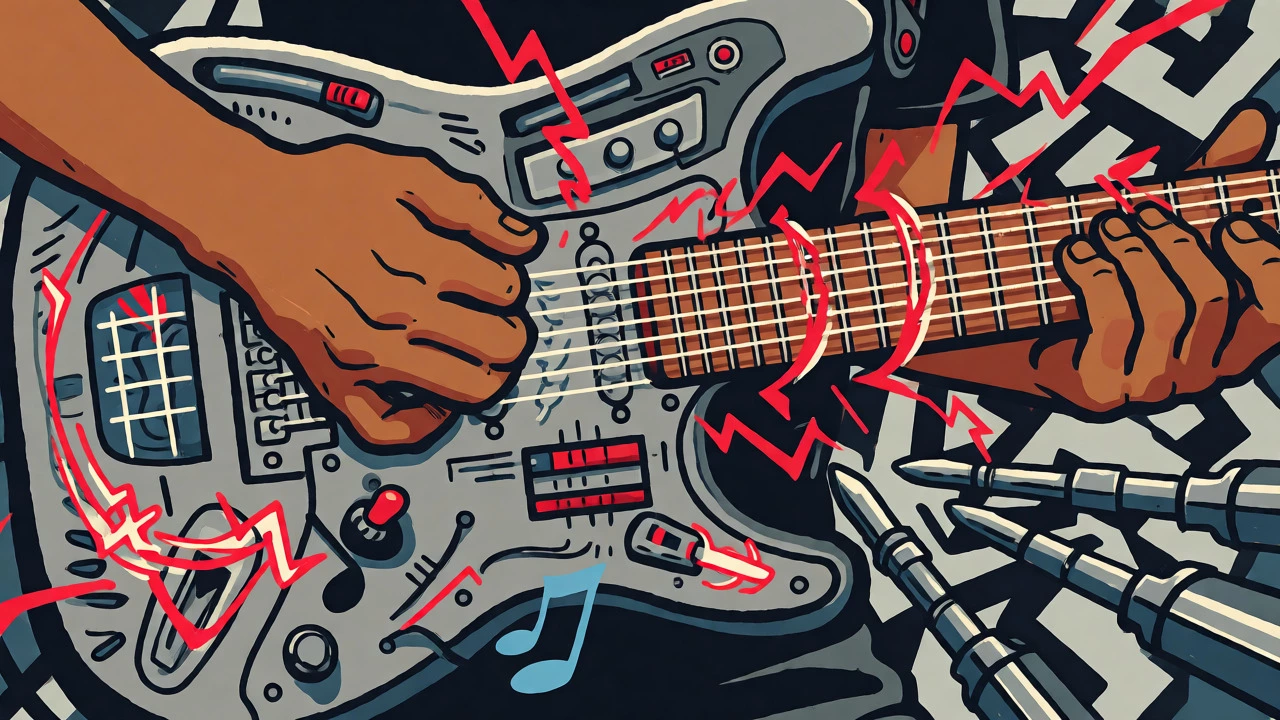
If you listen to RATM records closely, you might think there are synthesizers or turntable scratches. There aren’t. Tom Morello used only two guitars, an amplifier, and a handful of effects pedals. He treated the guitar like a DJ deck. He used toggle switches to cut the signal on and off rapidly, creating rhythmic stuttering sounds. He scraped strings with picks, used feedback loops, and manipulated whammy bars to mimic sirens and machine guns. This technique created a sonic texture that felt electronic but was entirely analog. It was innovative because it rejected the polished production standards of the early 90s. Morello believed that breaking musical rules mirrored breaking political rules. Why accept standard chord progressions if we reject standard social structures?
The riffs themselves became anthems. Think of the descending, syncopated riff in "Killing in the Name." It’s not complex theory; it’s pure tension. Or the percussive, wah-wah driven groove in "Bulls on Parade." These weren't just background music for singing along. They were confrontational spaces. The repetition forced the listener to pay attention. When Morello stopped playing abruptly, the silence hit as hard as the noise. This interplay between rhythm and silence gave de la Rocha’s lyrics room to breathe and strike.
Lyrics as Legal Briefs and Protest Signs
Zack de la Rocha didn’t write songs; he wrote manifestos set to music. His lyrics were dense, rhythmic, and unapologetically specific. Take "Killing in the Name," released in 1992. It directly addresses institutional racism within law enforcement. The line "Some of those that work forces are the same that burn crosses" leaves no room for misinterpretation. Then there’s "Bombtrack," which critiques foreign policy and military intervention. Or "Wake Up," which attacks the education system for producing compliant workers rather than critical thinkers.
By the time Evil Empire arrived in 1996, the band had sharpened its focus. The title itself references George Orwell’s concept of state propaganda. Songs like "Vietnow" attacked conservative media fearmongering, while "People of the Sun" highlighted Indigenous resistance in Mexico, specifically supporting the Zapatista movement. The album debuted at No. 1 on the Billboard 200. A politically radical album topping the pop charts? That was unheard of. Critics called it potentially the most politically radical album ever to hit number one. They weren’t wrong.
Their third studio album, The Battle of Los Angeles (1999), continued this trend. "Guerrilla Radio" won a Grammy for Best Hard Rock Performance, criticizing media control and political manipulation. "Sleep Now in the Fire" targeted capitalism and imperial history. Each song acted as a specific case study in systemic failure. For fans, these tracks provided vocabulary for their own frustrations. You didn’t just hear the song; you understood the argument behind it.
Activism Beyond the Stage
Many bands claim to be political. RATM actually did the work. They didn’t just sing about sweatshops; they marched against them. In 1997, Tom Morello was arrested during a civil disobedience protest against Guess? clothing company for using sweatshop labor. The campaign slogan was "Rage Against Sweatshops." This wasn't a photo op; it was legal trouble. It showed commitment.
The band also championed political prisoners. They fought for the retrial of Mumia Abu-Jamal, a journalist sentenced to death row in Pennsylvania. In 1999, a benefit concert associated with the Abu-Jamal campaign raised $80,000 for his defense fund. They supported Leonard Peltier, an Indigenous activist imprisoned since the 1970s. They backed the Zapatista Army of National Liberation in Mexico. This activism blurred the line between entertainment and advocacy. Fans weren’t just consumers; they were part of a movement. The band used their platform to amplify voices that mainstream media ignored.
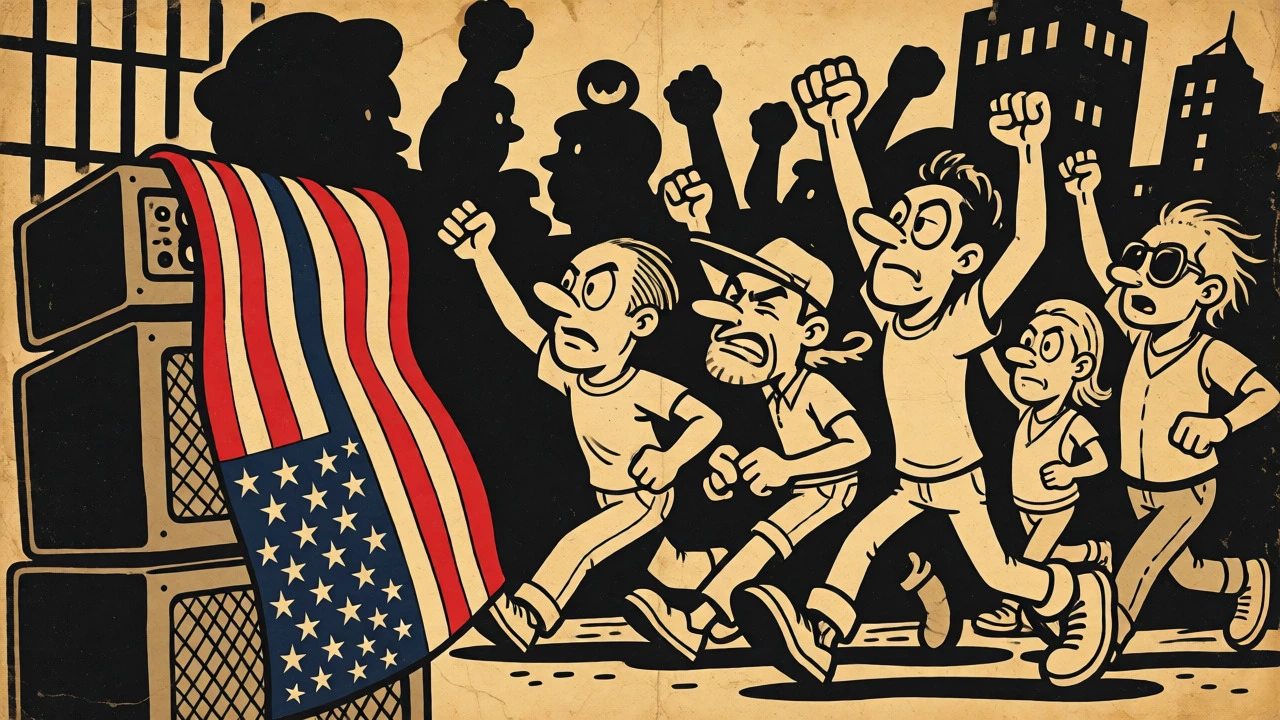
Consider their appearance on Saturday Night Live. They hung upside-down American flags from their amplifiers. In U.S. protocol, an upside-down flag signals distress. It was a subtle but sharp critique of nationalism. At the 1999 MTV Video Music Awards, they used their stage time to protest commercialism. Every public appearance was an opportunity to challenge the medium itself. They criticized the very industry that paid them, creating a fascinating paradox.
The Paradox of Corporate Rebellion
Here is the elephant in the room: Rage Against the Machine signed with Epic Records, a division of Sony, a massive global corporation. Critics argued this was hypocritical. How can an anti-capitalist band profit from capitalism? The band acknowledged this tension. They viewed the major label system as a distribution network, not an ideological home. They used the resources of a multinational conglomerate to disseminate songs attacking that exact conglomerate’s values.
This contradiction fueled their identity. It kept them honest. If they had stayed independent, they might have remained a niche act. By entering the mainstream, they forced millions of casual listeners to confront uncomfortable truths. Was it selling out? Or was it infiltration? Most fans sided with infiltration. The band maintained creative control, refusing to soften their message for radio play. The rawness of their sound proved that commercial success didn’t require compromise.
Legacy of the 1990s Era
The original lineup split in 2000 when Zack de la Rocha left to pursue solo projects. The remaining members eventually formed Audioslave with Chris Cornell. But the 1990s era remains definitive. Three albums-Rage Against the Machine, Evil Empire, and The Battle of Los Angeles-created a template for rap-rock and nu metal. Bands like Limp Bizkit and Linkin Park followed, though few matched RATM’s lyrical depth.
Today, their relevance feels urgent. Issues of police violence, economic inequality, and media bias haven’t disappeared. Listening to "Killing in the Name" in 2026 hits just as hard as it did in 1992. The band proved that rock music could be intellectually rigorous and physically explosive. They didn’t ask for permission to speak truth to power. They screamed it until everyone listened.
| Album Title | Release Year | Peak Chart Position | Primary Political Focus | Standout Track |
|---|---|---|---|---|
| Rage Against the Machine | 1992 | No. 45 (Billboard 200) | Police brutality, education, freedom | Killing in the Name |
| Evil Empire | 1996 | No. 1 (Billboard 200) | Military-industrial complex, class inequality | Bulls on Parade |
| The Battle of Los Angeles | 1999 | No. 1 (Billboard 200) | Media control, imperialism, capitalism | Guerrilla Radio |
Did Rage Against the Machine use samples in their music?
No, they did not use samples, keyboards, or synthesizers. All sounds, including those resembling turntable scratches or electronic textures, were produced by Tom Morello using electric guitars, amplifiers, and effects pedals like wah-wah, delay, and phaser.
Why did Rage Against the Machine appear naked at Lollapalooza?
They performed naked with tape over their mouths and "P-M-R-C" painted on their chests to protest the Parents Music Resource Center (PMRC) and music censorship. It was a visual statement against silencing artists.
What was the significance of the name "Evil Empire"?
The term invokes language often used in political propaganda, notably popularized by Ronald Reagan to describe the Soviet Union, but here repurposed to critique U.S. domestic and foreign policy. It reflects the band's view of state authority and corporate power.
How did Rage Against the Machine support political prisoners?
The band actively campaigned for Mumia Abu-Jamal and Leonard Peltier. They organized benefit concerts, such as one in 1999 that raised $80,000 for Abu-Jamal's defense, and frequently mentioned their cases in interviews and lyrics.
Is Rage Against the Machine still active?
The original lineup reunited for tours in the 2000s and again in recent years. However, their classic period of recording three studio albums ended in 1999, with Zack de la Rocha departing in 2000 before later reunions.