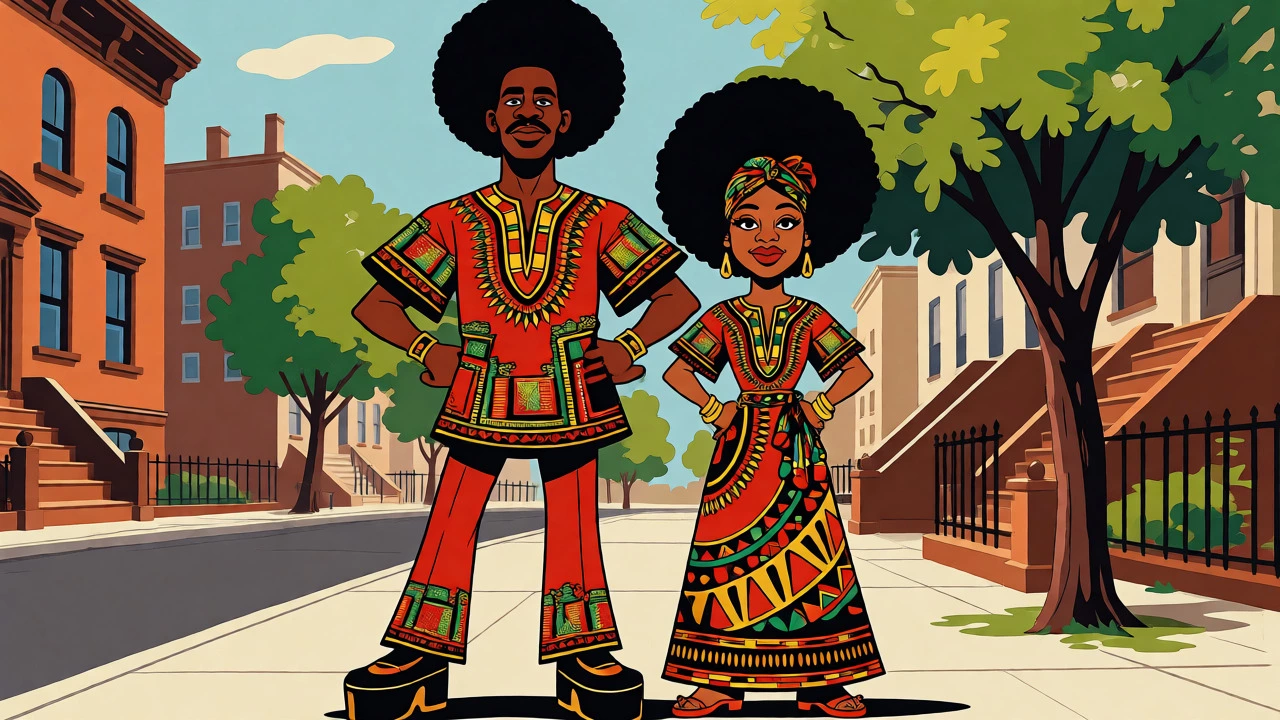

Imagine walking into a room where the air hums with funk basslines and the floor shakes from platform shoes. You’re not just hearing music; you’re seeing it. In the 1970s, R&B fashion wasn’t just about looking good-it was a loud, glittering declaration of identity. It combined sharp tailoring with wild sequins, African heritage with space-age fantasy, and political pride with pure spectacle. This era didn’t have a single uniform. Instead, it had a visual language that helped Black performers and audiences claim visibility, elegance, and power during a time of massive cultural shift.
The Political Roots: Dashikis and Natural Hair
You can’t understand the sparkle without understanding the struggle. Before the disco balls spun, the late 1960s and early 1970s were defined by the Civil Rights and Black Power movements. Clothing became a proxy battle for identity. The dashiki is a perfect example. This loose-fitting tunic, derived from Yoruba traditions in West Africa, became a staple for men and women who wanted to signal their connection to Pan-Africanism and reject Eurocentric beauty standards.
Wearing an Afro, a natural hairstyle celebrated for its volume and texture, wasn’t just a hair choice. It was a statement. As noted by the Smithsonian’s National Museum of American History, these styles were part of a broader "Black is Beautiful" movement. They challenged the idea that straightened hair and Western suits were the only paths to respectability. When a performer stepped on stage in a dashiki or with a large Afro, they were bringing the political street into the entertainment venue. This fusion made every performance a potential act of resistance and affirmation.
The Performance Suit: James Brown’s Engineering of Style
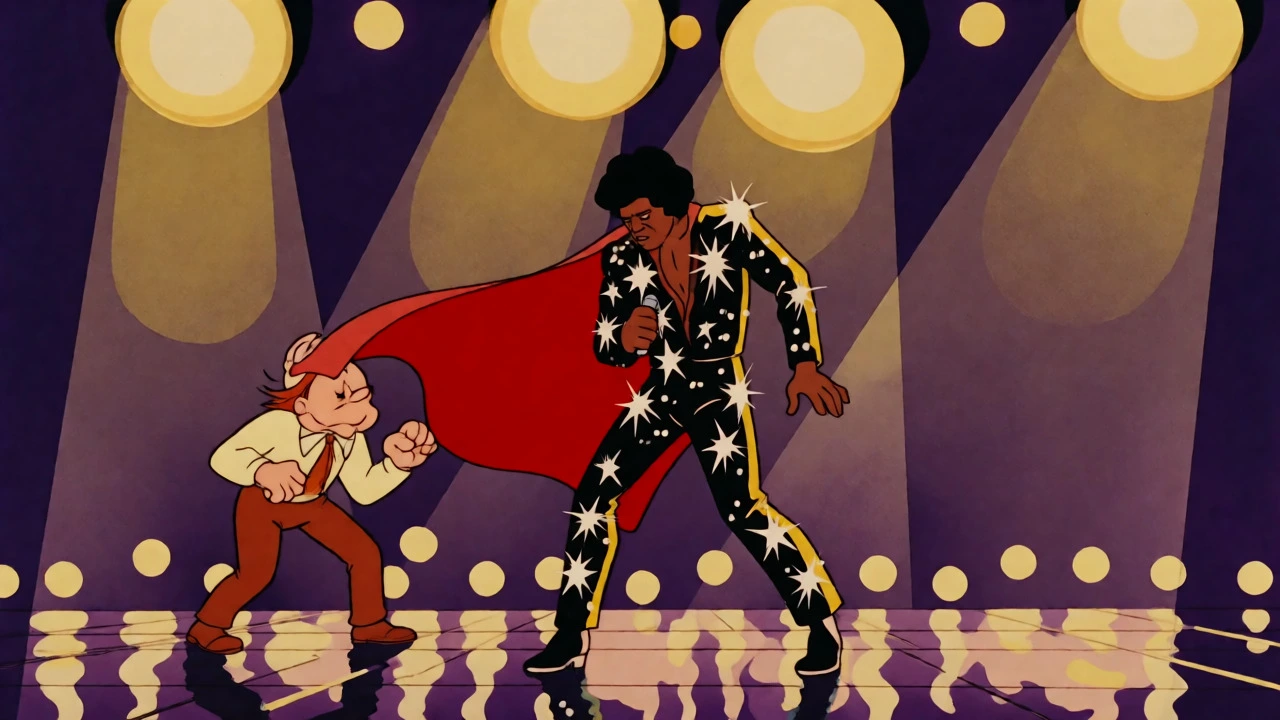
If the dashiki was political, the suit was theatrical. Enter James Brown. He didn’t just wear suits; he engineered them for chaos. Known as the "Godfather of Soul," Brown understood that his clothes needed to survive sweat, splits, and high-energy dance moves while catching the spotlight.
Brown’s famous "Cape Routine" turned a garment into a narrative device. During concerts, emcee Danny Ray would drape a red sequined polyester cape over Brown when he appeared exhausted. Brown would then dramatically reject the cape, rising again to dance. This cycle heightened audience anticipation. But behind the scenes, the engineering was intense. Accounts describe tight suits with extra fabric at the arms and crotch to allow for athletic movement without tearing. Traveling seamstresses from Brown’s hometown in Georgia repaired garments repeatedly during tours. His wardrobe included over 2,000 uniforms, with up to 50 suits on tour at any given time. This wasn’t vanity; it was durability. The suit became a tool for choreography, proving that formalwear could be flexible, durable, and deeply expressive.
Feminine Glamour: The Supremes and Diana Ross
While men pushed boundaries with capes and chains, women developed a parallel language of coordinated glamour. Group harmony was key. The Supremes set the standard for this aesthetic. Their outfits weren’t just bought off the rack; they were constructed through specialized labor. Designers like Michael Travis worked with embroidery businesses to create three-dimensional costumes using beads, sequins, and intricate stitching.
Diana Ross’s transition to a solo career marked a shift toward even more elaborate individuality. Her collaborations with designer Bob Mackie transformed television appearances into fashion spectacles. Mackie’s use of sequins and metallic fabrics created gowns that moved with light and sound. This style was elegant but also highly constructed. It showed that Black femininity could be sensual, powerful, and commercially viable without sacrificing sophistication. The coordination among group members signaled unity and professionalism, while the individual shine highlighted star power. It was a delicate balance of community and celebrity.
Afrofuturism and Cosmic Clothing
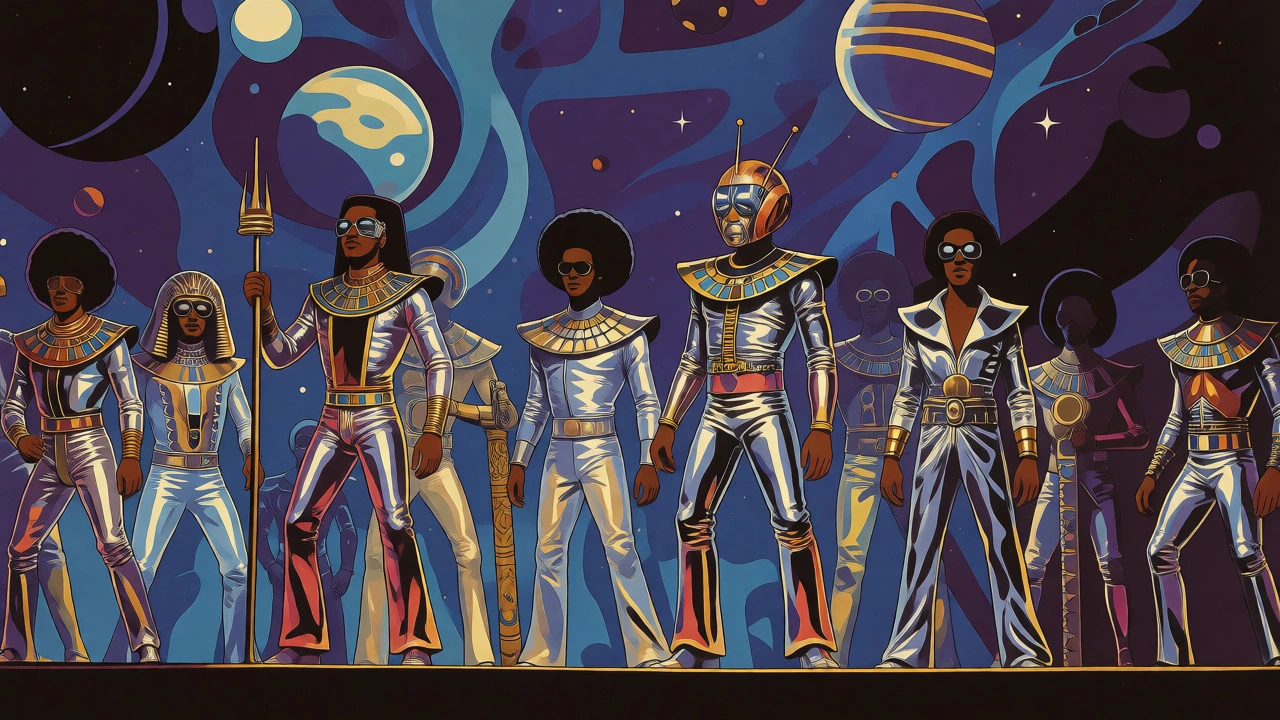
By the mid-1970s, some artists looked beyond Earth entirely. Bands like Parliament-Funkadelic and Earth, Wind & Fire embraced Afrofuturism, blending science fiction imagery with African diasporic heritage. They wore silver jumpsuits, chrome-plated armor, and Egyptian-inspired accessories.
This wasn’t just sci-fi cosplay. It connected Black performers to ancient African history and imagined futures. Designer Larry LeGaspi’s studio, Moonstone, created futuristic "Space Deco" clothing for these acts. The visuals suggested that Black people belonged in the cosmos, free from earthly racial constraints. Nona Hendryx of Labelle wore chrome space suits that became iconic symbols of this movement. These costumes used reflective materials to catch stage lights, turning the body into a source of energy. It was a way to assert spiritual power and technological advancement, challenging stereotypes by placing Black bodies in narratives of exploration and liberation.
Institutionalizing the Look: The Wiz and Disco Crossover
The 1975 Broadway production of The Wiz brought this visual language to a mainstream institutional stage. Geoffrey Holder, the Trinidadian-American director and costume designer, incorporated African diasporic elements into the costumes. The Wizard’s ensemble, now held in the Smithsonian, features a voluminous cape made of synthetic fiber, fur, sequins, and rhinestones.
Simultaneously, disco culture emerged from Black, Latino, and queer clubs in New York. Disco fashion overlapped heavily with R&B and funk: wide collars, flared trousers, satin shirts, and platform shoes became ubiquitous. While disco eventually crossed over to mainstream white audiences, its roots were in marginalized communities seeking freedom and inclusivity. The crossover expanded the commercial reach of these aesthetics but sometimes detached them from their original cultural context. Still, the vocabulary remained shared. A platform shoe could signify club coolness, stage dominance, or everyday street style, depending on who wore it and where.
Everyday Style vs. Stage Spectacle
Not everyone was wearing sequins. For many, everyday style blended denim, tennis shoes, and casual dresses with occasional nods to heritage. Streetwear rose in the 1970s as a reaction to both formal expectations and political movements. Denim jackets, bell-bottom jeans, and simple jewelry allowed ordinary people to participate in the broader cultural conversation. The line between performer and audience was porous. Album covers, TV shows, and magazines circulated images of stars, which fans adapted to their budgets and lives. A dashiki might be worn to a church service, while a platform shoe might be saved for Saturday night. This range allowed the decade’s fashion to communicate authenticity, aspiration, and belonging simultaneously.
| Element | Description | Cultural Significance |
|---|---|---|
| Dashiki | Loose tunic with vibrant patterns | Pan-African pride, rejection of Eurocentric norms |
| Sequined Cape | Heavy, reflective fabric often used in routines | Theatrical drama, vulnerability, and resilience |
| Platform Shoes | Elevated soles, often colorful or metallic | Status, height, and dance functionality |
| Afro | Natural, rounded hairstyle | Political statement, "Black is Beautiful" |
| Jumpsuit | One-piece garment, often metallic or tight-fitting | Modernism, gender fluidity, and stage mobility |
Why It Matters Today
The influence of 1970s R&B fashion hasn’t faded. Contemporary artists continue to draw on this era for inspiration. The concept of Black dandyism-the strategic use of clothing to assert dignity and creativity-is central to modern discussions of Black style. Museums like the Metropolitan Museum of Art have exhibited these themes, highlighting how tailoring and embellishment served as tools for identity formation.
When you see a modern rapper in a tailored suit or a pop star in a metallic bodysuit, you’re seeing echoes of James Brown, Diana Ross, and George Clinton. The 1970s taught us that fashion is never just superficial. It’s a way to tell your story, claim your space, and challenge the world’s expectations. Whether through a simple Afro or a feathered cape, the message remains clear: we are here, we are visible, and we define our own image.
What is the significance of the dashiki in 1970s R&B culture?
The dashiki was a symbol of Pan-Africanism and Black Pride. Derived from West African traditions, it allowed Black Americans to visually connect with their African heritage and reject Eurocentric fashion norms during the Black Power movement.
How did James Brown use fashion in his performances?
James Brown used clothing as a choreographic tool. His famous "Cape Routine" involved draping a heavy sequined cape over him to simulate exhaustion, creating dramatic tension before he returned to dance. His suits were also engineered for durability, with extra fabric to withstand vigorous movement.
What role did platforms shoes play in 1970s R&B fashion?
Platform shoes were worn by both men and women across R&B, funk, and disco scenes. They added height, enhanced stage presence, and provided stability for dancing. They also bridged the gap between formal tailoring and casual streetwear, becoming a unifying symbol of the era's aesthetic.
How did Afrofuturism influence 1970s R&B costumes?
Bands like Parliament-Funkadelic and Earth, Wind & Fire used cosmic imagery, silver fabrics, and space-themed designs to place Black performers in futuristic narratives. This challenged racial stereotypes by associating Black culture with technology, exploration, and ancient wisdom.
Was 1970s R&B fashion only about expensive stage outfits?
No, it encompassed a wide range of styles. While performers wore custom sequined jumpsuits, everyday people adopted accessible trends like denim, Afros, and dashikis. This democratized the aesthetic, allowing ordinary citizens to participate in the broader cultural expression of Black pride and style.