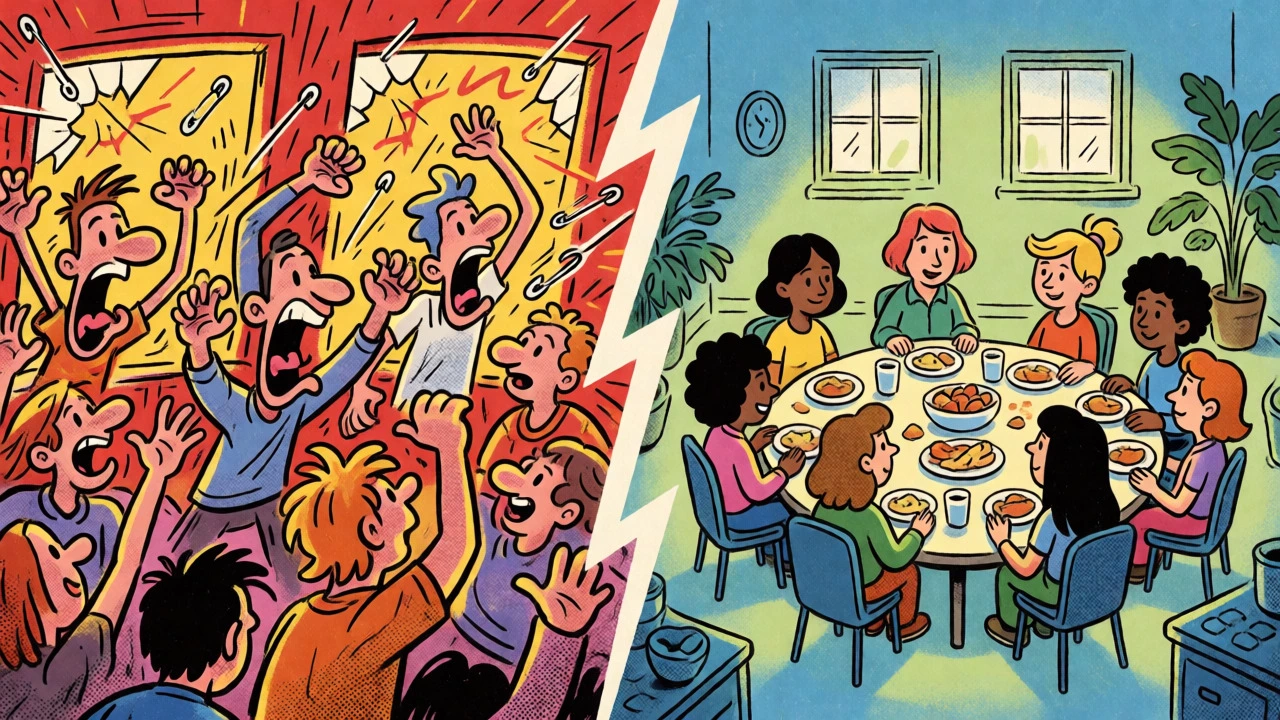

You hear the word "anarchy" and you probably picture chaos. Broken windows, screaming fans, maybe a safety pin through a nose. That’s the pop-culture version, fueled by headlines about riots and the Sex Pistols’ catchy but confusing anthem. But if you actually dig into the roots of punk is a rock music genre that emerged in the mid-1970s, characterized by short songs, aggressive instrumentation, and an anti-establishment ethos, you’ll find something far more structured than disorder. For decades, punk scenes have functioned as living laboratories for anarchism is a political philosophy advocating for stateless societies based on voluntary associations and mutual aid. It’s not just noise; it’s a vernacular political philosophy where the way you organize a gig matters as much as the lyrics you sing.
The Misunderstood Word: Chaos vs. Order
Let’s clear up the biggest misconception first. When John Lydon (Johnny Rotten) screamed "I am an antichrist / I am an anarchist," he wasn’t necessarily proposing a detailed policy platform. He was selling shock value. Mainstream media latched onto this, equating punk with nihilistic destruction. But real political anarchism, drawing from thinkers like Peter Kropotkin is a Russian philosopher and geographer who advocated for mutual aid as a factor in evolution and social organization, isn’t about blowing things up for fun. It’s about building systems without bosses.
Kropotkin described anarchism as a "no-government system of socialism." Think about that. No government doesn’t mean no rules; it means no hierarchy imposed from above. Punk adopted this core tenet early on. While the Sex Pistols used "anarchy" as a rhetorical weapon to provoke the British establishment, later bands turned it into a blueprint for daily life. The shift happened when musicians stopped asking "What can we destroy?" and started asking "How do we live differently right now?" This transition marked the birth of true anarcho-punk is a subgenre of punk rock that combines punk music with anarchist politics, emphasizing direct action and DIY ethics.
Crass and the Blueprint of Dial House
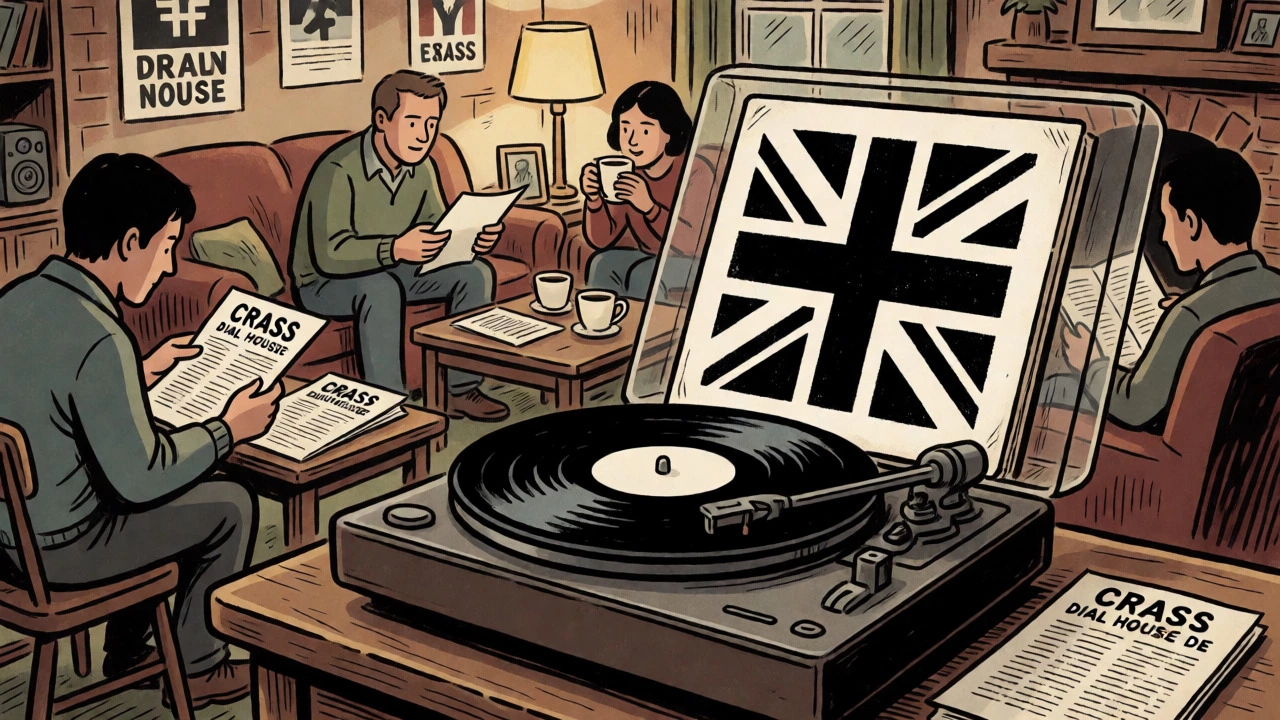
If you want to understand how punk became political philosophy, look at Crass is a British anarcho-punk band formed in 1977, known for their pacifist stance and communal living arrangements. Founded in 1977 by Penny Rimbaud, Gee Vaucher, and Steve Ignorant, Crass didn’t just play gigs; they lived their ideology. They operated out of Dial House is a commune and artist collective in Essex, England, that served as the base for Crass and other political artists, a long-running open-house community in Essex. Here, resource sharing and non-hierarchical decision-making weren’t abstract concepts-they were Tuesday morning chores.
Crass released their debut album, "The Feeding of the 5000," in 1978. Major labels refused to touch them because of their controversial content, so they founded their own imprint, Crass Records is an independent record label founded by the band Crass to maintain artistic control and low prices. This move was revolutionary. By cutting out corporate middlemen, they kept records cheap and accessible. Their artwork, often created by Vaucher, featured black-and-white stencils that mashed together symbols of oppression-the Christian cross, the swastika, the Union Jack-into a single logo of opposition. Every sleeve came packed with essays quoting Kropotkin or Emma Goldman. They turned vinyl records into mobile pamphlets, proving that art could be a primary vehicle for political education.
DIY: The Practice of Prefigurative Politics
The most tangible legacy of punk’s anarchy is the DIY ethic is the practice of creating, producing, and distributing cultural goods independently of major corporations. In academic terms, this is called "prefigurative politics." The idea is simple: if you want a free society, you must create free relationships now. You don’t wait for the revolution to start being egalitarian. You start it tonight, in the basement venue where you’re setting up chairs.
Punk scenes rejected the professionalization of culture. Why pay $50 for a concert ticket when you can organize a show in a squatted warehouse for five bucks? Why hire a marketing firm when you can photocopy a zine and mail it to friends? This approach mirrored anarchist critiques of expertise. If anyone can pick up a guitar and learn three chords, then cultural production belongs to everyone, not just the elite. Bands like Flux of Pink Indians is a British anarcho-punk band active in the early 1980s, known for their radical politics and DIY approach and Conflict is a British anarcho-punk band formed in 1981, associated with animal rights and veganism helped spread this model across the UK and beyond.
This wasn’t just aesthetic. It was economic resistance. By boycotting major labels and organizing benefit gigs for strikers or prisoners, punks practiced mutual aid is the exchange of resources and services for mutual benefit, a concept central to anarchist theory. They built infrastructures of dissent-infoshops, food cooperatives, and autonomous social centers-that operated outside state control. These spaces allowed people to experience self-management firsthand, learning democratic consensus not in a classroom, but while arguing over whether to book a crust band or a hardcore group.
Global Echoes: From Belfast to Indonesia
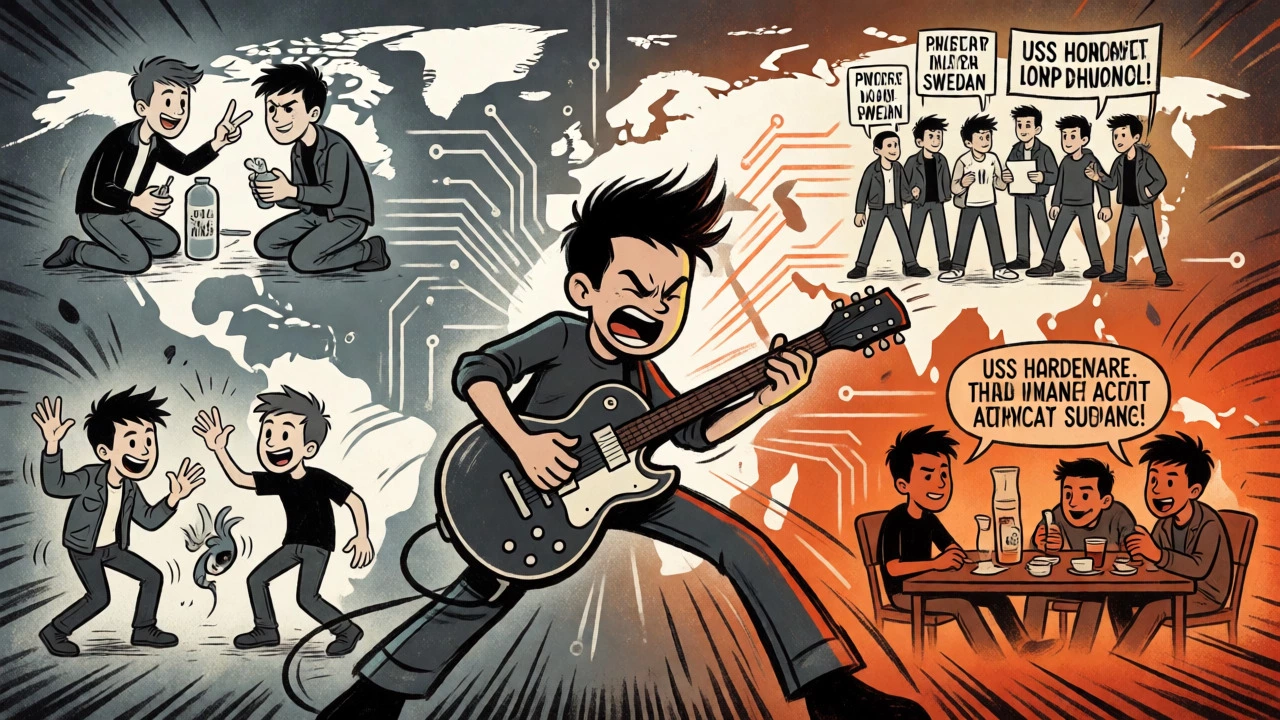
Punk’s anarchy wasn’t confined to London basements. It traveled, adapting to local struggles. In Northern Ireland during the Troubles, punk provided an anti-sectarian space is a social environment where individuals from conflicting nationalist and unionist communities interact equally. Young people who refused to align with either Catholic nationalists or Protestant unionists found refuge in punk venues. There, dress codes and behaviors were egalitarian, rejecting the tribal markers of sectarian violence. As scholars Rachel Smith and Janet Banfield note, this was an "attitudinal anarchist utopia"-living out peace and equality in the present, rather than waiting for politicians to sign a treaty.
Similarly, in Sweden, bands like Ebba Grön is a Swedish punk band active from 1977 to 1983, known for their left-wing political lyrics attacked private property and parliamentary systems directly. In the United States, hardcore punk is a subgenre of punk rock that developed in the late 1970s and early 1980s, characterized by faster tempos and more aggressive sounds served as a civic education hub. Teenagers in San Francisco or Washington D.C. encountered ideas about imperialism and labor rights through Dead Kennedys or Minor Threat, often before they learned them in school. More recently, ethnographies of punk scenes in Poland and Indonesia show how these communities use anarchist frameworks to critique both post-state-socialist authoritarianism and neoliberal capitalism. The core message remains consistent: challenge authority, build community, act directly.
The Tension: Pacifism vs. Insurrection
Not all punks agree on how to achieve freedom. This internal debate mirrors broader splits within anarchist history. On one side, you have the pacifists, inspired by figures like Gandhi and Tolstoy, who believe violence replicates the oppression they fight. Crass famously adopted this stance, using satire and direct action without physical aggression. They believed that smashing a window didn’t smash the system; changing minds did.
On the other side, there are insurrectionary strands, particularly in crust punk is a subgenre of punk rock that blends elements of hardcore punk and heavy metal, often associated with anarchist politics and militant anti-fascist groups. These participants argue that structural violence requires confrontational responses. Groups like Class War in the UK or CrimethInc in the US represent different tactical approaches-one focused on class struggle and public disruption, the other on lifestyle autonomy and nomadic existence. Neither side has a monopoly on "true" punk anarchy. Instead, this tension keeps the philosophy dynamic, preventing it from becoming a rigid dogma. It forces constant negotiation about what resistance looks like in any given moment.
Why It Still Matters Today
In 2026, you might wonder if punk’s political relevance has faded. After all, safety pins are sold at Target, and "punk" is often just a fashion statement. But the underlying philosophy persists in new forms. Anthropologist David Graeber argued that punk is unique among musical genres for consistently condemning all forms of oppression-from racism to militarism. That spirit lives on in modern movements that prioritize horizontal organization and direct democracy.
When you see a community garden run by volunteers, a mutual aid network delivering groceries during a crisis, or a protest organized via decentralized apps without a single leader, you’re seeing punk’s anarchy in action. It’s less about the leather jacket and more about the refusal to accept that "someone else" will fix things. Punk taught a generation that power doesn’t need permission. You don’t need a degree to write a zine, a million dollars to press a record, or a government permit to occupy a space. You just need to start.
| Feature | Mainstream Punk (e.g., Sex Pistols) | Anarcho-Punk (e.g., Crass) | Hardcore Punk (e.g., Dead Kennedys) |
|---|---|---|---|
| View of Anarchy | Rhetorical shock tactic; synonymous with chaos | Political philosophy; anti-hierarchy and mutual aid | Anti-authoritarian skepticism; varied political alignment |
| Organizational Model | Major label contracts; traditional management | Self-run labels (Crass Records); communes | Independent labels; DIY touring networks |
| Action Strategy | Nihilistic refusal; negation | Pacifist direct action; prefigurative politics | Satirical critique; community mobilization |
| Aesthetic Focus | Fashion; provocation; spectacle | Stencil art; political essays; uniformity | Aggressive sound; fast tempo; raw energy |
Is punk inherently anarchist?
No. While punk is strongly associated with anarchism, many punk bands identify with Marxism, socialism, liberalism, or no specific political ideology. However, the DIY ethic and anti-authoritarian attitude common in punk resonate deeply with anarchist principles, leading scholars to describe punk as a "subculture of anarchism" even when individual bands aren't doctrinally anarchist.
What is the difference between "anarchy" and "anarchism" in punk context?
In mainstream punk (like the Sex Pistols), "anarchy" was often used as a synonym for chaos, disorder, or rebellion against norms without a specific political program. In anarcho-punk (like Crass), "anarchism" refers to a specific political philosophy advocating for stateless, non-hierarchical societies based on mutual aid and voluntary cooperation. The latter involves concrete practices like DIY production and communal living.
How did Crass influence political activism?
Crass integrated music with direct action. They organized benefit gigs for striking miners, supported anti-nuclear campaigns, and participated in "Stop the City" protests in London. By releasing affordable records on their own label and including political literature in their sleeves, they made anarchist theory accessible to young people, effectively serving as a grassroots educational tool for political engagement.
Can you explain the DIY ethic in simple terms?
DIY stands for "Do It Yourself." In punk, it means taking control of your own creative and political output without relying on large corporations or governments. This includes recording your own albums, printing your own flyers, booking your own tours, and organizing your own shows. It’s rooted in the belief that anyone can participate in cultural production, challenging the idea that you need professional training or money to make art or enact change.
Did punk help spread anarchism globally?
Yes. Ethnographic studies show that punk scenes in countries like Poland, Indonesia, and Brazil introduced local youth to anarchist concepts such as anti-fascism, mutual aid, and direct action. Through zines, international tours, and shared aesthetics, punk acted as a transnational network for disseminating political ideas, often reaching audiences who had little access to formal leftist organizations.


