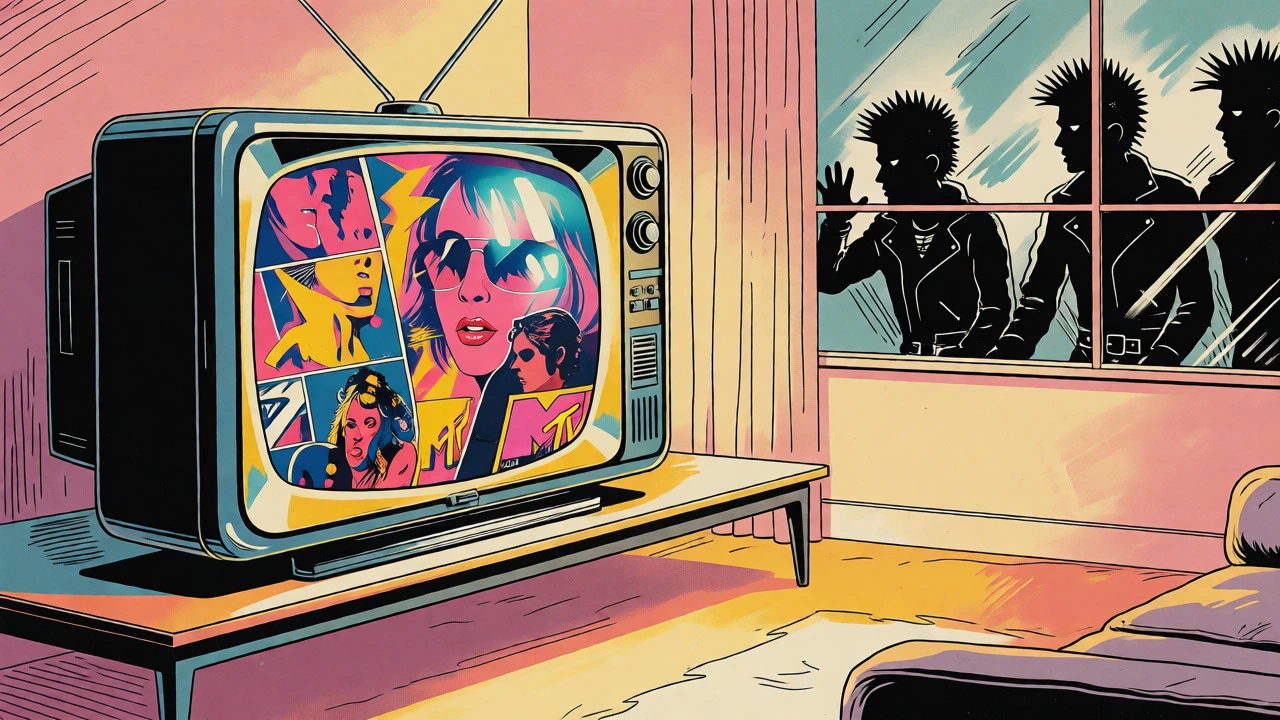

You probably think MTV and punk were natural enemies. One was a slick corporate machine selling rebellion to suburban teens; the other was three chords, safety pins, and a loud "no" to the establishment. But here’s the twist: MTV didn’t just ignore punk-it selectively absorbed it. The channel gave punk bands barely any screen time compared to pop stars, yet that tiny window of exposure changed everything. It turned local scenes into national phenomena and proved you could be anti-commercial while still being watched by millions.
The Gatekeeper Problem
When MTV launched on August 1, 1981, it wasn’t an open door for every band with a guitar. It was a curated showroom. The playlist leaned heavily toward new wave, hard rock, and polished pop because those genres fit the visual language advertisers wanted. Punk, especially American hardcore, was messy, fast, and often deliberately ugly. Bands like Black Flag or Minor Threat rarely had the budget for high-production videos, and many refused to play the game entirely. This created a bottleneck. If you weren’t backed by a major label willing to spend thousands on a video, you likely didn’t exist on television.
This wasn’t just about money. It was about ideology. Punk’s DIY ethic clashed with MTV’s need for repeatable, marketable images. Historian Kevin Mattson points out that MTV operated within Reagan-era consumer culture, where "cool" was a commodity. MTV could sell the look of rebellion-leather jackets, spiked hair, sneers-but it struggled with the actual politics. Direct criticism of capitalism or religion often got cut. So, the exposure punk got was filtered. You saw the attitude, but not always the argument.
Suicidal Tendencies Broke the Barrier
If there is one moment that defines punk’s breakthrough on MTV, it’s Suicidal Tendencies’s video for "Institutionalized." Premiering in 1984, this clip wasn’t just a song performance; it was a short film starring vocalist Mike Muir arguing with his parents. It featured actress Mary Woronov and had a comedic edge that made it palatable for a mass audience. Revolver magazine notes it as the first hardcore video to get regular rotation. Why did it work? Because it translated the chaos of Los Angeles hardcore into a narrative anyone could understand. It showed that punk could be funny, relatable, and visually engaging without losing its street credibility.
| Band | Song | Year | Why It Made It On |
|---|---|---|---|
| Suicidal Tendencies | Institutionalized | 1984 | Narrative structure, comedic tone, major label push |
| Black Flag | TV Party | 1984 | Iconic status, satirical take on media itself |
| The Minutemen | This Ain’t No Picnic | 1984 | Artistic merit, college radio crossover appeal |
| Billy Idol | Dancing With Myself | 1982 | Punk roots packaged as dance-rock, high production value |
Other bands slipped through the cracks too. Black Flag’s "TV Party" aired occasionally, largely because the song mocked television itself-a clever meta-commentary MTV producers found amusing. The Minutemen got some play with "This Ain’t No Picnic," benefiting from their connection to SST Records and the growing respect for their artistic integrity. But these were exceptions. For every video that aired, hundreds remained unseen. The scarcity made each appearance feel monumental to fans who knew how hard it was to get there.
The Late-Night Lifeline: 120 Minutes
Daytime MTV was for hits. Sunday nights were for discovery. In March 1986, MTV premiered 120 Minutes, a two-hour show hosted by Dave Kendall dedicated to alternative, post-punk, and underground acts. This program became the secret weapon for punk’s descendants. It didn’t play mainstream hits; it played Hüsker Dü, Sonic Youth, The Cure, and The Replacements. These bands weren’t getting daytime rotation, but they were getting national visibility.
For viewers in small towns without access to independent record stores or college radio stations, 120 Minutes was a revelation. It connected disparate scenes into a cohesive culture. You could see what kids in Minneapolis, New York, or London were listening to. The show ran until 2000, bridging the gap between the raw energy of 1980s hardcore and the eventual explosion of grunge in the early 1990s. It proved that even limited airtime, if targeted correctly, could build a massive community.
Punk’s Indirect Influence via Crossover Stars
Sometimes punk reached MTV not as itself, but disguised. Billy Idol is the prime example. Formerly of Generation X, he took punk’s aggression and leather aesthetic and wrapped it in synth-pop production. His videos were everywhere. He sold the look of punk to millions who never bought a Dead Kennedys record. Similarly, The Clash used MTV to broadcast political messages, though often softened for general consumption. This "Trojan Horse" strategy allowed punk imagery to permeate mainstream fashion and behavior, even if the underlying music wasn’t strictly hardcore.
Dead Kennedys hated this. Their 1985 track "M.T.V. Get Off the Air" explicitly attacked the network for homogenizing rebellion. They argued that MTV stripped punk of its teeth, turning dissent into a product. And they were right. MTV borrowed the style-the mohawks, the spikes, the anger-but often left behind the substance. Yet, this friction was productive. By critiquing MTV, punk bands forced the conversation about authenticity and commercialism, themes that remain central to music today.
Why Limited Exposure Was Actually Powerful
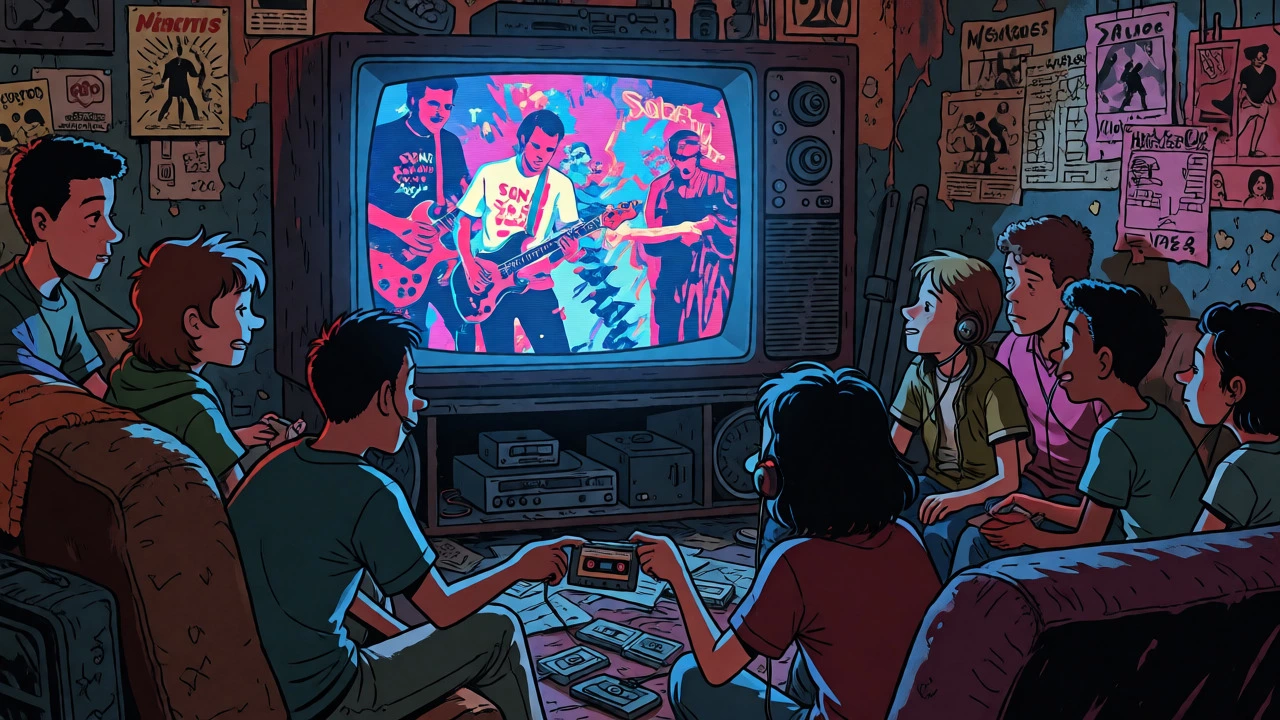
It seems counterintuitive, but the lack of constant exposure helped preserve punk’s mystique. If every hardcore band had been on TV daily, the genre might have lost its edge faster. Instead, seeing a rare clip of Bad Brains or Fishbone felt like discovering a secret. Fans had to work for it, recording tapes off the air or seeking out VHS compilations. This effort deepened engagement. When you finally heard a song on MTV, it mattered more because it was scarce.
Furthermore, MTV’s visual language influenced how punk bands presented themselves. Even if they didn’t make big-budget videos, they understood the power of image. Album art, live performances, and fanzine photos began to reflect a more conscious visual identity. MTV taught everyone, including punks, that how you looked was part of what you said. The channel didn’t just broadcast music; it broadcast identity.
Did MTV actually play punk rock?
Yes, but very sparingly during the day. Most punk and hardcore videos were relegated to late-night slots or special programs like 120 Minutes. Daytime rotation was dominated by new wave, pop, and hard rock. Only a few specific videos, such as Suicidal Tendencies' "Institutionalized," achieved significant daytime play.
What was the first hardcore punk video played on MTV?
While there were earlier appearances, Suicidal Tendencies' "Institutionalized" (1984) is widely cited as the first hardcore video to receive regular rotation on MTV. Its narrative format and comedic elements made it accessible to a broader audience than typical hardcore clips.
Why did punk bands hate MTV?
Many punk bands viewed MTV as a symbol of corporate greed and cultural homogenization. They believed it diluted the political and social messages of punk, turning rebellion into a marketable style. Bands like Dead Kennedys openly criticized MTV for exploiting punk aesthetics while ignoring its anti-capitalist ethos.
How did 120 Minutes help punk music?
Premiering in 1986, 120 Minutes provided a weekly showcase for alternative and underground artists who didn't get daytime airplay. It exposed national audiences to post-punk, college rock, and hardcore-influenced bands like Hüsker Dü and Sonic Youth, helping to build the foundation for the alternative rock explosion of the 1990s.
Did Billy Idol count as punk on MTV?
Billy Idol started in the punk band Generation X but evolved into a pop-rock star. On MTV, he represented the crossover version of punk-adopting the leather, sneer, and attitude but pairing them with polished, radio-friendly production. He introduced punk styling to mainstream audiences who might not have listened to hardcore.
