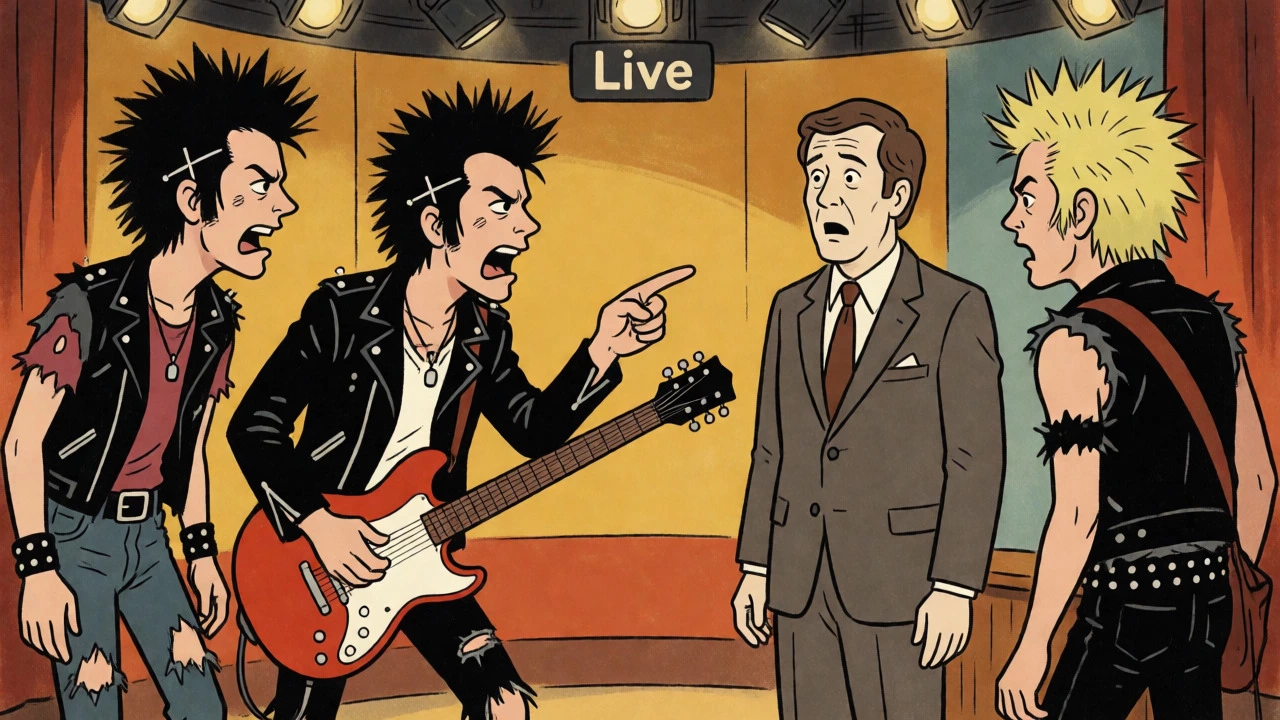

Imagine turning on your television in 1976, expecting a polite chat show, and watching four men with safety pins in their ears swear at the host. That wasn't just a bad interview; it was a cultural detonation. Punk rock didn't just change music in the 1970s; it triggered a societal meltdown that led to bans, boycotts, and a fierce battle over who gets to speak on public airwaves. If you think censorship is a modern problem involving algorithms and social media, look back at the UK and US during the punk era. The backlash against bands like the Sex Pistols and the Ramones reveals how fear of youth culture often outweighed artistic expression.
The Anatomy of a Moral Panic
To understand why people were so angry about three-chord songs, you need to know what a "moral panic" actually is. Sociologist Stanley Cohen coined the term in his 1972 book Folk Devils and Moral Panics. He described a process where society identifies a group-usually young people-as a threat to its core values. The media then amplifies this threat, portraying these "folk devils" as dangerous outsiders, which pressures authorities to step in with stricter controls.
In the mid-1970s, punk became the perfect target for this cycle. Unlike the hippies of the late 60s, who preached peace and love, punks were abrasive, cynical, and openly hostile to authority. They didn't want to hug the system; they wanted to spit on it. This attitude terrified the establishment. News outlets stopped reviewing the music and started reporting on the behavior, clothing, and language of fans. The message was clear: if you listen to this noise, you’re losing your mind-and maybe your morality.
The UK Explosion: When Swearing Broke the Internet (of 1976)
The tipping point in Britain happened on December 1, 1976. The Sex Pistols appeared on Thames Television’s early evening show Today, hosted by Bill Grundy. It was supposed to be a promotional segment for their single Anarchy in the U.K. Instead, it became a national scandal.
Grundy, perhaps trying to provoke a reaction or simply caught off guard, goaded the band. Guitarist Steve Jones snapped, calling Grundy a "dirty old man" and dropping several expletives live on air. At the time, swearing on British TV was rare, especially during family viewing hours. Within 24 hours, tabloids ran headlines like "The Filth and The Fury." The fallout was swift: Grundy was suspended, his show cancelled shortly after, and the Sex Pistols were branded enemies of the state.
This incident didn't just hurt one TV presenter; it galvanized the press to treat punk as a disease. Newspapers like the Daily Mail described punk as "the sickest, seediest step in a rock world," focusing less on the guitar riffs and more on the perceived degeneracy of the scene. By framing punk as a direct assault on British respectability, the media justified the censorship that followed.
The BBC Ban: Silencing God Save the Queen
If the Grundy interview was the spark, the release of God Save the Queen in May 1977 was the explosion. The song was timed perfectly-or terribly-to coincide with Queen Elizabeth II’s Silver Jubilee. The lyrics were blunt: they called the monarchy obsolete and described Britain as a "fascist regime." For a nation preparing to celebrate its royal heritage, this was an insult too far.
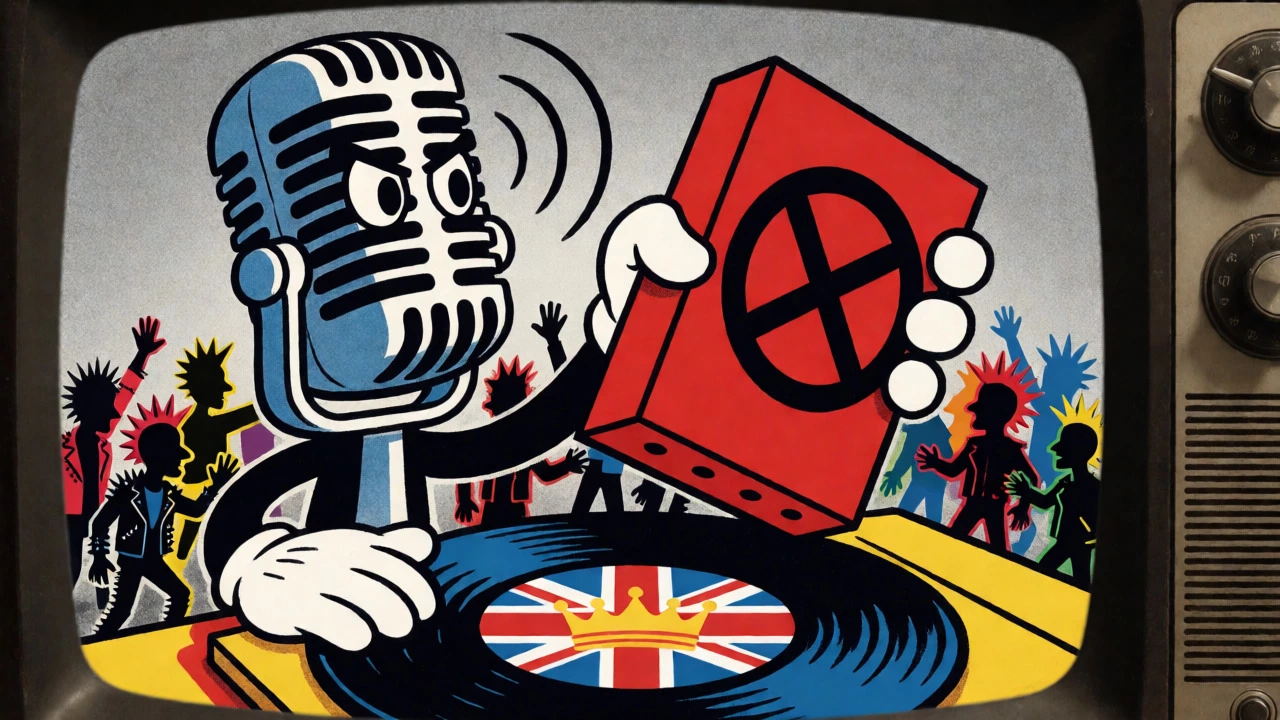
On May 31, 1977, just four days after the single’s release, the BBC instituted a total ban on the track. They weren’t alone; the Independent Broadcasting Authority (IBA) also refused to play it. BBC controller Charles McLelland publicly condemned the song as being in "gross bad taste." The ban was comprehensive, covering both radio and television, effectively erasing the song from legal broadcast channels during the height of the Jubilee celebrations.
But here’s the twist: the ban didn’t stop people from buying the record. In fact, it likely helped. Despite no airplay, God Save the Queen reached number two on the UK Singles Chart. Many fans suspected the chart position was manipulated to keep it out of the number one spot, but the symbolic victory was undeniable. The censorship proved that the establishment was afraid, and for punk fans, fear was the best marketing tool available.
| Event | Date | Entity Involved | Action Taken |
|---|---|---|---|
| Live Swearing Incident | Dec 1, 1976 | Thames Television | Suspension of host Bill Grundy; cancellation of show. |
| BBC Airplay Ban | May 31, 1977 | BBC | Total ban on God Save the Queen due to "bad taste." |
| Radio Blacklist | Early 1970s | FCC (US) | Warning lists for drug references, affecting punk playlists. |
The US Context: Exclusion Instead of Bans
Across the Atlantic, the situation looked different but felt similar. The United States didn’t have a single high-profile ban comparable to the BBC’s prohibition of the Sex Pistols. Instead, American punk faced a quieter, more insidious form of censorship: commercial exclusion.
By the mid-1970s, US regulators had already established a framework for policing rock music. Following controversies in the late 1960s involving bands like The Doors, the Federal Communications Commission (FCC) circulated warning lists of songs suspected of containing drug references. Radio stations, eager to avoid fines or license issues, self-censored aggressively. When punk arrived, bringing with it lyrics about street hustlers, violence, and anti-authoritarian themes, programmers saw risk rather than revenue.
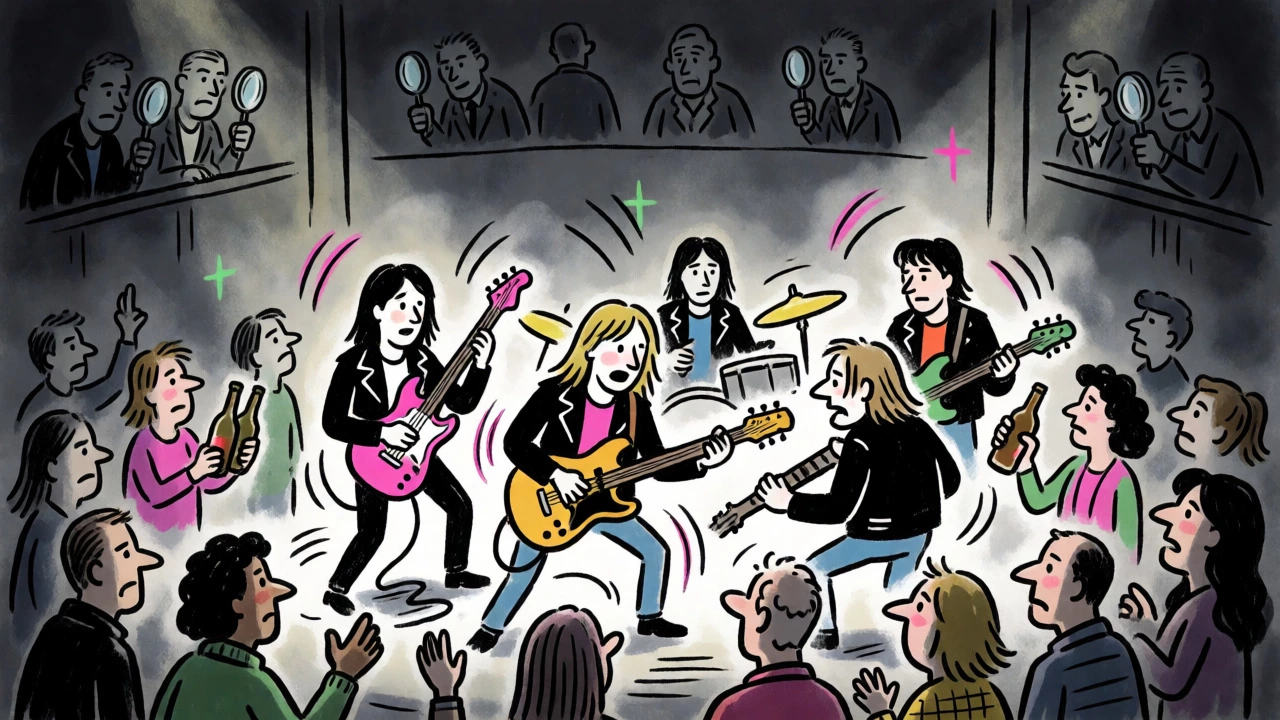
Take the Ramones. Their debut album, released in 1976, peaked at only No. 111 on the Billboard chart. They never cracked the US Top 40. Why? Mainstream venues and promoters viewed them as threatening. Early audiences sometimes threw bottles at them, and critics dismissed their fast, simple sound as a joke or a menace. Los Angeles Times critic Robert Hilburn noted in 1976 that the Ramones would have faced "much resistance" because they were too threatening to parents. This wasn’t a law banning their songs; it was an industry gatekeeping mechanism that kept punk on the margins.
Why Did It Matter?
You might ask, why does any of this matter today? Because the dynamic between art and authority hasn’t changed much. The 1970s punk backlash showed that censorship isn’t always about laws written in stone. Sometimes, it’s about editorial choices, venue bookings, and what critics decide is "acceptable."
The moral panics of the 1970s set the stage for future battles over heavy metal, hip-hop, and eventually rap. Each new genre faced the same accusations: corrupting youth, promoting violence, and lacking artistic merit. But punk’s legacy lies in its refusal to conform. The very acts of censorship-the bans, the booing, the blacklisting-cemented punk’s status as a symbol of resistance. Fans wore their banned records like badges of honor. The establishment tried to silence the noise, but the noise got louder.
Moreover, the economic impact was real. While first-wave punk bands didn’t achieve massive commercial dominance immediately, the controversy created a dedicated subculture. Record stores sold out of banned singles. Zines flourished outside mainstream distribution networks. This DIY ethos, born partly out of necessity due to exclusion, became punk’s most enduring contribution to music history.
Lessons from the Backlash
Looking back, it’s clear that the media played a crucial role in constructing the "folk devil" image of punk. Academic studies of British press coverage reveal that newspapers actively participated in creating the panic, using sensationalist language to link punk with crime and obscenity. They ignored the musical innovation in favor of the shock value.
In the US, the lack of formal bans didn’t mean freedom. The climate of surveillance and self-censorship meant that punk struggled to find a platform. Bands like the Ramones had to rely on small clubs like CBGB in New York, building a community from the ground up. This grassroots approach allowed punk to survive and evolve, influencing generations of musicians long after the initial moral panic faded.
The story of punk and censorship is ultimately a story about power. Who decides what we hear? Who defines decency? In the 1970s, it was broadcasters, politicians, and newspaper editors. Today, it might be tech giants or streaming algorithms. But the fundamental tension remains: the desire for order versus the need for disruption.
Frequently Asked Questions
Why did the BBC ban "God Save the Queen"?
The BBC banned the song primarily due to its lyrical content, which criticized the monarchy and described Britain as a "fascist regime." Released during Queen Elizabeth II's Silver Jubilee, the track was deemed to be in "gross bad taste" and potentially offensive to national sentiments. The ban covered all BBC radio and television outlets.
Did the Ramones face censorship in the United States?
While there were no specific federal bans on Ramones songs, they faced significant commercial censorship. Radio programmers avoided their tracks due to perceived risks associated with drug references and aggressive imagery. Additionally, many mainstream venues refused to book them, and audiences often reacted with hostility, limiting their exposure compared to other rock acts of the era.
What was the "Bill Grundy incident"?
On December 1, 1976, the Sex Pistols appeared on the Thames Television show "Today," hosted by Bill Grundy. During the live broadcast, guitarist Steve Jones swore at Grundy, breaking broadcasting norms. The incident caused a national scandal, leading to Grundy's suspension and the cancellation of his show, while intensifying the media backlash against punk rock.
How did Stanley Cohen's theory apply to punk rock?
Sociologist Stanley Cohen defined "moral panic" as a process where a group is labeled a threat to societal values, amplified by media coverage. In the 1970s, punk fans and musicians were cast as "folk devils." The media dramatized their behavior as dangerous and deviant, prompting institutional responses like bans and restrictions, fitting Cohen's model perfectly.
Did censorship help or hurt punk sales?
Censorship generally boosted punk's cultural capital. Although it limited mainstream radio play, the bans created a sense of rebellion and exclusivity. For example, despite the BBC ban, "God Save the Queen" reached number two on the UK charts. The controversy attracted curious listeners and solidified loyalty among existing fans, turning suppression into a badge of authenticity.


