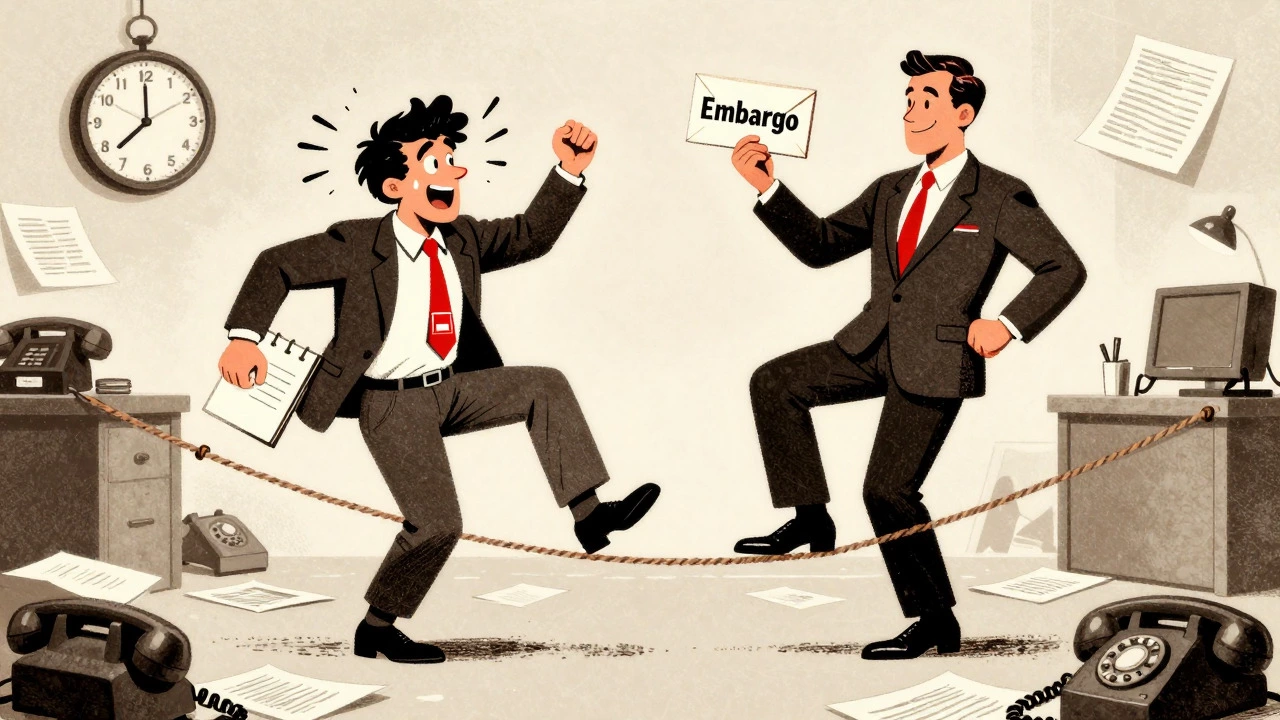

Picture this: it’s 4 PM on a Tuesday. A major record label is about to drop a surprise album. Your editor is breathing down your neck for a scoop. Meanwhile, the artist’s publicist is a professional who manages the flow of information between an organization and the media to shape public perception, carefully weighing whether to leak details now or wait for maximum impact.
This isn’t just drama; it’s the daily reality of modern media. For decades, we’ve been told that journalists and publicists are natural enemies-watchdogs versus wolves, truth-tellers versus spin doctors. But if you look closer at how music journalism actually works, you’ll see something different. It’s less like a war and more like a high-stakes dance where both sides need each other to survive.
The Myth of the Enemy
We love to believe in the heroic journalist who digs up dirt while dodging manipulative PR teams. This narrative sells well, but it doesn’t match the data. Research spanning over a century shows a paradoxical relationship: journalists openly disdain public relations as "spin," yet they rely on it for between 40% and 75% of their content.
Think about that. Nearly three-quarters of what you read in the news comes from materials provided by organizations themselves. In the music industry, this means press releases, embargoed albums, and curated interview access are the lifeblood of coverage. Without these "information subsidies," most newsrooms would grind to a halt due to lack of resources. So why the bad blood? It’s because admitting dependence feels like losing independence. Journalists protect their status by framing PR as propaganda, even while using its products every day.
How the Negotiation Actually Works
Sociologist Jean Charron described this dynamic as a "game of negotiation." It happens on two levels simultaneously:
- Economic Exchange: Journalists trade publicity (access to audiences) for resources (information, quotes, exclusive access). Publicists provide the raw material; journalists package it for consumption.
- Political Struggle: Both sides fight over the rules. Who sets the deadline? Can the artist review the questions beforehand? Is off-the-record commentary allowed?
In music journalism, this plays out constantly. When a band tours, the publicist controls which cities get featured interviews and which don’t. They decide if a journalist can attend the soundcheck or only the show. These aren’t minor details-they determine the angle of the story. If you’re locked out of the backstage area, you lose access to the candid moments that make good profiles. You’re left with the polished, rehearsed version of the artist.
Conversely, journalists hold power too. They can choose to ignore a press release entirely or frame a new single negatively despite the label’s best efforts. This mutual leverage keeps the relationship balanced, albeit tense.
Gatekeeping: Who Controls the Flow?
Both professions act as gatekeepers, but at different points in the chain. Understanding this distinction is key to seeing why conflicts arise.
| Role | Primary Function | What They Filter Out | Success Metric |
|---|---|---|---|
| Publicist | Organizational Gatekeeper | Negative narratives, unverified rumors, sensitive internal data | Favorable coverage volume, reputation protection |
| Journalist | Media Gatekeeper | Boring stories, inaccurate claims, irrelevant angles | Audience engagement, credibility, exclusivity |
When a scandal breaks involving a musician, the publicist’s job is to control the narrative before it spirals. They might delay comments until legal advice is received or issue a vague statement to buy time. To a journalist working under a tight deadline, this looks like obstruction. To the publicist, it’s risk management. Neither side is necessarily lying; they’re just playing by different rulebooks.
The Reality of "Spin"
Let’s talk about spin. It’s the dirty word in journalism. We imagine it as deliberate deception-twisting facts to mislead. While that happens, most spin is subtler. It’s called "framing."
If a singer cancels a tour due to health issues, a publicist might frame it as "prioritizing fan experience by ensuring peak performance" rather than "burnout." They highlight job creation numbers for crew members while downplaying environmental concerns of large-scale tours. This isn’t always lies; it’s selective emphasis.
Interestingly, studies from New Zealand in 2026 found that many journalists distinguish between malicious spin and simple advocacy. Most publicists aren’t trying to trick reporters; they’re doing their jobs, which is to represent their client’s interests. The conflict arises when journalists feel their editorial judgment is being overridden by corporate messaging. The solution isn’t to eliminate spin-it’s to recognize it and verify independently.

Digital Speed and New Tensions
The internet changed everything. Before social media, there was a buffer zone. Now, leaks happen instantly. A tweet from a fan can break news before the official announcement drops. This speed intensifies the pressure on both sides.
Journalists expect responses within hours, not days. If a publicist takes too long, it’s interpreted as hiding something. Meanwhile, publicists feel overwhelmed by the demand for instantaneous transparency. In crisis situations, this leads to friction. A delayed response during a controversy can be spun by critics as guilt, forcing the PR team into a defensive posture that further erodes trust.
Yet, digital tools also enable better collaboration. Direct messaging allows for quick clarifications. Shared documents help align facts before publication. The technology hasn’t solved the fundamental tension, but it has made the negotiation process faster and more visible.
Building Better Relationships
So, how do we fix this? It starts with acknowledging interdependence. Here are practical steps for healthier interactions:
- Set Clear Expectations: Agree on response times upfront. If a journalist needs a quote by 5 PM, say so. If the publicist needs 24 hours for legal review, communicate that early.
- Embrace Transparency: Journalists should credit sources clearly. If a story relies heavily on a press release, note it. Publicists should disclose limitations, such as "comment pending" or "off the record."">
- Verify Independently: Don’t take press materials at face value. Cross-check statistics, seek secondary sources, and ask tough questions. This builds long-term trust because the publicist knows you won’t publish inaccuracies that hurt their client.
- Respect Boundaries: Understand that publicists answer to employers, not editors. Their loyalty is split. Recognizing this reduces frustration when access is denied.
Ultimately, the goal isn’t friendship-it’s functional cooperation. When journalists and publicists understand each other’s constraints, they can produce richer, more accurate stories. The audience wins when the noise of spin fades and the signal of truth remains.
Do journalists really use 75% of PR content?
Yes, empirical studies consistently show that between 40% and 75% of news content is significantly shaped by PR inputs like press releases and media events. This is known as "information subsidy" because it saves journalists time and resources.
What is the difference between spin and framing?
Framing is selecting certain aspects of a story to make them more prominent, which is standard practice in all communication. Spin often implies deceptive intent to manipulate perception. In practice, much of what journalists call spin is simply strategic framing by publicists.
Why do journalists hate publicists if they need them?
It’s a psychological defense mechanism. Admitting dependence on PR threatens the journalist’s identity as an independent watchdog. By demonizing PR as "propaganda," journalists maintain a sense of moral superiority despite structural reliance on PR materials.
How does social media change the dynamic?
Social media accelerates the news cycle, demanding faster responses from publicists and quicker verification from journalists. It also allows organizations to bypass traditional media, but journalists still rely on PR for context, access, and official statements.
Can publicists and journalists ever truly cooperate?
Yes, research shows that day-to-day interactions are often characterized by pragmatic collaboration and mutual respect. Conflict usually arises from systemic pressures (deadlines, budgets) rather than personal animosity. Clear communication helps bridge gaps.