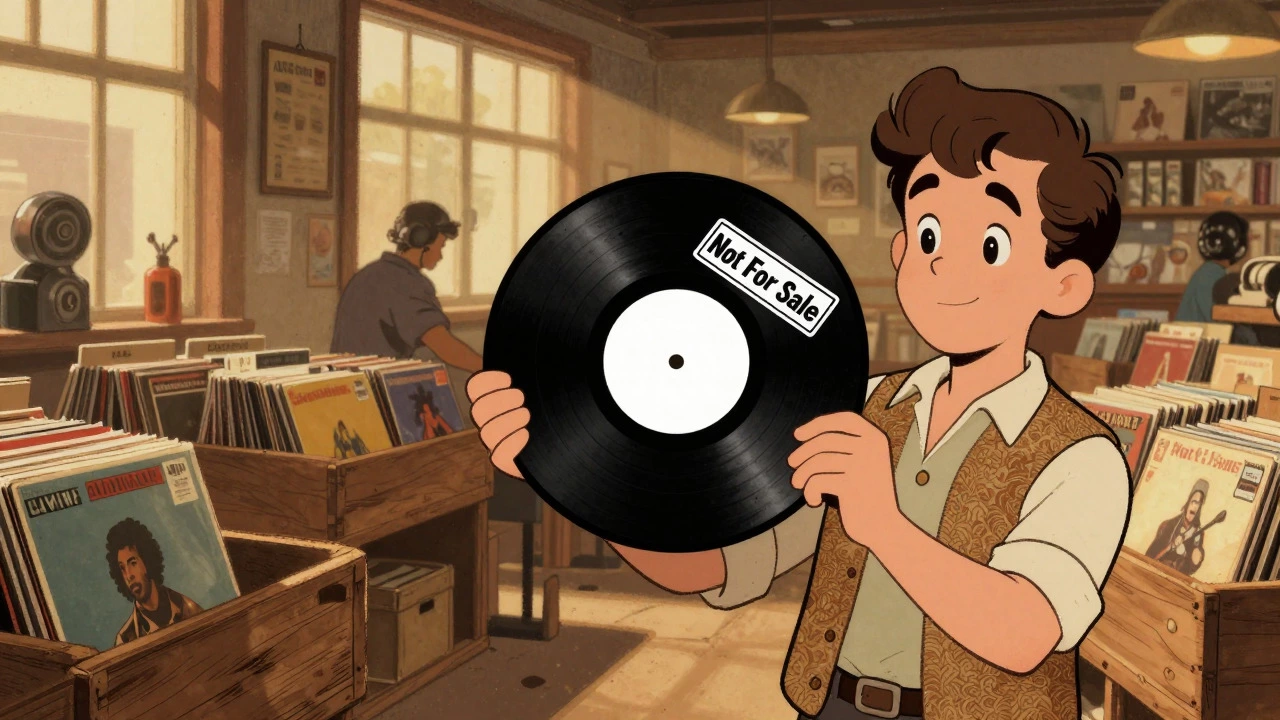

Walk into any used record store in Portland or dig through a dusty crate at a flea market, and you might spot something odd. It looks like a standard album, but the label is blank white, or it has a bold black stamp reading "Not For Sale." You aren't looking at a mistake; you are holding a piece of music industry history. These are promotional copies and white-label records. For decades, these discs were the lifeblood of radio stations and club DJs, acting as the bridge between a new song's creation and its moment on the airwaves.
If you have ever wondered why certain songs became hits while others vanished, the answer often lies in these physical tools. They weren't just freebies; they were strategic instruments designed to influence taste, bypass retail channels, and gather critical feedback before a mass release. Understanding how they work-and why they still matter today-gives you a clearer picture of how the music business actually operates behind the scenes.
The Mechanics of the Promo Copy
To understand the power of a promotional copy, you first need to look at what makes it different from the record sitting on your shelf. A standard retail record is meant to be sold, taxed, and tracked by sales charts. A promotional copy, however, exists outside that system. Its primary job is distribution to influencers: radio programmers, disc jockeys (DJs), music journalists, and key retail staff.
In the mid-20th century, particularly between 1956 and 1973, labels in the United States and the United Kingdom developed strict visual codes to distinguish these items. You would see stamps like "Review Copy," "D.J. Copy," or "Advance Promotion Copy." These markings served two crucial purposes. First, they prevented accidental resale in stores, which could cannibalize actual sales figures. Second, and perhaps more importantly, they helped labels avoid paying sales tax on items that were technically being loaned out for marketing purposes rather than sold.
| Feature | Retail Release | Promotional Copy / White Label |
|---|---|---|
| Purpose | Consumer purchase | Marketing, review, and airplay testing |
| Label Appearance | Full artwork, logo, catalog number | Blank white, plain color, or stamped text |
| Legal Status | For sale; subject to sales tax | "Not For Sale"; exempt from sales tax |
| Distribution | Record stores, distributors | Radio stations, DJs, critics, record pools |
| Content Variations | Standard mix | Often includes edits, alternate mixes, or timing guides |
The distinction wasn't just bureaucratic. In the UK, for instance, the broadcasting landscape was centralized until 1967, with only two main outlets for pop music: the BBC Light Programme and Radio Luxembourg. Labels like Pye didn't need to mail thousands of copies. They sent highly targeted "Advance Promotion Copy" discs to a handful of decision-makers. This created a high-impact, low-volume strategy where a single white-label disc could determine whether a song got national exposure. Meanwhile, in the US, the decentralized nature of radio required a much broader net, leading to the mass circulation of stamped promos across thousands of independent stations.
White Labels and the Rise of Record Pools
As the disco era exploded in the 1970s, the old method of mailing individual records to every DJ became inefficient. Club culture was moving fast, and DJs needed fresh music constantly to keep dance floors alive. This demand birthed the concept of the DJ record pool, a centralized distribution system that revolutionized how promotional music reached audiences.
The first formal record pool meeting took place at The Loft in New York City on June 2, 1975. Frustrated by labels hoarding promotional copies for a select few "top" DJs, a group of industry workers drafted a "Declaration of Intent." They established a self-regulated exchange where DJs paid a small membership fee-just $2 per person-to receive shipments directly from record companies. In return, members had to fill out feedback sheets detailing how tracks performed on the dance floor.
This model transformed promotional copies from simple giveaways into data-gathering tools. By 1977, this initial pool had inspired over 30 similar organizations. By the 1980s and 1990s, the network peaked with approximately 150 regional pools across the United States, servicing around 3,500 DJs systematically. This infrastructure allowed labels to gauge public reaction before committing to expensive full-scale manufacturing runs. If a track flopped in the pools, it might never get a commercial release. If it soared, the label knew exactly where to focus their advertising budget.
Interestingly, this pool system remained largely a U.S. phenomenon. In countries like the UK, the tradition of direct-mail demos persisted longer because the smaller market size made centralized pools less necessary. However, the efficiency of the pool model eventually won out globally as digital formats emerged.

Tailoring the Sound: Edits and Timing Guides
You might assume a promotional copy is identical to the retail version, but that is rarely the case. One of the most valuable functions of a white-label or promo LP was providing customized versions of songs tailored specifically for broadcast constraints. Radio slots are tight, usually lasting three to four minutes. An album version might run seven minutes, making it impractical for heavy rotation without editing.
Labels responded by creating "DJ edits" or "radio edits." These were special mixes sent exclusively on 7-inch promotional singles. They often featured shortened intros, repeated choruses, or even altered lyrics to meet broadcast standards. In many cases, these radio-only versions were the only way listeners experienced the song, as the original long-form mix was never released commercially on vinyl. Decades later, collectors hunt for these specific promo singles because they represent a unique sonic artifact that doesn't exist in standard catalogs.
Progressive rock labels took this customization further. Consider Virgin Records' 1973 campaign for Mike Oldfield’s *Tubular Bells*. They sent a dedicated promo LP (catalog VR13-105DJ) accompanied by a spiral-banded EP containing six different timing variations of themes from the album. The packaging included a blue sticker explicitly addressing radio programmers, offering pre-timed options suitable for different show formats. Another pressing, PZ33913, featured uninterrupted music with visual banding on the vinyl itself. The jacket listed "Suggested Cuts" corresponding to these bands, allowing DJs to cue musically coherent sections instantly without listening to the entire side. This turned the promotional record into a practical workflow tool, saving programmers hours of manual tape editing.
The Collector's Market and Historical Value
Today, the utility of promotional copies has shifted from active programming to historical preservation. What was once considered disposable marketing material is now highly prized by collectors. Jazz enthusiasts, for example, pay significant premiums for Blue Note Records' early promo issues. Between 1961 and 1965, Blue Note used both "Review Copy" and "D.J.COPY" stamps. Because these were sent in limited quantities to specific stations, surviving examples are rare. Auction prices for these stamped jackets often exceed those of standard pressings, driven by their scarcity and status as "first stampers"-early pressings that audiophiles believe offer superior sound quality due to fresher master plates.
However, rarity isn't uniform. In the UK, some demonstration singles pressed by labels like Pye were produced in such large numbers for internal testing that they are actually more common than the commercial releases if the original song failed to chart. Collectors must navigate these nuances, distinguishing between genuine scarce promos and mass-produced test pressings. The debate over markings continues; for instance, collectors still discuss whether the prominent letter "A" on Pye's late-1960s promos stands for "A-side" or "Advance copy," with production evidence suggesting the latter since the letter appeared on both sides of the disc.
From Vinyl to Digital: The Modern Era
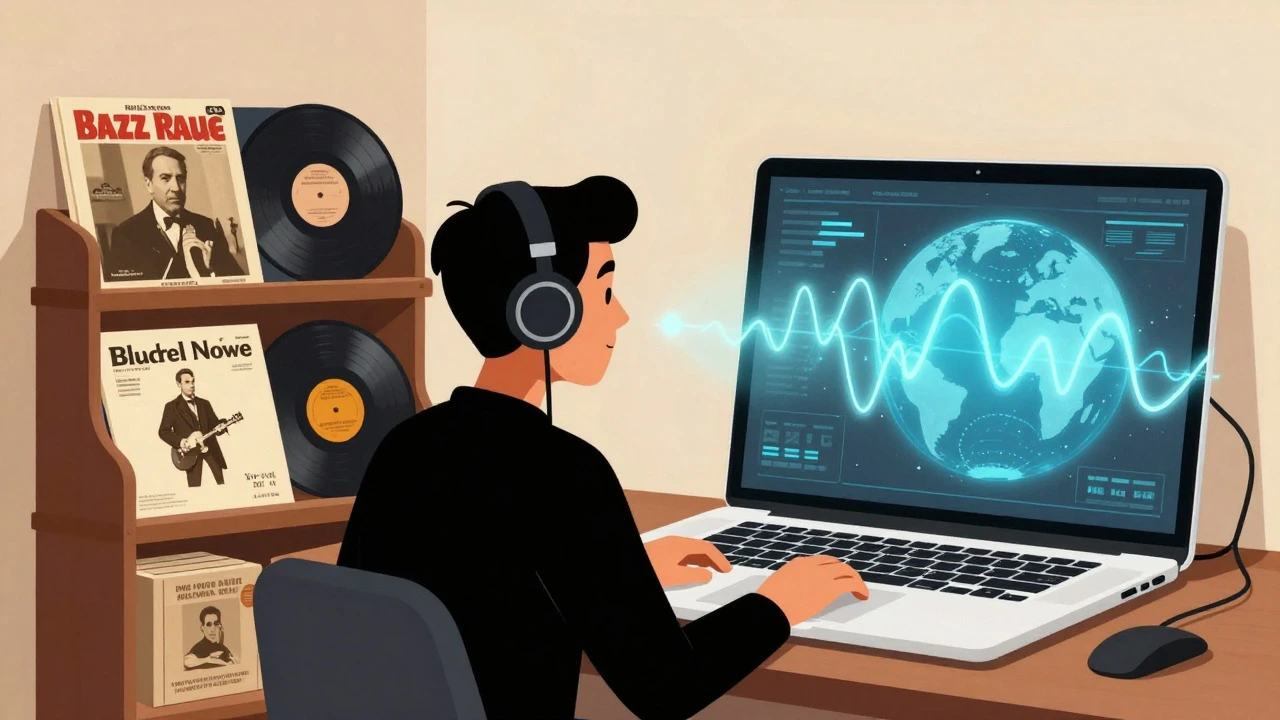
By 2007, the physical record pool began its decline as the industry shifted toward digital files. Services like iDJPool, which had distributed 12-inch vinyl and CDs since 1985, transitioned to MP3 delivery. This shift didn't kill the record pool; it modernized it. Today, online DJ pools operate as subscription platforms, delivering exclusive tracks directly to DJs' computers worldwide.
In 2026, the core function remains the same: providing access to unreleased or newly released music ahead of the general public. However, the dynamic has changed. Physical white labels are now collectibles, while digital promos are the working tools. Modern pools offer vast back-catalogues and real-time feedback mechanisms, mirroring the data-driven approach of the 1975 NYC founders but at a global scale. The ethical questions surrounding payola-the practice of incentivizing plays-also persist, though modern transparency requirements and digital tracking make it harder to hide informal deals compared to the cash-under-the-table days of the 1950s.
Whether you are a historian tracing the path of a jazz classic or a DJ hunting for the next big club hit, promotional copies and white labels remain central to the story of how music moves. They are the unseen gears that turn the engine of popular culture, ensuring that the right song reaches the right ear at the right time.
What is the difference between a white label and a promotional copy?
While often used interchangeably, there is a technical distinction. A white label typically refers to a record with a blank or plain white center label, often used for test pressings or underground releases where branding is minimal. A promotional copy is a broader term for any record sent for marketing purposes, which may have white labels but also frequently features colored labels with explicit stamps like "Not For Sale" or "DJ Copy." All white labels sent for promotion are promo copies, but not all promo copies are white labels.
Why do promotional records say "Not For Sale"?
The "Not For Sale" marking serves two main purposes. First, it prevents the record from entering the retail stream, which could skew sales charts and cannibalize actual consumer purchases. Second, historically, it helped record labels avoid paying sales tax on these items, as they were classified as marketing materials or loans rather than taxable goods sold to end consumers.
Are promotional copies worth more than regular records?
It depends on the genre and era. For jazz labels like Blue Note in the 1960s, stamped promo copies are rarer and often command higher auction prices due to their scarcity and status as early pressings. However, for some pop demo singles, especially those pressed in large quantities for internal testing, promos can be more common than commercial releases if the original song was a flop. Rarity and condition always drive value.
How did DJ record pools change the music industry?
DJ record pools democratized access to new music. Before pools, labels controlled distribution tightly, sending copies only to a few elite DJs. Pools, starting in 1975, allowed thousands of club DJs to receive music directly, creating a more organic grassroots movement for hits. They also provided labels with structured feedback on dance-floor reactions, turning DJs into essential data sources for A&R decisions.
Do DJs still use physical promotional records?
Most professional DJs have transitioned to digital files via online record pools, which offer instant access to MP3s and WAVs. However, vinyl enthusiasts and collectors still seek out physical promos for their historical value and perceived audio quality. Some niche genres and retro-focused clubs continue to use physical white labels, but the majority of promotional distribution in 2026 is digital.