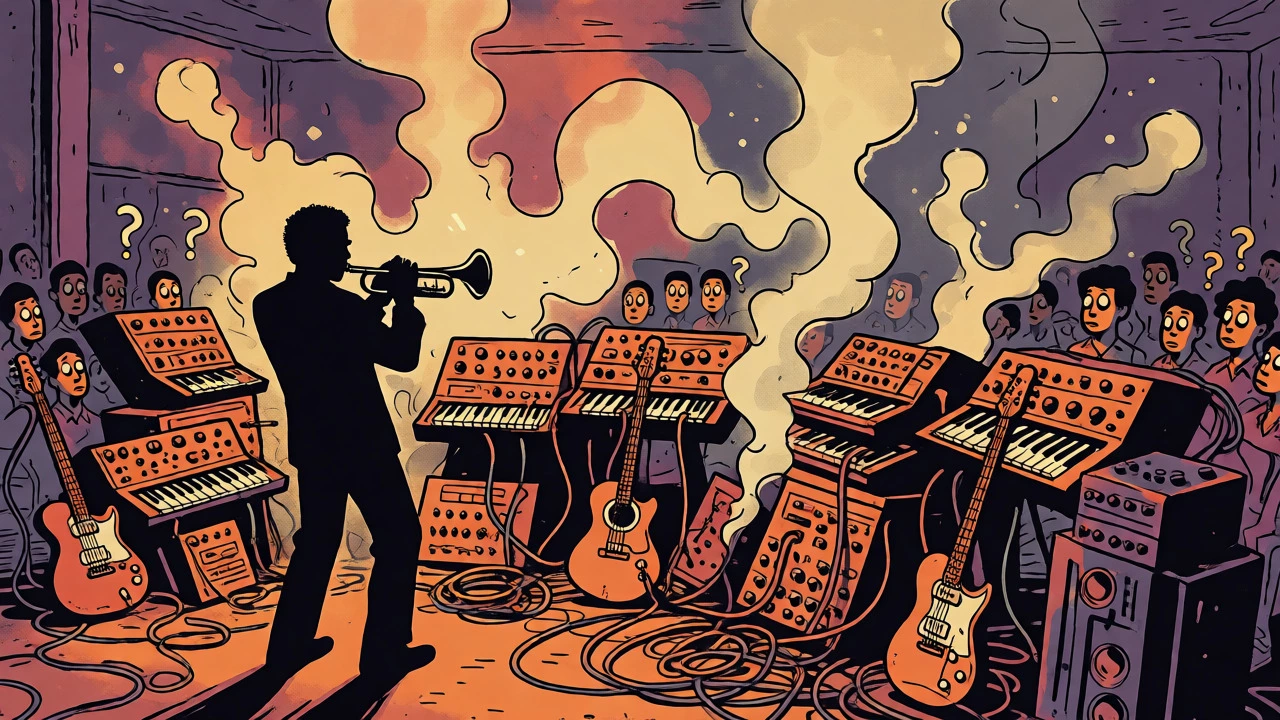

Imagine walking into a club in 1973. You expect to hear swing rhythms and acoustic bass. Instead, you’re hit with a wall of distorted guitar, synthesizers that sound like spaceships, and drummers playing in 11/8 time while sweating through their shirts. This wasn’t just noise; it was Progressive Jazz, a high-ambition musical movement in the 1970s that merged jazz improvisation with rock volume, funk grooves, and classical complexity. It was messy, controversial, and utterly brilliant.
If you’ve ever wondered why some jazz albums from the 70s feel more like progressive rock concerts than traditional jam sessions, this is where the story begins. We aren’t talking about smooth elevator jazz. We’re talking about musicians who looked at the boundaries between genres and decided to burn them down. They wanted the technical prowess of bebop but the physical impact of Led Zeppelin. The result? A decade of sonic experimentation that still challenges listeners today.
The Spark That Lit the Fire: Miles Davis and Bitches Brew
You can’t talk about 1970s fusion without starting with Miles Davis. He didn’t invent electric instruments, but he gave them permission to be wild. His album Bitches Brew, released on March 30, 1970, is the big bang event. Recorded in August 1969 at Columbia Studio B, it featured a massive ensemble including Chick Corea, John McLaughlin, and Joe Zawinul.
Davis wasn’t interested in melody in the traditional sense. He used the studio as an instrument, editing tape loops and layering sounds to create a collage effect. Critics called it a sellout move. Fans were confused. But for the musicians involved, it was liberation. They could play louder, use effects pedals, and explore rhythmic densities that acoustic pianos simply couldn’t handle. This set the stage for everyone else to follow.
Three Paths to Complexity
Once the door was open, three distinct groups rushed through, each taking progressive jazz in a different direction. Think of them as three different flavors of ambition.
Mahavishnu Orchestra: Speed and Precision
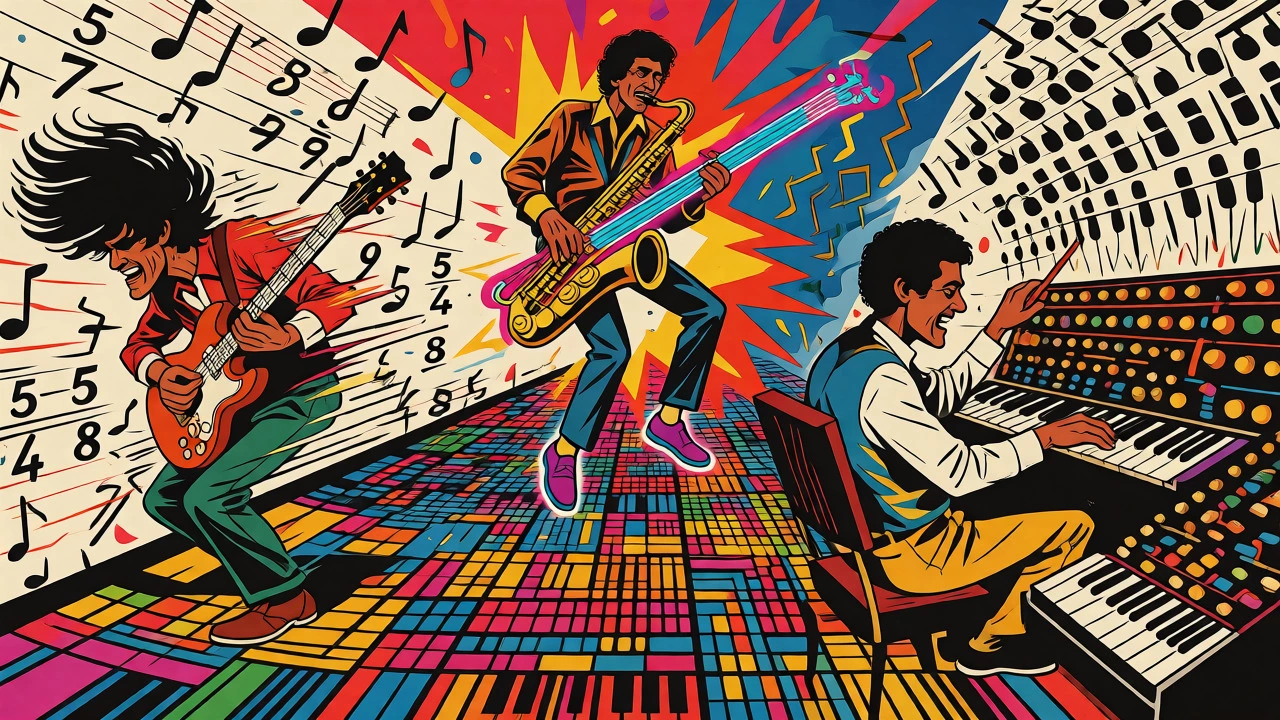
John McLaughlin’s Mahavishnu Orchestra went for pure intensity. Their 1973 album Birds of Fire is a masterclass in controlled chaos. McLaughlin played electric guitar with a ferocity that rivaled heavy metal, but his harmonic language was pure jazz. The band used odd meters-like 5/4 or 7/8-and intricate unison lines where every instrument played the same complex phrase at breakneck speed.
This wasn’t just showing off. The complexity served a purpose. It created a tension and release cycle that felt urgent. If you listen to "The Dance of Maya," you’ll hear how they shift gears instantly, moving from aggressive rock backbeats to delicate, almost classical interludes. It demanded you pay attention. There was no background listening here.
Weather Report: Texture and Interaction
While Mahavishnu focused on precision, Weather Report focused on color. Founded by Joe Zawinul and Wayne Shorter, this group rejected the idea of a single soloist backed by a rhythm section. Instead, they treated the whole band as one organism.
Zawinul was a pioneer of synthesizer technology, using early ARP and Oberheim synths to create textures that had never existed before. Shorter’s saxophone lines often floated above the mix, responding to the electronic landscape rather than leading it. Albums like Sweetnighter (1973) and Heavy Weather (1977) showcase this approach. When Jaco Pastorius joined on fretless bass for Heavy Weather, he added a singing, vocal quality to the low end that changed how people heard electric bass forever.
Return to Forever: Classical Meets Funk
Chick Corea’s Return to Forever took a more composed route. Early works leaned into Brazilian rhythms, but by 1976, with Romantic Warrior, they embraced a progressive rock aesthetic. This album is a concept piece inspired by medieval themes, featuring long-form compositions with multiple sections.
Corea and guitarist Al Di Meola traded rapid-fire solos over shifting time signatures. Bassist Stanley Clarke provided a funk-driven foundation that kept the head-banging potential alive. Tracks like "Duel of the Jester and the Tyrant" are essentially mini-suites, moving through different moods and tempos. It’s ambitious because it tries to do everything: improvise, compose, rock out, and tell a story.
The Technology Behind the Sound
You cannot separate the music from the gear. The 1970s saw a rapid expansion of what was possible in the studio and on stage. Acoustic drums couldn’t compete with amplified rock bands, so drummers switched to larger kits and started using electronic triggers. Keyboardists moved from Fender Rhodes electric pianos to synthesizers, allowing them to sustain notes indefinitely and create new timbres.
| Instrument | Traditional Role | Progressive Jazz Application | Impact on Complexity |
|---|---|---|---|
| Fender Rhodes | Piano substitute | Layered with synth pads | Increased harmonic density |
| Synthesizers | N/A (New) | Lead melodies and textures | New timbral possibilities |
| Electric Bass | Timekeeping root notes | Fretless, soloistic role | Expanded melodic range |
| Electric Guitar | Rhythm chords | Distorted lead, effects pedals | Added aggression and sustain |
| Studio Editing | Capture live performance | Tape loops, multi-tracking | Enabled non-linear forms |
This tech allowed for things like metric modulation, where the tempo feels like it changes without actually speeding up or slowing down the beat. It also meant that recordings could be built layer by layer. Davis and producer Teo Macero would cut and splice tape to create structures that were impossible to play live in one take. This studio-centric approach influenced how composers thought about form. Why stick to AABA when you can build a ten-minute journey?
Why Was It So Divisive?
Here’s the uncomfortable truth: most people hated it. Jazz purists felt betrayed. To them, jazz was about acoustic warmth and swing. Adding distortion felt like cheating. Rock fans weren’t thrilled either. They found the solos too long and the harmonies too dense. As All About Jazz noted, jazz listeners heard too much rock, and rock listeners heard too much jazz.
There was also a racial and economic dimension. Some critics, like Amiri Baraka, dismissed fusion as "dollar-sign music," arguing that Black musicians were selling out their cultural heritage for white rock audiences. But scholars like Kevin Fellezs argue this view is too simplistic. These musicians weren’t just chasing money; they were expanding their artistic vocabulary. They wanted to reach younger audiences without dumbing down their craft.
The criticism stuck, though. By the mid-70s, some fusion drifted into easy-listening territory, losing its edge. But the best progressive jazz remained challenging. It demanded active listening. You had to count the beats, follow the thematic development, and appreciate the interplay. It wasn’t background music; it was an engagement.
How to Listen to Progressive Jazz Today
If you want to dive in, don’t start with the most obscure record. Start with the landmarks. Here’s a roadmap:
- For the Origin Story: Miles Davis - Bitches Brew (1970). Listen for the texture and the way instruments blur together.
- For Pure Energy: Mahavishnu Orchestra - Birds of Fire (1973). Focus on the unison passages and the speed.
- For Groove and Innovation: Herbie Hancock - Head Hunters (1973). "Chameleon" is essential for understanding funk-fusion.
- For Composition: Return to Forever - Romantic Warrior (1976). Analyze the structure of "Duel of the Jester and the Tyrant."
- For Textural Beauty: Weather Report - Heavy Weather (1977). Pay attention to Jaco Pastorius’s bass lines.
When you listen, try to identify the ostinatos-repeated rhythmic patterns that drive the track. Notice where the written composition ends and the improvisation begins. In many progressive tracks, these boundaries are blurred. A solo might quote a theme from earlier in the song, creating a cohesive narrative even within free improvisation.
The Legacy: Where Did It Go?
Progressive jazz didn’t die; it evolved. Its DNA is visible everywhere. Progressive metal bands like Dream Theater cite Mahavishnu Orchestra as a key influence. Math rock bands borrow the odd meters. Modern artists like Kamasi Washington and Snarky Puppy carry the torch, blending complex harmony with accessible grooves.
The main lesson from the 1970s is that complexity doesn’t have to mean exclusion. These musicians proved you could combine virtuosity with energy, tradition with innovation. They broke the rules not to be difficult, but to be expressive. And honestly, we’re still living in the world they built.
What is the difference between jazz fusion and progressive jazz?
Jazz fusion is a broad term for any music mixing jazz with other genres, especially rock and funk. Progressive jazz refers specifically to the sub-sector of fusion that emphasizes complex compositions, odd meters, and high-level instrumental virtuosity, often resembling progressive rock in its structural ambition.
Why did jazz purists dislike fusion in the 1970s?
Purists felt that the use of electric instruments, amplification, and rock rhythms diluted the acoustic purity and swing feel central to traditional jazz. They also viewed the commercial success of fusion as a compromise of artistic integrity.
Which album should I start with if I’m new to progressive jazz?
Start with Herbie Hancock’s Head Hunters (1973). It has strong funk grooves that make the complex harmonies more accessible. After that, try Mahavishnu Orchestra’s Birds of Fire for higher energy and complexity.
Did progressive jazz influence modern genres?
Yes, significantly. Its emphasis on odd time signatures and virtuosic playing influenced progressive metal, math rock, and modern instrumental hip-hop. Bands like Snarky Puppy and artists like Thundercat directly reference this era.
Was progressive jazz commercially successful?
It achieved crossover success, with albums like Head Hunters and Heavy Weather reaching wide audiences. However, it was never mainstream pop. Most musicians earned modest incomes compared to rock stars, relying heavily on touring and niche markets.