
In 1987, Prince walked into his office at Paisley Park and told his record label to burn half a million copies of an album that was already pressed and ready for shelves. It wasn't a stunt for publicity. It was a spiritual crisis. But it was also the final, dramatic chapter of a decade-long battle for artistic freedom that reshaped how pop stars interact with major labels. While Michael Jackson was polishing every frame of his videos with a team of executives, Prince was playing every instrument on his records alone, refusing to let anyone else touch his sound. This isn't just a story about a talented musician; it’s a case study in power dynamics. It shows how one artist used the machinery of the pop establishment to break its rules, creating a blueprint for creative control that still echoes through the music industry today.
The Unusual Start: A Deal That Changed Everything
Most artists sign away their rights before they even write a song. Prince did something different. On June 25, 1977, an 18-year-old from Minneapolis signed a three-album deal with Warner Bros. Records is a major American record label founded in 1958, known for signing influential rock and pop acts. Most deals at the time were simple: you sing, we pay, we own the masters. But Prince negotiated a "producer's deal." This meant he didn't just perform; he produced. In an era where session musicians played on hits for stars like John Lennon or Bob Dylan, Prince insisted on recording himself. His debut album, For You, released in April 1978, featured him playing nearly every instrument. This wasn't just a musical choice; it was a legal and strategic move. By controlling the production, he controlled the art. The label owned the tapes, sure, but they couldn't easily rework them because Prince had sealed the creative process inside his own hands.
Building Leverage: The Self-Producing Megastar
Between 1980 and 1983, Prince proved that this model could sell. Albums like Dirty Mind (1980) and 1999 (1983) weren't just hits; they were statements. They challenged the racial and gender norms of the 1980s pop landscape. While the industry pushed toward polished, manager-driven images, Prince embraced androgyny and raw funk. He formed The Revolution, a band that included female members and interracial collaborations, directly opposing the segregated social scenes of the time. This wasn't accidental. It was a calculated assertion of identity. Every release strengthened his bargaining power. Warner realized that if they wanted the next big thing, they had to accept Prince's terms: no outside producers, no heavy-handed marketing directives, and full creative autonomy over the studio sessions. He was becoming the most valuable asset in their catalog, not just because of sales, but because of his unique brand of independence.
Purple Rain: The Peak of Creative Control
Then came Purple Rain is a 1984 album and film by Prince that became a cultural phenomenon, blending rock, funk, and gospel. Released in June 1984, it was a blockbuster. But what made it significant for our topic is how Prince handled it. He didn't just hand over a soundtrack for a movie. He directed the film, wrote the songs, and cast the actors. It was a total artistic package. The song "When Doves Cry" hit number one on the Billboard Hot 100 without a bass line-a radical departure from radio standards that would have been vetoed by any traditional A&R executive. Yet, it worked. This success validated his approach. It showed that audiences didn't need corporate safety nets; they wanted authentic vision. For Prince, Purple Rain was proof that you could be a global superstar while remaining the sole author of your work. The purple persona he created wasn't just fashion; it was a shield against the homogenizing pressure of the pop machine.
| Aspect | Prince's Model | Standard Major Label Model |
|---|---|---|
| Production | Self-produced, multi-instrumentalist | Hired producers and session musicians |
| Master Ownership | Label-owned (contractual) | Label-owned (standard) |
| Release Timing | Artist-driven, often rapid | Label-controlled, spaced for market saturation |
| Visual Identity | Artist-directed (e.g., Purple Rain film) | Marketing-team driven |
The Cracks Form: Tensions Over Output and Ownership
Success brought new problems. By the mid-1980s, Prince was writing faster than Warner could release. He had enough material for multiple albums a year, but the label wanted to space them out to maximize profit and avoid cannibalizing sales. This friction led to the creation of Paisley Park Records is an independent record label founded by Prince in 1985 as a joint venture with Warner Bros.. Launched in 1985, it was supposed to be Prince's autonomous imprint, similar to The Beatles' Apple Records. In theory, it gave him freedom. In practice, Warner still owned the masters. This legal reality became a growing source of resentment. Prince saw himself as the creator, the owner, the visionary. The contract said otherwise. The more successful he became, the more the gap between his self-image and his legal status widened. He was building an empire, but the deed was in someone else's name.
The Black Album: When Spirituality Met Corporate Logic
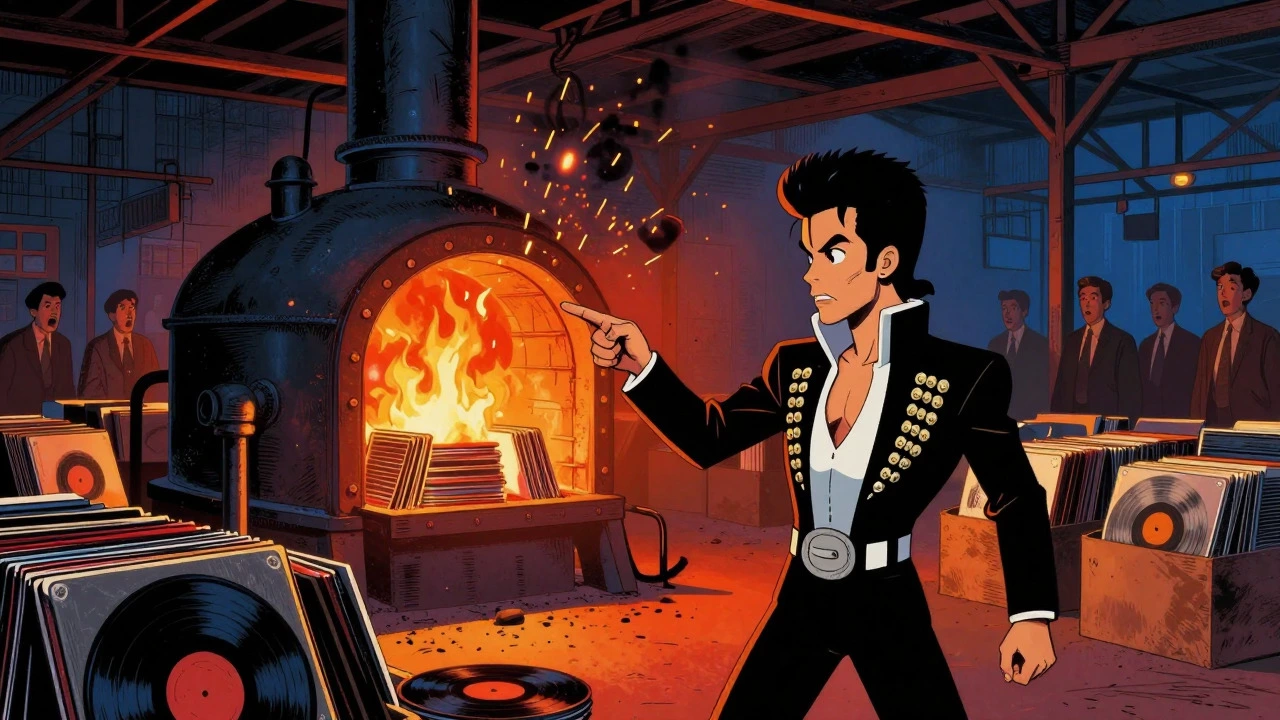
The tension exploded in December 1987. Prince had finished a funk-heavy album intended as a follow-up to Sign O' The Times. It was scheduled for release on December 8, 1987. About 500,000 copies were already pressed. Then, on what he later called "Blue Tuesday," Prince contacted Warner chairman Mo Ostin. He demanded the album be pulled. Why? He claimed a spiritual epiphany. He felt the album was "evil" and disrespectful to God, attributing its creation to a demonic alter ego named "Spooky Electric." He offered to pay for the manufacturing losses out of his own royalties. Warner complied. The album was destroyed. To the outside world, it looked like madness. To the industry, it was a terrifying display of power. No other artist had the leverage to cancel a major release so close to launch without facing immediate lawsuit or career ruin. Prince had proven that his artistic will could override corporate economics. It was a high-cost victory, but it cemented his reputation as an untamable force.
Legacy: The Cost of Freedom Inside the System
So, did Prince win? It’s complicated. He achieved unprecedented creative control during his peak years, influencing a generation of artists to demand producer credits and master ownership. However, the economic reality remained harsh. Because Warner owned the masters, Prince spent decades fighting for his back catalog. His later famous protest-writing "slave" on his face in the 1990s-was the direct result of these 1980s compromises. The 1980s model worked for art, but it left a financial debt that took twenty years to repay. Yet, for contemporary artists, Prince’s trajectory offers a crucial lesson. You can negotiate for creative freedom within a major label structure, but you must understand exactly what you are giving up. The 1980s showed that artistic freedom is possible, but it requires constant vigilance, commercial success, and sometimes, the willingness to burn bridges-even if those bridges are made of vinyl.
Did Prince own his masters in the 1980s?
No. Under his Warner Bros. contract, the label owned the master recordings. Prince received royalties, but the corporation held the legal rights to distribute and exploit the recordings. This lack of ownership was a primary source of conflict throughout the decade.
Why was The Black Album cancelled in 1987?
Prince cancelled the album after a spiritual epiphany, believing it was "evil" and disrespectful to God. Despite 500,000 copies being pressed, he ordered them destroyed and offered to cover the costs personally, demonstrating his absolute control over his release schedule.
How did Prince's contract differ from standard deals of the era?
Prince secured a rare "producer's deal" in 1977, which granted him control over the production process and allowed him to record at his own facility. Unlike standard deals where labels hired external producers, Prince played most instruments himself, ensuring artistic integrity despite label ownership of masters.
What role did Paisley Park play in his fight for freedom?
Paisley Park Records, launched in 1985, was a joint venture that gave Prince a semi-autonomous label. It allowed him to manage his own releases and sign other artists. However, because Warner still owned the underlying masters, it provided creative independence rather than full economic ownership.
How did Purple Rain demonstrate artistic control?
Purple Rain was a multimedia project where Prince controlled the music, film direction, and casting. Songs like "When Doves Cry" broke radio conventions by omitting bass lines, showing that his artistic vision could drive commercial success without adhering to label-mandated formulas.