
Imagine a room with nothing in it. No props, no elaborate sets, just white walls and a band playing hard. Now imagine that this empty space became one of the most iconic images in music history. That is exactly what happened in June 1984 when Prince released the music video for "When Doves Cry," the lead single from his album and film project "Purple Rain.". While other artists were spending fortunes on pyrotechnics and narrative storylines, Prince stripped everything away to focus on raw performance, sexuality, and emotional intensity. This clip didn't just promote a song; it redefined what a music video could be during the early days of MTV.
The visual strategy here was bold. By removing distractions, the viewer’s eye is forced onto Prince’s body language, his intense facial expressions, and the synchronized choreography of The Revolution, his backing band. It is a masterclass in doing more with less. But how did a simple white room become so powerful? And why does it still feel fresh more than four decades later?
The Sound Behind the Silence
To understand the visuals, you have to look at the audio. The song itself features a famously sparse arrangement. At 126 beats per minute, the track drives forward with energy, but it lacks a traditional bass line. Instead, the low end is handled by synthesizers and drum machines, creating an open, airy texture that feels almost fragile. This sonic choice directly mirrors the visual aesthetic. Just as the music leaves space for the guitar and vocals to breathe, the video uses a bare set to let the performance shine.
This alignment between sound and image is not accidental. The absence of a heavy bass line creates harmonic tension, giving Prince’s high-register guitar solos extra room to cut through the mix. Visually, this translates to tight framing and bright, flat lighting. Every gesture is exposed. There is nowhere to hide. This lean approach was unconventional for a mainstream pop-rock single that went on to top the charts for several weeks, proving that minimalism could be commercially dominant.
Symbolism in the Opening Seconds
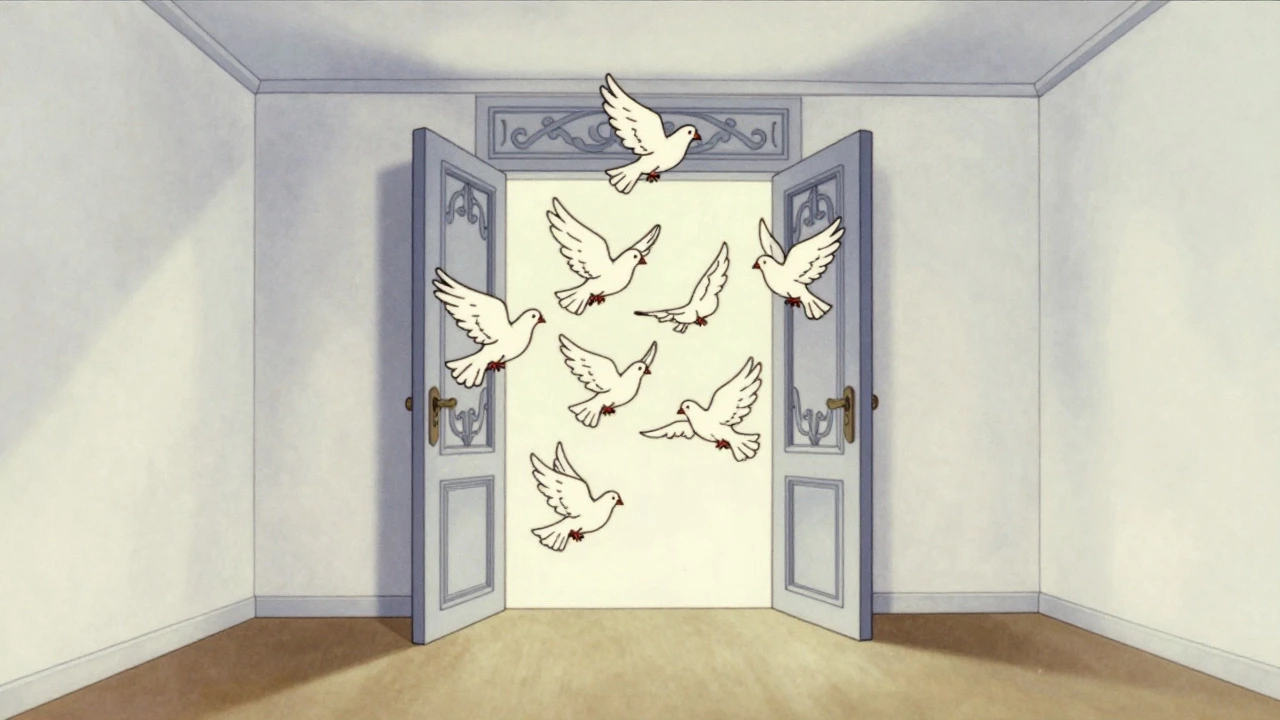
The video opens with a striking tableau: white doves flying out from behind ornate double doors. In Western iconography, doves symbolize peace and love. Seeing them erupt into motion immediately suggests that harmony is being disrupted. This links directly to the song’s title and its lyrical theme of a turbulent relationship where peace is destroyed by conflict.
Moments later, we see Prince reclining in a bathtub, apparently nude. This shot is intimate and theatrical, pushing the boundary of what was acceptable on television at the time. Network executives reportedly found the sexual imagery too explicit, leading to debates about airplay. Yet, the framing is careful, using shadows and angles to suggest rather than show. This balance of sensuality and restraint captures the viewer’s attention instantly, setting the tone for the rest of the clip.
| Visual Element | Musical Attribute | Emotional Impact |
|---|---|---|
| Bare white room | Absence of bass line | Exposure and vulnerability |
| Flying doves | 126 BPM tempo | Disrupted peace and urgency |
| Bathtub scene | Multi-tracked vocals | Intimacy and introspection |
| Mirrored ending | Synthesizer hooks | Duality and confusion |
The White Room Performance
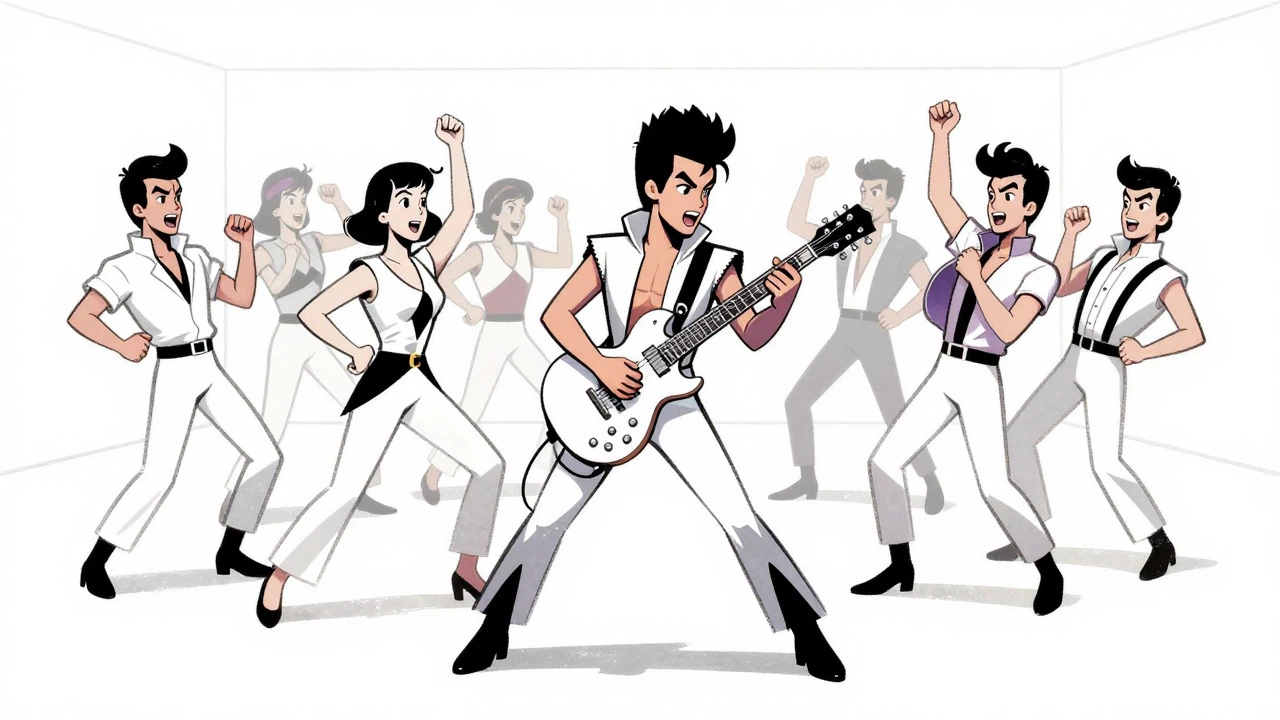
The core of the video takes place in a largely empty white room. This is where Prince and The Revolution perform. The lack of set dressing forces the audience to read emotion purely through movement. The choreography is sharp, with synchronized steps and turns that externalize the song’s themes of tension and defiance. It is not just dancing; it is a physical manifestation of the lyrics’ struggle.
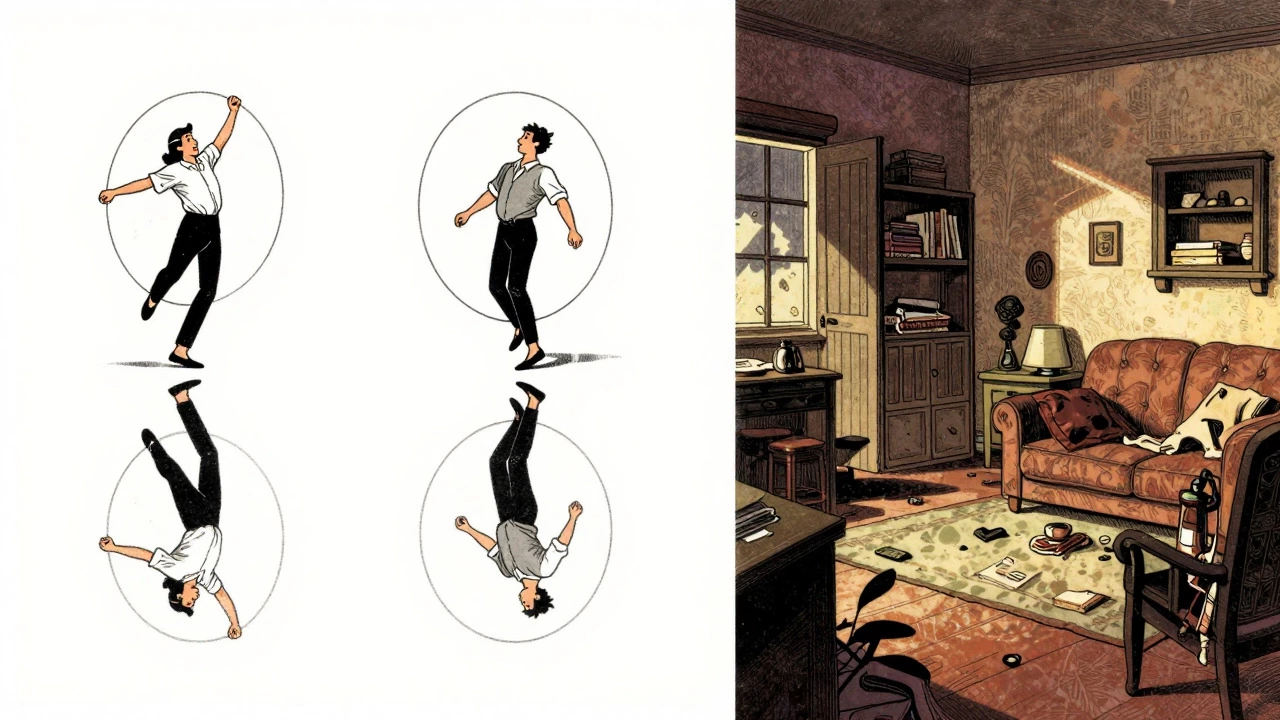
This staging contrasts sharply with the intercut scenes from the Purple Rain film. Those clips show cluttered domestic interiors, family arguments, and chaotic backstage moments. By juxtaposing the stark performance arena with these crowded narrative environments, the video highlights the difference between public persona and private turmoil. The rapid cuts between these two worlds keep the viewer engaged, preventing the minimalism from feeling static.
The Mirrored Ending and Thematic Duality
Near the end of the clip, something unusual happens. The left half of the frame is mirrored, creating a symmetrical, kaleidoscopic effect. For the final seconds, you are watching two copies of one side of the performance. This visual doubling is a direct reflection of the song’s exploration of duality-between Prince and his lover, and between himself and his parents.
In this section, the choreography becomes abstract. Spins and arm movements turn into geometric patterns, feeling more like graphic design than traditional filmmaking. This shift aligns with the synthetic nature of the track’s production. It is a clever way to signal the end of the performance without breaking the hypnotic rhythm established throughout the video.
Controversy and Cultural Impact
Despite its artistic merit, the video faced scrutiny. Some broadcast leaders considered the sexual nature of the bathtub scenes and the grinding dance moves too frank for TV. However, it received substantial exposure on MTV and earned a nomination for Best Choreography at the 1985 Video Music Awards. This recognition highlighted how the clip occupied a liminal space between transgressive art and mainstream branding.
Today, the video remains a staple of 1980s culture. HD and 4K remasters continue to refresh its impact for new generations. Fans often cite the white-room imagery and the unconventional lack of bass as elements that make the work feel timeless compared to more gimmicky clips from the same era. It has become a template for creators who want to build impactful visuals with limited resources, proving that simplicity can be just as powerful as spectacle.
Why It Still Matters
More than 40 years after its release, "When Doves Cry" stands as a definitive example of minimalist visual mastery. It shows that you do not need expensive sets or complex narratives to create a lasting impression. You need strong performance, clear symbolism, and a deep understanding of how sound and image interact. Whether you are a student of media studies or a fan of classic rock, this video offers lessons in efficiency and emotional resonance that are still relevant today.
Who directed the "When Doves Cry" music video?
There is some disagreement among sources. English and Spanish encyclopedia entries credit Prince himself, emphasizing his control over his image. German-language sources credit director Larry Williams, with producers Sharon Oreck and Simon Fields. Regardless of the formal credit, Prince’s performance and aesthetic vision dominate the clip.
Why is there no bass line in the song?
Prince originally recorded a bass part but decided to mute it to keep the texture lean and emotionally taut. This decision created an open low end that allowed the synthesizers and guitar to stand out, mirroring the visual minimalism of the white room set.
What do the white doves symbolize in the video?
Doves traditionally represent peace and love. Their appearance at the start of the video, bursting from the doors, symbolizes the destruction of harmony in the relationship described in the lyrics. It visually reinforces the idea that the narrator’s peace is being shattered by conflict.
Was the video controversial when it first aired?
Yes, some network executives found the bathtub nudity and dance moves too explicit for television. Despite this, it received heavy rotation on MTV and was nominated for Best Choreography at the 1985 VMA, showing its dual status as both transgressive and mainstream.
How has the video been preserved in recent years?
The video has undergone HD and 4K remastering, with improved clarity and color correction discussed by fans in recent years. These updates ensure that the visual details, such as Prince’s costume and facial expressions, remain sharp for modern viewers on high-definition platforms.