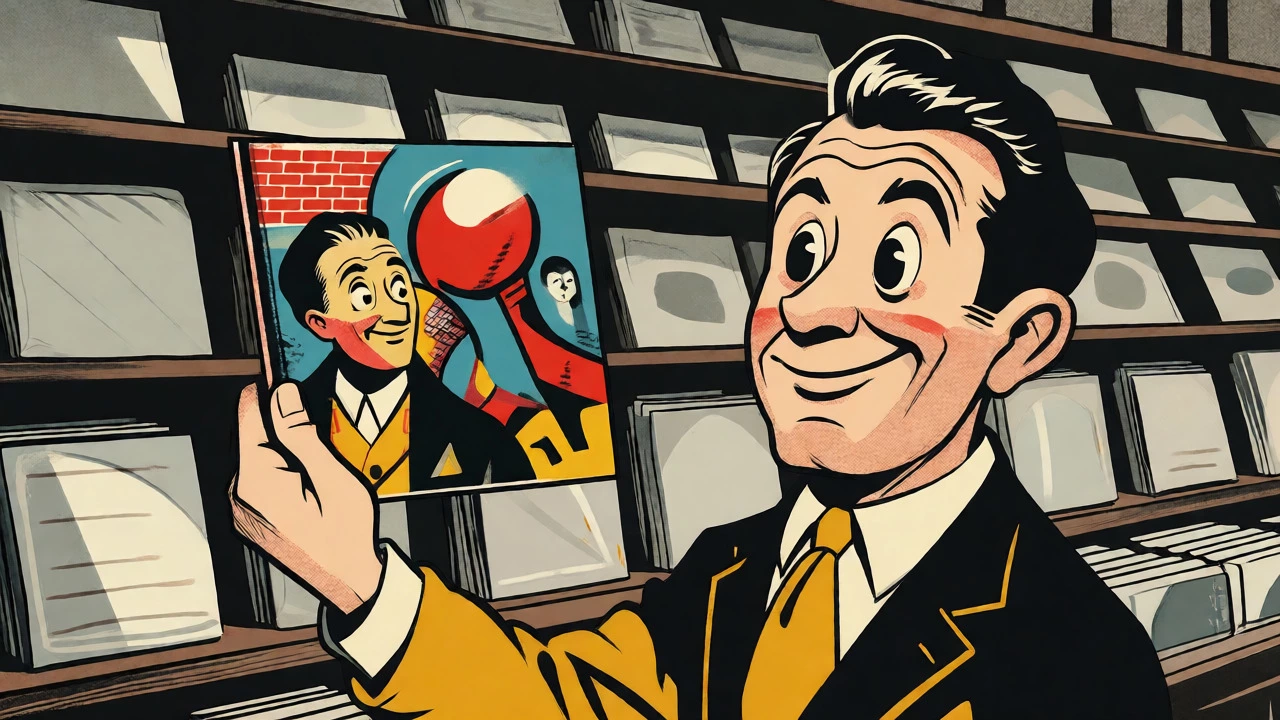

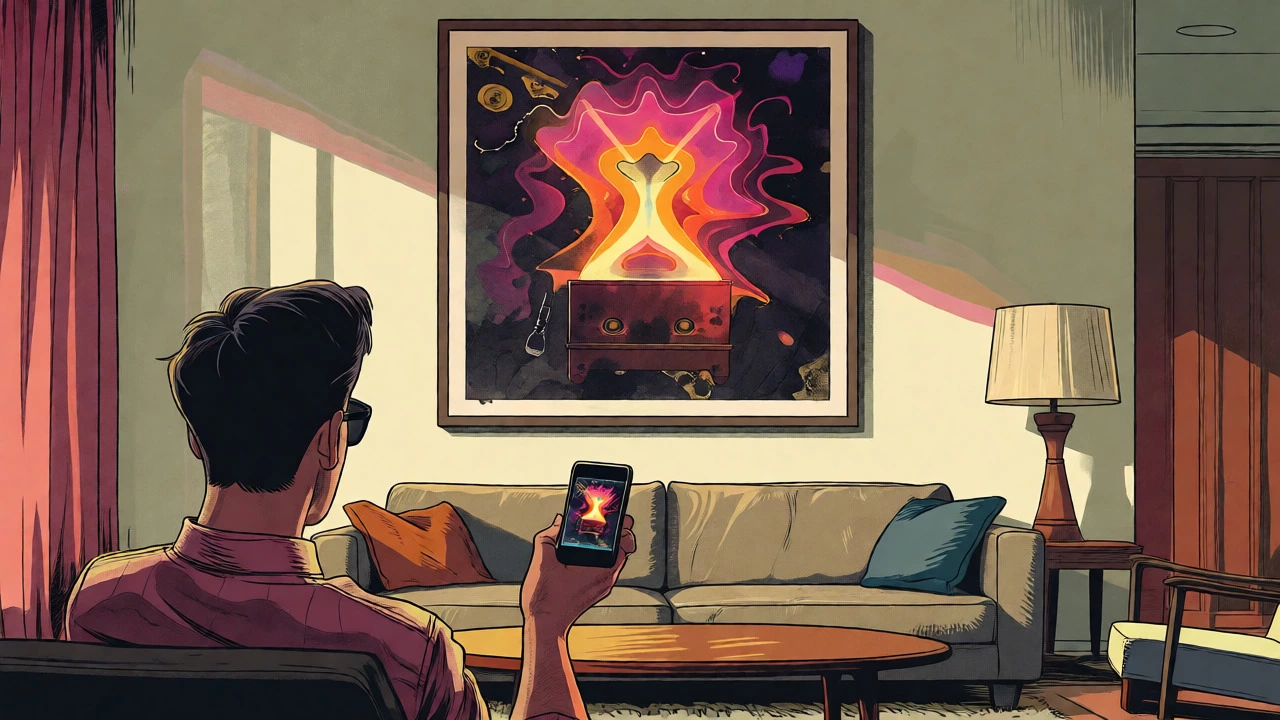
You know that feeling when you pull a new vinyl record off the shelf? Before you even drop the needle, you’re holding a 12x12 inch piece of visual culture. For decades, that square was the only place to see the artist’s vision in full detail. But what happens when the format shrinks to a thumbnail on Spotify or Apple Music? The art doesn’t disappear; it just moves. It jumps from the sleeve to your living room wall.
Album artwork is the visual design created for a music release, originally displayed on physical packaging like LPs and CDs, now extended into standalone posters and fine-art prints. This shift isn't just about nostalgia. It’s about reclaiming space. In an era where we consume music through tiny screens, poster and print art allows fans to experience the graphic intensity of iconic covers at a scale that actually hits you in the face. Whether it’s a high-end screenprint of a Pink Floyd prism or a digital download of a modern indie release, these objects serve a dual purpose: they are memorabilia and they are interior design.
The Birth of Visual Music
It wasn’t always this way. If you go back to the late 1930s, record jackets were boring. They were plain paper sleeves with simple text telling you who sang and what song it was. Then came Alex Steinweiss. In 1939, working for Columbia Records, he realized that people buy with their eyes before they listen with their ears. He designed the first illustrated cover for a Rodgers and Hart compilation. Sales skyrocketed. Suddenly, the record label wasn’t just a container; it was a canvas.
This innovation turned the 12x12 inch LP surface into a playground for some of the 20th century’s most famous artists. Salvador Dalí painted a cover for Jackie Gleason in 1955. Andy Warhol gave us the banana for The Velvet Underground & Nico in 1967. These weren’t just marketing tools; they were artworks. When the LP format peaked in the 1960s and 70s, the cover became as important as the music itself. Today, that legacy lives on in the print market. Collectors don’t just want the record; they want the image enlarged, framed, and hung up.
Why We Need Big Prints Now
Think about the last time you looked at album art on your phone. It’s small. Maybe two inches by two inches. You can’t see the texture of the brushstrokes or the subtle gradients in the background. The transition from analog to digital shrank our view of music. First, the CD longbox appeared, then the jewel case, and finally, the MP3 icon. Each step reduced the physical presence of the art.
Poster art solves this problem. It restores the grandeur. A museum-quality print of The Beatles’ Sgt. Pepper’s Lonely Hearts Club Band lets you spot every celebrity face in the collage. A large-format poster of Radiohead’s In Rainbows reveals details lost in the digital thumbnail. This isn’t just about size; it’s about impact. Large-scale prints command attention in a room in a way that a smartphone screen never can. They turn a playlist into a visual statement.
Gig Posters vs. Album Reproductions
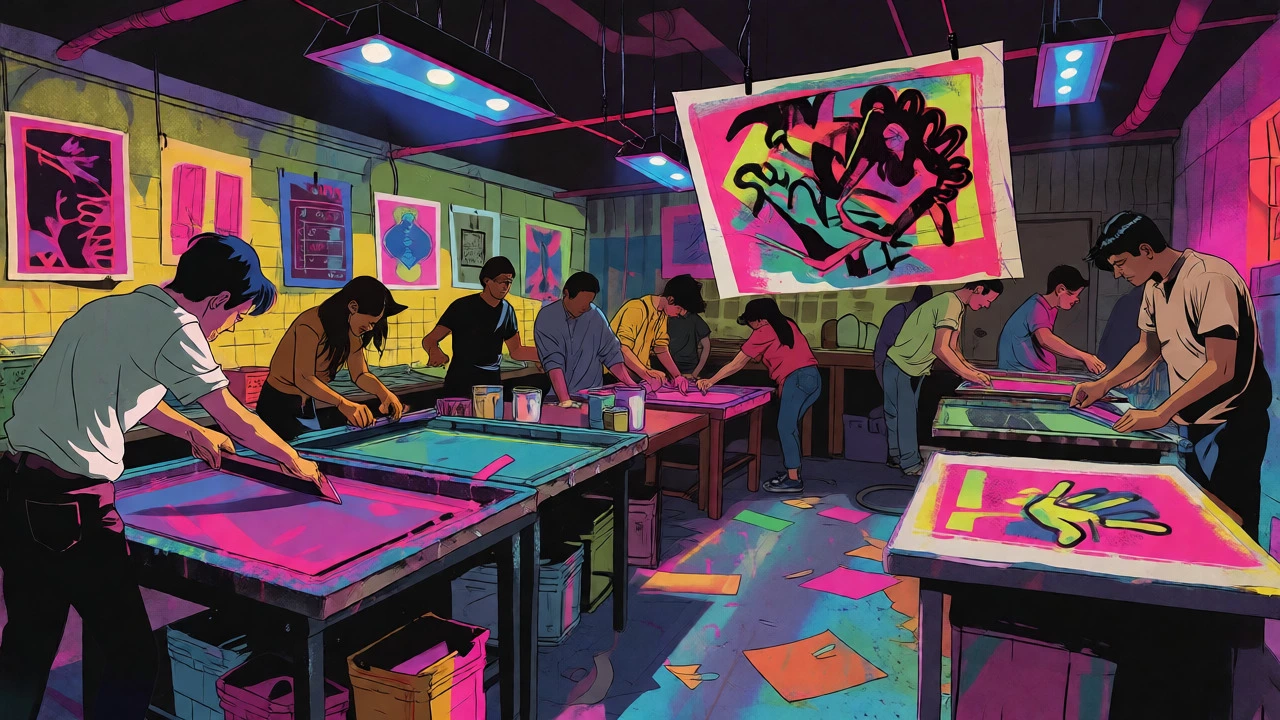
Not all music prints are the same. There’s a distinct difference between reproducing an album cover and creating a gig poster. Gig posters are born from live events. They promote specific concerts, tours, or festivals. Designers like those at FutureProof Visuals create these pieces to capture the "vibe" of a night. They often use bold typography, psychedelic colors, and hand-drawn illustrations that differ significantly from the polished look of studio album art.
For example, Pale Horse Design produces foil screenprints and blacklight posters for bands like Primus and Puscifer. These aren’t just copies of the CD booklet; they are unique artistic interpretations meant to be seen under UV light or admired for their metallic sheen. On the other end of the spectrum, platforms like Gigposters.com connect independent designers with fans who want stylized tributes to their favorite bands. These community-driven designs often reinterpret album themes for a new audience, blending nostalgia with contemporary graphic trends.
| Feature | Original LP Sleeve | Reproduction Poster | Original Gig Poster |
|---|---|---|---|
| Primary Purpose | Packaging & Protection | Home Decor & Nostalgia | Event Promotion |
| Typical Size | 12 x 12 inches | 18 x 24 to 24 x 36 inches | 18 x 24 inches (standard) |
| Production Method | Offset Lithography | Digital Inkjet / Giclée | Silkscreen / Screenprint |
| Value Driver | Condition & Rarity | Aesthetic Appeal | Artist Signature & Edition |
The Business of Framed Covers
There’s a thriving cottage industry built around framing original record covers. Entrepreneurs scour flea markets, garage sales, and used record stores for sleeves in good condition. They avoid covers with ring wear or spine damage because condition dictates value. Once sourced, these originals are mounted behind glass and sold as finished art pieces.
This model works because it bridges the gap between music collectors and home decorators. Interior designers love them because they add personality to offices and restaurants without requiring a huge budget. Unlike limited-edition screenprints, which can cost hundreds of dollars, a framed vintage cover might sell for $50 to $100. It’s accessible art. Plus, there’s a tactile satisfaction in owning the actual object that held the music you love. It’s authentic in a way that a digital file simply isn’t.
Digital Art and NFTs
We can’t ignore the digital frontier. Non-Fungible Tokens (NFTs) have entered the conversation around album art. Some digital collectibles based on album imagery have sold for tens of thousands of dollars. While this market has cooled since its peak hype, it introduced a new layer of ownership. Artists can now sell exclusive digital versions of their cover art directly to fans, bypassing traditional retail margins.
However, for most people, the appeal remains physical. Digital files don’t hang on walls. They sit on hard drives. The trend toward print-on-demand services means you can order a high-resolution canvas print of any album, from Junior H’s Contingente to classic rock staples, delivered straight to your door. These services handle the technical heavy lifting-color calibration, resolution scaling, and material selection-so you get a gallery-quality result without needing a professional printer.
How to Choose Your Next Print
If you’re looking to start collecting, here’s how to navigate the options:
- Check the Source: Is it an official reproduction licensed by the label, or an independent fan-made design? Official prints usually offer higher fidelity to the original artwork.
- Consider the Material: Matte finishes reduce glare and look more like traditional art. Glossy finishes make colors pop but reflect light, which can be annoying in bright rooms. Canvas adds texture and depth, mimicking the feel of a painting.
- Size Matters: Measure your wall space. An 18x24 inch print gets lost on a large blank wall. Don’t be afraid to go big. A 24x36 inch poster makes a stronger visual impact.
- Framing Tips: Use acid-free mats if you’re framing original sleeves to prevent yellowing over time. For digital prints, a simple black frame keeps the focus on the art.
Ultimately, extending album artwork beyond the LP is about preserving culture. It ensures that the visual identity of music survives the death of physical formats. Whether you’re hanging a Warhol-inspired print or a gritty gig poster from a local show, you’re keeping the connection between sound and sight alive.
Are album cover posters worth collecting?
Yes, particularly limited-edition screenprints and signed gig posters. Original LP sleeves in mint condition also hold value, especially for iconic albums like The Beatles' White Album or Pink Floyd's Dark Side of the Moon. However, mass-produced digital prints are primarily decorative and hold little resale value.
What is the best size for an album art poster?
The standard LP size is 12x12 inches, but this is often too small for wall display. Most collectors prefer enlarging the art to 18x24 inches or 24x36 inches to maintain visual impact. Square frames are popular for maintaining the original aspect ratio of the cover.
Can I sell my own album art prints?
You can, but you must ensure you have the rights to the image. If you took the photo or created the illustration, you own it. If you are reproducing a famous album cover, you may need licensing from the record label or photographer, unless your work qualifies as transformative fair use, which is legally complex.
What is a blacklight poster?
A blacklight poster uses fluorescent inks that glow under ultraviolet light. Popular in the 1960s and 70s for concert promotion, they remain popular today for psychedelic rock and metal genres. They require specific ink formulations and are often produced via silkscreen printing.
How do I care for framed album covers?
Keep them out of direct sunlight to prevent fading. Use UV-protective glass if possible. Ensure the frame is sealed to protect against dust and humidity, which can warp paper or cause mold. Avoid hanging them in bathrooms or kitchens where moisture levels fluctuate.