
Turn on a radio in 1985, and you might hear a danceable beat at 70 beats per minute. But listen closer to the lyrics, and you’d find names like Nelson Mandela, references to Soweto, and calls for economic boycotts. This wasn’t just background noise; it was political reggae, a genre that turned the dance floor into a classroom and a rally point during one of the most turbulent decades in modern history.
In the 1980s, reggae musicians didn't just sing about love or partying. They used their platform to address apartheid, state violence, racial discrimination, and Cold War anxieties. From Kingston to London to Johannesburg, artists linked local struggles to global liberation movements. If you want to understand how music can drive social change, looking at the political reggae of the 1980s offers a clear blueprint.
The Roots: How Politics Entered the Beat
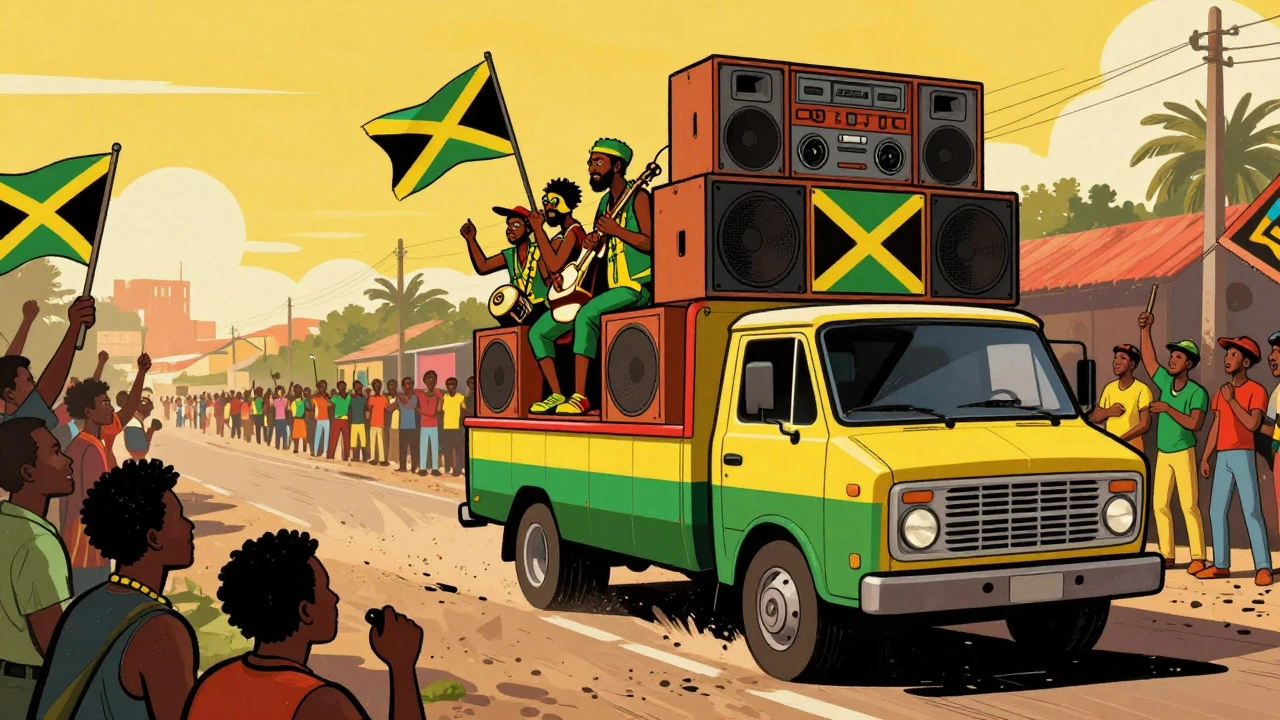
To understand the 1980s explosion of political reggae, we have to look back at Jamaica in the 1970s. Prime Minister Michael Manley’s People’s National Party (PNP) deliberately fused electoral politics with reggae culture. Between 1972 and 1980, Manley organized "bandwagon tours," putting sound systems and reggae bands on trucks to reach voters across Jamaica’s 14 parishes.
This wasn't subtle marketing. Manley carried the "rod of correction," a staff he claimed Emperor Haile Selassie I gave him, using it as a symbol to "punish the right"-specifically targeting the rival Jamaica Labour Party (JLP). This fusion created a template where music and political messaging were inseparable. By the time the 1980s arrived, Jamaican audiences were already accustomed to hearing political slogans over offbeat guitar rhythms.
However, the 1980s brought new challenges. Political violence between PNP and JLP garrison communities intensified, intersecting with the growing cocaine trade. In this chaotic environment, reggae evolved from campaign fuel to a tool for peacekeeping. Artists began addressing domestic violence directly, realizing that their influence on the streets often outweighed official government statements.
Anti-Apartheid: The Global Soundtrack
While Jamaica dealt with internal strife, the rest of the world watched South Africa. Apartheid authorities treated reggae as a threat, frequently banning it because its protest content was considered subversive. Yet, this suppression only fueled the genre's growth underground and abroad.
British-Guyanese artist Eddy Grant released "Gimme Hope Jo’anna" in 1988. It became one of the most recognizable anti-apartheid anthems of the decade. Grant personified Johannesburg as "Jo’anna," criticizing segregation and political repression so clearly that South African censors banned the song from official broadcast. Similarly, UB40’s 1986 hit "Sing Our Own Song" included the ANC rallying slogan "Amandla Awethu" (Power to Us), leading to its censorship in South Africa.
| Song Title | Artist | Year | Key Theme/Impact |
|---|---|---|---|
| Gimme Hope Jo’anna | Eddy Grant | 1988 | Personified Johannesburg; banned in SA for explicit criticism |
| Sing Our Own Song | UB40 | 1986 | Featured ANC slogan "Amandla Awethu"; censored in SA |
| Freedom Fighter | Black Uhuru | 1983 | Celebrated liberation struggle heroes |
| Fire in Soweto | Sonny Okosun | 1977 (Popular in 80s) | Addressed uprisings and state repression in Soweto |
| Tribute to Steve Biko | Tappa Zukie | 1978 (Influential in 80s) | Honored activist killed by police in 1977 |
These songs did more than entertain. They named specific locations like Soweto and Namibia, referenced figures like Steve Biko, and called for concrete actions like international sanctions. For many listeners, especially those outside Africa, these tracks served as their primary education on the realities of apartheid.
Activism Beyond the Studio
Political reggae in the 1980s wasn't limited to individual recordings. It manifested in organized campaigns involving broadcasters, NGOs, and massive coalitions of musicians. One of the most visible projects was "Sun City," launched in 1985 by Steven Van Zandt and producer Arthur Baker.
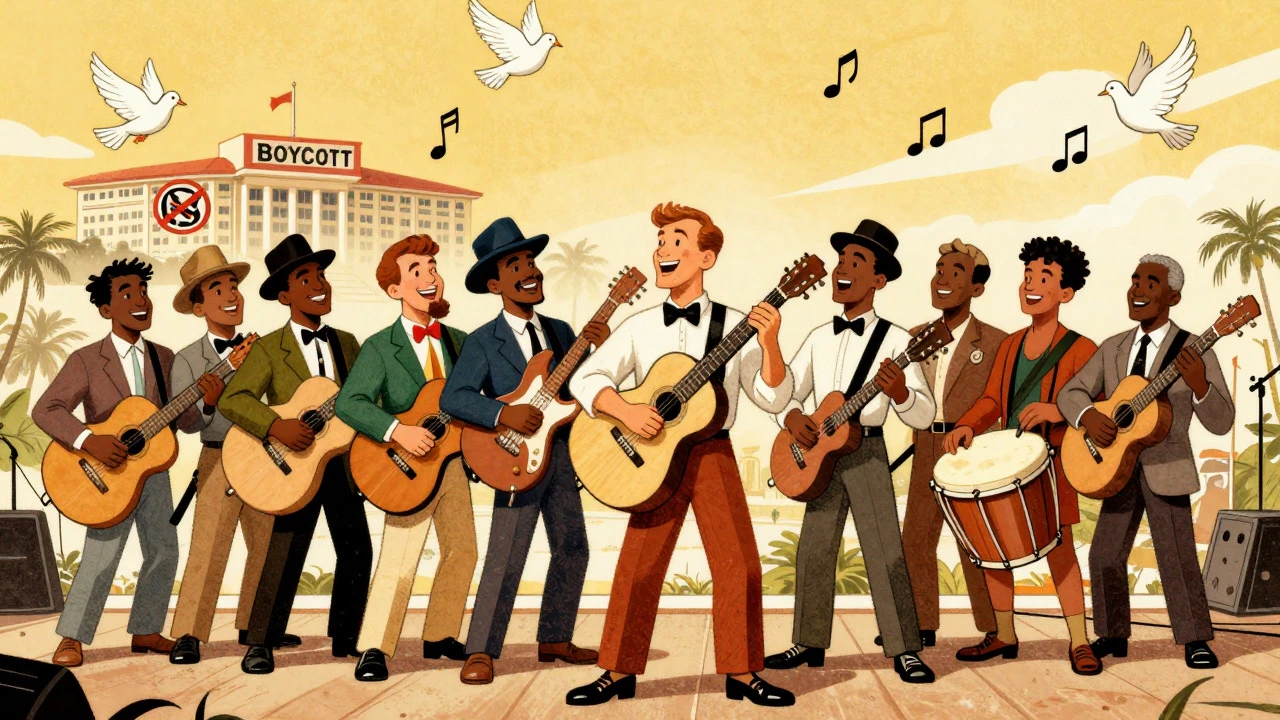
The "Sun City" album featured over 50 artists, including Bruce Springsteen, Bono, Run-DMC, and reggae legends Jimmy Cliff and Big Youth. The song explicitly urged listeners to boycott the Sun City resort in South Africa’s Bophuthatswana homeland, a symbol of apartheid’s attempt to legitimize racial segregation. Most political experts credit this project with delivering a significant blow to the apartheid regime by raising global awareness and contributing to the climate that led to Nelson Mandela’s release in 1990.
Radio also played a crucial role. In 1986, San Francisco DJ Doug Wendt produced a four-hour special titled "Musical Apartheid Attack" on station KQAK. Featuring over 100 reggae protest songs linked to the memory of Steve Biko, the program functioned as a curated archive, exposing thousands of listeners to anti-apartheid tracks without relying on record sales.
Regional Variants: Britain, Jamaica, and South Africa
The flavor of political reggae varied depending on where you listened. In Britain, reggae intersected with anti-racist and anti-Thatcher movements. The Specials’ "Ghost Town," released in June 1981, captured rising unemployment and urban unrest in cities like Coventry and London. While primarily a ska band, The Specials used reggae rhythms to align British urban protest with Jamaican styles, creating a unique political aesthetic.
In Jamaica, the focus remained heavily domestic. As gang wars intensified in Kingston in the late 1980s, dancehall artist Ninjaman recorded "Nah Go Love It." The track explicitly urged armed supporters of both the PNP and JLP to lay down their guns. The song resonated strongly in Kingston’s toughest neighborhoods, proving that political messages delivered through music could reach youths more effectively than formal speeches.
In South Africa, artists like Lucky Dube emerged as the country’s first widely recognized reggae stars. His rise occurred alongside the gradual dismantling of apartheid after 1990, illustrating how the genre adapted as formal restrictions weakened. Earlier, artists like Hugh Masekela and Johnny Clegg had adopted reggae-inflected rhythms in songs like "Bring Him Back Home" and "Asimbonanga," blurring genre boundaries while preserving their political intent.
Legacy and Modern Relevance
Why does this matter today? Because the issues addressed by 1980s political reggae-racial inequality, police brutality, and economic marginalization-persist. Contemporary platforms like Jamaicans.com update their protest playlists to include 2010s songs like Kabaka Pyramid’s "I Can’t Breathe" alongside classics from the 1980s. This shows that fans view political reggae as a continuous tradition rather than a closed historical period.
Educators and activists still use resources like Brown University’s "Singing Freedom" exhibition, which catalogues reggae songs protesting apartheid with lyrics and historical context. These tools help students connect the dots between past struggles and current events. Whether it’s listening to Peter Tosh’s "Equal Rights" or analyzing the impact of "Sun City," the legacy of 1980s political reggae remains a potent weapon for awareness and change.
What made reggae music so effective for political activism in the 1980s?
Reggae combined danceable rhythms (typically 70-90 BPM) with direct, narrative lyrics. Unlike abstract protest art, reggae songs named specific leaders, locations, and policies. This made complex political issues accessible to a wide audience, turning clubs and radios into spaces for political education.
How did the South African government react to political reggae?
The apartheid government viewed reggae as subversive and frequently banned or restricted it. Songs like UB40's "Sing Our Own Song" and Eddy Grant's "Gimme Hope Jo’anna" were censored from official broadcasts because they explicitly supported the ANC and criticized segregation.
What is the significance of the "Sun City" project?
Released in 1985, "Sun City" was a collaboration of over 50 major artists urging a cultural boycott of a South African resort. It is credited with raising global awareness against apartheid and demonstrating the power of cross-genre musical solidarity in political campaigns.
Did political reggae affect Jamaican domestic politics?
Yes. In the 1970s, Prime Minister Michael Manley used reggae in election campaigns. By the 1980s, artists like Ninjaman used the genre to call for peace between rival political gangs (PNP and JLP supporters), influencing street-level behavior in Kingston.
Are there resources for learning more about 1980s political reggae?
Yes. Brown University’s "Singing Freedom" exhibition provides academic context and lyrics. Community sites like MzansiReggae and Jamaicans.com offer curated playlists of anti-apartheid and protest reggae, updated regularly to include both classic and contemporary tracks.