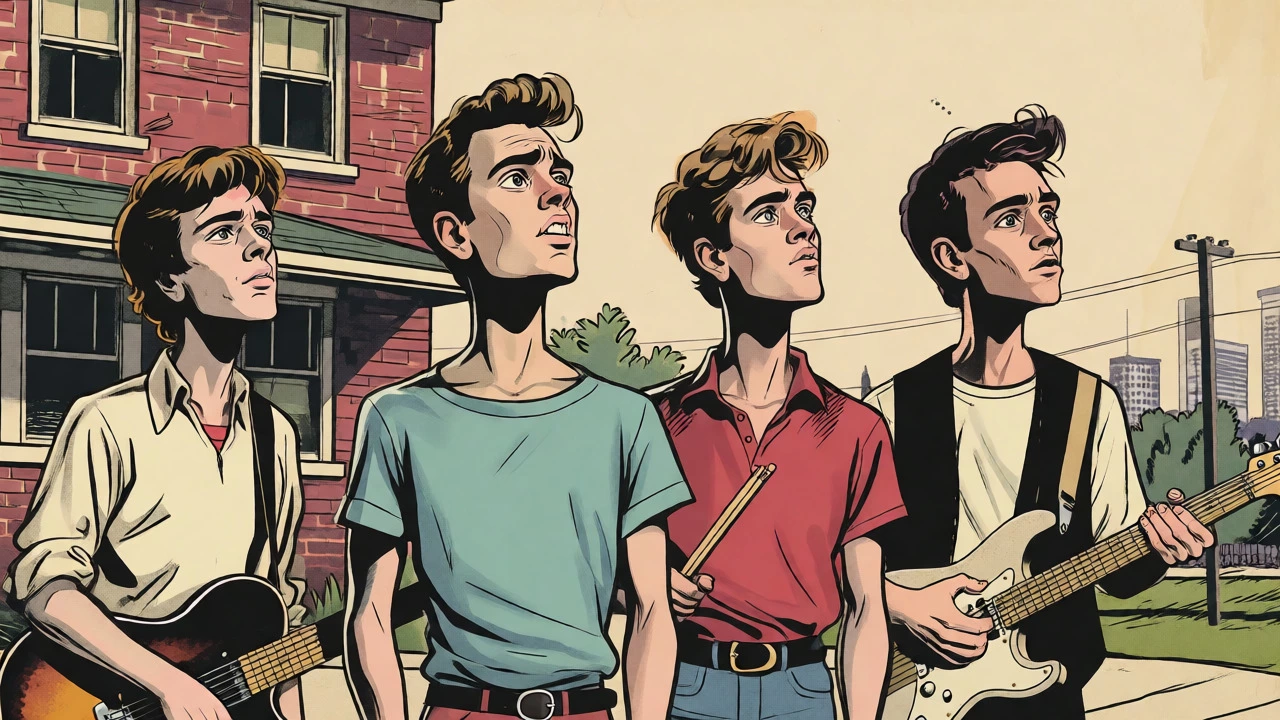

You can hear it before you see it. That specific crunch of a distorted guitar chord, followed by a drum fill that sounds like someone hitting a trash can lid with a hammer, and then-bam-a chorus so catchy it feels like a sugar rush in your ears. If you grew up in the late 1980s, or if you’ve ever seen a music video featuring men with more hairspray than sense, you know exactly what I’m talking about. This was the sound and sight of Poison, an American glam metal band formed in Mechanicsburg, Pennsylvania, in 1983. They weren’t just a band; they were the neon-colored poster children for an era that valued fun over seriousness, spectacle over subtlety, and partying over politics.
While thrash metal bands like Metallica and Slayer were busy proving how fast and angry they could be, Poison took the opposite approach. They decided that rock and roll should look good, feel good, and make you want to dance in your living room. Their rise from small-town Pennsylvania clubs to the glittering stages of Los Angeles’ Sunset Strip is one of the most colorful stories in modern music history. It’s a tale of ambition, aesthetics, and the undeniable power of a well-placed eyeliner stroke.
From Mechanicsburg to the Sunset Strip
The story starts far away from the palm trees of California. In 1983, three high school friends-Bret Michaels (vocals), Bobby Dall (bass), and Rikki Rockett (drums)-formed a band called Paris in Mechanicsburg, Pennsylvania. They were hungry, talented, and completely out of place in their hometown. Rock stars didn’t come from there; they came from big cities with record labels and radio stations.
So, they packed up and moved to Los Angeles around 1984. This wasn’t just a relocation; it was a transformation. The West Coast scene demanded a different kind of musician. You couldn’t just play loud; you had to look the part. The club circuit on the Sunset Strip, home to venues like the Whisky a Go Go and the Roxy, was a pressure cooker where bands lived or died based on their visual appeal as much as their musical chops. To complete the lineup, guitarist C.C. DeVille joined in 1985, replacing original member Matt Smith. With this new formation, the band changed its name to Poison, signaling a shift toward something sharper, edgier, and undeniably dangerous-at least in appearance.
The Visual Language of Excess
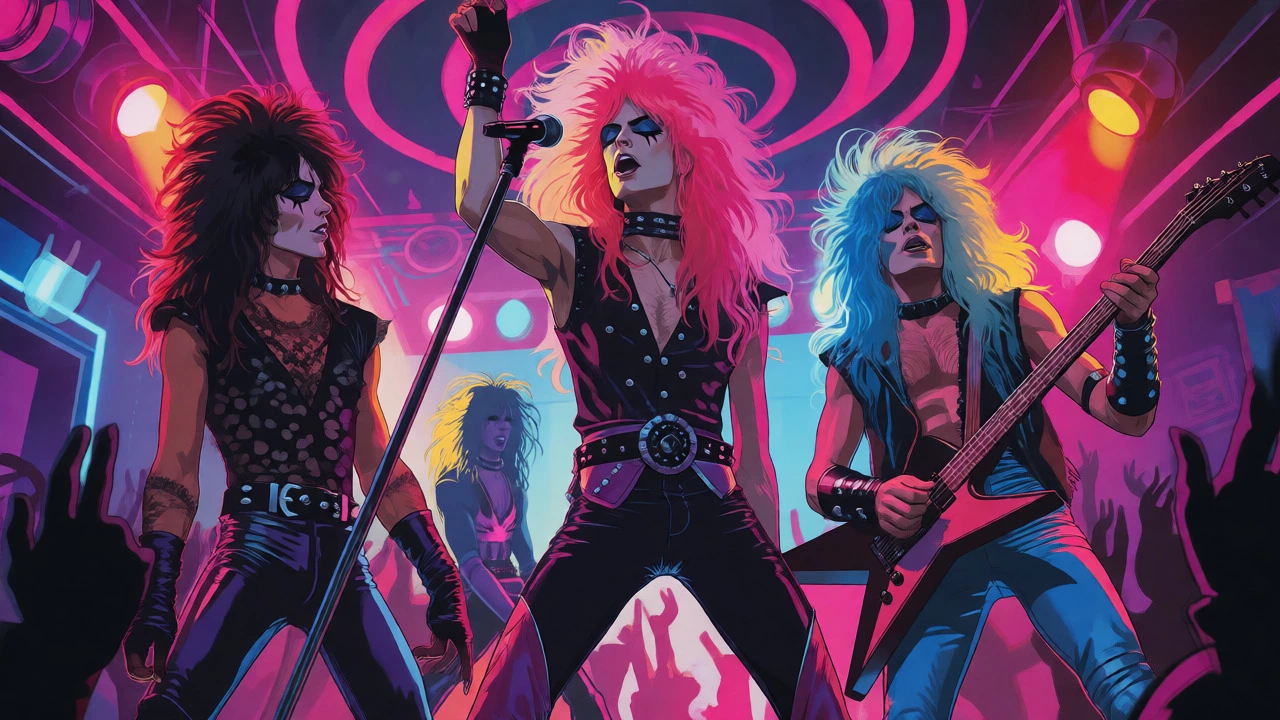
If you look at photos of Poison from 1986, you might do a double-take. Are those four women? Or are they men who spent hours in front of a mirror? The answer is the latter, but the ambiguity was the point. Poison embraced an androgynous aesthetic that leaned heavily into cosmetics, bright colors, and backcombed hair that defied gravity. Wikipedia notes their "excessive use of cosmetics" would make pageant queens blush, and they meant it literally. Eyeshadow, lipstick, and foundation were standard issue, not optional extras.
This wasn’t vanity for vanity’s sake. It was branding. In the age of MTV, looking interesting was half the battle. While other metal bands wore leather jackets and ripped jeans, Poison wore spandex, lace, and satin. They turned the stage into a fashion runway. The cover of their debut album, Look What the Cat Dragged In, released in August 1986, perfectly captures this vibe. The band members look polished, pretty, and ready to party. It was a deliberate contrast to the grimacing aggression of their contemporaries. They weren’t trying to scare you; they were trying to charm you.
Party Anthems Over Power Riffs
Musically, Poison played a style often labeled "hair metal" or "pop-metal." Critics sometimes dismissed them as shallow, arguing that their songs lacked the technical complexity of progressive rock or the raw intensity of punk. But that criticism missed the point. Poison wasn’t aiming for critical acclaim; they were aiming for the charts. And they hit them hard.
Songs like "Talk Dirty to Me" and "Nothin’ But a Good Time" are masterclasses in hook writing. They are simple, repetitive, and incredibly effective. The lyrics focus on universal themes: partying, romance, and having a good time. There’s no deep philosophical inquiry here. When Bret Michaels sings about wanting to talk dirty, he means exactly that. It’s honest, straightforward hedonism. DeBaser, a music analysis site, even coined the term "Party Metal" to describe this subgenre, noting that Poison’s music was "brazen and glossy, excessive and hyper-melodic."
But don’t mistake simplicity for lack of skill. Producing a song that sticks in your head after one listen is a difficult art form. Poison mastered it. Their arrangements relied on mid-tempo rhythms and soaring choruses designed for stadium sing-alongs. They understood that rock and roll, at its core, is about energy and connection. By stripping away the pretension, they made heavy guitar music accessible to teenagers who might have been intimidated by the speed-picking solos of Van Halen or the growling vocals of Judas Priest.
Commercial Dominance and the Second Wave
Poison’s commercial success was staggering. After a slow start, their debut album climbed to number 3 on the Billboard 200. But it was their second album, Open Up and Say… Ahh!, released in May 1988, that truly cemented their status. It sold roughly 8 million copies worldwide. Tracks like "Every Rose Has Its Thorn," a power ballad about heartbreak, showed a softer side that appealed to a broader audience, including those who usually avoided metal.
| Album Title | Release Year | Key Singles | Chart Peak (US) |
|---|---|---|---|
| Look What the Cat Dragged In | 1986 | Talk Dirty to Me, I Want Action | #3 |
| Open Up and Say… Ahh! | 1988 | Nothin' But a Good Time, Every Rose Has Its Thorn | #2 |
| Flesh & Blood | 1990 | Unskinny Bop, Something to Believe In | #7 |
This period, roughly 1986 to 1990, represents the second wave of glam metal. Unlike the first wave, which included bands like Twisted Sister and W.A.S.P. who used shock horror imagery, Poison and their peers focused on melody and mainstream appeal. They proved that you could sell millions of records without needing to wear spikes or scream about demons. Their success paved the way for other acts like Mötley Crüe and Def Leppard, creating a dominant market segment that controlled MTV and FM radio for nearly five years.
Critics vs. Fans: The Love-Hate Relationship
Not everyone loved Poison. Heavy metal purists often looked down on them, viewing their makeup and pop sensibilities as a betrayal of rock’s rebellious roots. To these critics, Poison represented everything wrong with the genre’s commercialization. They saw the band as manufactured products rather than authentic artists.
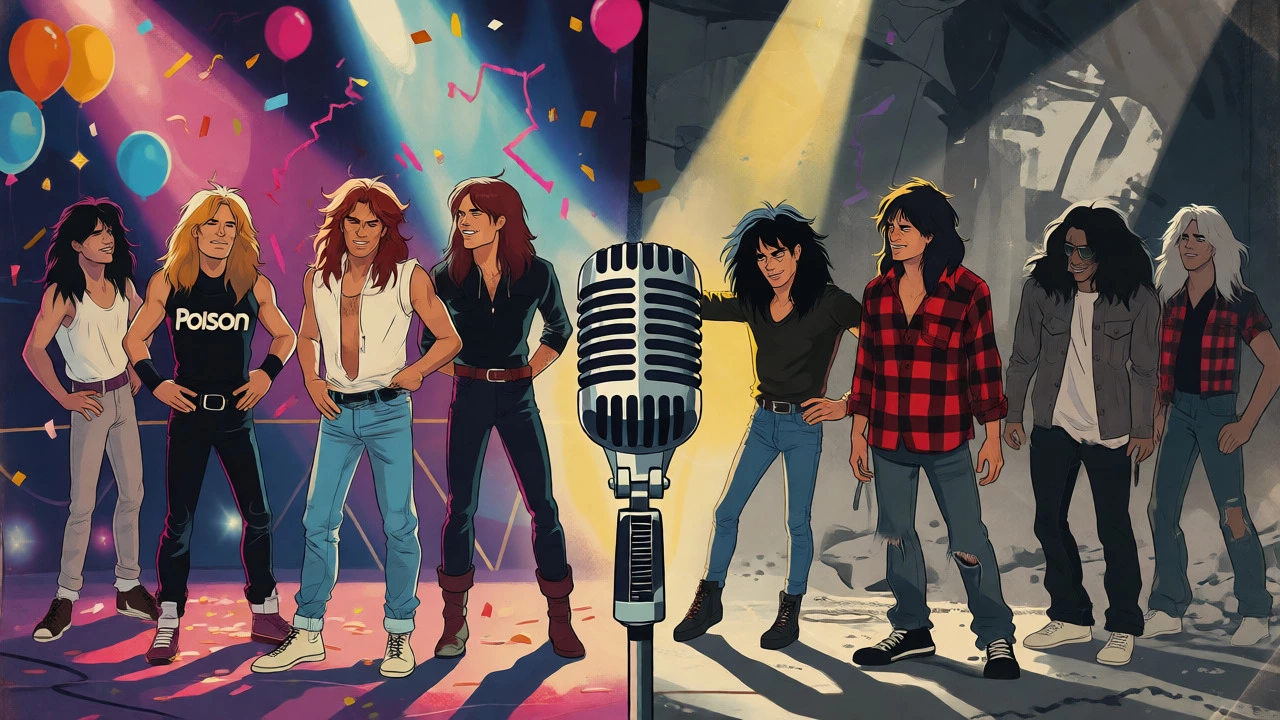
But fans didn’t care about purity tests. For millions of listeners, Poison provided pure escapism. In a decade marked by Cold War tensions and economic uncertainty, there was comfort in a band that promised nothing but a good time. As noted in retrospective articles, Poison’s "colorful, grinning, party-first sound" offered a safe space for rebellion. You could rock out without feeling threatened. This accessibility was their superpower. They brought heavy metal into suburban homes where parents might have banned Slayer but tolerated Poison because the songs were catchy and the visuals were entertaining.
Legacy Beyond the Hair Spray
The glam metal bubble burst in the early 1990s with the rise of grunge. Suddenly, flannel shirts and apathy were cool, and spandex and enthusiasm were uncool. Poison’s popularity waned, and the band went through various breakups and reunions. Yet, unlike many of their contemporaries who faded into obscurity, Poison maintained a loyal fanbase. Today, they continue to tour, playing to crowds who remember the 80s fondly and younger audiences discovering the era’s excesses for the first time.
Looking back, Poison’s impact is clear. They democratized rock stardom. They showed that you didn’t need to be a virtuoso guitarist or a poetic lyricist to connect with people. You needed charisma, hooks, and the courage to look ridiculous. Their neon bravado reminds us that music doesn’t always have to be serious to be meaningful. Sometimes, it just needs to be fun.
What defines the "glam metal" genre?
Glam metal, also known as hair metal, is a subgenre of heavy metal that emerged in the late 1970s and peaked in the 1980s. It combines elements of traditional heavy metal with the flamboyant aesthetics of glam rock, such as elaborate costumes, makeup, and big hairstyles. Musically, it tends to be more melodic and radio-friendly than thrash or death metal, focusing on catchy hooks and power ballads.
Why did Poison change their name from Paris?
The band originally formed as Paris in 1983. After relocating to Los Angeles and recruiting guitarist C.C. DeVille in 1985, they changed their name to Poison. The new name better reflected their edgier image and helped distinguish them from other local bands, marking the beginning of their classic lineup and commercial ascent.
How successful was Poison commercially?
Poison achieved massive commercial success, selling over 15 million albums in the United States and more than 40 million records and DVDs worldwide. Their second album, "Open Up and Say… Ahh!", alone sold approximately 8 million copies globally, making them one of the best-selling rock bands of the late 1980s.
Did Poison write all their own songs?
Yes, the core members of Poison, particularly Bret Michaels, Bobby Dall, Rikki Rockett, and C.C. DeVille, co-wrote the majority of their hits during their peak years. While they occasionally collaborated with outside producers, their signature sound was largely self-generated, reflecting their shared vision for party-centric rock anthems.
Why did glam metal decline in the 1990s?
The rise of grunge and alternative rock in the early 1990s shifted cultural tastes away from the excess and polish of glam metal. Bands like Nirvana and Pearl Jam emphasized authenticity and raw emotion over theatricality and technical flash, leading radio stations and MTV to drop glam metal acts in favor of the new, grittier sound.
