
Imagine spending two million dollars on a stage set that blocks the audience from seeing the band for most of the show. That is exactly what Pink Floyd did in 1980 with The Wall Tour. It wasn't just a concert; it was a theatrical experiment that nearly bankrupted the band while redefining what a live rock performance could be.
If you are researching the history of high-concept tours or trying to understand why this specific era remains so influential, you need to look past the music and into the engineering. This article breaks down the logistics, the failures, and the artistic triumphs of a production that treated the stage like a movie set rather than a platform for guitar solos.
Why They Built a Wall (And Why It Was a Bad Business Idea)
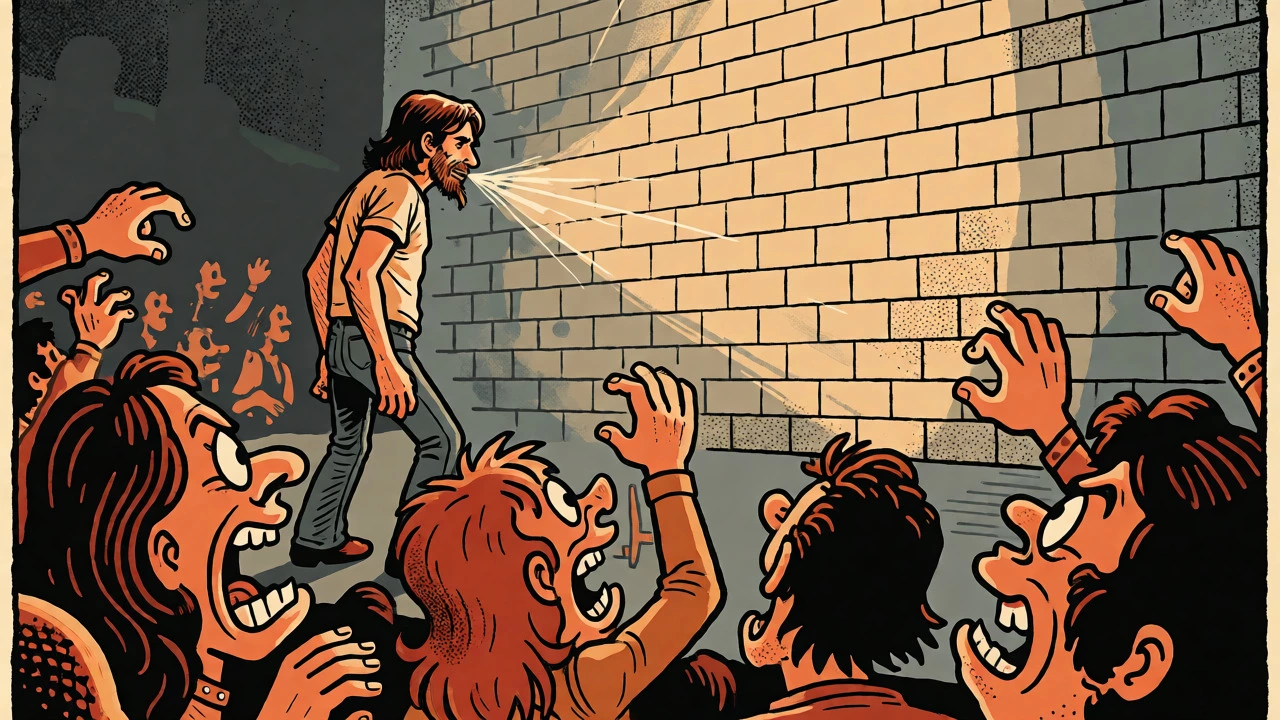
The origin story isn't about fame; it's about frustration. During the Animals tour in 1977, Roger Waters spat at a fan who wouldn't stop shouting at him. He realized he had lost his connection with the crowd. Instead of fixing it by getting closer, he decided to build a barrier. Literally.
Gerald Scarfe, the cartoonist who designed the album art, helped visualize this concept. The idea was simple but insane: erect a massive wall between the performers and the audience during the first half of the show. By the time the second half started, the wall would be complete, hiding the musicians entirely until the final act when it would be demolished.
This decision had immediate economic consequences. To make the wall work, Pink Floyd couldn't play open-air stadiums where wind and sightlines would ruin the effect. They had to book indoor arenas. This capped their ticket sales at around 15,000-20,000 per night. Meanwhile, the cost to transport and assemble the rig skyrocketed. Reports vary, but estimates suggest the production cost between $1.5 million and $2.8 million before they even played a note. In today's money, that is tens of millions. They ended up losing roughly $600,000 on the tour-a fortune in 1980.
The Engineering Behind the Brick Wall
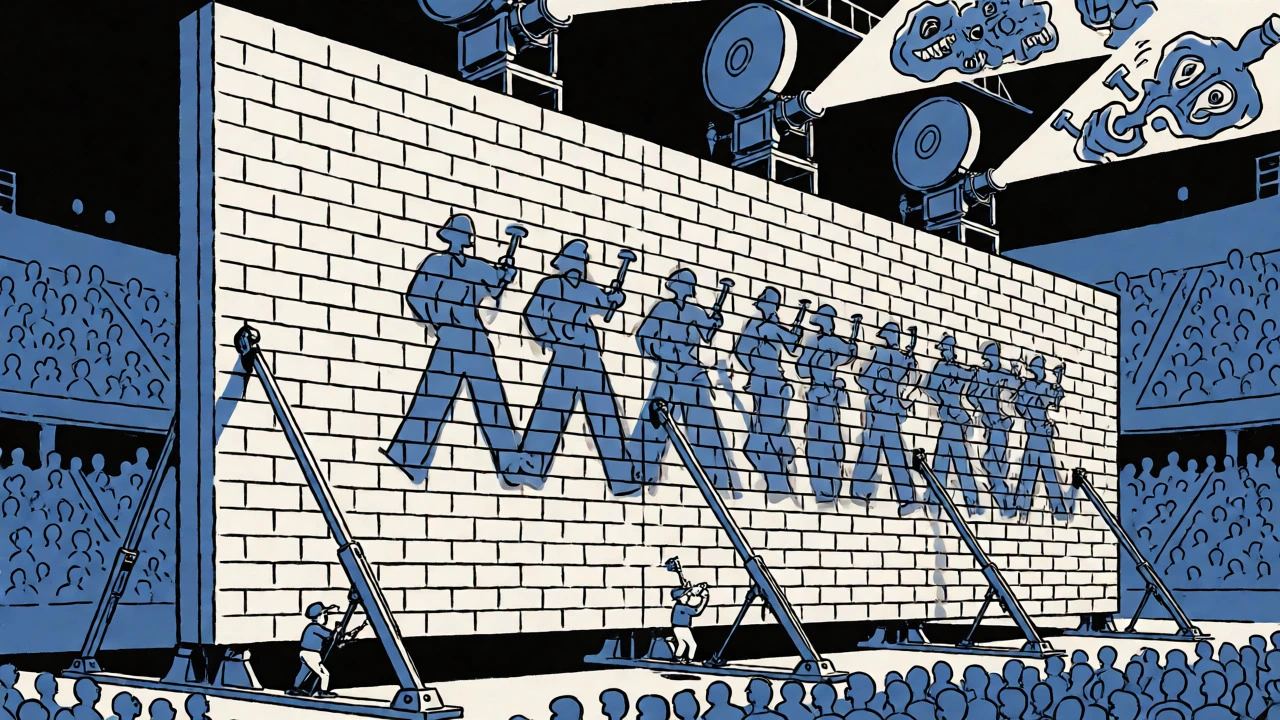
Building a wall that looks like concrete but moves like a stage prop required serious industrial design. The structure wasn't made of real bricks. It consisted of hundreds of lightweight cardboard or fiberboard sections, each printed to look like masonry.
| Component | Specification | Function |
|---|---|---|
| Wall Dimensions | Approx. 160 ft wide x 35 ft high (varies by venue report) | Physical barrier and projection surface |
| Brick Count | 340-450 modular sections | Raised by hydraulic lifts during performance |
| Sound System | Quadraphonic, ~109 dB, 150 kW | Spatial audio immersion |
| Projections | Three 35mm film projectors | Displaying Gerald Scarfe’s animations |
| Inflatables | Teacher, Mother, Wife figures | Symbolic representation of trauma |
The wall grew brick by brick during the first half of the show. Crew members, hidden behind the structure, used hydraulic lifts to raise new sections as the songs progressed. This meant the timing had to be perfect. If a song ran long, the wall wouldn't finish rising. If it ran short, they'd have empty space where bricks should be. There was no room for improvisation.
Once the wall was up, it became a cinema screen. Three synchronized 35mm projectors displayed Scarfe’s grotesque animations-marching hammers, war imagery, and psychological distortions. This wasn't just background visuals; it was the primary focus of the show. The band became secondary to the narrative.
The Performance Structure: A Play, Not a Gig
You don't walk into a Pink Floyd concert expecting a medley of hits. You get the entire double album, performed in order. The setlist included tracks like "In the Flesh?," "Another Brick in the Wall," and "Comfortably Numb." But the delivery was radically different from the studio recordings.
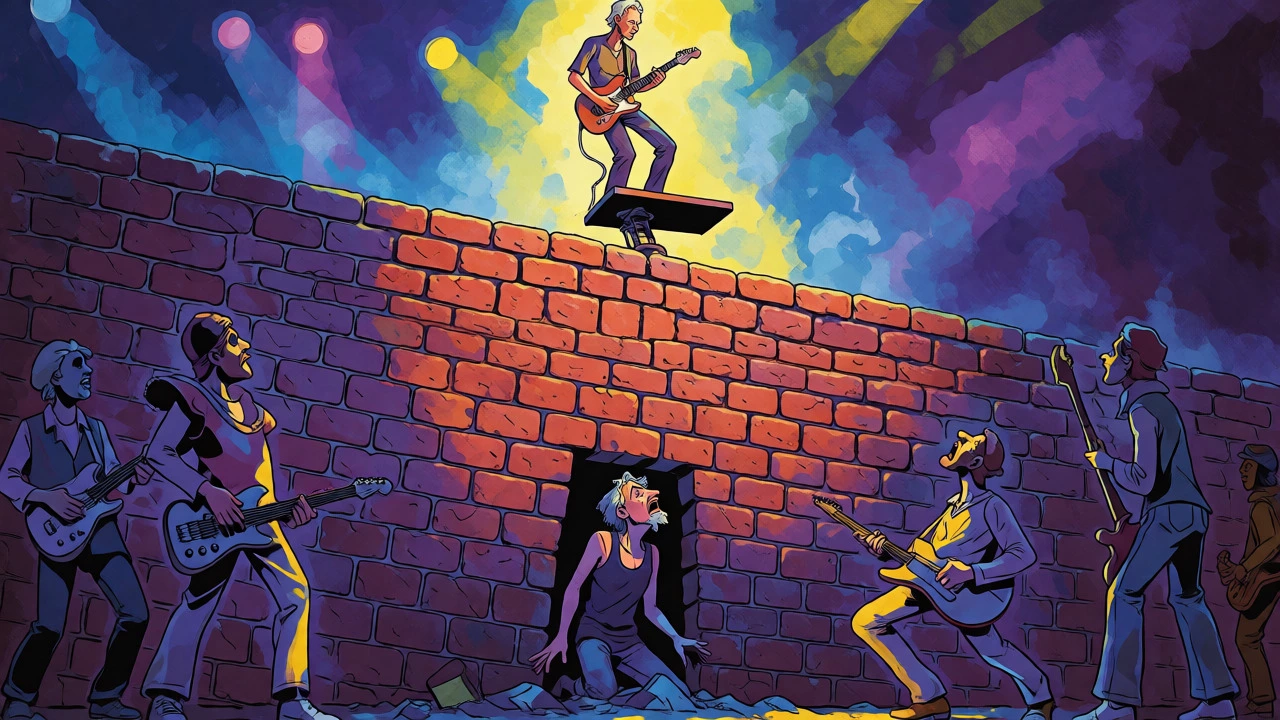
For "Comfortably Numb," David Gilmour didn't stand next to Waters. He stood on top of the completed wall, elevated on a hydraulic platform. This created a visual hierarchy: Gilmour was the angelic voice from above, while Waters was trapped below. It was a literal interpretation of the lyrics.
The band also used surrogate musicians. Four actors wearing masks and costumes mimed playing instruments during certain segments. This reinforced the theme of dehumanization-the idea that rock stars are interchangeable commodities. It felt less like a band playing together and more like a puppet show controlled by a director.
Richard Wright, the keyboardist, was technically not part of the core lineup anymore due to internal conflicts. He was hired as a session musician for the tour, paid a weekly salary. This tension added a layer of awkwardness to the already rigid staging. Everyone knew the financial stakes were high, and the creative control was tightly held by Waters.
Economic Reality: Why They Only Played 31 Shows
Most major acts in 1980 would do 100+ shows. Pink Floyd did 31. Here is why:
- Venue Constraints: The wall required specific ceiling heights and floor strength. Not every arena could handle the hydraulics and the weight of the equipment (approx. 45 tons).
- Setup Time: Building the wall took hours. They couldn't pack up and move overnight like a standard tour bus crew.
- Ticket Pricing vs. Capacity: Indoor venues hold fewer people than stadiums. To cover costs, tickets had to be expensive, limiting the demographic reach.
The tour visited only four cities: Los Angeles, Uniondale (New York), London, and Dortmund. Even then, the runs were short-five to eight nights per city. This scarcity turned the concerts into events rather than routine gigs. Fans traveled across continents to see it, knowing there might never be another chance.
Critics argue this made the tour elitist. But supporters say it preserved the integrity of the art. Scaling it to stadiums would have diluted the intimacy of the wall metaphor. You can't feel trapped by a wall if you're 200 feet away in the nosebleeds.
Legacy and Technical Risks
The tour wasn't without danger. During the opening night in Los Angeles, a curtain caught fire. Pyrotechnics, heavy machinery, and complex lighting rigs created a hazardous environment. One wrong cue could mean disaster.
Despite the losses, The Wall Tour changed live entertainment forever. Before this, concerts were mostly about hearing the music. After this, concerts became multimedia experiences. Bands like U2 and later Lady Gaga adopted elements of this approach: narrative arcs, massive sets, and integration of film.
The audio technology was also ahead of its time. The quadraphonic sound system placed speakers all around the audience, creating an immersive bubble. This was rare in 1980. Most venues still used basic left-right stereo setups. Pink Floyd forced venues to upgrade their infrastructure to accommodate the show.
Today, we view The Wall through the lens of nostalgia and the 2000 live album release. But at the time, it was a risky gamble that failed financially while succeeding artistically. It proved that you could lose money and still win history.
Frequently Asked Questions
Did Pink Floyd actually build a real brick wall?
No, the wall was made of lightweight materials like cardboard or fiberboard, printed to look like brick. Real bricks would have been too heavy for the hydraulic lifts and dangerous if they fell. The illusion was created through careful printing and lighting.
How many times did Pink Floyd perform The Wall Tour?
There were 31 official performances. These took place in Los Angeles, Uniondale, London, and Dortmund between February 1980 and June 1981. Some sources cite 29 shows depending on whether they count certain rehearsal-like performances or split London dates differently.
Why did Pink Floyd lose money on The Wall Tour?
The production costs were enormous (estimated between $1.5M and $2.8M) due to the complex stage mechanics and transportation needs. Because they played small indoor arenas instead of large stadiums, they couldn't sell enough tickets to offset these expenses. The limited number of shows (31) further spread the fixed costs over a small revenue base.
Who designed the animations for The Wall Tour?
Gerald Scarfe designed the iconic animations, including the marching hammers and the pig. His style provided the visual language for the show's themes of fascism, childhood trauma, and isolation. The animations were projected onto the wall using three synchronized 35mm projectors.
Is The Wall Tour available to watch today?
Yes, primarily through the 2000 live album Is There Anybody Out There? The Wall Live 1980-1981. Additionally, footage from the London performances was used in the 1982 film Pink Floyd - The Wall, though the film features actors acting out the roles rather than showing the full concert setup.
