
Imagine an album that spent over 14 years on the Billboard charts. Not because it was constantly in the top ten, but because people simply refused to stop buying it. That is The Dark Side of the Moon. It’s not just a collection of songs; it’s a 42-minute psychological journey that redefined what a rock record could be. If you’ve ever wondered why this 1973 release still dominates playlists and audiophile discussions, the answer lies in its anatomy. It wasn’t magic. It was engineering, philosophy, and relentless rehearsal combined into a perfect storm of sound.
Key Takeaways
- Conceptual Unity: Unlike narrative-driven albums, this work unifies themes of time, money, death, and madness through sonic motifs rather than plot.
- Production Innovation: Engineer Alan Parsons used tape loops and early synthesizers to create textures that were impossible for other bands of the era.
- Live Prototyping: The band performed the entire piece live for a year before recording, ensuring every transition was flawless.
- Visual Minimalism: The iconic prism cover by Hipgnosis broke from the illustrative trends of the 1970s, aiding its cultural longevity.
- Enduring Legacy: With 45 million copies sold, it remains the benchmark for commercial success in progressive rock.
The Blueprint: From Live Experiment to Studio Masterpiece
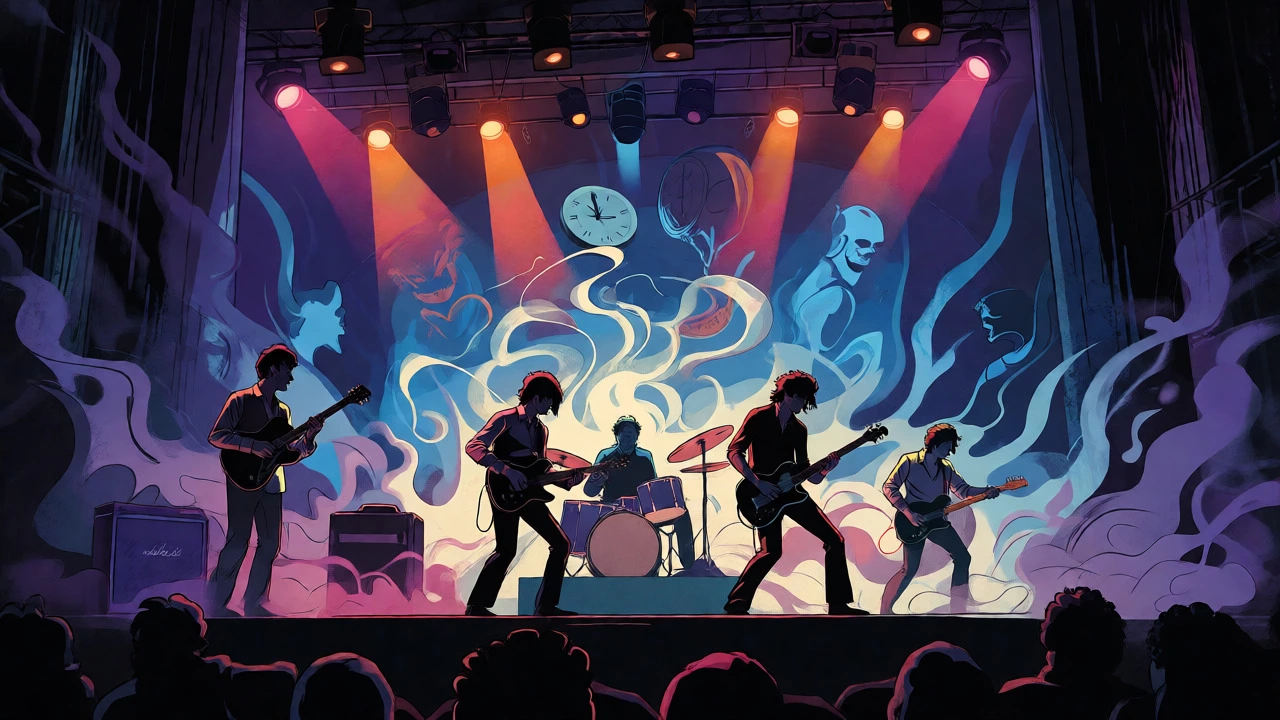
Most bands write songs, record them, and hope they stick. Pink Floyd did the opposite. They started with a working title, "Dark Side of the Moon (A Piece for Assorted Lunatics)," and took it on tour in January 1972. For twelve months, they played this continuous suite of music at venues like The Rainbow Theatre in London. This wasn’t just touring; it was prototyping. Roger Waters, the bassist and primary lyricist, wanted to explore "things that make people mad." He wasn’t interested in telling a story about a character named Pink, as he would later do on The Wall. Instead, he wanted to map the universal pressures of modern life.
By the time they entered EMI Studios (now Abbey Road) on May 31, 1972, the structures were solid. They knew exactly how each track flowed into the next. This pre-production phase is often overlooked in music history, but it’s crucial. It allowed them to refine the emotional arc before touching a microphone. When they finally recorded, they had 255 days of studio time. That sounds like a lot, but when you are building a cathedral out of sound waves, it goes fast.
The Architects Behind the Sound
You can’t talk about the anatomy of this album without talking about the people who built it. While Roger Waters, David Gilmour, Richard Wright, and Nick Mason were the creative core, one man deserves special mention for the technical execution: Alan Parsons. Parsons was in his early twenties and had already worked on Beatles records like Abbey Road. He brought a level of precision that elevated the band’s ideas into high-fidelity reality.
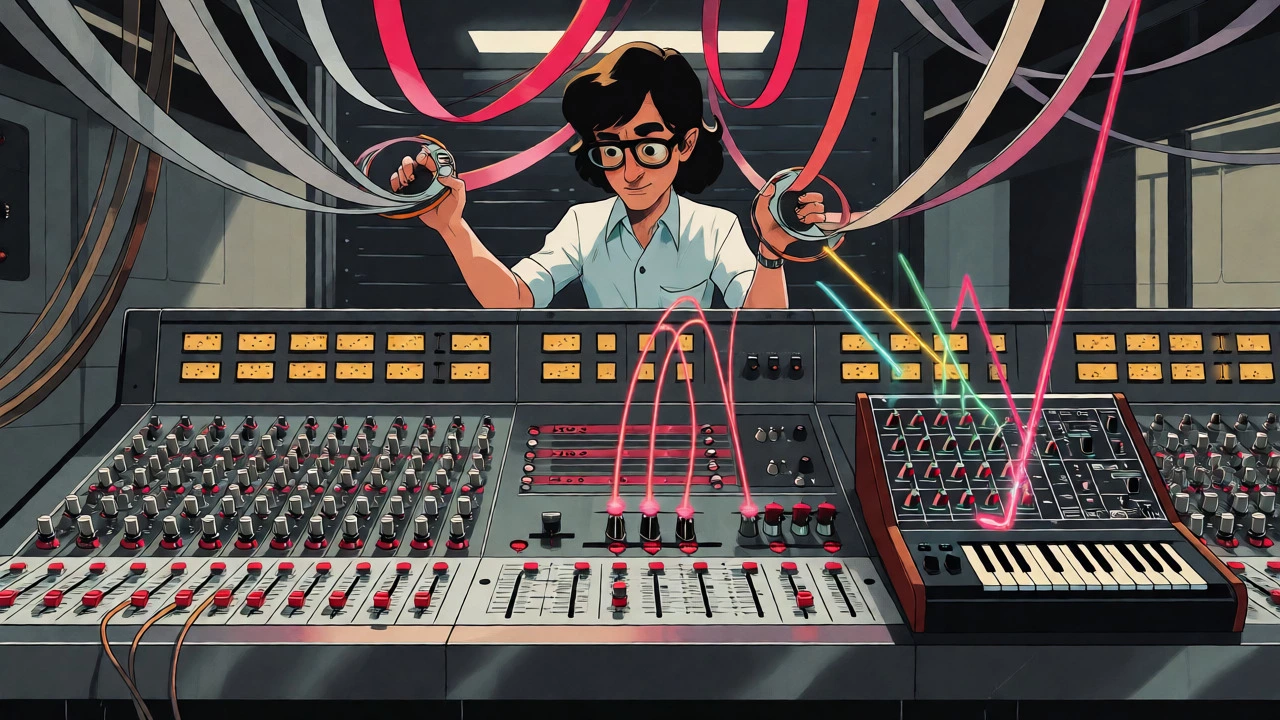
Parsons didn’t just press record. He engineered the experience. He utilized the EMS VCS3 and EMS Synthi A synthesizers, which were cutting-edge tech at the time. On "On the Run," he created a sequenced arpeggiator pattern that mimics the panic of travel. He also pioneered the use of multi-track tape loops. Listen to the intro of "Money." Those cash registers and coins aren’t random noise. They are a carefully cut and spliced loop that establishes the song’s unusual 7/4 time signature. Without Parsons’ technical wizardry, these elements might have sounded chaotic. Instead, they sound inevitable.
Thematic Architecture: Time, Money, and Madness
A concept album usually implies a storyline. Think of Tommy by The Who or The Lamb Lies Down on Broadway by Genesis. The Dark Side of the Moon breaks that mold. It doesn’t have a protagonist. It has a mood. Daniel Levitin, a neuroscientist and author, described the album as a tapestry of "angst, greed, alienation, and questioning one’s own sanity." The unity comes from recurring musical motifs and lyrical themes, not a plot.
The opening track, "Speak to Me," sets the stage with a collage of heartbeats, alarm clocks, and laughter. These sounds return throughout the album, creating a subconscious link between tracks. "Time" uses the alarm clock motif to trigger existential dread about wasted youth. "Money" attacks consumerism with sardonic lyrics and that mechanical 7/4 beat. "Us and Them" explores division and war through jazz-inflected harmonies. Finally, "Brain Damage" and "Eclipse" address mental instability directly, referencing the fragility of sanity.
This approach makes the album feel cohesive even though the songs stand alone. You can listen to "The Great Gig in the Sky" separately, and it hits hard. But in sequence, it serves as the emotional climax regarding death, bridging the gap between the anxiety of "Time" and the cynicism of "Money." It’s a structural masterpiece.
Sonic Innovation and Technical Specifications
Why does this album still sound good on modern speakers? Because it was mixed for them. The band and Parsons aimed for reference-quality audio. They used quadraphonic mixing techniques, placing sounds in different corners of the listening space. This was rare in 1973. Most stereo mixes felt flat. Here, the spatial depth creates immersion.
Consider "The Great Gig in the Sky." There are no lyrics. Clare Torry, a session singer, improvised wordless vocals in a single take. Her performance spans wide dynamic ranges, moving from soft hums to powerful belts. It’s a non-verbal depiction of fear and ecstasy. Technically, the track relies on a simple chord progression in B minor, but the production layers her voice with such clarity that it feels intimate, almost intrusive. Audiophiles often use this track to test loudspeaker midrange detail.
| Track Name | Primary Theme | Technical Highlight | Emotional Function |
|---|---|---|---|
| Speak to Me | Chaos / Introduction | Sound collage (heartbeats, alarms) | Builds tension and anticipation |
| Breathe (In the Air) | Life / Breath | Slide guitar and ambient pads | Provides calm after chaos |
| On the Run | Anxiety / Travel | EMS Synthi A sequencer | Creates panic and urgency |
| Time | Mortality / Regret | Alarm clock intro, heavy drums | Triggers existential crisis |
| The Great Gig in the Sky | Death / Fear | Clare Torry’s vocal improvisation | Emotional peak and release |
| Money | Greed / Materialism | 7/4 time signature, tape loops | Satirical critique of society |
| Us and Them | Division / War | Dick Parry saxophone solo | Reflective and melancholic |
| Any Colour You Like | Illusion of Choice | Instrumental jam, synth effects | Bridge to the finale |
| Brain Damage | Madness | Rhythmic drive, direct lyrics | Acceptance of insanity |
| Eclipse | Unity / Conclusion | Crescendo, heartbeat return | Final summation of themes |
The Visual Identity: Why the Prism Works
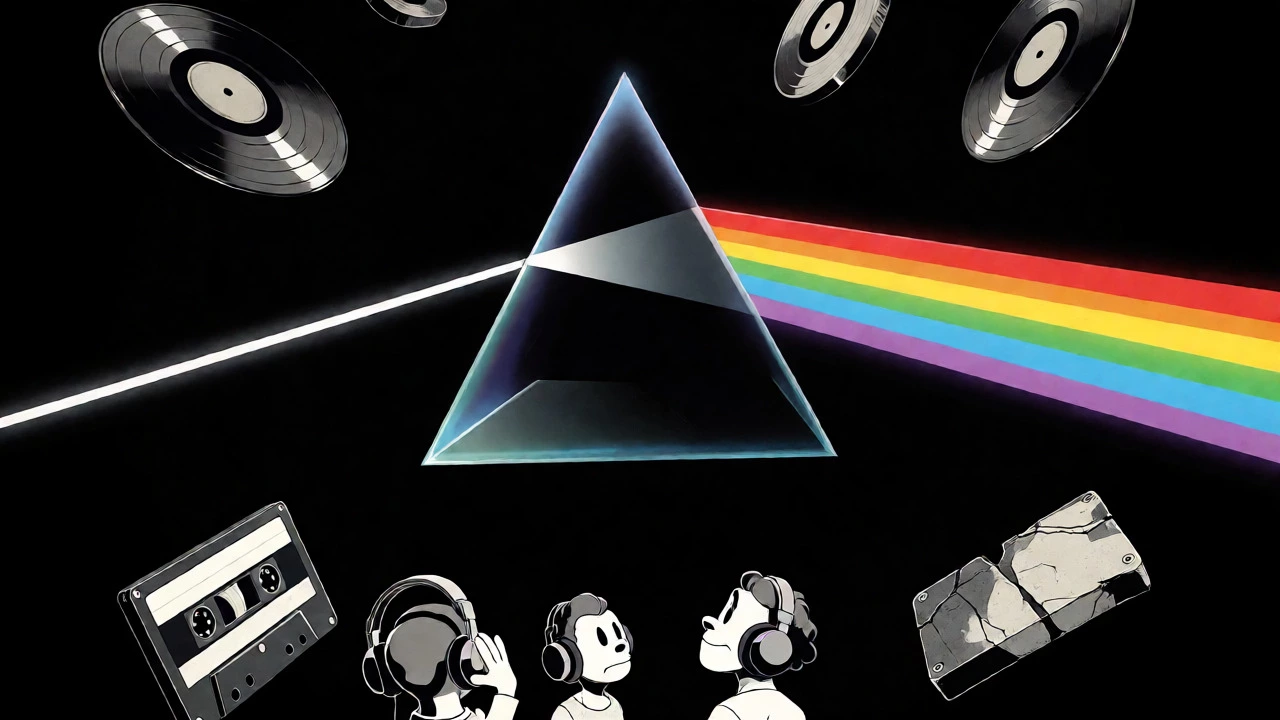
We can’t ignore the cover. Before The Dark Side of the Moon, concept albums often featured busy, illustrative art-think of Tales from Topographic Oceans by Yes. Hipgnosis, the design agency led by Storm Thorgerson, proposed something radically different: a black background with a triangular prism refracting light into a spectrum. No band name. No title on the front.
This minimalist design was a gamble. Record labels hated it. But it worked. The image became a brand. It signaled that this was a serious, scientific, and philosophical work, not just another pop record. The simplicity allowed the artwork to transcend the music itself, appearing on T-shirts, posters, and tattoos worldwide. It proved that visual minimalism could enhance conceptual weight.
Reception and Commercial Longevity
When released in March 1973, critics praised its polish. But the real story is the sales. It hit number one on the US Billboard 200 and stayed on the chart for 741 weeks. That’s over 14 years. In an industry where attention spans last weeks, this is unheard of. By the late 1990s, it had been certified 15x Platinum in the US. Globally, estimates sit around 45 million copies.
Why did it sell so well? It bridged the gap. Progressive rock fans loved the complexity and odd time signatures. Mainstream listeners connected with the accessible melodies and relatable themes. It wasn’t too weird, but it wasn’t boring. It offered intellectual depth wrapped in beautiful sound. This balance is the secret ingredient that many "perfect" albums lack.
Is It Actually Perfect? The Counter-Argument
Not everyone agrees it’s the pinnacle of prog rock. Some critics argue it’s overrated. They claim it lacks the narrative depth of The Wall or the political bite of Animals. Reddit threads often feature users saying they "want to appreciate it" but find it too abstract. They miss the character arc. To them, The Dark Side of the Moon is more of an atmospheric soundscape than a story.
However, defenders argue that perfection isn’t about complexity; it’s about execution. Every note serves the theme. There is no filler. Even the spoken-word interludes, featuring interviews with roadies and staff about madness, add texture rather than clutter. The debate continues, but the consensus among most musicians and producers is clear: it is a masterclass in album construction.
How to Listen Properly
If you haven’t listened to it recently, don’t shuffle it. Play it from start to finish. Use headphones if possible. Pay attention to the transitions. Notice how the heartbeat in "Speak to Me" fades into the wind of "Breathe." Hear how the alarm clocks in "Time" disrupt the calm. Feel the shift from the frantic energy of "On the Run" to the soulful resignation of "The Great Gig in the Sky." This isn’t background music. It demands attention.
For collectors, the original UK Harvest pressing is prized for its dynamic range. However, the 2011 "Immersion" box set offers a modern surround mix that reveals details missed in stereo. Whichever version you choose, treat it as a single piece of art. That’s how it was designed.
Frequently Asked Questions
What is the central concept of The Dark Side of the Moon?
The album explores the pressures of modern life that lead to mental disintegration. Key themes include the passage of time, financial greed, interpersonal conflict, fear of death, and the fragility of sanity. Unlike narrative concept albums, it connects these themes through recurring musical motifs and sound effects rather than a specific story.
Who engineered The Dark Side of the Moon?
Alan Parsons engineered the album at EMI Studios (Abbey Road). He was instrumental in implementing innovative recording techniques, including the use of tape loops for "Money" and early synthesizer programming for "On the Run." His work helped achieve the album's renowned clarity and spatial depth.
How long did Pink Floyd spend developing the album?
The band developed the material live for approximately one year, starting in January 1972, before entering the studio in May 1972. Recording sessions continued intermittently until February 1973. This extensive pre-production allowed them to refine arrangements and transitions before final recording.
Why is the cover art so famous?
Designed by Hipgnosis (Storm Thorgerson and George Hardie), the cover features a prism refracting light into a spectrum on a black background. Its minimalist design contrasted sharply with the elaborate illustrations typical of 1970s rock albums. The imagery symbolizes the album's themes of light, darkness, and human experience, making it instantly recognizable.
Did Clare Torry receive credit for her vocals on 'The Great Gig in the Sky'?
Initially, Clare Torry was paid a standard session fee and received no writing credit. Decades later, following legal disputes and recognition of her contribution as co-composition, she was retroactively credited as a co-writer of the track.
How successful was the album commercially?
It is one of the best-selling albums of all time, with estimated global sales of 45 million copies. In the US, it reached number one on the Billboard 200 and remained on the chart for 741 weeks. It has been certified 15x Platinum by the RIAA.


