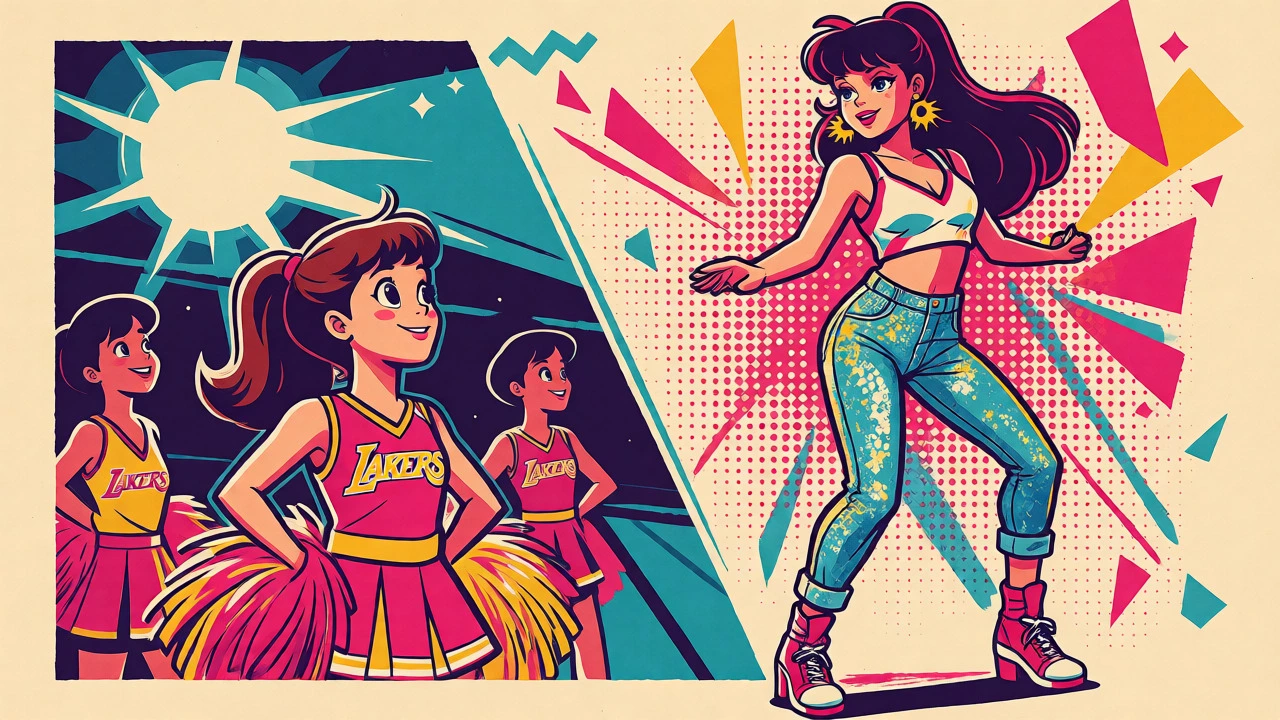

Imagine releasing an album that takes over a year to hit number one. That’s exactly what happened with Paula Abdul’s debut record, Forever Your Girl. In an industry obsessed with overnight success, her climb was slow, steady, and ultimately unstoppable. By October 1989, the album had spent 64 weeks on the charts before finally reaching the summit of the Billboard 200, setting a record for the longest ascent in history at the time. But how did a former cheerleader become the defining pop star of the late 1980s? It wasn’t just about singing. It was about mastering the new currency of fame: choreography, music videos, and pure visual charisma.
From the Sidelines to the Spotlight
Before she ever stepped into a recording studio, Paula Abdul was already a fixture in Los Angeles entertainment. She started as a Los Angeles Lakers cheerleader at age 18, quickly rising to head choreographer for the Laker Girls. This wasn’t just about waving pom-poms; she transformed the group’s routine from standard cheers into complex dance numbers. That experience caught the eye of major artists. She choreographed for Janet Jackson’s iconic "Nasty" video, which won an MTV Video Music Award, and worked with stars like Duran Duran and George Michael. These credits gave her insider access and a reputation for excellence long before she released a single note of her own music.
In 1987, Abdul used her savings to fund a demo tape. Virgin Records executives heard it and saw potential not in a group, but in a solo artist. They signed her, betting that her existing fame in the video world could translate to radio airplay. The result was Forever Your Girl, released in June 1988. The production team included heavy hitters like Oliver Leiber, Elliot Wolff, and Babyface, blending dance-pop, contemporary R&B, and new jack swing into a sound that felt fresh yet familiar.
The Slow Burn to Number One
Success didn’t happen instantly. The first two singles, "Knocked Out" and "The Way That You Love Me," failed to crack the U.S. Top 40. For many artists, this would have been the end. But Abdul persisted. The third single, Straight Up, began gaining traction through local radio support, particularly from San Francisco station KMEL. As momentum built, Virgin Records accelerated their marketing push.
When "Straight Up" finally hit No. 1 in February 1989, it stayed there for three weeks. This opened the floodgates. Over the next year, Forever Your Girl produced four consecutive No. 1 hits on the Billboard Hot 100: "Straight Up," "Forever Your Girl," "Cold Hearted," and "Opposites Attract." This achievement set a record for a debut album, proving that persistence and a strong follow-up strategy could outlast initial failures. The album eventually spent 10 nonconsecutive weeks at No. 1 and was certified seven-times platinum in the United States, selling approximately 7 million copies domestically.
| Song Title | Release Year | Peak Chart Position | Key Visual Element |
|---|---|---|---|
| Straight Up | 1988 | No. 1 (3 weeks) | Black-and-white choreography |
| Forever Your Girl | 1989 | No. 1 | High-energy dance routines |
| Cold Hearted | 1989 | No. 1 | Theatrical storytelling |
| Opposites Attract | 1989 | No. 1 (US & Australia) | Animation with MC Skat Kat |
Dance as the Primary Selling Point
What set Abdul apart from contemporaries like Madonna or Janet Jackson? Her entire brand revolved around technical dance proficiency. Critics often noted that her vocal range was limited, describing her voice as "passable" rather than powerful. Yet, this didn’t matter because the market had shifted. The MTV era demanded visual spectacle. Abdul’s videos weren’t just accompaniments to songs; they were essential components of the product.
The video for "Straight Up," directed by David Fincher, featured stark black-and-white imagery and tightly synchronized moves that showcased her Broadway-style training. It won four MTV Video Music Awards in 1989, including Best Choreography and Best Dance Video. This validated her approach: audiences tuned in to watch her move, not just listen to her sing. Industry observers argued that criticizing her vocals missed the point-her appeal lay in the total package of style, image, and movement.

The Animation Revolution: Opposites Attract
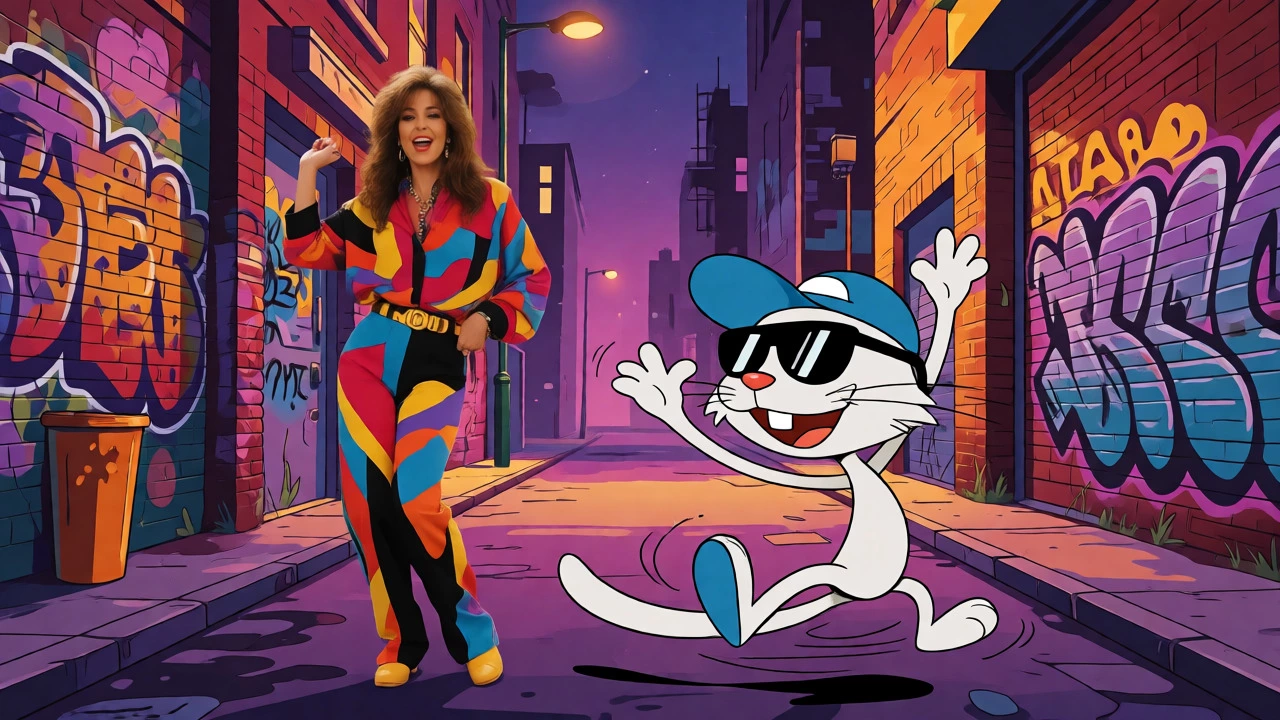
If "Straight Up" proved she could dance, "Opposites Attract" proved she could innovate. Released in late 1989, the song featured a duet with an animated cat named MC Skat Kat. Created by Candace Reckinger and Michael Patterson, the video required Abdul to perform live-action movements that perfectly matched the animated character’s timing. This blend of reality and cartoon made the song accessible to both adult pop fans and children watching Saturday morning cartoons.
The concept became a cultural touchstone. MC Skat Kat remains one of the most recognizable music video characters of the decade. This track solidified Abdul’s dominance, reaching No. 1 in both the United States and Australia. It demonstrated that her formula wasn’t a fluke; she could adapt her choreographic strengths to different genres and visual styles while maintaining commercial viability.
Awards and Institutional Recognition
By 1989, Abdul’s influence extended beyond the charts. She won a Primetime Emmy Award for Outstanding Achievement in Choreography for her work on The Tracey Ullman Show. This recognition highlighted her dual career as both a performer and a behind-the-scenes creative force. She also swept the American Music Awards, winning Pop/Rock Female Artist and Dance Music Artist categories.
These awards underscored a broader shift in how stardom was measured. Success was no longer defined solely by vocal talent or songwriting prowess. It included technical skill in dance, innovation in video production, and the ability to cross demographic lines. Abdul’s seven-time MTV Video Award wins and multiple People’s Choice Awards cemented her status as a multimedia icon.
Critical Reception vs. Commercial Reality
Despite the sales figures, critical reception remained mixed. Some reviewers questioned whether Abdul’s rise represented a decline in musical standards. Rolling Stone writer David Wild suggested her success proved that style could compensate for a lack of innate musical depth. Others argued that this perspective ignored the artistic merit of choreography and visual storytelling.
Abdul herself acknowledged the criticism, noting that there was room for improvement in her singing. However, the market spoke louder than critics. Her ability to connect with audiences through energy and relatability outweighed technical vocal judgments. This tension between critical prestige and commercial popularity defines much of pop history, and Abdul’s career is a prime example of winning the latter.
Legacy and Cultural Impact
Paula Abdul’s breakthrough paved the way for future pop princesses. Commentators often cite her as an "original Britney," linking her crisp movements and coy presentation to later stars like Britney Spears and Christina Aguilera. She established a template where dance technique became a primary engine of pop stardom, not just a supporting element.
Her legacy is contested but undeniable. While some dismiss her vocal abilities, her impact on the music-video economy and female pop performance is profound. She showed that a performer could build a massive career through choreography and visual identity alone. Today, her late-1980s hits remain staples of nostalgia playlists, reminding listeners of an era when dancing was as important as singing.
How many No. 1 hits did Paula Abdul have from Forever Your Girl?
Paula Abdul achieved four No. 1 hits on the Billboard Hot 100 from her debut album Forever Your Girl: "Straight Up," "Forever Your Girl," "Cold Hearted," and "Opposites Attract." This was a record-setting achievement for a debut album at the time.
Why did it take so long for Forever Your Girl to reach No. 1?
The album took 64 weeks to reach the top of the Billboard 200, which was the longest climb in chart history at the time. Initial singles failed to chart high, but sustained radio play and viral music videos eventually drove massive sales.
Did Paula Abdul write her own songs?
While Paula Abdul co-wrote some material, the majority of her biggest hits were written and produced by professional songwriters and producers such as Oliver Leiber, Elliot Wolff, and Babyface. Her primary contribution was performance and choreography.
What was unique about the "Opposites Attract" music video?
The video featured Paula Abdul performing alongside an animated cat character named MC Skat Kat. This blend of live-action and animation was innovative for its time and helped the song appeal to a wide audience, including children.
Was Paula Abdul criticized for her singing ability?
Yes, contemporary critics often described her vocals as limited or passable compared to her exceptional dance skills. However, her commercial success proved that visual appeal and choreography were equally valuable assets in the MTV era.