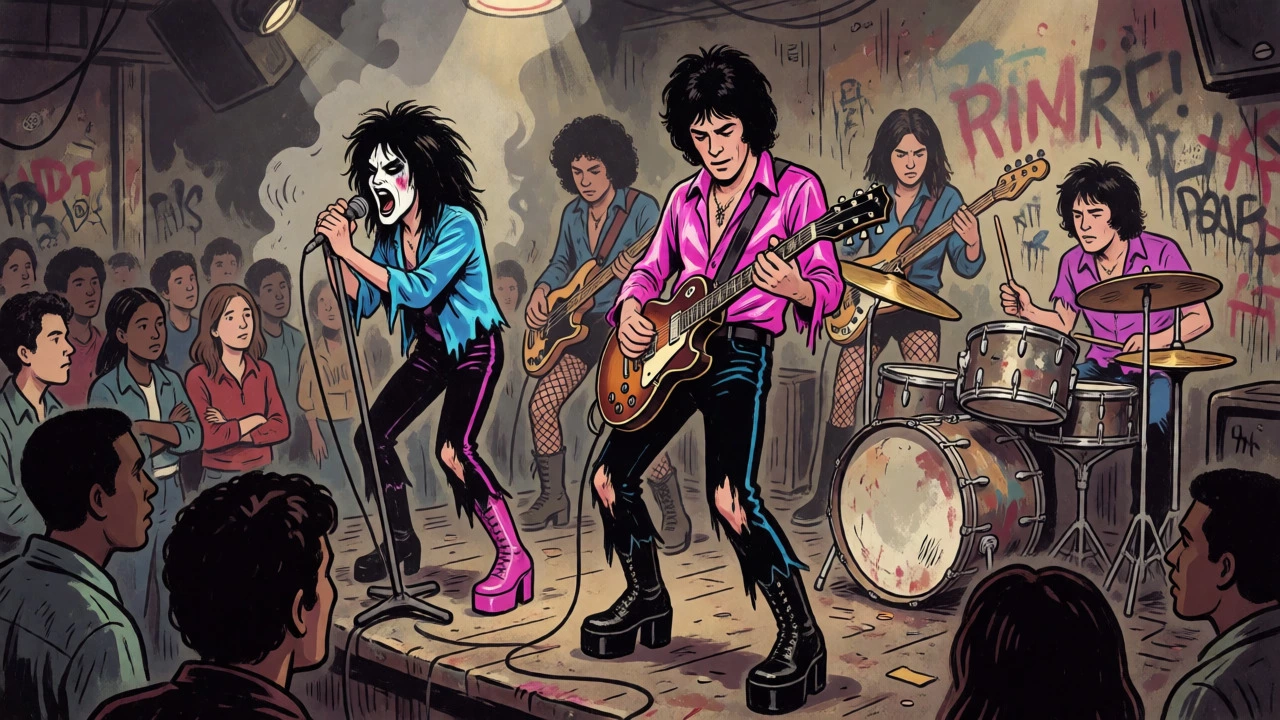

You probably think punk started with the Ramones in 1976 or the Sex Pistols in London. But if you rewind just a few years to the grimy clubs of Lower Manhattan, you’ll find the real blueprint. New York Dolls didn’t just play music; they staged a revolution in satin and leather that shattered the polished facade of early 70s rock. They were messy, loud, and dangerously stylish, bridging the gap between the theatrical excess of glam rock and the raw aggression that would become punk.
The Birth of Glitter and Grime
Formed in New York City around 1971, the Dolls emerged from a scene where art students, drag queens, and street toughs mixed freely. Vocalist David Johansen, guitarists Johnny Thunders and Sylvain Sylvain, bassist Arthur "Killer" Kane, and drummer Billy Murcia (later replaced by Jerry Nolan) weren’t trying to be virtuosos. They wanted to be felt. Their sound was a collision of the Rolling Stones’ swagger, the Stooges’ noise, and the catchy hooks of 60s girl groups. It wasn’t pretty, but it was undeniable.
While bands like Led Zeppelin were dominating radio with complex solos and progressive structures, the Dolls kept things simple and dirty. They played fast, distorted chords over a pounding backbeat. This wasn’t just laziness; it was a statement. By stripping rock down to its bones and dressing it up in outrageous costumes, they created a new language for rebellion. Critics often called them sloppy, but that sloppiness was the point. It invited everyone to join in, regardless of skill level.
Fashion as a Weapon
If the sound was the spark, the look was the gasoline. The Dolls wore platform shoes, spandex, and heavy makeup not because they were following trends, but because they were mocking them. They took the androgyny of David Bowie and T. Rex and dragged it into the gutter. Imagine seeing men in high heels and fishnets screaming about trash and personality crises on a stage in the Bowery. It was confusing, hilarious, and threatening all at once.
| Element | Description | Influence on Later Genres |
|---|---|---|
| Aesthetic | Satin, platforms, heavy makeup, torn clothing | Glam Metal (80s), Gothic Rock |
| Sound | Distorted twin guitars, simple chords, high volume | Punk Rock, Garage Revival |
| Attitude | Nihilistic, campy, anti-establishment | Post-Punk, Indie Rock |
This visual chaos directly influenced the next wave of New York bands. When CBGB opened its doors, the aesthetic template was already set. Bands like Blondie and the Ramones adopted the simplicity of the Dolls’ approach but refined it. Without the Dolls proving that you could wear lipstick and play three-chord rock without being laughed out of the room, the punk explosion might have looked very different.
The Todd Rundgren Era
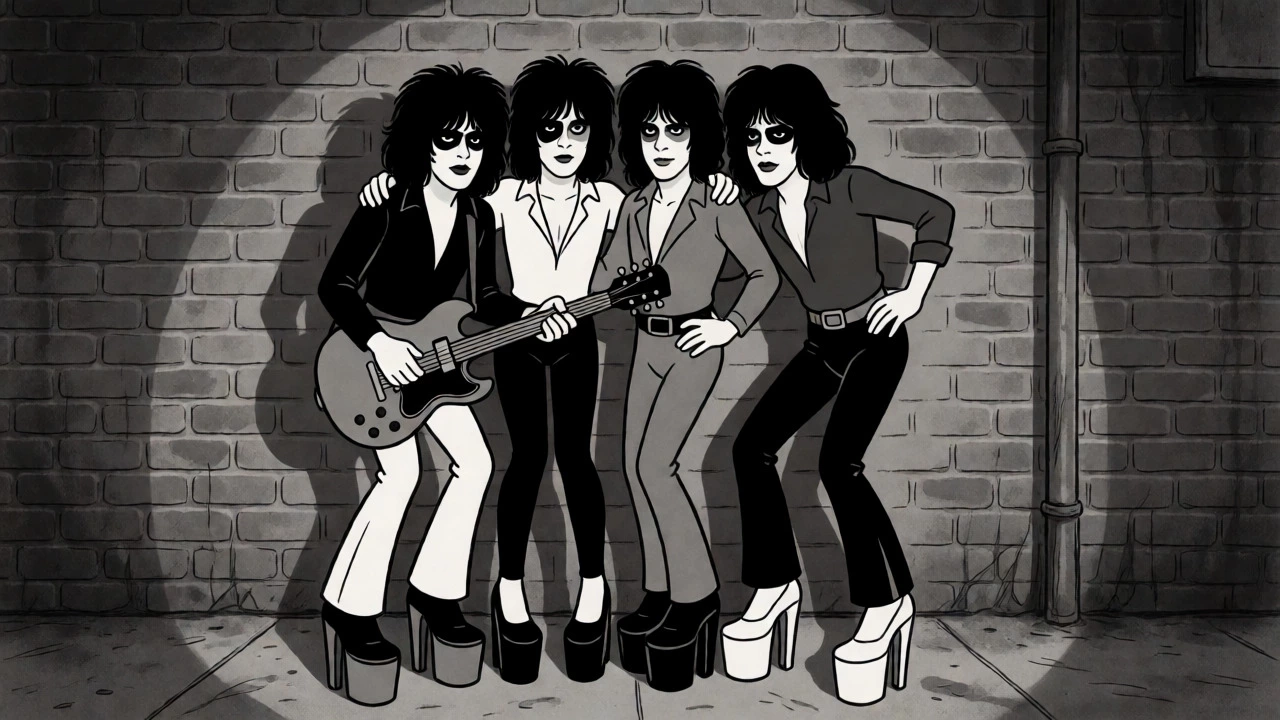
In 1973, the band signed with Mercury Records and hired producer Todd Rundgren. Rundgren’s job was to capture their live energy in the studio, a task he handled with controversial precision. The resulting self-titled debut album, New York Dolls, is widely considered a masterpiece of proto-punk. Tracks like "Personality Crisis" and "Trash" combined satirical lyrics with infectious melodies.
Rundgren’s production added a layer of polish that some purists disliked, arguing it smoothed out the rough edges that made the band special. Yet, this tension between chaos and control defined their legacy. The follow-up, Too Much Too Soon (1974), leaned harder into their R&B influences, featuring covers like "Stranded in the Jungle." While critically respected, neither album achieved massive commercial success in the US, largely because mainstream radio didn’t know what to do with a band that sounded like a car crash and looked like a drag show.
The Bridge to Punk
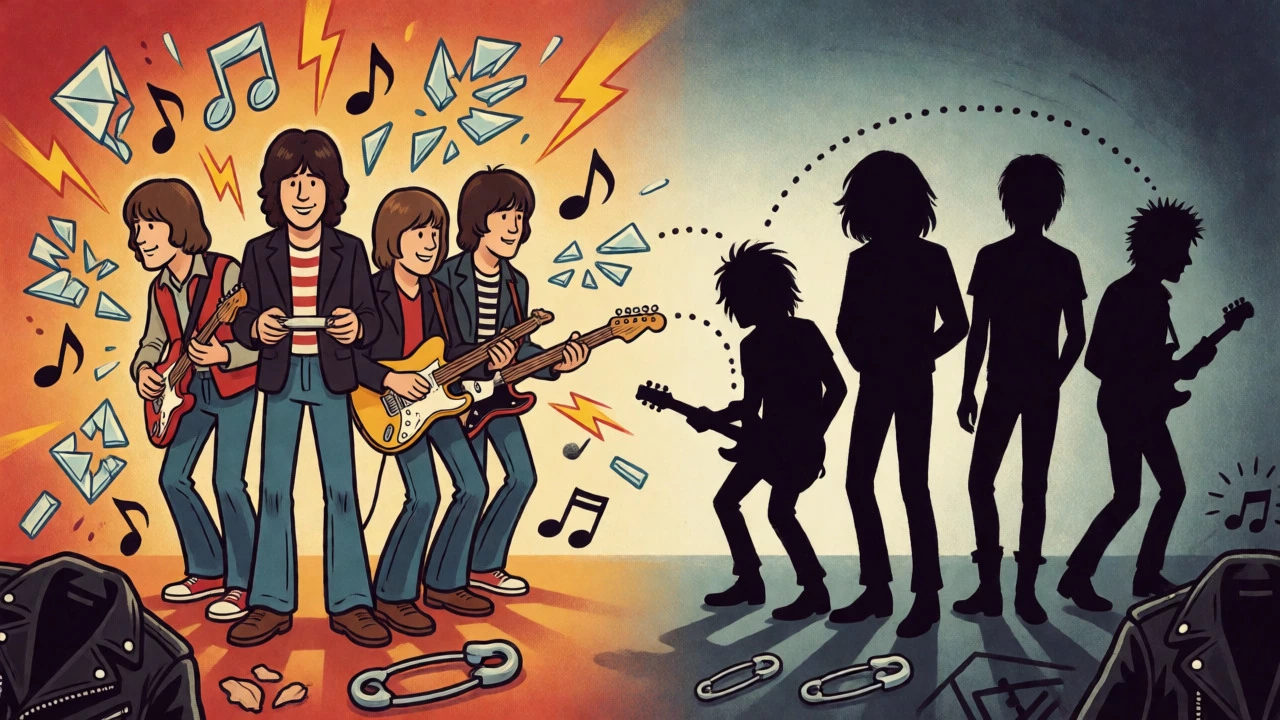
By 1975, internal strife and substance abuse tore the original lineup apart. Johnny Thunders left to form the Heartbreakers, and the band effectively dissolved. But their impact had only just begun. Malcolm McLaren, who would later manage the Sex Pistols, spent time with the Dolls in New York. He absorbed their attitude and fashion sense, taking those ideas back to London to curate the UK punk movement.
The connection is explicit. The Sex Pistols’ safety-pin-and-leather look owes a debt to the Dolls’ trash-glam. Meanwhile, in New York, the Ramones formed in 1974, explicitly citing the Dolls as an influence. Joey Ramone admired their ability to make bad musicianship feel heroic. The Dolls proved that rock and roll didn’t need technical perfection; it needed conviction. This idea became the central tenet of punk ideology.
Legacy Beyond the Grave
The Dolls’ influence didn’t stop at punk. In the 1980s, glam metal bands like Mötley Crüe and Guns N’ Roses revived the androgynous, hedonistic image the Dolls pioneered. If you look at the hair, the makeup, and the sheer excess of LA strip rock, you’re seeing the long shadow of New York Dolls. They created a lineage that runs from Detroit garage rock through New York punk to global stadium rock.
Critics today view them not just as a footnote, but as essential architects of modern alternative culture. They showed that identity could be performed, that gender norms could be mocked, and that music could be both silly and serious. For anyone trying to understand how we got from the Beatles to Nirvana, you have to go through the Dolls.
Key Takeaways
- Proto-Punk Pioneers: The New York Dolls merged glam aesthetics with raw hard rock, creating the sonic and visual template for punk rock before the term existed.
- Fashion Influence: Their use of makeup, platforms, and androgynous clothing directly inspired the look of 1980s glam metal and the punk subculture.
- Production Debate: Todd Rundgren’s production on their 1973 debut captured their energy but sparked debates about authenticity versus polish in rock recording.
- Direct Lineage: Key figures like Malcolm McLaren and members of the Ramones cited the Dolls as primary influences, linking NYC underground scenes to global punk movements.
- Cultural Impact: They revitalized the NYC underground scene in the early 1970s by rejecting mainstream virtuosity in favor of attitude and accessibility.
Are the New York Dolls considered a punk band?
Technically, they are classified as proto-punk or glam punk. They predate the formal punk movement of 1976-1977, but their sound and attitude laid the groundwork for it. Most historians credit them with inventing the style that punk later adopted.
Who produced the first New York Dolls album?
Todd Rundgren produced the 1973 self-titled debut album. His clean, layered production style contrasted with the band's messy live reputation, leading to ongoing discussions among fans about whether the studio versions fully captured their chaotic energy.
Did the New York Dolls influence the Sex Pistols?
Yes, indirectly but significantly. Malcolm McLaren, who managed the Sex Pistols, spent time with the Dolls in New York. He brought their fashion sensibilities and rebellious attitude back to London, which heavily shaped the image and ethos of the UK punk scene.
What is the best album to start with for the New York Dolls?
Start with their 1973 self-titled debut, New York Dolls. It features classics like "Personality Crisis" and "Trash" and represents their peak creative output. Follow it up with Too Much Too Soon (1974) to hear their evolution toward R&B-influenced rock.
Why did the original New York Dolls break up?
The band broke up in 1975 due to a combination of drug addiction, internal conflicts, and lack of commercial success. Guitarist Johnny Thunders' increasing struggles with heroin and the general instability of the group led to their dissolution, though various members continued playing together in different configurations.


