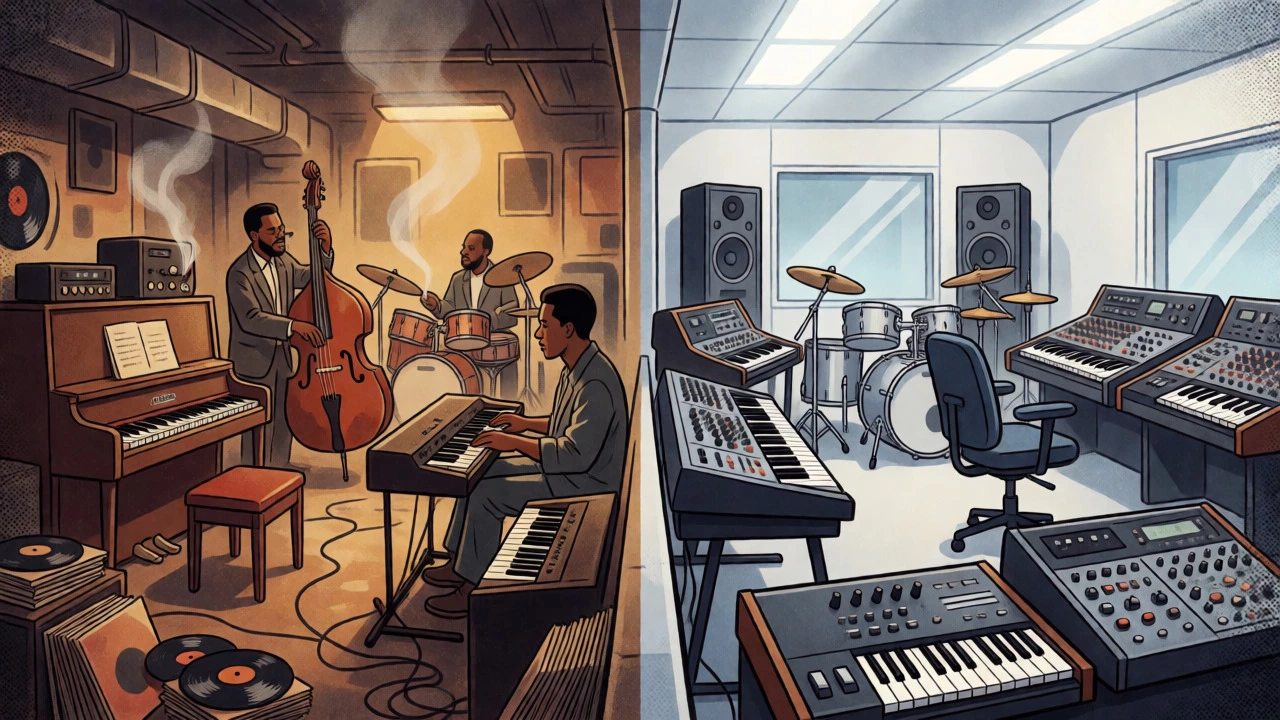

Put on D’Angelo’s Brown Sugar and then queue up a track by TLC. They came out around the same time, both feature Black vocalists singing about love and life, and both dominated the airwaves in the late 90s. Yet, they feel like they exist in different universes. One sounds like it was recorded in a dimly lit basement with a live band smoking cigarettes; the other sounds like it was engineered in a pristine studio to hit every frequency perfectly. Why does this distinction matter? Because understanding the gap between neo-soul and 1990s R&B unlocks how modern Black music evolved from polished radio hits to artistic statements.
You might think they are the same thing because radio stations lumped them together under "R&B." But for musicians, producers, and critics, the difference is stark. It comes down to philosophy. 1990s R&B chased perfection and mass appeal. Neo-soul chased authenticity and musical depth. This article breaks down exactly where these paths diverged, why the aesthetics clash, and how they share the same DNA.
The Origin Story: Where Did They Come From?
To understand the split, you have to look at the late 1980s. The dominant sound was New Jack Swing, which mixed hip-hop beats with pop melodies. As that era faded, two distinct reactions emerged. On one side, producers wanted to make R&B smoother, sexier, and more compatible with the rising tide of hip-hop culture. This became mainstream 1990s R&B. On the other side, artists felt R&B was losing its soul-literally. They wanted to bring back the organic instrumentation of the 1970s but keep the contemporary edge.
The term "neo-soul" didn’t even exist when this started. It was coined later by Kedar Massenburg, an executive at Motown Records, as a marketing label. He needed a way to sell albums by artists who didn’t fit the standard mold. These artists weren’t trying to be pop stars; they were trying to be musicians. Key figures like Erykah Badu, Maxwell, and Lauryn Hill released landmark albums between 1995 and 1998 that defined this new lane. Meanwhile, groups like Boyz II Men and singers like Mariah Carey were perfecting the art of the commercial hit.
Production Philosophy: Polished vs. Raw
If you listen closely, the biggest difference is in the mix. Mainstream 1990s R&B relied heavily on digital technology. Producers used drum machines, synthesizers, and heavy compression to create a glossy, high-energy sound. The goal was clarity. Every instrument had its own space, and the vocals were tuned and pitch-corrected to sit right on top of the beat. Think of the crisp snare drums in a Janet Jackson track or the layered harmonies in a Whitney Houston ballad. It was designed for car stereos and club systems.
Neo-soul did the opposite. It embraced imperfection. Producers like J Dilla (who worked extensively in this sphere) and Questlove preferred live instruments over samples. You can hear the room tone, the slight drag of the drummer behind the beat, and the warm hum of a Rhodes piano. This technique is often called "playing in the pocket," where the groove feels loose and human rather than mechanically precise. While 1990s R&B aimed for a wall of sound, neo-soul aimed for a vibe. It prioritized mood over melody, creating thick, atmospheric textures that invited you to lean in rather than dance along.
| Feature | 1990s R&B | Neo-Soul |
|---|---|---|
| Instrumentation | Synthesizers, Drum Machines, Samples | Live Drums, Bass, Keys, Horns |
| Mix Style | Polished, Compressed, Bright | Raw, Warm, Dynamic Range |
| Rhythm | Precise, Quantized, Hip-Hop Swing | Loose, Human Error, Jazz Inflection |
| Vocal Treatment | Clean, Pitch-Corrected, Layered | Expressive, Melismatic, Gospel-Style |
| Primary Goal | Radio Play, Dance Floor Appeal | Artistic Expression, Deep Listening |
Vocals and Lyrics: Hook-Driven vs. Message-Driven
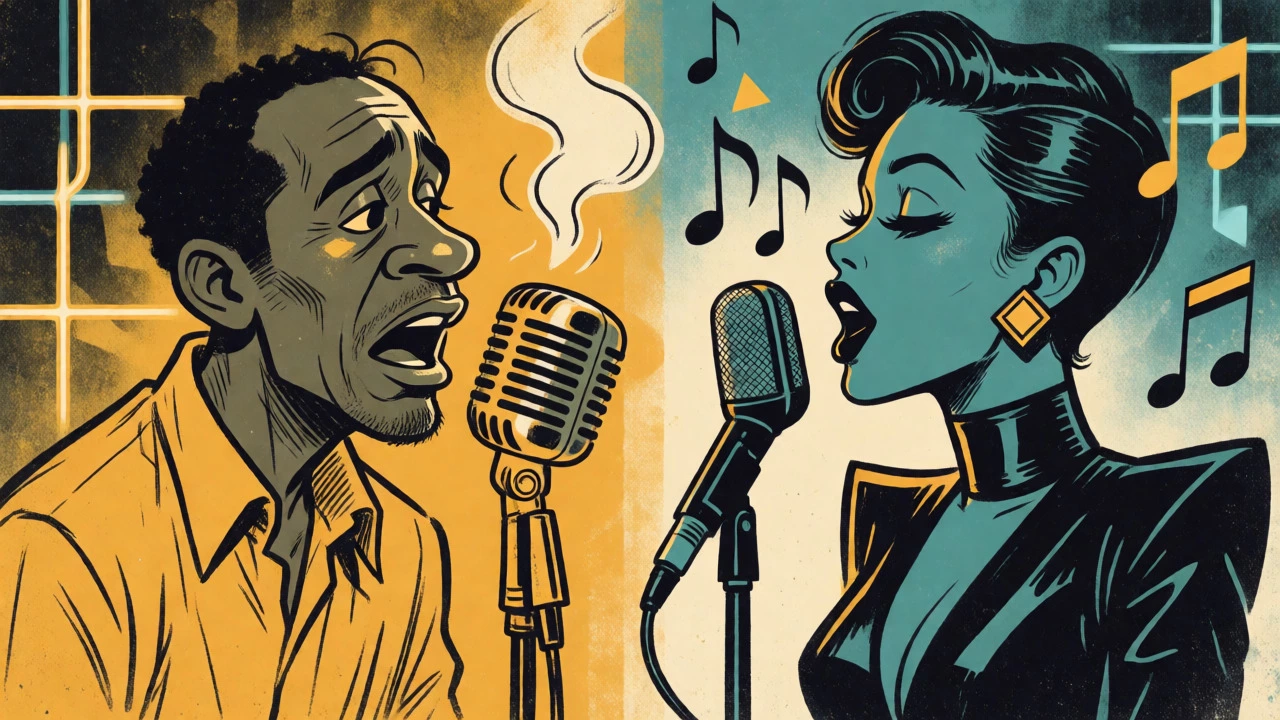
Vocally, both genres draw from gospel traditions, but they use those skills differently. In 1990s R&B, the voice is often treated as another instrument in the arrangement. Singers deliver powerful runs, but they serve the hook. The lyrics are usually direct: I love you, I miss you, or let’s get together. The focus is on emotional immediacy. You want the listener to feel something instantly. Artists like Usher or Brandy excelled at delivering complex melodies with technical precision while keeping the song accessible.
Neo-soul treats the voice as a vehicle for storytelling and spirituality. The singing style is often less about hitting the highest note and more about conveying nuance. Erykah Badu’s whispery delivery or D’Angelo’s falsetto aren’t just stylistic choices; they are part of the lyrical message. The lyrics themselves tend to be more introspective, political, or abstract. Instead of simple love songs, you get tracks about self-worth, systemic issues, or existential dread. Lauryn Hill’s The Miseducation of Lauryn Hill is a prime example-it’s not just an album of singles; it’s a cohesive narrative about womanhood and faith.
Market Positioning: Pop Stars vs. Album Artists
The business models supporting these genres were vastly different. 1990s R&B was single-driven. Labels pushed radio edits, remixes, and music videos designed for MTV. Success was measured by chart position and sales volume. If a song didn’t have a catchy chorus in the first thirty seconds, it wasn’t getting played. This created a highly competitive environment where image and branding mattered as much as the music.
Neo-soul was album-oriented. Fans bought records to listen to from start to finish. The packaging, the liner notes, and the visual aesthetic were part of the experience. This genre attracted a slightly older, more niche audience that valued credibility over popularity. Artists had more creative control because their fans were loyal to the artist’s vision, not just their latest hit. This allowed for risk-taking. An album could have a seven-minute jazz instrumental in the middle without ruining the flow. That kind of freedom was rare in the tightly curated world of mainstream R&B.
Shared Roots: The Common DNA
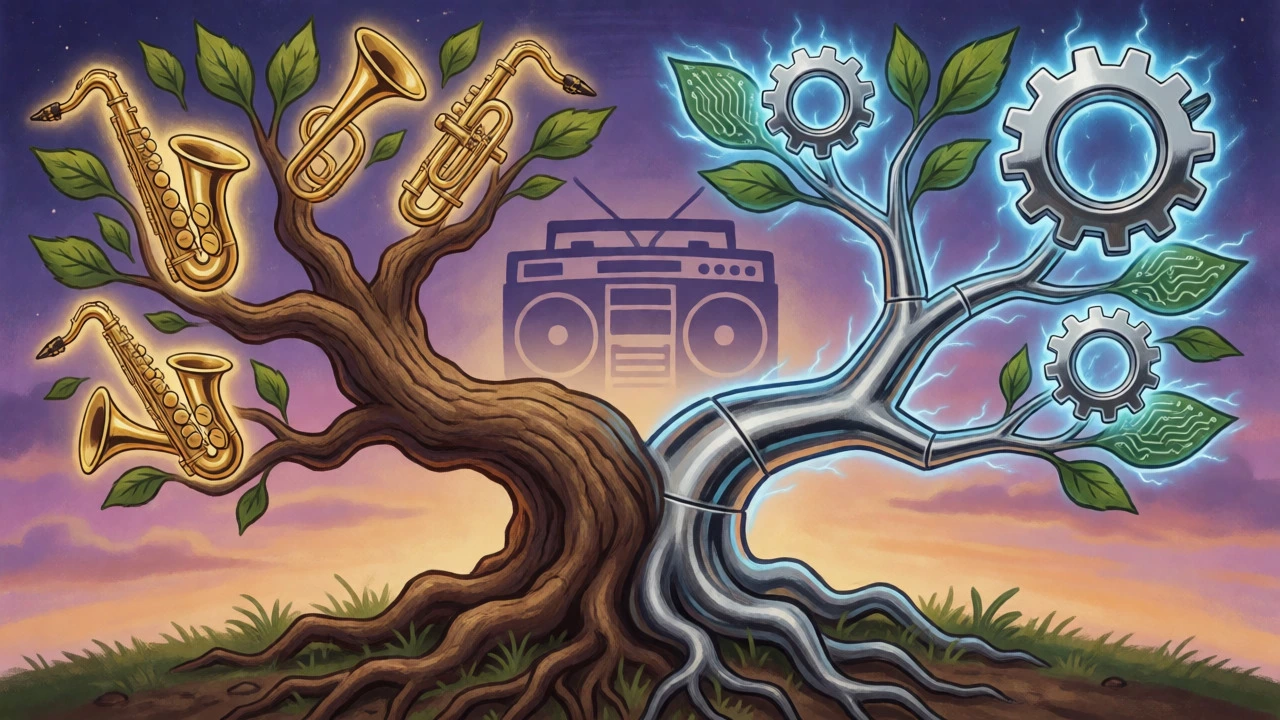
Despite these differences, it’s crucial to remember that neo-soul is technically a subgenre of R&B. Both styles rely on the same foundational elements: syncopated rhythms, blue notes, and call-and-response structures inherited from African American church music. Both genres also borrowed heavily from funk. James Brown’s influence is audible in the tight basslines of both P-Funk-inspired R&B tracks and neo-soul grooves.
Furthermore, both genres responded to the rise of hip-hop. 1990s R&B integrated hip-hop beats directly into the songs, leading to collaborations between R&B singers and rappers. Neo-soul took a different approach by adopting hip-hop’s attitude and sampling techniques but applied them to jazz and soul chords. So, while the surface aesthetics differ, the underlying cultural context is identical. They are two branches growing from the same tree, reacting to the same social and technological shifts in the 1990s.
Why Does This Distinction Still Matter?
You might wonder if this debate is still relevant in 2026. Absolutely. Today’s R&B landscape is a hybrid of these two approaches. Artists like SZA or Frank Ocean blend the polished production of 90s R&B with the introspective lyricism and experimental structures of neo-soul. When you hear a track that feels "vintage" yet modern, you’re likely hearing the ghost of neo-soul’s live instrumentation mixed with the digital sheen of contemporary R&B.
Understanding the difference helps you appreciate the craft. It explains why some songs make you want to dance and others make you want to cry. It highlights the tension between commerce and art that has always existed in popular music. Whether you prefer the slick hooks of TLC or the smoky grooves of Maxwell, knowing the history enriches the listening experience.
Is neo-soul considered a separate genre from R&B?
Technically, no. Most music historians classify neo-soul as a subgenre of contemporary R&B. However, culturally and aesthetically, it is often treated as a distinct movement due to its emphasis on live instrumentation, jazz influences, and album-oriented artistry, which contrasted sharply with the producer-driven, sample-based nature of mainstream 1990s R&B.
Who coined the term "neo-soul"?
The term was popularized by Kedar Massenburg, a former president of Motown Records, in the mid-1990s. He used it as a marketing label to categorize a wave of artists who were blending traditional soul sounds with hip-hop, jazz, and funk, distinguishing them from the more polished contemporary R&B acts of the time.
What are the key sonic characteristics of neo-soul?
Key characteristics include the use of live instruments (drums, bass, keyboards), loose or "human" rhythmic timing, jazz-influenced chord progressions, warm analog production textures, and lyrics that often explore spiritual, political, or deeply personal themes rather than standard romantic tropes.
Did 1990s R&B use live instruments?
While some 1990s R&B recordings featured live sessions, the dominant trend was toward digital production. Producers relied heavily on synthesizers, drum machines, and sampling technology to create a polished, radio-ready sound. Live instrumentation was more common in neo-soul, where the "band feel" was a central aesthetic choice.
How did hip-hop influence both genres?
Hip-hop influenced 1990s R&B through direct collaboration, such as rap verses in choruses and the adoption of hip-hop drum patterns. Neo-soul absorbed hip-hop’s ethos of sampling and crate-digging but applied it to obscure jazz and soul records, creating a more eclectic and musically complex foundation compared to the more straightforward pop-rap fusion of mainstream R&B.


