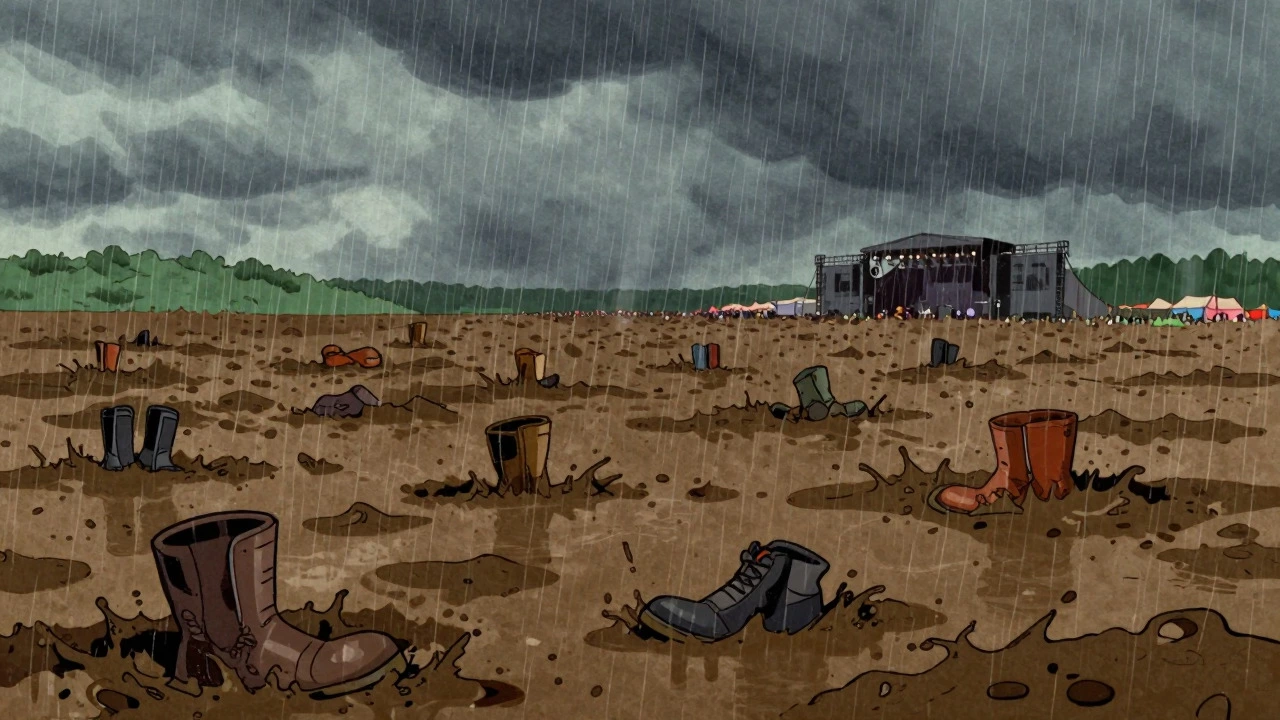

Picture this: it’s August 1994, and the air in Saugerties, New York, is thick with rain. The ground at Winston Farm isn’t just wet; it’s a quagmire of brown sludge that swallows shoes whole. This wasn’t just a bad day for a music festival. It was the birth of Mudstock ’94, a three-day event held from August 12 to 14, 1994, remembered for its rain-soaked conditions and iconic performances by 1990s alternative artists. While organized as the 25th-anniversary tribute to the original 1969 gathering, the weekend became less about nostalgia and more about the visceral, chaotic energy of a new generation. If you’ve ever wondered why people still talk about the mud, it’s because the muck didn’t just soak the clothes-it shaped the identity of an entire era of rock music.
The Weather That Wrote the Legend
You can’t talk about these memories without talking about the sky. Heavy downpours prior to the final day transformed what had been a dusty field into deep pits of mud. By the time the afternoon sun broke through on August 14, the landscape looked less like a concert venue and more like a construction site after a storm. For many attendees, the mud was an obstacle. For the bands that followed, it became a prop, a weapon, and finally, a symbol. The environmental contingency created the perfect stage for spontaneity, proving that sometimes the best moments in live music aren’t planned; they’re weathered.
Green Day: The Afternoon Riot
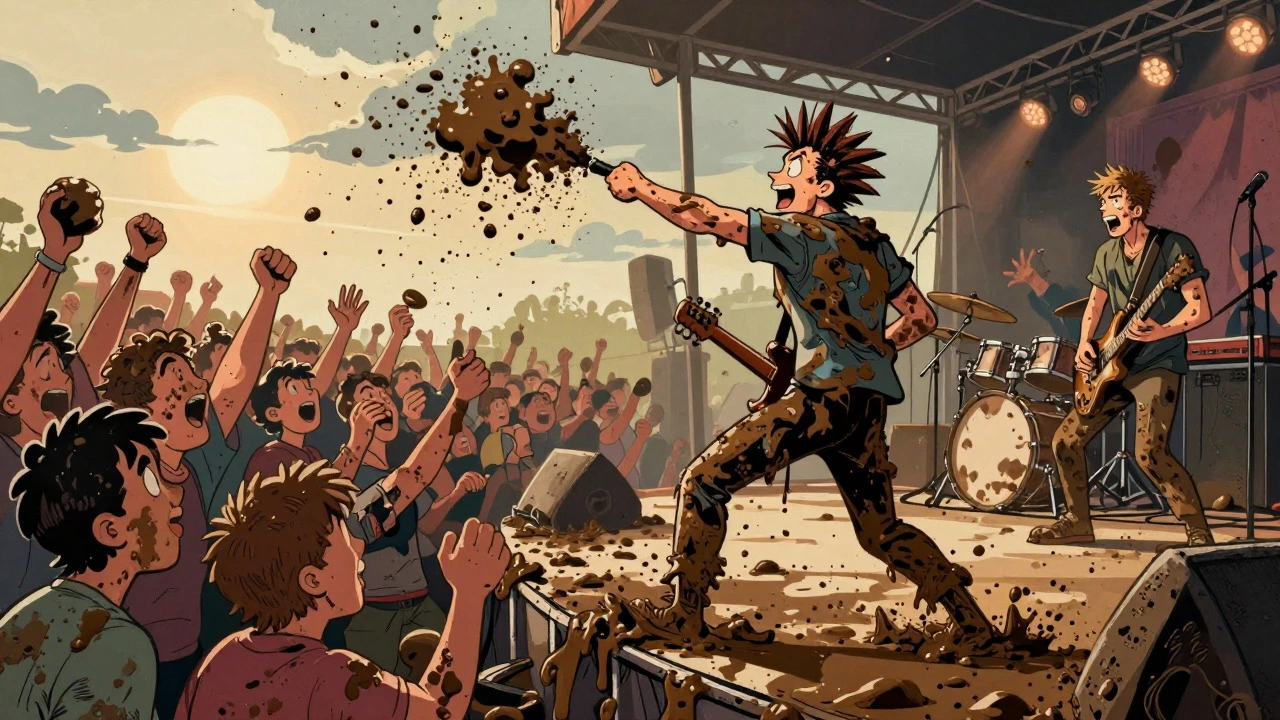
No discussion of Woodstock ’94 is complete without Green Day, whose performance has become the single most cited embodiment of the event. Taking the stage in the afternoon, the band opened their roughly 35-minute set with "Welcome to Paradise" and moved through tracks like "Longview" and "Basket Case." But about twenty minutes in, the atmosphere shifted. Fans in the front rows began forming mud balls and hurling them toward the stage. What started as playful throwing quickly escalated into a full-scale mud riot.
Frontman Billie Joe Armstrong initially tried to quiet the crowd, but he soon leaned into the anarchy. During "Paper Lanterns," he abandoned his guitar entirely, actively volleying clumps of mud back at thousands of fans. The exchange lasted until the end of the set, leaving the band and the front-of-stage area coated in sludge. It was a moment of pure, unscripted catharsis. As Armstrong famously declared before joining the fray, "I’m not going to become a mud hippie, I don’t care what you say." This line perfectly captured the generational contrast between the peace-and-love mythology of 1969 and the sarcastic, punk attitude of 1994. The scene wasn’t just messy; it was a redefinition of the relationship between performer and audience.
| Band | Key Moment | Nature of Interaction | Legacy Impact |
|---|---|---|---|
| Green Day | Mud fight during "Paper Lanterns" | Spontaneous, reciprocal throwing | Propelled band to mainstream stardom |
| Nine Inch Nails | Backstage mud wrestling | Deliberate, theatrical immersion | Cemented reputation for intense live shows |
| Primus | Crowd throws mud during "My Name is Mud" | Ironic, song-specific bombardment | Linked funk-metal lyrics to physical reality |
Nine Inch Nails: Embracing the Grime
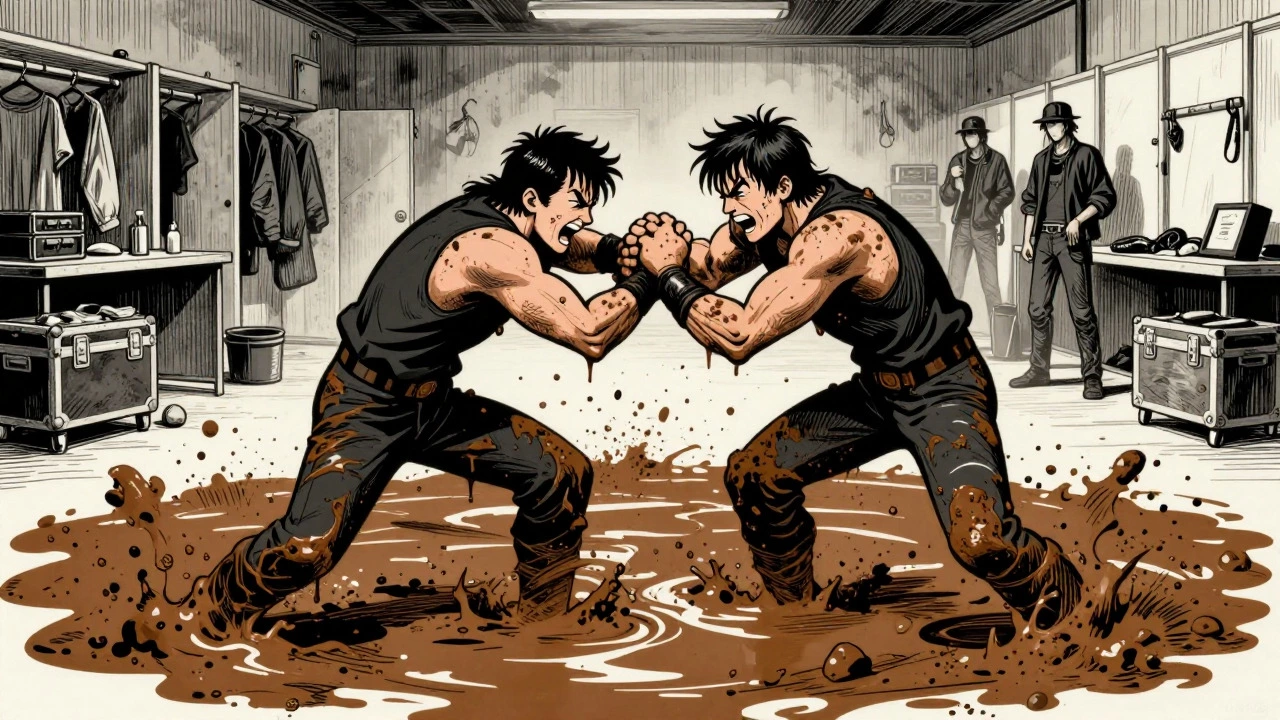
While Green Day’s chaos was spontaneous, Nine Inch Nails took a different approach. Led by Trent Reznor, the industrial rock group turned their set into a deliberate visual statement. Before taking the stage, the band members engaged in a mud-wrestling match backstage, emerging completely drenched and coated in dirt. This wasn’t an accident; it was a choice aligned with Reznor’s interest in theatrical presentation. When they performed under the night sky, the mud gave their abrasive sound a raw, elemental quality. It contrasted sharply with the cleaner, more polished acts on other stages, reinforcing the idea that authenticity in 1994 often meant getting dirty. For fans, seeing such a precise and controlled band willingly immerse themselves in the filth added another layer to the Mudstock mythos.
Primus and the Irony of "My Name is Mud"
Then there was Primus. Their performance offered a different kind of magic: irony. When the band played their 1993 single "My Name is Mud," the crowd decided to take the title literally. Fans threw handfuls of mud onto the stage, turning the dark-humored narrative of the song into a real-world bombardment. It was a clever link between the band’s quirky funk-metal style and the physical conditions of the weekend. Unlike the high-energy riots or the theatrical displays of other acts, Primus’s moment was a shared joke between the musicians and the audience, grounded in the specific absurdity of the situation.
Beyond the Fun: Safety and Chaos
It’s easy to romanticize these memories, but the reality was often dangerous. The mud created significant operational challenges for the festival staff. Security personnel struggled to identify who was a performer and who was a fan, leading to memorable incidents like when guards tackled Green Day bassist Mike Dirnt, breaking several of his front teeth. Despite the injury, Dirnt continued to play bass lines without missing a beat, a detail that fans still praise today. Stage hands worked on slippery surfaces, and instruments were visibly splattered. These details remind us that while the spectacle was legendary, the limits of crowd control under extreme weather were being tested in real-time. The tension between the romantic image of Mudstock and the actual risks involved is a crucial part of the story.
Why These Memories Still Matter
Decades later, the legacy of Woodstock ’94 remains active cultural currency. Green Day released an official live album titled "Woodstock 1994," capturing the full extent of the mud fight and reinforcing how central this appearance is to their narrative. Critics and fans alike argue that the willingness of bands to embrace environmental chaos helped shape how later generations conceptualize large-scale rock festivals. It differentiated 1990s alternative culture from the more controlled corporate events that would follow. The mud wasn’t just a nuisance; it was a participatory medium that dissolved barriers between artist and audience. In a world where concerts are increasingly curated and sanitized, the raw, unpredictable energy of Mudstock ’94 serves as a reminder that some of the most powerful musical experiences happen when everything goes slightly wrong.
Why is Woodstock ’94 called Mudstock?
The nickname stems from the heavy rain that turned the festival grounds into deep mud pits. This condition led to iconic moments, particularly Green Day’s mud fight with fans, Nine Inch Nails’ mud-coated performance, and Primus’s song-specific mud throwing, making the mud a defining aesthetic of the event.
Did Green Day plan the mud fight?
No, the mud fight was largely spontaneous. Fans began throwing mud first, and Billie Joe Armstrong eventually joined in, turning it into a mutual exchange. However, the band’s decision to stay and engage rather than leave the stage cemented the moment in history.
What happened to Mike Dirnt during the show?
Security staff, struggling to see clearly due to the mud, mistook bassist Mike Dirnt for a fan who had crashed the stage. They tackled him violently, breaking several of his front teeth. Despite the injury, he continued playing through the rest of the set.
How did the weather affect the festival experience?
Heavy rain before the final day turned the field into a mud pit, creating difficult walking conditions and slick stages. While challenging for logistics, it provided the material for the iconic mud-related performances that define the festival’s legacy.
Where was Woodstock ’94 held?
The festival took place at Winston Farm near Saugerties, New York, the same location used for the original 1969 Woodstock festival. It ran from August 12 to 14, 1994.