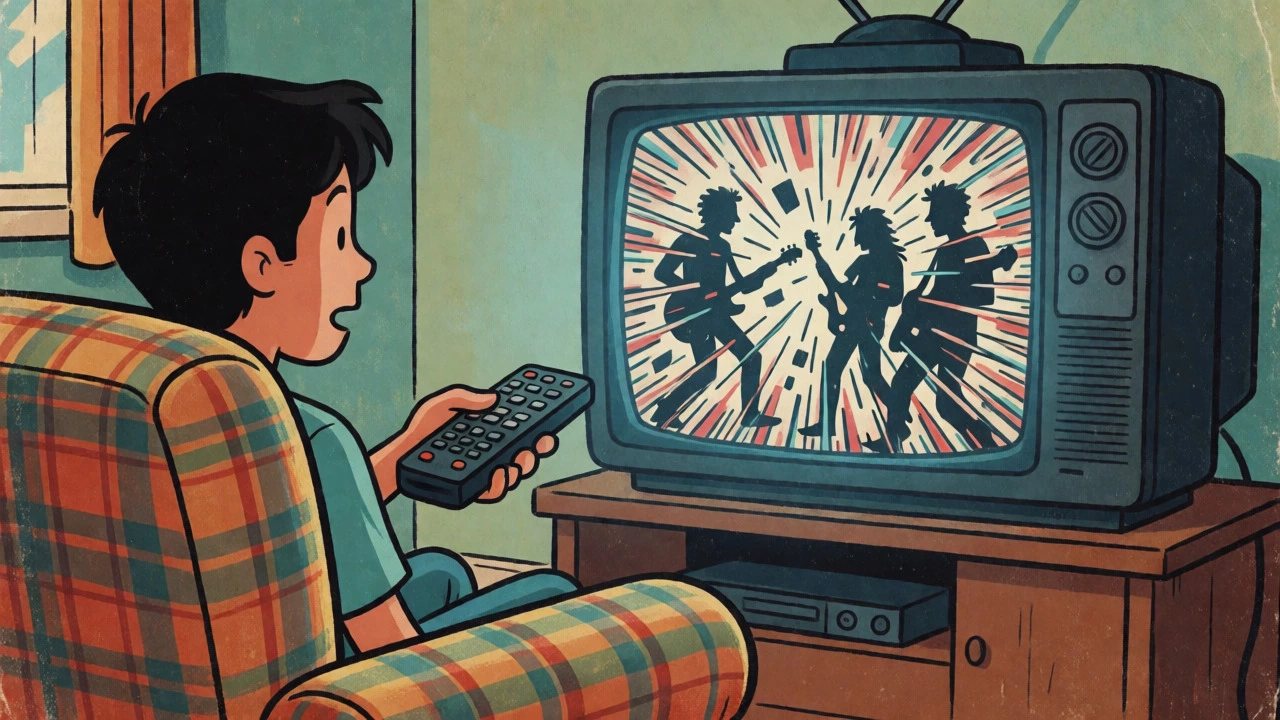

You’re sitting on your couch in 1994. You flip the channel and hit a wall of noise and light. It’s not a movie. It’s not a concert tape. It’s a three-minute assault on your senses where the camera blinks faster than you can process what you’re seeing. That jarring, high-energy chaos wasn’t an accident. It was a deliberate craft known as MTV Style, a specific grammar of fast cuts and visual rhythm that defined the golden age of music television. Before this era, videos were often long, narrative-driven films or static performances. By the mid-90s, editors had figured out how to make the edit itself the star of the show.
If you’ve ever wondered why modern trailers feel so frantic or why TikTok edits are so punchy, look no further than the analog suites of the 1990s. This period didn't just change how we watch music; it rewired our brains to expect information at a breakneck pace. Let’s unpack how grainy film, wide-angle lenses, and ruthless cutting created a visual language that still dominates screens today.
The Death of Continuity
In traditional cinema, the goal is invisibility. Editors use match cuts and continuity rules to hide their work, ensuring you don’t notice the jump from one shot to the next. The 1990s flipped this script. Directors like David Fincher and Hype Williams started treating discontinuity as a feature, not a bug. They wanted you to see the cut. They wanted the edit to hit you like a snare drum.
This shift was driven by necessity. MTV needed content that could hold the attention of viewers who were actively channel-surfing. A slow pan across a landscape wouldn’t cut it when the remote was in your hand. So, editors began chopping footage into tiny fragments. We’re talking about shots lasting less than a second-sometimes just 12 to 24 frames. At 24 frames per second, that’s half a second or less. Imagine blinking. Now imagine doing that every time the beat hits. That’s the baseline for Fast Cuts.
This approach broke the spatial logic of filming. You might see a singer screaming into a mic, then instantly cut to a close-up of a guitar string snapping, then back to the singer’s eye. There was no logical connection other than rhythm. It was visual jazz. The audience stopped asking "where are we?" and started feeling "what is happening?"
Technical Constraints Became Aesthetic Choices
Here’s the thing about the 90s: they didn’t have Adobe Premiere Pro with its unlimited undo buttons. Most editing happened on linear tape decks or early non-linear systems like Avid Media Composer. These tools were clunky. Making precise, frame-perfect cuts required physical skill and patience. But these constraints birthed a unique look.
To get that gritty, urgent texture, many directors shot on 16mm film instead of clean digital video. They would push the film stock one or two stops during processing. What does that mean? It means they overexposed the image slightly to bring out details in shadows, but in doing so, they amplified the grain. The result was a noisy, textured picture that felt raw and anti-glamour. It stood in stark contrast to the slick, warm, orange-tinted look of 1980s pop videos.
| Feature | 1980s Pop Style | 1990s MTV Style |
|---|---|---|
| Average Shot Length | 3-5 seconds | 0.5-1.0 seconds (12-24 frames) |
| Film Stock/Medium | Clean Betacam or 35mm | Grainy 16mm (pushed 1-2 stops) |
| Color Grading | Warm, saturated, high-key | Desaturated, cool blue-green cast |
| Lens Choice | Standard primes, telephoto | Extreme wide-angle (14-24mm) |
| Editing Goal | Narrative clarity | Rhythmic impact |
Lens choice played a huge role here too. Editors loved extreme wide-angle lenses, often 14mm or 24mm equivalents. When used up close, these lenses distort perspective, making noses look bigger and backgrounds stretch away. In a fast-cut environment, this distortion adds a sense of unease and energy. It makes the viewer feel like they are right in the middle of the action, almost uncomfortably so. Combine that with smoke machines and low-light setups, and you get the moody, claustrophobic vibe typical of grunge and alternative rock videos.
Visual Rhythm: Cutting to the Beat
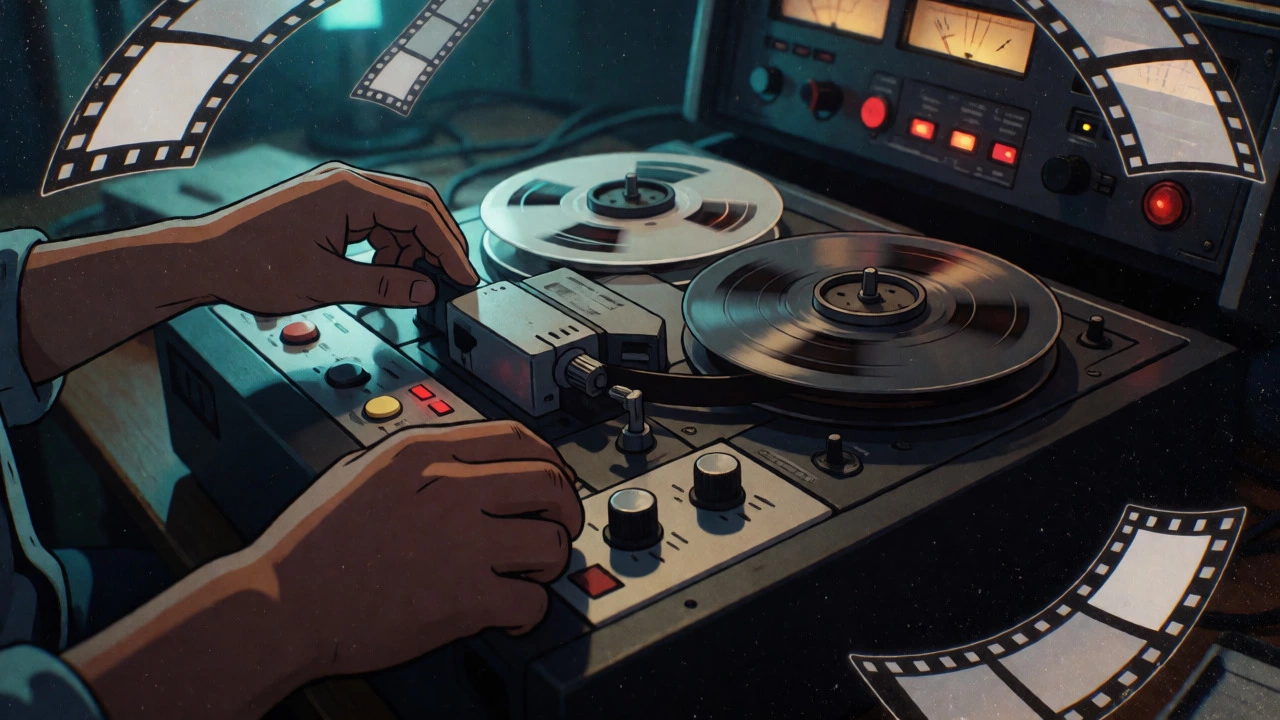
The core engine of this style was Visual Rhythm. This isn't just about moving images quickly; it's about syncing those movements to the audio track. Think of the editor as a drummer. Every cut is a beat.
Editors would map out the song’s tempo in beats per minute (BPM). If a song was 120 BPM, there are two beats per second. An editor might decide to cut exactly on every beat, or maybe every fourth beat. During a chorus, they might speed up the cuts to match the intensity of the vocals. During a breakdown, they might let a shot linger for four bars to let the viewer breathe. This dynamic pacing keeps the brain engaged because it never gets bored, but it also never feels random.
Research supports this intuition. Studies on audiovisual perception show that when cuts align with musical accents, viewers experience higher levels of engagement and perceived coherence. It creates a synesthetic effect-you almost feel the music visually. Conversely, off-beat cuts create tension. Great 90s editors knew when to sync and when to disrupt. They would establish a pattern, lull you into expecting the next cut on the downbeat, and then throw a jump cut in between to shock you awake.
The Role of Typography and Graphics
It wasn’t just live-action footage. The 90s saw the rise of kinetic typography in music videos. Text wasn’t just for credits anymore; it became part of the percussion. Words would flash on screen, matching the lyrics or acting as abstract punctuation. This technique, sometimes referred to in industry circles as the "Pellington method," treated text like a graphic element rather than informational data.
Imagine a rap video where the word "STOP" flashes red for two frames exactly when the hi-hat closes. Or a rock video where band names appear in jagged, distorted fonts that shake with the bass line. This integration of graphics added another layer of rhythm. It turned the screen into a collage of sound, motion, and text. For bands like Nirvana or Rage Against the Machine, this chaotic mix mirrored the sonic aggression of their music.
Why It Mattered: The Cognitive Shift
Critics at the time hated it. Some called it "music video editing" as a slur, arguing that it destroyed the ability to focus. They claimed that by fragmenting time and space, these videos were training a generation to have short attention spans. And they weren’t entirely wrong. The average shot length in Hollywood blockbusters has decreased significantly since the 90s, largely due to the influence of this style.
But for the artists and audiences, it was liberating. It allowed for a form of expression that couldn’t exist in traditional narrative film. You could convey emotion through speed alone. You could make a viewer feel anxious, excited, or disoriented without showing them a single plot point. It democratized visual storytelling because you didn’t need a big budget to make something impactful. A good idea and a sharp edit could do more than expensive sets.
This era also paved the way for the digital revolution. As editing moved from tape to hard drives, the ability to copy, paste, and manipulate clips became easier. The techniques pioneered in the 90s-jump cuts, speed ramps, split screens-became standard tools in every editor’s kit. Today, when you watch a Marvel trailer or a viral YouTube vlog, you’re seeing the descendants of those grainy, fast-cut 90s videos.
Legacy in the Modern Era
Is the MTV Style dead? Not really. It evolved. With the advent of AI and automated editing tools, we can now detect beats and suggest cuts automatically. But the human element remains crucial. Algorithms can sync cuts to beats, but they struggle with the creative decision of *when* to break the pattern. The best modern editors still use the 90s playbook: establish a rhythm, then subvert it.
Platforms like TikTok have taken the concept of short-form, rhythmic editing to its logical extreme. Clips are often under 15 seconds, relying on immediate visual hooks. While the technology has changed, the fundamental principle holds true: if you want to capture attention in a crowded media landscape, you have to move fast. The 1990s taught us that the edit is not just a transition; it’s a statement.
What defines the "MTV Style" of editing?
The MTV Style is characterized by rapid intercutting (often 12-24 frames per shot), grainy 16mm film aesthetics, desaturated cool color grading, and the use of extreme wide-angle lenses. It prioritizes visual rhythm and emotional impact over narrative continuity, treating the edit itself as an expressive device.
Why did music videos in the 1990s use such fast cuts?
Fast cuts were used to maintain viewer attention in an era of channel surfing and multi-tasking. By aligning cuts with musical beats, editors created a visceral, rhythmic experience that kept audiences engaged for the entire duration of the song, differentiating the content from slower-paced traditional media.
How did film stock influence the look of 90s music videos?
Many directors chose 16mm film and pushed it one to two stops during processing. This increased the visible grain and altered the contrast, creating a raw, gritty texture that contrasted with the clean look of video. This aesthetic choice reinforced the alternative and anti-establishment themes popular in 90s rock and hip-hop.
Did critics accept this new editing style immediately?
No, many traditional editors and critics initially rejected it, labeling it "music video editing" as a derogatory term. They argued that the fragmentation of time and space damaged narrative coherence. However, its popularity with younger audiences and its effectiveness in capturing attention eventually led to its widespread adoption in mainstream filmmaking.
How does visual rhythm affect viewer perception?
Aligning visual cuts with musical beats enhances perceived coherence and engagement. On-beat cuts create a sense of flow and synchrony, while off-beat cuts introduce tension and surprise. This manipulation of timing allows editors to guide the viewer’s emotional response and maintain interest throughout the video.