
Remember when you turned on the TV expecting to see a band perform, but instead watched seven strangers argue about whose turn it was to clean the kitchen? That wasn’t just a random channel flip. It was MTV, a cable network that started as a 24-hour music jukebox and slowly morphed into a factory for unscripted drama. By the late 1990s, the channel known for playing "Video Killed the Radio Star" had quietly stopped playing most videos at all.
This shift wasn’t an accident or a sudden executive whim. It was a calculated business move driven by money, demographics, and the fading novelty of music videos. If you grew up in that era, you felt the change. One year, you were watching Nirvana; the next, you were obsessed with who was dating whom on The Real World. Let’s look at how this happened, why it made sense for the business, and what it cost the music industry.
The Jukebox Days Are Over
MTV launched on August 1, 1981, with a simple promise: non-stop music videos. For nearly a decade, it worked. Record labels used the channel to break artists, and fans tuned in to discover new sounds. But by the mid-1990s, the model was cracking. The New York Times
Why did they do this? Because videos are expensive, and they don’t own them. When MTV aired a Michael Jackson clip, they didn’t control the rights long-term, and they couldn’t easily rerun it to build audience loyalty. They needed content they owned-shows that people would tune in for week after week, not just song after song.
The Real World Changed Everything
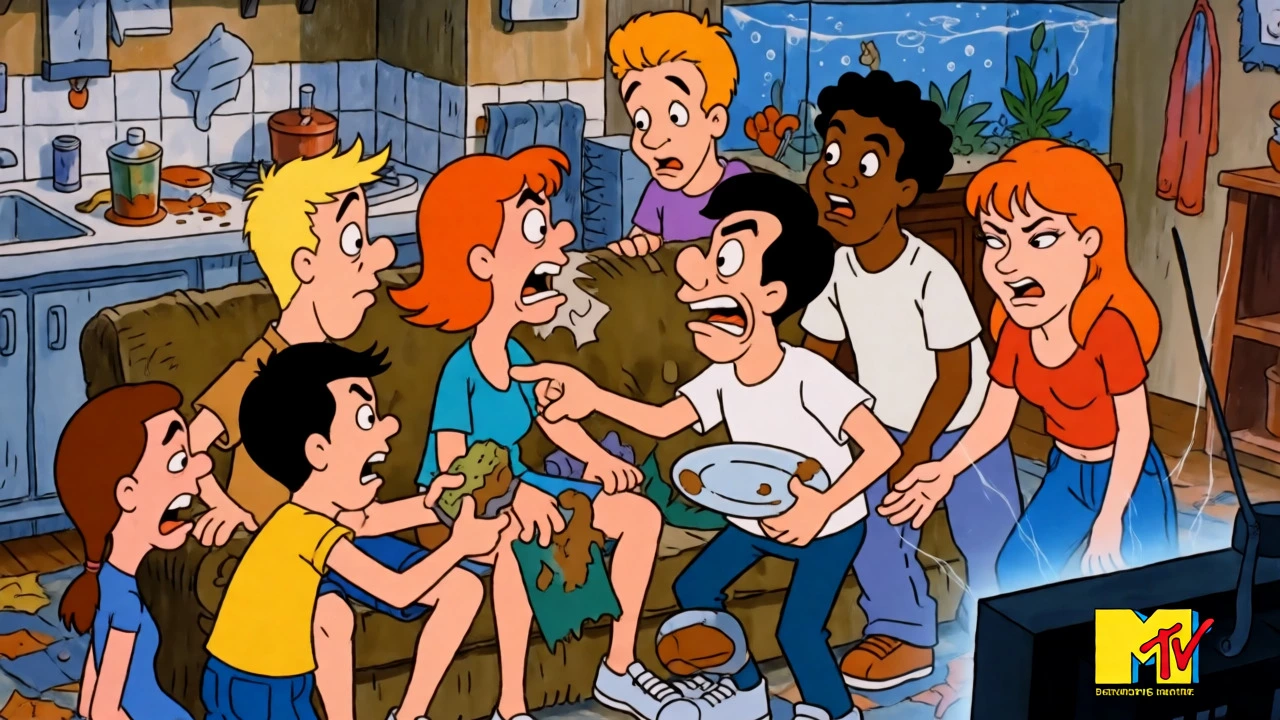
The tipping point arrived on May 21, 1992, with the premiere of The Real World. Created by Mary-Ellis Bunim and Jonathan Murray, the show placed seven young adults in a shared New York apartment. It wasn’t scripted, but it wasn’t purely documentary either. Producers cast for conflict, edited for narrative, and created a "reality-based soap opera."
The numbers tell the story of its success. By 2000, The Real WorldFriends
| Feature | Music Videos (Early MTV) | Reality TV (Late 1990s MTV) |
|---|---|---|
| Content Ownership | Licensed from record labels | Owned by Viacom/MTV Networks |
| Production Cost | High (paid by labels, but high opportunity cost) | Lower than scripted drama |
| Audience Loyalty | Low (channel surfing between songs) | High (weekly appointment viewing) |
| Repeatability | Low (rights issues limit reruns) | High (syndication and reruns) |
| Sponsorship Value | Hard to target specific demographics | Easier to sell targeted ad slots |
Building a Reality Ecosystem
Once The Real WorldRoad Rules
Other formats followed. Singled OutHouse of StyleTrue Life
The Great Video Decline
The impact on music exposure was stark. Amanda Ann Klein, author of Millennials Killed the Video Star
It wasn’t a total blackout. MTV still aired genre blocks like Yo! MTV RapsAlternative NationMTV Video Music Awards
MTV2: The Safety Net
Realizing they were losing their core identity, MTV launched a second channel on August 1, 1996. Originally called M2MTV2
The first hour of M2 included 15 videos, featuring artists like PJ Harvey and A Tribe Called Quest. It served two purposes: it gave purists a place to go, and it gave MTV executives permission to keep pushing the main channel further away from music. It was a strategic hedge. If reality TV failed, they still had music. If music declined, they had reality.
Why It Made Business Sense
Critics often blame MTV for "killing" music television, but the shift was economically rational. Van Toffler, a former MTV president, admitted that "the novelty of just showing music videos has worn off." Record companies were also pushing back against the rising costs of producing elaborate promotional clips. Why spend millions on a video if the channel only plays it three times?
Reality TV offered proprietary content. MTV owned The Real WorldThe Challenge
The Cultural Cost
The trade-off was cultural capital. MTV had been a tastemaker, a place where unknown bands became stars overnight. As screen time shifted to reality, that discovery role weakened. Artists had to find new platforms-first radio, then the internet-to reach audiences. The channel became less about what you listened to and more about how you lived.
Viewers noticed the change. Complaints about staging and manipulation grew. A 2009 report noted that over 17 years, hundreds of editors had sifted through 40,000 hours of footage to craft these narratives. The "reality" was heavily curated. Yet, audiences stayed. They found identification in the conflicts, romances, and failures of ordinary people, even if those people were carefully selected and edited.
Legacy of the Shift
By 2010, MTV removed "Music Television" from its logo, a symbolic end to an era. The 1990s weren’t just a transition; they were the foundation of modern cable branding. Today, channels like Bravo, E!, and TLC operate on the model MTV perfected: low-cost, high-engagement, personality-driven content.
For music lovers, the loss was real. The centralized power of MTV to break an artist diminished. But for the media landscape, the shift proved that authenticity-or the illusion of it-could be more valuable than polished production. MTV didn’t die; it evolved. And in doing so, it changed how we consume celebrity, conflict, and culture forever.
Did MTV stop playing music videos entirely in the 1990s?
No, MTV did not stop playing music videos entirely. However, the volume decreased significantly. Between 1995 and 2000, the number of music videos aired dropped by approximately 36%. Music remained part of the schedule through genre-specific blocks, awards shows, and interviews, but it no longer dominated the entire day.
What was the first reality show on MTV?
The first major reality series on MTV was The Real World, which premiered on May 21, 1992. It was created by Mary-Ellis Bunim and Jonathan Murray and featured seven young adults living together in a shared residence, filmed continuously to capture interpersonal dynamics.
Why did MTV launch MTV2?
MTV launched M2 (later MTV2) in 1996 to preserve the music-video-centric identity of the original channel. As the main MTV channel shifted toward reality TV and general youth entertainment, MTV2 provided a dedicated space for music videos, particularly for alternative and emerging artists, allowing the flagship channel to diversify its programming.
How did reality TV benefit MTV financially?
Reality TV benefited MTV financially because the network owned the content. Unlike music videos, which were licensed from record labels, reality shows could be rerun, syndicated, and franchised indefinitely. This generated predictable revenue streams and allowed for better targeting of the 12-to-34-year-old demographic, which is highly valuable to advertisers.
Did The Real World have higher ratings than Friends?
In terms of total viewership, no. Friends drew approximately 23 million viewers per episode during its peak, while The Real World drew around 3.1 million. However, The Real World outperformed many other basic-cable shows and had a stronger hold on the specific 12-to-34 demographic that MTV targeted, making it commercially successful within its niche.

