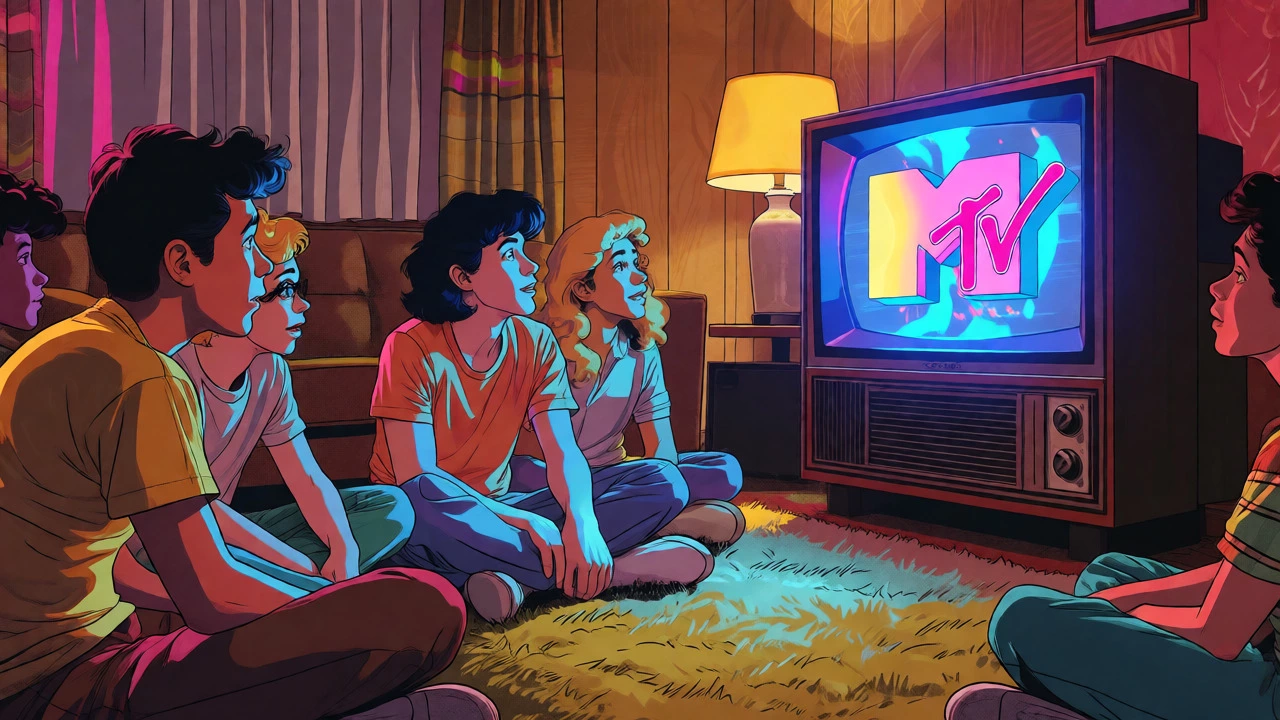

Before MTV launched on August 1, 1981, fashion trends moved slowly. You saw a style in a magazine, maybe caught it on a local TV show, or heard about it from a friend who went to the city. But when that cable channel hit American homes, it didn't just play songs; it turned every three-minute video into a high-speed fashion runway. Suddenly, millions of teenagers weren't just listening to music-they were studying it for style cues. The result? A decade where clothing became as loud and theatrical as the synthesizers, and artists like Madonna and Michael Jackson became global style dictators overnight.
The Visual Shift: From Album Covers to 24/7 Broadcast
Think about how you discover new clothes today. It’s probably Instagram or TikTok. In the early '80s, MTV was the original algorithm. Before this, the album cover was the primary visual link between artist and fan. You’d stare at a static image, try to imagine the vibe, and maybe buy a similar shirt if you were lucky. MTV changed the game by showing garments in motion. You could see how a leather jacket moved during a dance break, how a skirt swirled, or how shoulder pads altered a silhouette in real-time.
Cable penetration grew rapidly, reaching about 70% of U.S. households by the mid-80s. This meant that a kid in rural Oregon and a teen in downtown New York were watching the exact same visual content at the exact same time. Judy McGrath, an MTV creative director, famously called the network a "continuous, nearly subconscious fashion showcase." It wasn’t just entertainment; it was a tutorial. If Duran Duran wore a pastel suit with rolled-up sleeves in their "Rio" video, that look appeared in school hallways within weeks. The gatekeepers-fashion magazines and department store buyers-were bypassed. The musicians became the editors-in-chief.
Madonna and the Art of Thrift-Store Punk
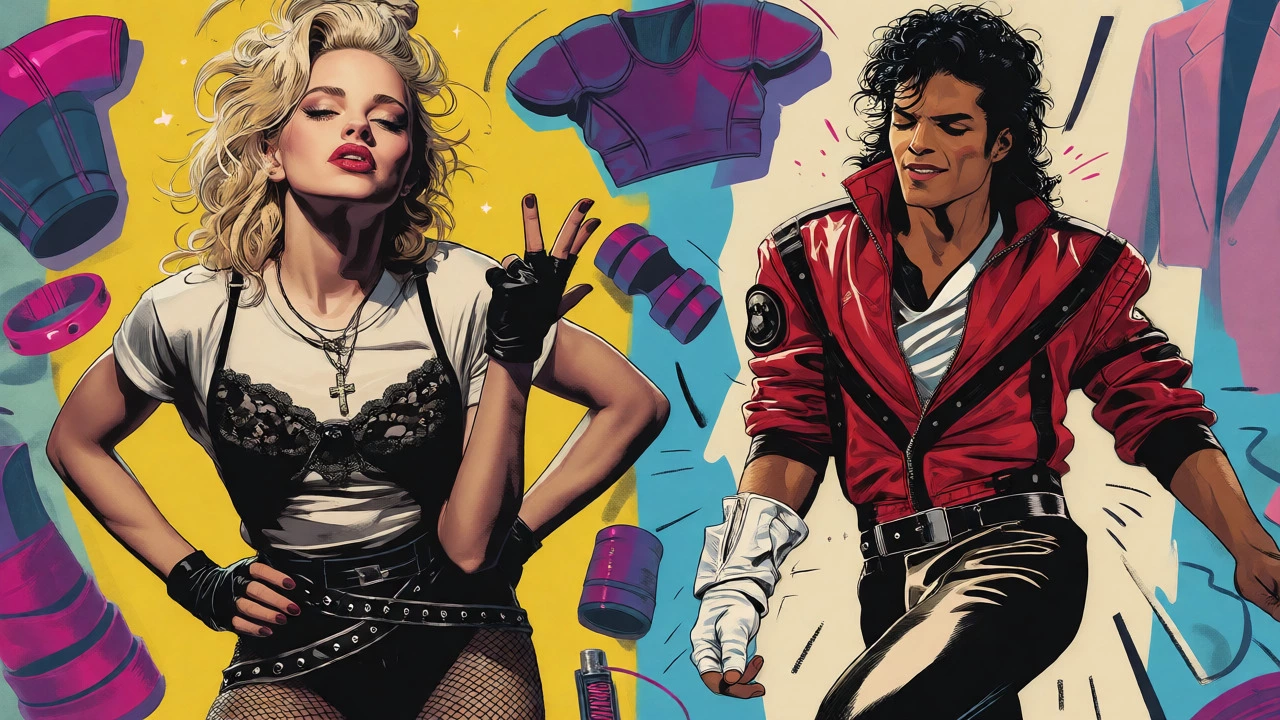
No single person defined MTV-era fashion more than Madonna. She didn’t just wear clothes; she curated a rebellion. Her look was a mashup of thrift-store finds, lingerie-as-outerwear, and religious iconography worn as jewelry. When she performed "Like a Virgin" at the first MTV Video Music Awards in 1984, wearing a modified wedding gown, lace bustier, and fingerless gloves, she shattered norms. Girls everywhere started layering cheap rubber bracelets over lace tops and pairing corsets with jeans.
Her style was accessible. You didn’t need a designer budget to copy her. You needed a rag for your hair, some fishnets, and confidence. This democratized avant-garde looks. Subcultural punk elements-like safety pins and messy styling-entered mainstream suburban closets because they looked cool on screen. Madonna proved that visual identity could be as powerful as vocal talent. Her influence wasn’t fleeting; it set the template for pop stars for decades. Today, when we see layered necklaces or cropped jackets, we’re seeing echoes of that 1983-1986 MTV window.
| Artist/Band | Signature Item | Fashion Impact | Era Peak |
|---|---|---|---|
| Madonna | Fingerless Gloves & Crucifixes | Lingerie as outerwear; thrift-punk aesthetic | 1984-1986 |
| Michael Jackson | Red Leather Jacket (Beat It) | Menswear rebellion; tailored suits for youth | 1983-1984 |
| Duran Duran | Pastel Suits & Headscarves | New Wave elegance; men wearing makeup/jewelry | 1982-1985 |
| Run-DMC | Tracksuits & Adidas Sneakers | Hip-hop streetwear entering mainstream | 1986-1988 |
| Cyndi Lauper | Neon Colors & Mismatched Patterns | Eclectic mixing; color-blocking trends | 1983-1985 |
Michael Jackson and the Precision of Cool
If Madonna was chaotic and DIY, Michael Jackson was engineered perfection. His impact on menswear was massive. The red leather jacket from his "Beat It" video became one of the most copied items in history. Teens wanted that jacket not because they rode motorcycles, but because it signaled a safe, stylized version of toughness. It made rebellion wearable for the masses.
Beyond the jacket, Jackson popularized sharp tailoring. Single gloves, fedoras, and crisp loafers influenced formal wear for school dances and proms. He showed that men could care deeply about their appearance without losing masculinity. His videos were choreographed spectacles where every button and fold mattered. This attention to detail raised the bar for male fashion, moving away from the baggy, unstructured looks of the late '70s toward something tighter, cleaner, and more performance-ready.
New Wave and the Gender-Bending Suit
British bands like Duran Duran brought a different flavor to MTV. Their style was luxurious yet playful. Think tailored blazers with sleeves rolled up to reveal colorful linings, silk headscarves, and pastel suits. This was the New Romantic movement, and it blurred gender lines significantly. Men wore makeup, jewelry, and long, styled hair. For young men in America, seeing Simon Le Bon or John Taylor in these outfits gave them permission to experiment. Wearing a scarf or a brightly colored suit wasn't weird anymore; it was cosmopolitan.
This era normalized cross-gender dressing in mainstream media. Hair-metal bands took this further with teased hair and tight spandex, while New Wave acts kept it chic. The result was a generation that viewed clothing as a form of artistic expression rather than just utility. School hallways became runways where students competed to recreate these intricate looks, often spending hours teasing hair and applying heavy eyeliner before heading out.
Hip-Hop Enters the Frame
While rock and pop dominated the early years, hip-hop broke through later in the decade, thanks to artists like Run-DMC. They didn’t dress like the polished pop stars. They wore tracksuits, unlaced Adidas sneakers, and gold chains. This was authentic street style, and MTV’s broadcast gave it national visibility. Before this, hip-hop fashion was largely regional. After Run-DMC’s videos hit rotation, tracksuits became a staple across suburbs and cities alike.
This marked the beginning of modern streetwear culture. The mix of sportswear with luxury logos and customized pieces created a DIY aesthetic that felt fresh compared to the theatricality of glam rock. It also paved the way for the sneaker culture we know today. By embracing this look, MTV expanded its definition of what a "music star" could look like, proving that coolness didn’t require sequins or shoulder pads.
Retail Response: Selling the Vibe
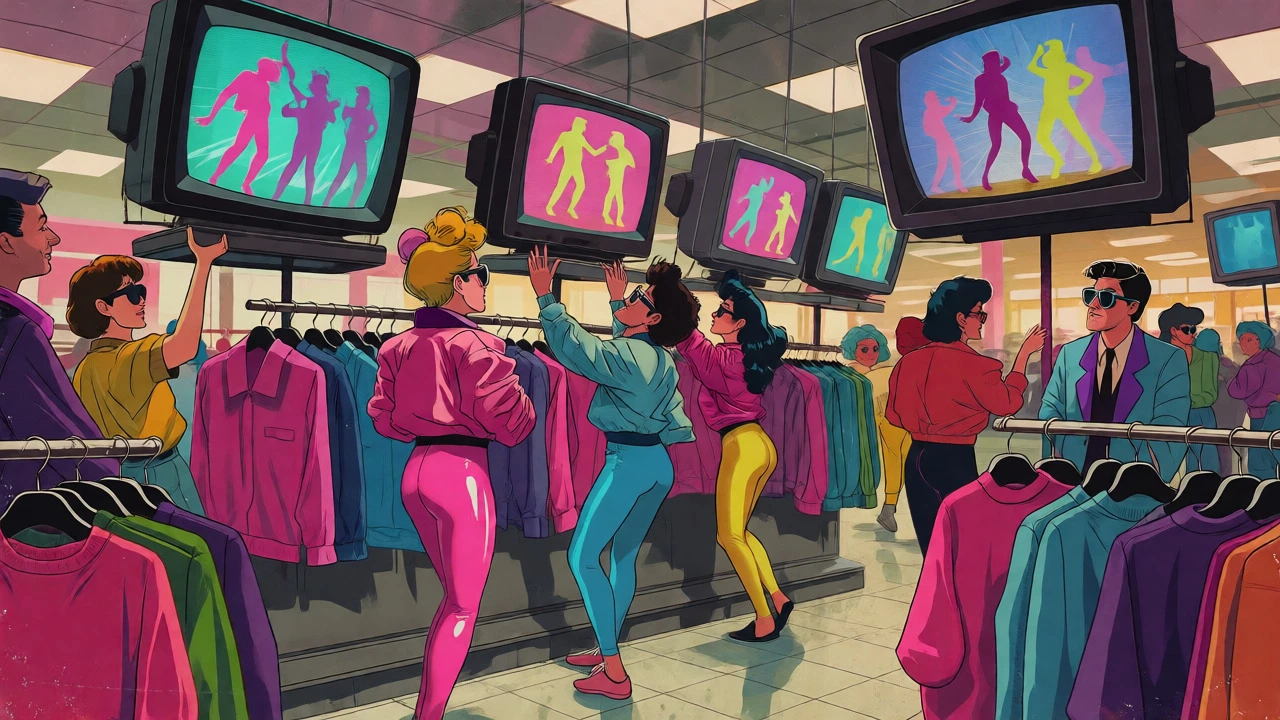
Stores noticed. Department stores like Nordstrom and Bullock’s installed TV monitors in their clothing sections, playing MTV videos directly above the racks. If you wanted to buy the outfit, you could watch the model wear it on loop right there in the aisle. This closed the gap between inspiration and purchase. Trends moved faster than ever. A video released on Tuesday might have fans asking for that specific item by Friday.
Mass production ramped up to meet demand. Neon spandex leggings, oversized sunglasses, and rubber bracelets were churned out by the millions. This accessibility is key. You didn’t need to be rich to participate in the '80s look. The trend cycle compressed so tightly that regional differences in style began to vanish. Everyone was buying from the same visual playbook, creating a unified national aesthetic driven entirely by television.
Legacy: Why We Still Talk About It
MTV didn’t just change what people wore; it changed how we consume fashion. It established the idea that musicians are influencers. Today, when Beyoncé drops a visual album or Harry Styles wears a pearl necklace, we see the direct lineage of 1980s MTV logic. The channel taught us that style is part of the art, not just an add-on.
Critics often mock the excess-the giant hair, the neon colors, the sheer volume of fabric. And sure, some of it was ridiculous. But that absurdity was the point. Fashion became fun, performative, and inclusive. It allowed kids to express identities that radio alone couldn’t convey. The legacy of MTV-era fashion is the understanding that visual presentation is a language, and for a whole generation, music was the teacher.
Why did MTV have such a big impact on fashion?
MTV provided a 24/7 visual platform that bypassed traditional fashion gatekeepers like magazines. By showing clothes in motion and context, it made styles instantly recognizable and easy to copy, accelerating trend cycles from months to weeks.
What was Madonna's biggest fashion contribution?
She popularized lingerie-as-outerwear, layered accessories like crucifixes and rubber bracelets, and mixed thrift-store punk aesthetics with high-fashion concepts, making subversive looks mainstream for teenage girls.
How did Michael Jackson influence men's fashion?
His red leather jacket from "Beat It" became a cultural phenomenon, symbolizing stylized rebellion. He also promoted sharp tailoring, single gloves, and clean silhouettes, influencing both casual and formal wear for young men.
Did MTV help launch hip-hop fashion?
Yes, artists like Run-DMC used MTV to bring streetwear elements-tracksuits, gold chains, and unlaced sneakers-to a national audience, laying the groundwork for modern hip-hop style.
Were 1980s fashion trends expensive?
Not necessarily. While designer items existed, mass-produced copies of MTV looks (like rubber bracelets and neon tees) were affordable, allowing teens from various backgrounds to participate in the trends.