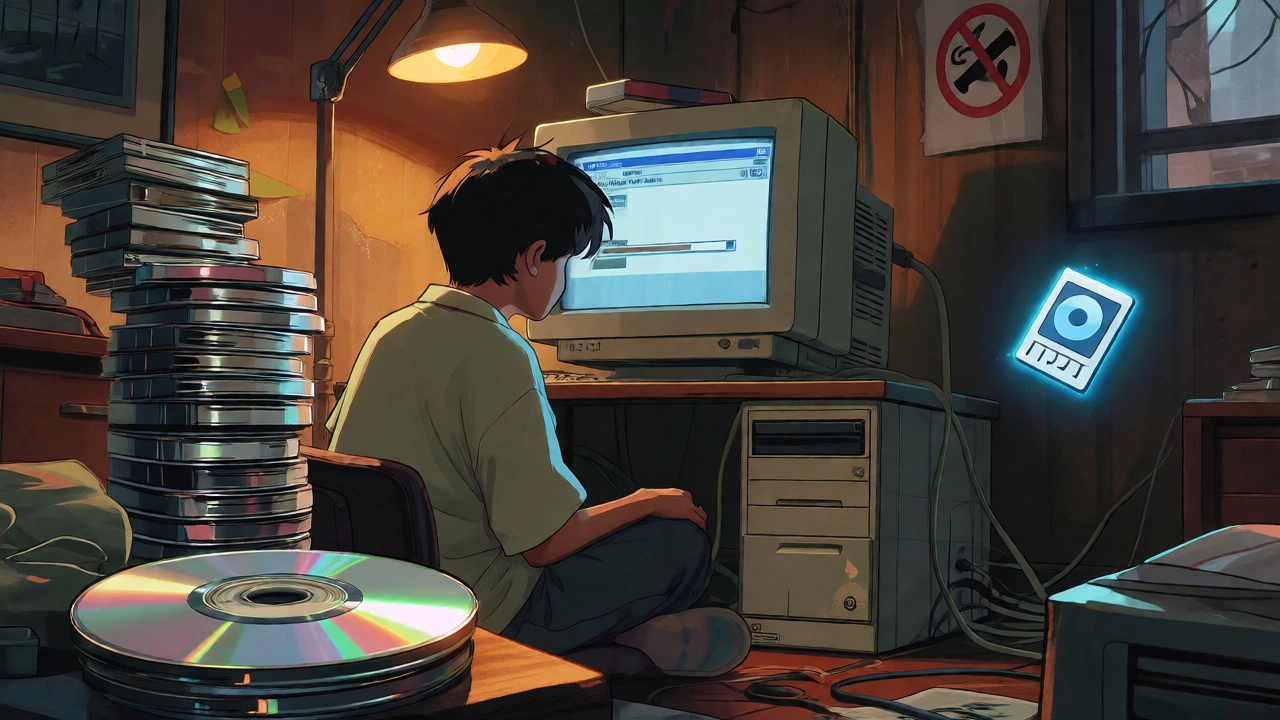

Imagine trying to download a single song on a computer in 1996. You’re on a 28.8k modem, the internet is a noisy dial-up connection, and you have to wait over an hour just to get one track. Now imagine doing that for an entire album. It was practically impossible. Then came MP3, a file format that promised to shrink songs by 90% while keeping them sounding "good enough." But was it? This question sparked one of the most heated debates in tech history: MP3 vs. CD. Audiophiles claimed MP3s sounded like garbage. Tech enthusiasts argued nobody could hear the difference. Who was right? And why did this technical squabble change how we listen to music forever?
The Numbers Game: Why Size Mattered More Than Fidelity
To understand the anger and excitement of the 1990s, you have to look at the raw numbers. The Compact Disc (CD) wasn't just a physical object; it was a standard. Defined by Philips and Sony in 1980, it used uncompressed digital audio known as PCM. A three-minute song on a CD takes up about 31.7 MB of space. That sounds small today, but back then, hard drives were tiny, and internet speeds were glacial.
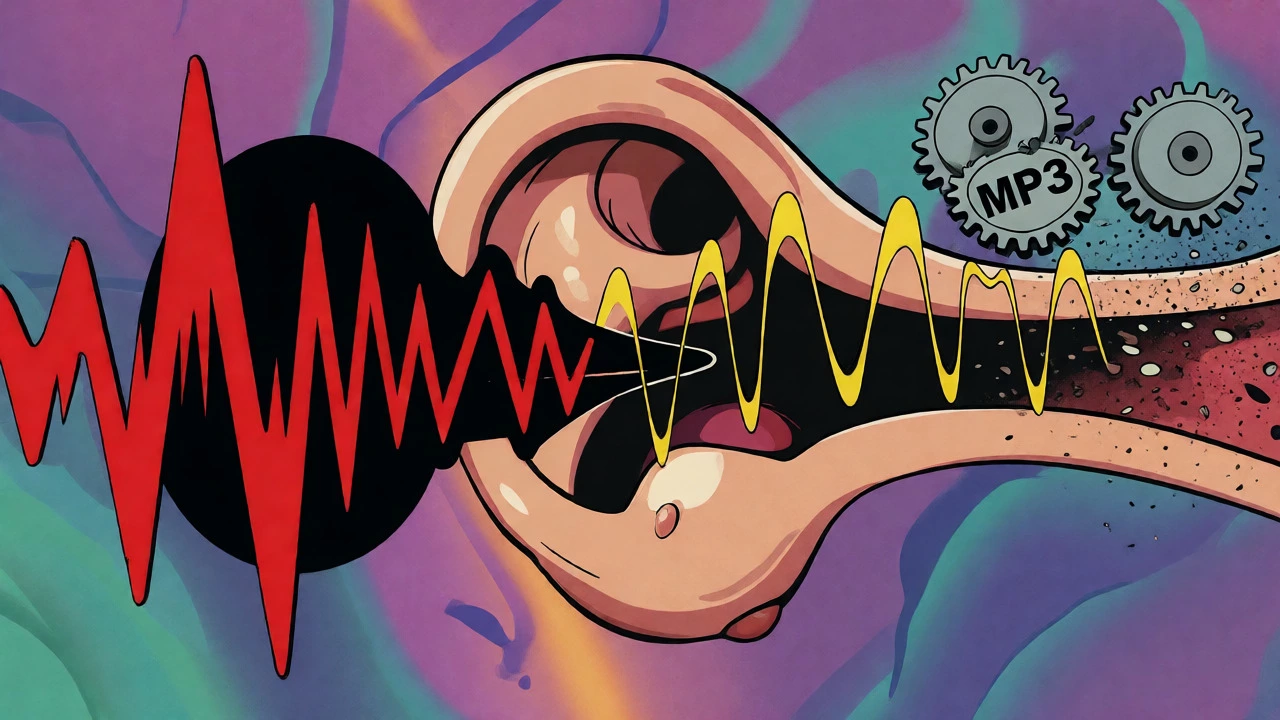
MP3, developed by Fraunhofer IIS, solved this by throwing away data. It didn’t just compress files like a ZIP archive; it deleted parts of the audio signal that human ears are predicted not to hear. This is called lossy compression. By using psychoacoustic models, an MP3 encoder could reduce that same three-minute song to roughly 2.9 MB at a standard bitrate of 128 kbps. That’s a 10-to-1 reduction.
This wasn't just a convenience feature; it was a revolution. Before MP3, sharing music meant burning CDs or copying tapes. With MP3, you could email a song, download it overnight, or store hundreds of tracks on a portable player. The trade-off was obvious: you lost some data. The debate was whether that lost data actually mattered to your ears.
How Psychoacoustics Tricked the Ear
You might think deleting audio data would sound terrible. Like listening to a radio with static. But MP3 technology relies on a clever trick called psychoacoustics. Your brain doesn't process sound like a microphone does. If a loud drum hit happens at the same time as a quiet flute note, your brain ignores the flute because the drum masks it. MP3 encoders know this. They delete the quiet flute note entirely, saving space without you noticing.
However, this system isn't perfect. In the 1990s, early MP3 encoders often struggled with complex sounds. Sharp transients-like a cymbal crash or a snare snap-could cause "pre-echo," where you hear a ghostly warble before the actual sound. High frequencies could get smeared, making hi-hats sound like sandpaper underwater. For casual listeners using cheap computer speakers, these artifacts were invisible. But for audiophiles with high-end equipment, they were glaring flaws.
The core argument became philosophical. Was "inaudible" the same as "gone"? Engineers said yes. Purists said no, arguing that removing information altered the emotional impact of the music, even if you couldn't pinpoint the flaw. This divide created two camps: those who valued accessibility and those who valued purity.
| Feature | CD Audio (Red Book) | MP3 (Standard 128kbps) |
|---|---|---|
| Data Type | Uncompressed PCM | Lossy Compressed |
| Bitrate | ~1,411 kbps | ~128 kbps |
| File Size (3-min song) | ~31.7 MB | ~2.9 MB |
| Dynamic Range | ~90-96 dB | Variable (dependent on encoding) |
| Reversibility | None (Source preserved) | Irreversible (Data discarded) |
| Best Use Case | Archival, Critical Listening | Storage, Dial-up Downloading |
The Hardware Bottleneck: Modems and Hard Drives
It’s easy to judge the past with modern eyes, but context is everything. In 1995, the average home internet speed was around 14.4k or 28.8k bits per second. At 28.8k, downloading a 31.7 MB CD-quality WAV file took nearly three hours. An MP3 at 128 kbps took about 15 minutes. That’s the difference between grabbing a coffee and going to bed.
Hard drive space was another killer. A 1 GB hard drive in 1995 cost hundreds of dollars and could hold only about 30 songs in CD quality. The same drive could hold over 300 MP3s. For students and young professionals, MP3 wasn't just a preference; it was the only way to build a large digital library. The "quality" debate was often overshadowed by the sheer joy of having access to thousands of songs instead of dozens.
Software also played a role. Early players like Winamp allowed users to visualize their music with wild animations, turning listening into a visual experience. This cultural shift made MP3s feel more personal and interactive than the passive act of putting a CD in a tray. The medium itself changed the message.
Piracy and the Industry Panic
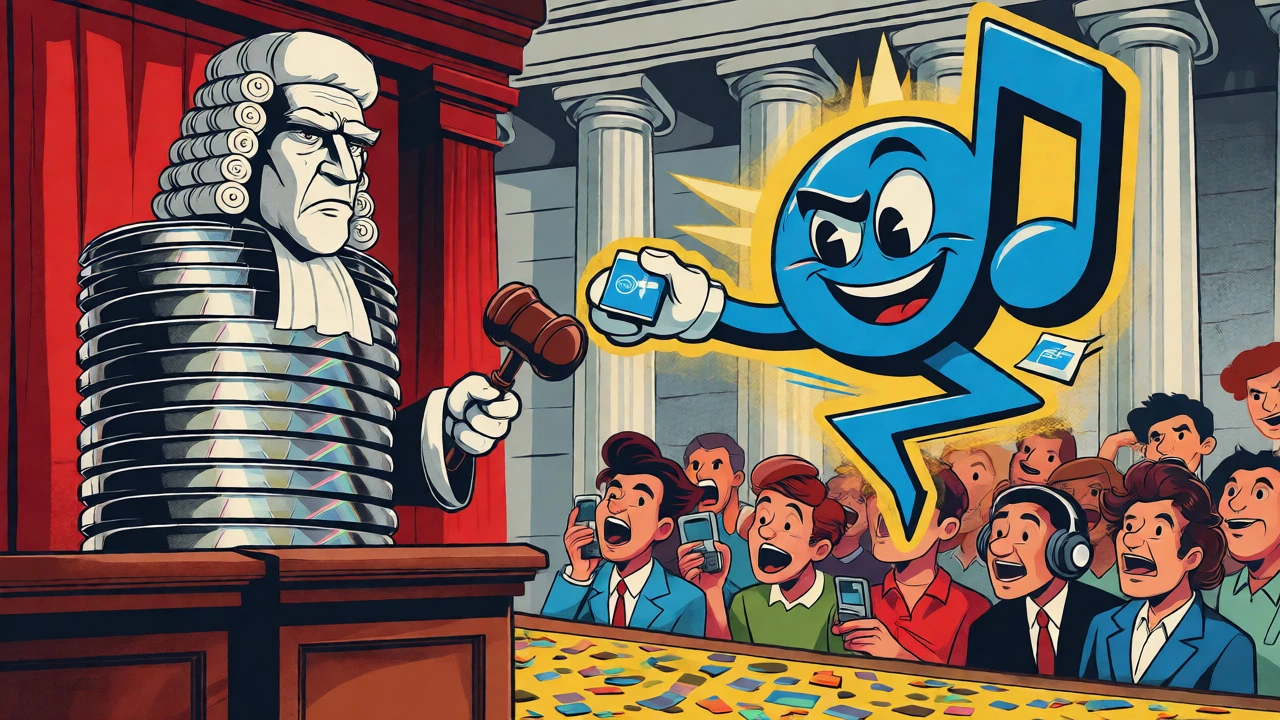
You can't talk about MP3 without talking about Napster. Launched in 1999, Napster used the MP3 format to allow peer-to-peer file sharing. Suddenly, anyone with a computer could find almost any song ever recorded. The record industry panicked. They argued that MP3s degraded the art form and that free distribution destroyed revenue.
But there was a deeper fear. CDs were physical products you had to buy. MP3s were data. Data is easy to copy. Easy to lose. Easy to steal. The sound quality debate was partly a proxy war for economic control. Record labels insisted that only the full fidelity of a CD justified paying $15-$20 per album. If people accepted MP3s, the label's power to dictate price and format vanished.
Interestingly, the piracy wave helped validate MP3. Because millions of people downloaded low-bitrate files illegally, they got used to the sound. When Apple launched the iTunes Store later, offering higher-quality AAC files, consumers were already comfortable with digital formats. The 1990s battle paved the way for the streaming era, even if the combatants never fully agreed on who won.
Did Anyone Actually Hear the Difference?
This is the million-dollar question. Studies from the late 1990s and early 2000s show mixed results. In blind ABX tests-where listeners don't know which sample is which-many people failed to distinguish between a 128 kbps MP3 and a CD. Others, particularly trained musicians or those with expensive gear, consistently identified the differences.
The key variable was the source material. Simple pop songs with heavy production and masking effects hid MP3 artifacts well. Complex jazz, classical music, or acoustic recordings exposed them. A harpsichord solo encoded at 128 kbps might sound brittle, while a heavily compressed rock anthem might sound identical to its CD counterpart.
Expectation bias also skewed opinions. If you knew a file was an MP3, you might convince yourself it sounded worse. Conversely, if you believed digital audio was inferior, you’d hear flaws that weren't there. The truth lies in the middle: MP3 is not transparent at all bitrates and on all systems, but for the majority of casual listening scenarios in the 1990s, it was close enough to win the market.
Legacy of the Great Format War
Today, we stream high-resolution audio, and storage is cheap. We rarely worry about file size. So, why look back at the MP3 vs. CD debate? Because it established the rules of digital consumption. It proved that convenience often beats perfection. It showed that technology evolves faster than human perception adapts.
The CD didn't disappear because it sounded bad. It disappeared because it was inconvenient. MP3 didn't win because it sounded better. It won because it was accessible. The 1990s debate taught us that "quality" is subjective and contextual. What matters isn't just the math behind the waveform, but how, where, and when we choose to listen.
Was MP3 really lower quality than CD?
Technically, yes. CD audio is uncompressed and contains all the original data captured during mastering. MP3 uses lossy compression, meaning it permanently deletes data deemed inaudible. However, for many listeners on typical equipment, the audible difference was negligible, especially at higher bitrates like 192 or 320 kbps.
Why did people prefer MP3s if they sounded worse?
Convenience and cost. In the 1990s, MP3s were 10 times smaller than CD audio files. This made them practical for downloading over slow dial-up internet and storing on limited hard drive space. The ability to carry hundreds of songs outweighed the minor fidelity loss for most users.
What is psychoacoustic modeling?
Psychoacoustic modeling is the science of how humans perceive sound. MP3 encoders use these models to identify and remove audio components that the human ear is unlikely to hear, such as quiet sounds masked by louder ones. This allows for significant file size reduction without a perceived drop in quality.
Did the record industry fight against MP3s?
Yes, aggressively. The rise of MP3s and file-sharing services like Napster threatened the CD-based business model. Labels feared that easy copying would destroy sales and devalue music. They pursued legal action and promoted alternative formats like SACD and DVD-Audio, though these failed to gain mainstream traction.
Can you convert an MP3 back to CD quality?
No. Because MP3 is a lossy format, data is permanently discarded during compression. Converting an MP3 to a WAV or AIFF file increases the file size but does not restore the lost audio information. The resulting file will still contain the artifacts and limitations of the original MP3 encoding.