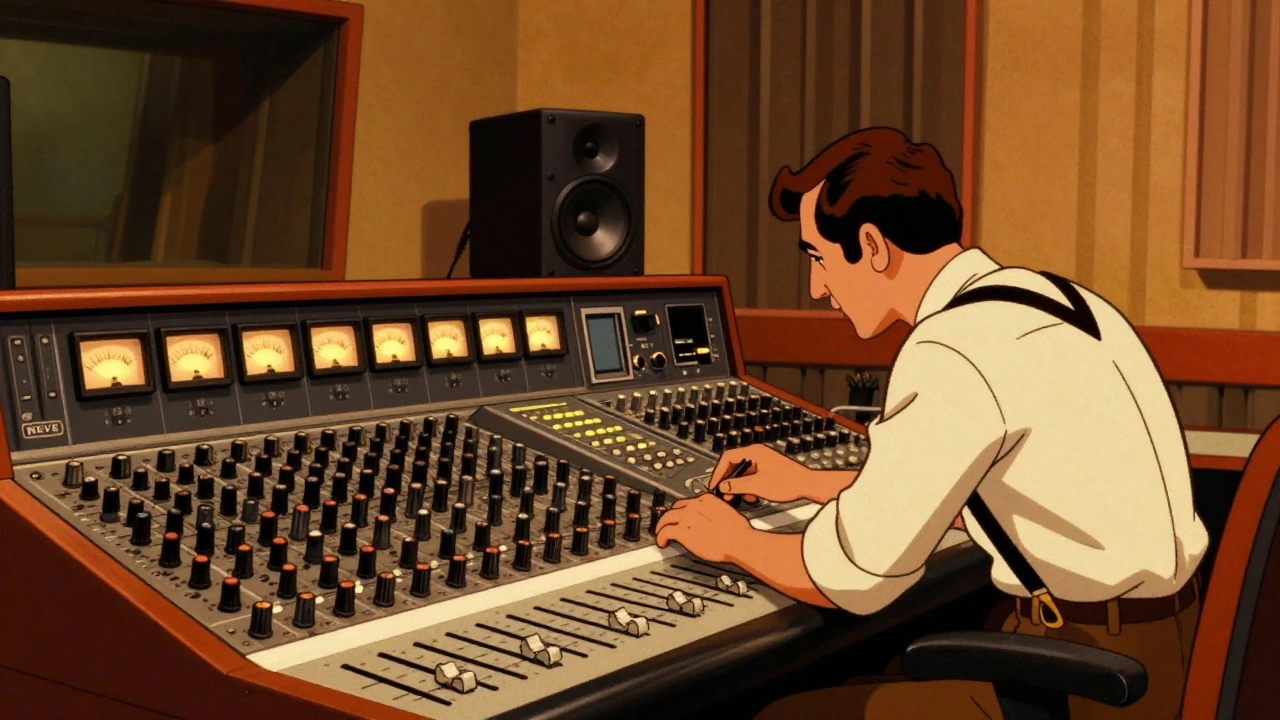

Disco didn't just happen; it was engineered. When you hear the punchy kick drums and soaring strings of a classic 1977 dance record, you are hearing the result of intense physical labor on massive pieces of hardware. There were no "undo" buttons. There was no digital noise gate to clean up bleed. Engineers had to manage dozens of instruments on limited tracks using Analog Mixing Consoles that shaped sound through electricity and magnetism rather than code. This era defined how we perceive rhythm and low-end power in music today.
The workflow was brutal but precise. Studios relied on large-format desks from brands like Neve, API, and Harrison, paired with 16- or 24-track tape machines. The goal was simple yet difficult: create a mix that sounded huge on club systems but could still be cut onto vinyl without skipping. To do this, engineers developed specific techniques for managing frequency clashes, controlling dynamics, and utilizing the unique architecture of these consoles. Understanding these methods reveals why those records still hit so hard decades later.
The Hardware Foundation: Why Specific Consoles Mattered
You couldn't mix disco on any desk. The genre demanded clarity in dense arrangements where brass, strings, percussion, and vocals all fought for space. Studios favored consoles with transformer-coupled inputs because transformers added a natural saturation that glued elements together. A Neve 80-series console, such as the 8014 or 8078, provided a thick, warm midrange that made vocals and guitars sit perfectly in the pocket. These British desks used Class A amplification stages, which meant they handled high signal levels cleanly before breaking up in a musical way.
In the United States, particularly in Los Angeles, the Harrison 32C became the go-to machine for complex productions. Introduced in 1975, the Harrison 32C featured an inline design with separate input and monitor paths. This wasn't just a luxury; it was a necessity for disco. Tracks like those released by Butterfly Records often had over twenty individual elements. The Harrison’s 32 multitrack buses allowed engineers to route signals flexibly, ensuring that every layer had its own dedicated path to the main mix. By 1977, studios like Village Recorder installed multiple Harrison units specifically to handle the demands of high-end disco and rock projects.
Another key player was the SSL 4000 series. Although the famous SSL 4000E with automation arrived in 1979-right at the end of the disco peak-the earlier models set the standard for speed and clarity. Their fast EQ sections and powerful bus compressors helped define the bright, sharp attack that characterized late-era dance records. Before SSL, however, most disco was mixed on Neves and Harrisons, relying on their distinct tonal colors rather than sheer processing speed.
Managing Low-End: The Vinyl Constraint
The biggest challenge in disco mixing was the bass. Dance music lives in the low frequencies, but vinyl records have physical limits. If you put too much energy below 45 Hz, the needle jumps out of the groove. Engineers had to keep the sub-bass tight while making the kick drum feel massive. They achieved this through careful equalization and routing tricks.
A common technique involved rolling off the extreme lows sharply around 45 Hz on the master bus. This prevented the cutter lathe from struggling during manufacturing. But how did they maintain impact? They focused on the "body" of the kick drum, usually between 60 Hz and 100 Hz, and ensured the electric bass guitar occupied a different spectral slot. If the kick was boosted at 80 Hz, the bass might be cut slightly there and boosted higher, perhaps around 150 Hz or 200 Hz. This frequency trading prevented muddiness.
Harrison engineers took this further. Using the inline monitoring path of the 32C, some engineers fed an oscillator generating a pure sine wave at 40 Hz or 60 Hz into the sidechain of the kick drum compressor. This added perceived weight and sub-bass thump without actually putting that frequency content into the stereo mix. The listener felt the power, but the vinyl remained safe. It was a clever workaround for the limitations of the medium.
| Console Model | Key Feature | Sonic Characteristic | Typical Use Case |
|---|---|---|---|
| Neve 8014/8078 | Transformer Input, Class A Stages | Warm, Thick Midrange | Vocals, Guitars, General Mix |
| Harrison 32C | Inline Design, 32 Buses | Clean, Detailed, Flexible Routing | Complex Arrangements, Orchestral Overdubs |
| API Console | Discrete Circuitry, Fast Transients | Punchy, Bright, Aggressive | Drums, Percussion, Lead Instruments |
| SSL 4000 (Early) | Fast EQ, Bus Compression | Sharp Attack, Wide Stereo Image | Final Polish, Late-Era Disco |
EQ and Dynamics: Sculpting the Groove
Equalization in the 1970s was not surgical. Modern digital plugins let you carve out tiny notches in the frequency spectrum with precision. Vintage consoles had broad, fixed-frequency bands. An engineer boosting 220 Hz on a guitar would affect a wide range around that point. This forced them to think holistically about the mix. If they boosted the low-mids on one instrument, they had to cut those same frequencies on another to avoid masking.
Compression was applied heavily but with intent. The typical chain looked like this: Console Preamp → Fast Compressor (like a Urei 1176) → Tape Machine → Slow Compressor (like a Neve 2254) → Final Mix Console. The fast compressor controlled peaks on individual tracks, preventing distortion on the tape. The slow compressor smoothed out the overall performance, adding sustain and glue. For disco vocals, chaining two compressors-one fast and aggressive, one slow and gentle-created a vocal that sat right on top of the beat without sounding squashed.
Drums were treated differently. They were close-miked and heavily damped to reduce ring and bleed. Then, the entire drum bus was smashed with a fast-releasing compressor. This exaggerated the room sound and the initial transient, giving the kit a cohesive, punchy identity. In a genre driven by rhythm, this cohesion was vital. You wanted the snare and kick to feel like one unit, not separate sounds fighting each other.
Tape Saturation and Noise Management
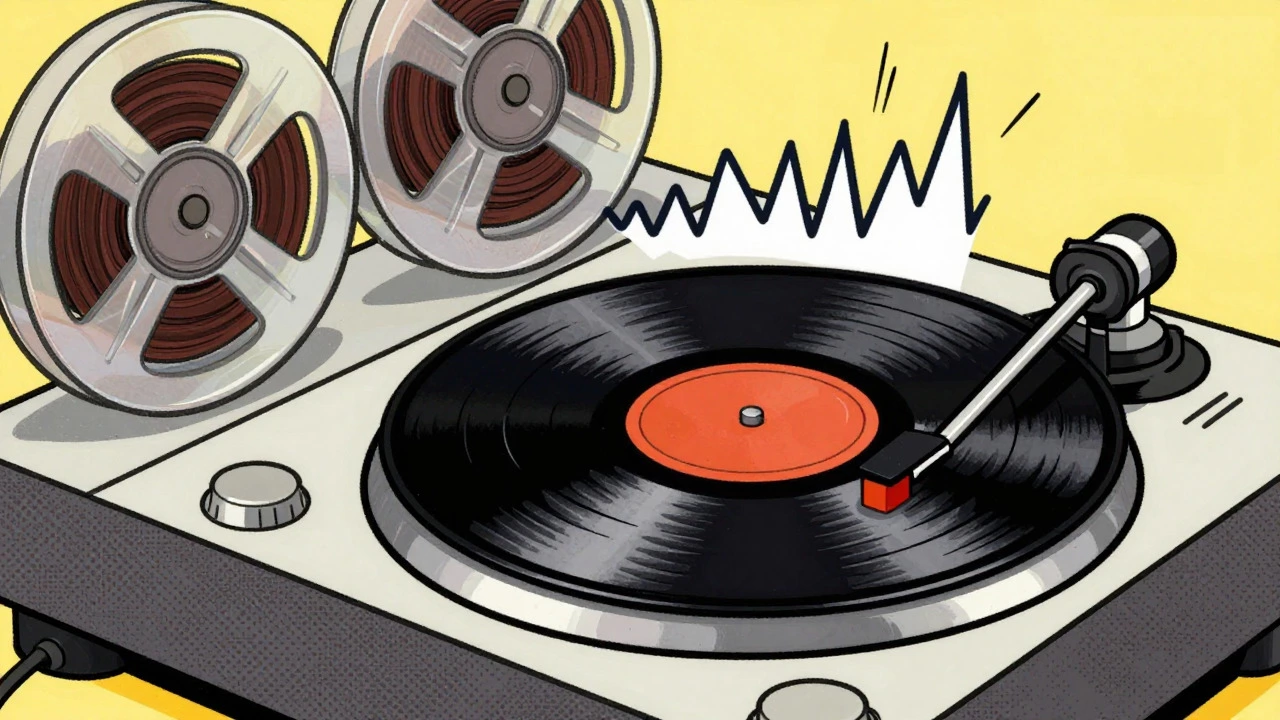
Everything went to tape. Usually 1-inch tape running at 15 inches per second (ips). This speed offered a good balance of fidelity and noise floor. Tape introduces harmonic saturation, which softens harsh transients and adds warmth. It also adds hiss. Engineers managed this by keeping levels hot but not peaking. They avoided boosting high frequencies excessively during the final mix because doing so would amplify the tape hiss.
Instead of trying to eliminate noise, they worked with it. They used Dolby noise reduction systems when available, but primarily relied on dynamic control. By compressing the quiet parts less and letting the loud parts drive the tape naturally, they maintained a healthy signal-to-noise ratio. The result was a mix that felt alive and moving, rather than sterile and static. Modern producers often add tape emulation plugins to their master bus to replicate this slight compression and coloration, aiming for that same organic feel.
Reverb and Ambience: Creating Space
Disco mixes were generally dry compared to modern pop. Too much reverb would muddy the rhythm section. Reverb was reserved mainly for vocals and sometimes strings. Plate reverbs were popular because they provided a smooth, consistent wash that didn't interfere with the low end. Room reverbs were also used, often by feeding multiple instruments into the same auxiliary send. This created a sense that all the musicians were playing in the same physical space, enhancing the stereo image without cluttering the frequency spectrum.
Delays were typically analog tape echoes or early bucket-brigade devices. These effects were lo-fi, with limited bandwidth and slight degradation. A slap-back delay on a vocal or a subtle repeat on a guitar riff added depth without washing out the direct signal. Engineers kept these effects short and tight to preserve the rhythmic integrity of the track.
Workflow Constraints: No Undo, No Recall
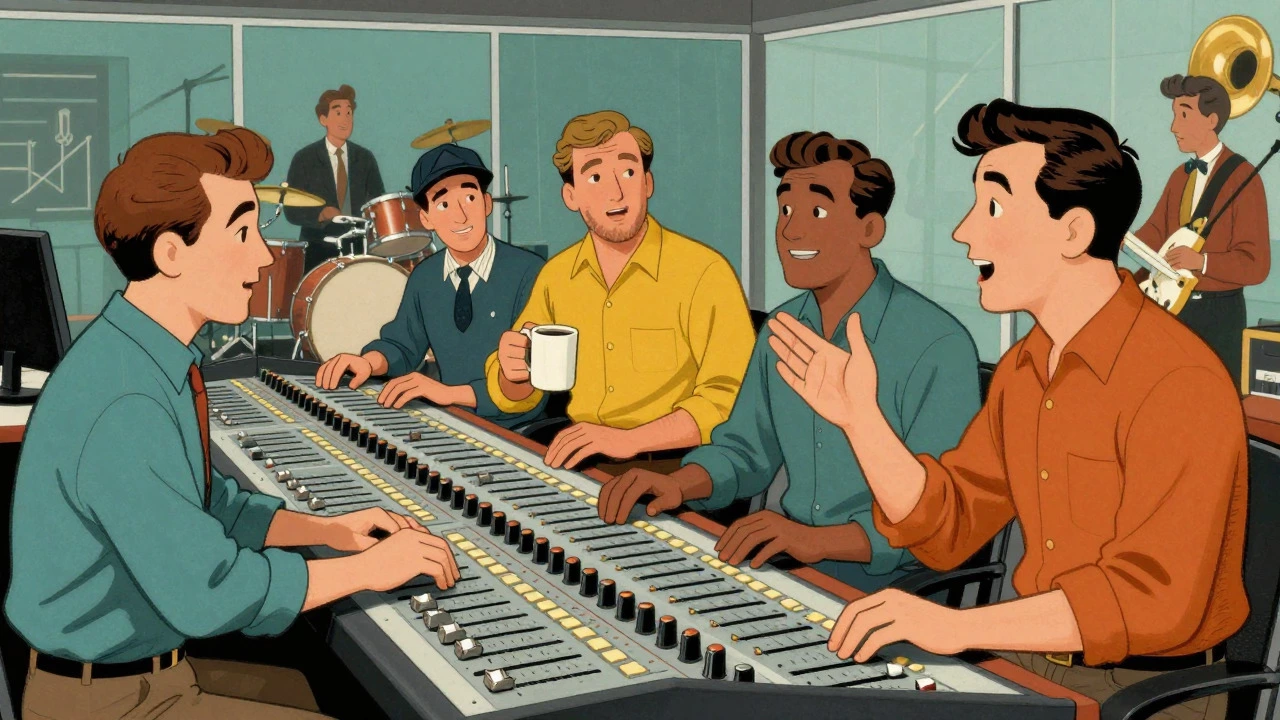
Perhaps the most defining aspect of 1970s disco mixing was the lack of automation. You couldn't save a scene. You couldn't recall fader positions. If a song had a breakdown where the drums dropped out and then came back in, the engineer had to move the faders manually in real-time. Often, multiple engineers stood behind the console, moving faders simultaneously to execute complex transitions. This required immense concentration and coordination.
Decisions were committed early. Once a part was recorded to tape, it was done. You couldn't change the mic position or the EQ curve later without re-recording. This pressure forced engineers to get the sound right at the source. Mic placement, preamp gain staging, and initial EQ choices were critical. There was no safety net. This discipline resulted in mixes that were focused and intentional, with every element serving the groove.
Legacy and Modern Application
Today, we can emulate these workflows digitally. Plugins model the circuitry of Neve and Harrison consoles. Tape saturation plugins simulate 15 ips recording. But understanding the original constraints helps us use these tools better. Limit your track count. Commit to decisions. Focus on the midrange. Control the low end carefully. And remember that the goal isn't perfection; it's energy. Disco was about making people move, and the engineers of the 1970s built their mixes to serve that purpose above all else.
What was the typical track count for disco recordings in the 1970s?
Most disco recordings were tracked on 16-track or 24-track analog tape machines. This limited number of tracks forced engineers to submix instruments, such as combining all percussion into a single stereo pair, to make room for orchestral overdubs and vocals.
Why was the Harrison 32C console preferred for disco?
The Harrison 32C offered 32 multitrack buses and an inline design with separate input and monitor paths. This allowed engineers to manage complex arrangements with many layers and use creative routing techniques, such as injecting sub-bass frequencies via the monitor path, without running out of channels.
How did engineers manage low-end frequencies for vinyl cutting?
Engineers rolled off frequencies below 45 Hz to prevent the needle from jumping out of the groove. They focused on boosting the "body" of the kick drum (60-100 Hz) and used frequency trading to ensure the bass guitar and kick drum didn't clash, often cutting overlapping frequencies on one instrument while boosting them on the other.
What role did tape saturation play in disco mixes?
Tape saturation added harmonic warmth and softened harsh transients, helping to glue the mix together. Recording at 15 ips provided a good balance of fidelity and noise. Engineers drove the tape lightly to achieve this coloration while managing hiss through careful level setting and dynamic control.
Did 1970s disco mixes use automation?
No, full automation was not available until the SSL 4000E arrived in 1979. Most disco mixes were performed manually by one or more engineers moving faders in real-time. This required precise coordination and meant that mix settings could not be recalled or edited after the session ended.