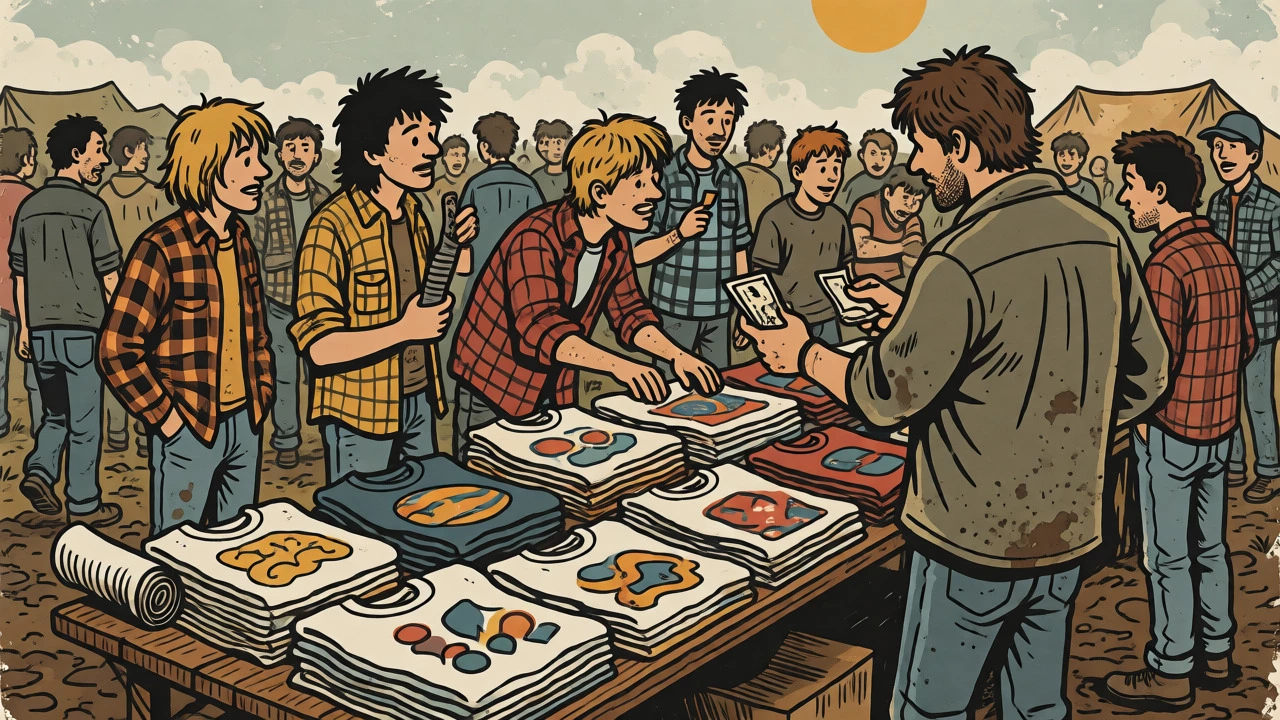

You’re standing in a muddy field or a crowded arena. The air smells like stale beer and sunscreen. You just saw your favorite band play for two hours. Now you’re at the merchandise booth, holding a crumpled five-dollar bill, trying to decide between a shirt that says "I Was There" or a poster of a skull wearing sunglasses. If you were alive during the 1990s, this scene was your reality. But what you bought wasn’t just a souvenir. It was a piece of a $500 million industry that was exploding right before our eyes.
Today, we look back at 1990s Festival Merchandising as a cultural artifact. Back then, it was just Tuesday. The decade transformed how fans interacted with music events. We moved from buying cheap souvenirs to investing in identity markers. This article breaks down the economy, the design, and the legacy of those iconic posters, shirts, and collectibles. We’ll look at why a simple cotton tee became a status symbol and how museums now treat these items as historical records.
The Boom: How Merch Became Big Business
In the late 1980s, selling t-shirts at concerts was often an afterthought. Promoters focused on ticket sales. Artists relied on record royalties. But by January 1991, things had changed drastically. The New York Times reported that music merchandising had tripled in size since the late 1980s. It had become a half-billion-dollar-per-year industry. Why the sudden spike?
The rise of alternative rock, grunge, and hip-hop created new fan bases. These groups didn’t just listen to music; they wore it. MTV made visual identity crucial. If you wanted to show you belonged to the scene, you needed the right gear. Festivals like Lollapalooza capitalized on this. They weren’t just concerts; they were traveling brands. The merchandise sold at these events served two purposes. First, it generated immediate cash for the tour. Second, it acted as free advertising long after the stage lights went out. Every time a fan wore a faded Lollapalooza ’93 shirt to school or work, they were promoting the brand.
This shift required professional infrastructure. Companies like Winterland Productions, founded by Bill Graham’s team, scaled up operations. By 1996, Winterland reportedly employed 500 people. They handled everything from design to logistics. But not every festival had big-budget backing. Local events relied on local screen printers. This created a wild mix of high-quality licensed goods and bootleg knockoffs. Understanding this split is key to spotting authentic vintage items today.
The Shirt: Wearable Proof of Attendance
If you dig through a closet full of old clothes, you’ll likely find a festival shirt. In the 1990s, the T-shirt was king. It was cheap, durable, and highly visible. Most were screen-printed on cotton blanks. Brands like Screen Stars, Giant, and Hanes supplied the base garments. The printing method mattered. Plastisol inks were common because they sat on top of the fabric rather than soaking in. This gave the designs a distinct texture and brightness.
Authenticity collectors obsess over construction details. A major clue is the stitching. Before roughly 1992-1994, many shirts featured single-stitch hems on the sleeves and bottom. After that, double-stitching became standard. But don’t rely on this alone. Old equipment could still produce single-stitch shirts later, and modern reproductions can fake the look. Other signs include tubular body construction (where the sides are sewn together) and period-correct neck tags. Country of manufacture labels also help. Many 1990s shirts were made in the USA or specific Asian countries depending on the brand.
| Feature | Original 1990s Indicator | Modern Reproduction Red Flag |
|---|---|---|
| Hem Stitching | Single stitch common pre-1994; double stitch mid-to-late 90s. | Uniform double stitch on early 90s designs; overly clean edges. |
| Print Quality | Halftone dots visible under magnification; ink may crack or fade naturally. | Sharp digital print lines; no fading; feels like plastic film. |
| Tags | Period-specific brand tags (e.g., Screen Stars); printed copyright dates. | Blank tags; generic "Made in China" without specific year context. |
| Fit | Tubular body; boxy cut; heavier cotton weight. | Fitted cuts; lightweight blends; side-seamed bodies. |
Designs reflected the era’s chaotic energy. You saw distorted typography, collage art, and references to subcultural politics. For example, some Glastonbury shirts incorporated imagery related to the UK Criminal Justice Bill. Wearing one wasn’t just about fashion; it was a political statement. Fans used these shirts to signal their values. A shirt listing the entire lineup of a tour leg was a badge of honor. It proved you knew the bands and attended the event. Today, these complete lineup designs are among the most sought-after items.
Posters: Art, Advertising, and Archive
While shirts were worn, posters were displayed. They served as the visual anchor for a festival. Before social media, a poster was the primary way to announce a lineup. It had to grab attention instantly. Designers like Derek Hess became legends for their work in the Cleveland scene, creating hundreds of posters for alternative rock venues. His style-bold, graphic, and intense-defined the aesthetic of 1990s indie music.
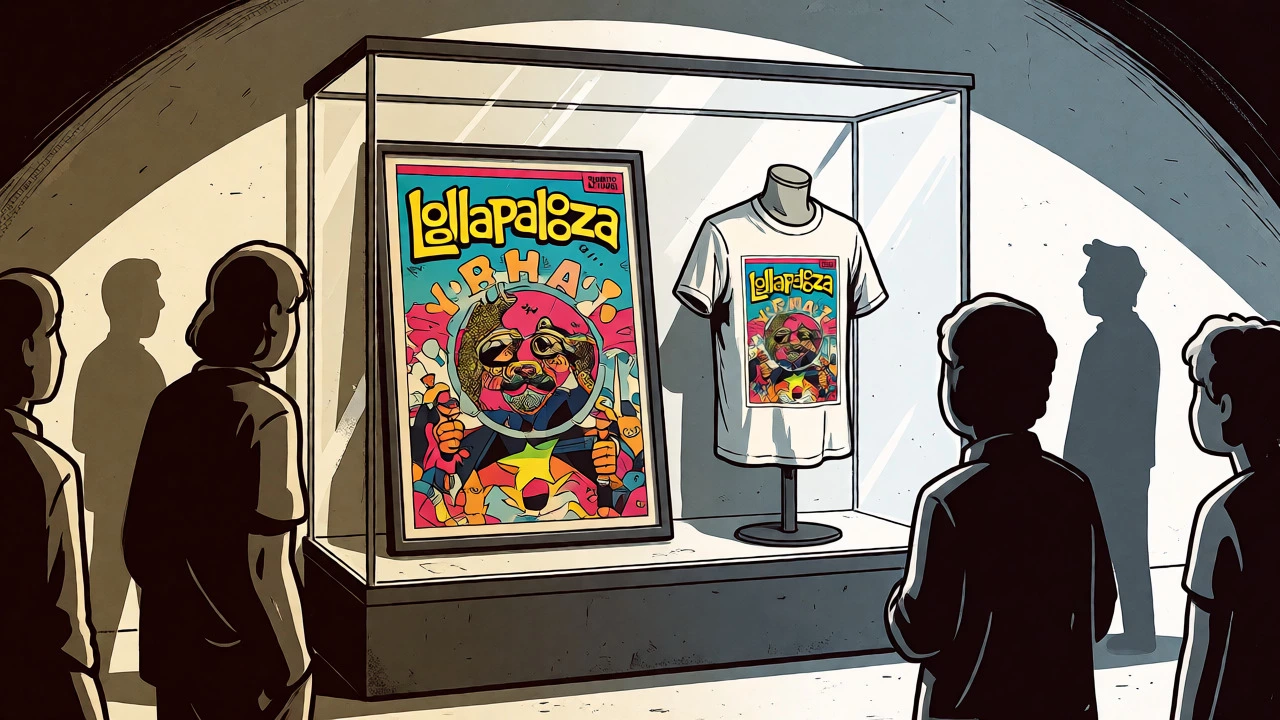
At major festivals, posters were often sold as official merchandise. The Rock & Roll Hall of Fame holds a Lollapalooza poster from 1991. It lists acts like Jane’s Addiction and Nine Inch Nails. This wasn’t just a flyer taped to a wall; it was a product. Fans bought them to decorate dorm rooms and apartments. Unlike shirts, which wear out, posters could survive decades if stored properly. This longevity makes them valuable historical documents. They capture the exact lineup, date, and venue of an event. If a band canceled last minute, the poster might still list them, creating a unique historical discrepancy that collectors love.
Regional variations existed too. A poster for a show in Portland, Oregon, looked different from one in London. Local artists designed many of these, giving each city a distinct visual flavor. The Victoria and Albert Museum in London acquired the Glastonbury Festival Archive in 2014. Their collection includes thousands of posters, programs, and tickets. This institutional validation proves that these ephemeral items have lasting cultural weight. They aren’t just junk mail; they are primary sources for understanding music history.
The Economics of Scarcity and Licensing
Why do some shirts sell for hundreds of dollars while others go for ten? Scarcity. In the 1990s, production runs were often short. A festival might print only enough shirts for the weekend. Once they sold out, they were gone. There was no online store to restock inventory. If you missed the booth, you missed the shirt. This created immediate scarcity. Add in the fact that many items were destroyed by weather, washing, or neglect, and surviving originals became rare.
Licensing played a huge role. Large tours had dedicated merchandise companies handling contracts. Artists received a percentage of sales. Smaller festivals often operated informally. A promoter might hire a local printer without clear agreements. This led to confusion about who owned the rights to a design. Sometimes, unofficial vendors set up tables outside the gate selling bootlegs. These unauthorized items lacked quality control but captured the vibe perfectly. Distinguishing between official and unofficial merch is tricky. Official items usually had licensing logos or copyright info. Bootlegs might misspell band names or use low-resolution images.
The value proposition for promoters was clear. Merchandise diversified revenue streams. Ticket prices couldn’t always cover rising costs. Selling a $20 shirt with near-zero marginal cost helped balance the books. For fans, the math was simple. You paid for a memory and a marketing tool. The dual nature of these items drove demand. You got a cool shirt, and the festival got a walking billboard. This symbiotic relationship fueled the industry’s growth throughout the decade.
Collecting Culture: Then vs. Now
Fast forward to 2026. The market for 1990s festival memorabilia is robust. Platforms like Etsy and eBay are flooded with listings. But beware: the line between original and reproduction is blurry. Modern manufacturers use advanced printing techniques to mimic the faded look of old plastisol inks. They even distress the fabric to simulate age. Collectors must be vigilant.
Provenance matters. Did someone buy the shirt at the actual event? Do they have a photo from 1994 wearing it? Documentation increases value significantly. Museums now curate these items alongside photographs and business records. The Smithsonian notes that at Woodstock 1969, organizers didn’t sell shirts; third-party vendors did. By Woodstock 1994 and 1999, merchandising was tightly controlled. Commemorative stores today sell replicas for around $39. These are not the original retail prices, but they indicate current market positioning. Originals from those years, especially staff-only or security items, command higher prices due to rarity.
Community forums play a vital role in authentication. Reddit threads and specialized Facebook groups dissect stitching patterns and tag fonts. Experts share tips on spotting fakes. For instance, a copyright date on a tag might refer to the artwork, not the garment production year. This nuance trips up many buyers. Always cross-reference the lineup with archived schedules. If a band listed on a "1992" shirt didn’t exist until 1994, you’ve found a reproduction.
Legacy: From Souvenir to Status Symbol
The 1990s transformed festival merch from disposable souvenirs into integrated branding systems. Posters defined public identity. Shirts converted that identity into everyday wear. Staff passes created insider status. Today, wearing a vintage Nirvana or Radiohead shirt signals taste and nostalgia. It connects you to a specific moment in cultural history.
This evolution laid the groundwork for the modern festival economy. Contemporary events like Coachella leverage Instagram to sell merch globally. But the core principles remain unchanged. Fans want proof of attendance. Artists want visibility. Promoters want revenue. The 1990s established the playbook. We just added smartphones and drop-shipping.
For historians, these items offer insights beyond music. They reveal fashion trends, political sentiments, and economic shifts. A Glastonbury shirt from 1990 reflects British anti-rave politics. A Lollapalooza tee from 1993 captures the peak of alternative rock’s mainstream acceptance. These objects are tangible evidence of a transformative decade. They remind us that music culture isn’t just heard; it’s worn, seen, and kept.
How can I tell if a 1990s festival shirt is authentic?
Check the stitching. Single-stitch hems suggest pre-1994 production, while double-stitching indicates later manufacturing. Examine the print quality; original screen prints often show halftone dots and natural cracking. Look for period-correct neck tags and country-of-manufacture labels. Cross-reference the lineup with historical archives to ensure the bands actually played that year.
Were all festival shirts sold officially?
No. While major tours had licensed merchandise, many festivals allowed third-party vendors to sell unofficial goods. These bootlegs often lacked proper licensing marks and varied in quality. Official items typically included copyright information and were sold within the festival grounds or authorized outlets.
What makes certain 1990s posters more valuable?
Rarity, condition, and artist significance drive value. Posters designed by notable artists like Derek Hess are highly sought after. Items documenting unique lineups or cancelled shows add historical interest. Well-preserved examples without significant creases or tears fetch higher prices. Institutional provenance, such as museum acquisition, also boosts credibility and worth.
Did festivals make money primarily from merch?
Merchandise was a significant revenue stream but not the sole source. Ticket sales remained the primary income for most events. However, merch helped offset rising production costs. The dual benefit of immediate cash flow and long-term advertising made it essential for financial sustainability, especially for touring acts.
Are modern reproductions easy to spot?
Not always. Advanced printing techniques can mimic aged plastisol inks. Reproductions often feature modern fits, such as fitted cuts instead of the boxy 1990s style. Check for uniform stitching and lack of natural wear patterns. If the price seems too good for a rare item, it is likely a reproduction.