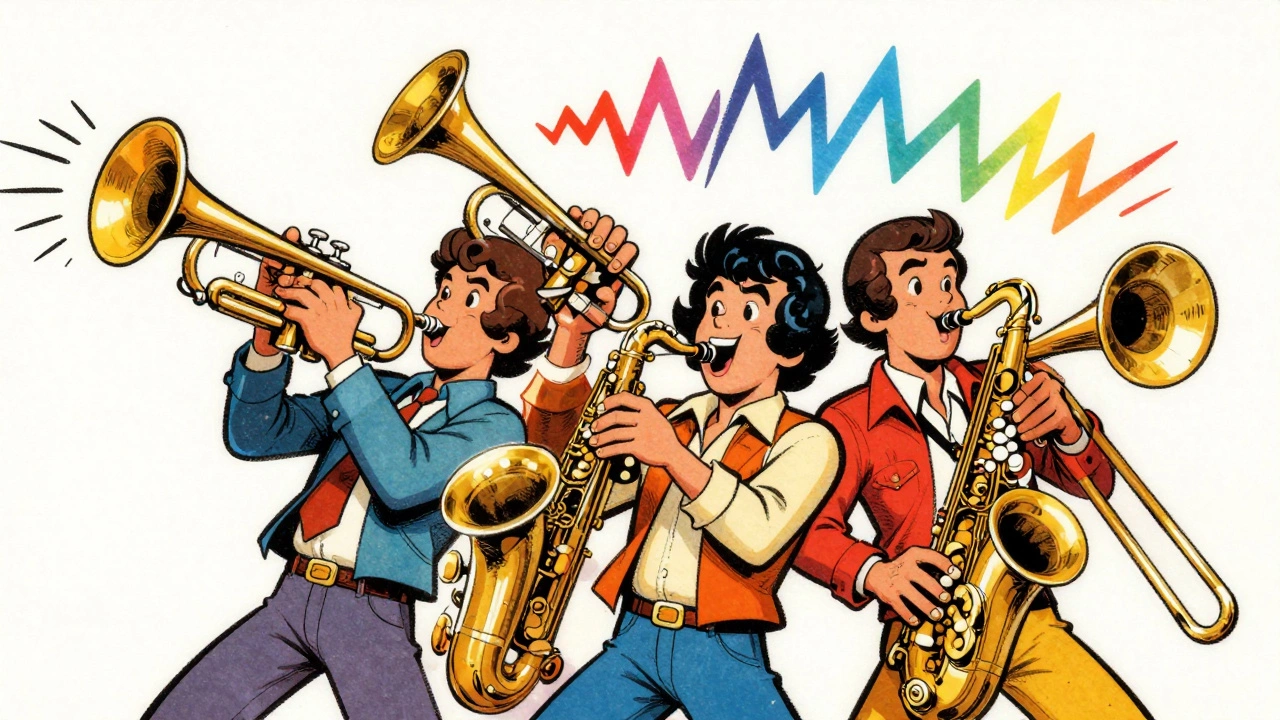

Ever wonder why some songs make you want to move the second the music starts? It isn't just the bass line or the drums. Often, it's the sudden, sharp punch of a brass section hitting exactly where it needs to. In the world of funk, funk horn sections is the strategic arrangement of brass instruments to provide rhythmic drive and melodic counterpoint that defines the genre's high-energy sound. They aren't just there for melody; they act like a percussion section made of gold and valves, slicing through the mix to propel the groove forward.
The Core Lineup: Which Instruments Make the Cut?
You can't just throw any brass player into a room and call it a funk section. To get that classic, punchy texture, most arrangements rely on a specific set of voices. The most common three-horn configuration consists of a Trumpet, a Tenor Saxophone, and a Trombone. This trio is the gold standard because it covers the high, mid, and low-mid frequencies perfectly without crowding the sonic space.
When a production needs more weight-think big R&B hits or massive pop records-they often move to a four-horn setup. This usually adds a second trumpet for extra brilliance or a Baritone Saxophone to anchor the bottom end. The Baritone Sax is a secret weapon here; it can drop a full octave below the tenor, providing a gritty, thick foundation that locks in with the bass guitar.
| Configuration | Typical Instruments | Primary Sonic Goal |
|---|---|---|
| Three-Horn Trio | Trumpet, Tenor Sax, Trombone | Agile, clear, and punchy movement |
| Four-Horn Section | 2 Trumpets, Tenor Sax, Trombone | Maximum brightness and "wall of sound" |
| Low-End Heavy | Trumpet, Tenor Sax, Bari Sax, Trombone | Deep, earthy groove and harmonic weight |
Voicing the Brass: From Unison to Drop-2
How you stack the notes is just as important as which notes you play. In funk, simplicity usually wins. Roughly 90% of the time, arrangers use unison or octave voicings. When every horn plays the same note (unison), it creates a laser-focused sound that cuts through the loudest drums. When you add an octave, you add weight and power, ensuring the phrase doesn't sound thin.
But for those who want more "color," there are a few professional tricks. Thirds and Sixths are common for creating a sweeter, more melodic feel. If you're looking for a modern, sophisticated vibe, try Drop-2 Voicing. This is where the second voice from the top of a harmony is dropped down an octave. It opens up the sound and prevents the horns from sounding like a block of chords, giving the arrangement a breath of air.
For sustained sections, often called "pads," arrangers use close position or spreads. The goal here is to provide a warm harmonic cushion. A pro tip for pads: keep the intervals between the bass and middle voices wide-like tenths-to keep the sound from becoming muddy.
The Secret of the Groove: Timing and Articulation
If you program MIDI horns to hit exactly on the beat, they will sound like a robot. Real funk isn't played on a grid. Professional horn sections deliberately avoid playing 100% together and exactly on the beat. There is a tiny, organic offset-a micro-delay or a slight rush-that creates a "push and pull" effect. This is what makes the music feel alive.
Articulation is the other half of the battle. Every note must match the bass groove. If the bass is playing a short, staccato line, the horns need to mimic that exact energy. The release of the note is just as important as the attack; cutting a note off abruptly creates that signature "snap" that defines the genre. If you let the notes bleed into each other, you lose the rhythmic precision that makes funk work.
Practical Roles: Fills, Pads, and Responses
Horn sections don't just play the melody; they act as a conversational partner to the singer or the lead instrument. One of the most effective techniques is Call and Response. The vocalist might sing a line, and the horns "answer" with a short, punchy phrase. It turns the song into a dialogue.
Then there are the fills. These are the little melodic bursts that occupy the gaps between vocal phrases. A great fill doesn't distract from the singer; it builds tension and then releases it right as the next verse starts. Finally, you have the pads. These are long, sustained chords used for harmonic support. While they are great for building atmosphere, be careful not to use high brass for pads-it can become piercing and fatigue the listener's ears.
Production Tips: Mixing Brass for Maximum Impact
Getting a great recording is only half the work; the mix is where the groove is polished. The biggest enemy of a horn section is "mud." Because brass instruments occupy a wide range of frequencies, they can easily clash with the vocals or the snare drum.
Start with a high-pass filter. Cutting the lowest frequencies from your horn stems ensures that the bass guitar and kick drum have plenty of room to breathe. From there, use a linear phase EQ on your horn bus. This allows you to add a bit of brightness to the high end for that "shimmer" without introducing phase issues that can make the horns sound unnatural.
If you're working with samples-like those found in libraries like Funk Horns by Image Sounds-remember that the samples are often already processed. Your job is to ensure they sit correctly in the stereo field. Panning a few of the horn elements slightly left and right can create a wider, more immersive sound, making the listener feel like they are standing in the middle of the band.
Looking Back: The Architects of the Sound
To truly master this style, it helps to look at the legends. Groups like Chicago and The Jazz Crusaders paved the way, experimenting with how different combinations of sax and trombone could interact. A textbook example of how to handle a horn pad can be found in Blood, Sweat & Tears' "Spinning Wheel," which demonstrates a perfect balance of harmonic depth and rhythmic restraint.
Why do funk horns often play in unison?
Playing in unison creates a powerful, concentrated sound that cuts through a dense mix of drums and bass. It provides a rhythmic clarity that complex harmonies sometimes obscure, making the horn section sound like a single, massive instrument.
How do I stop my horn section from sounding like a MIDI track?
Avoid quantifying your notes to 100% accuracy. Introduce slight timing variations-some notes hitting a millisecond early and others slightly late. Additionally, focus on the "release" of the notes; make sure the stops are sharp and decisive rather than fading out.
What is the best way to mix horns in a funk track?
Use a high-pass filter to remove low-end rumble and prevent clashing with the bass guitar. Apply a linear phase EQ to the horn bus to boost brightness and warmth, and use subtle panning to create a wider, more natural soundstage.
When should I use a Baritone Sax instead of a Trombone?
Use a Baritone Sax when you need a grittier, more percussive low end. While the trombone is great for warm, mid-range support, the Bari Sax can play an octave lower and provides a tighter "lock" with the bass line in heavy funk grooves.
What are 'pads' in the context of horn arrangements?
Pads are sustained chords played by the horn section to provide harmonic backing. They usually consist of whole or half notes and are designed to fill the background, rather than act as the primary rhythmic driver.