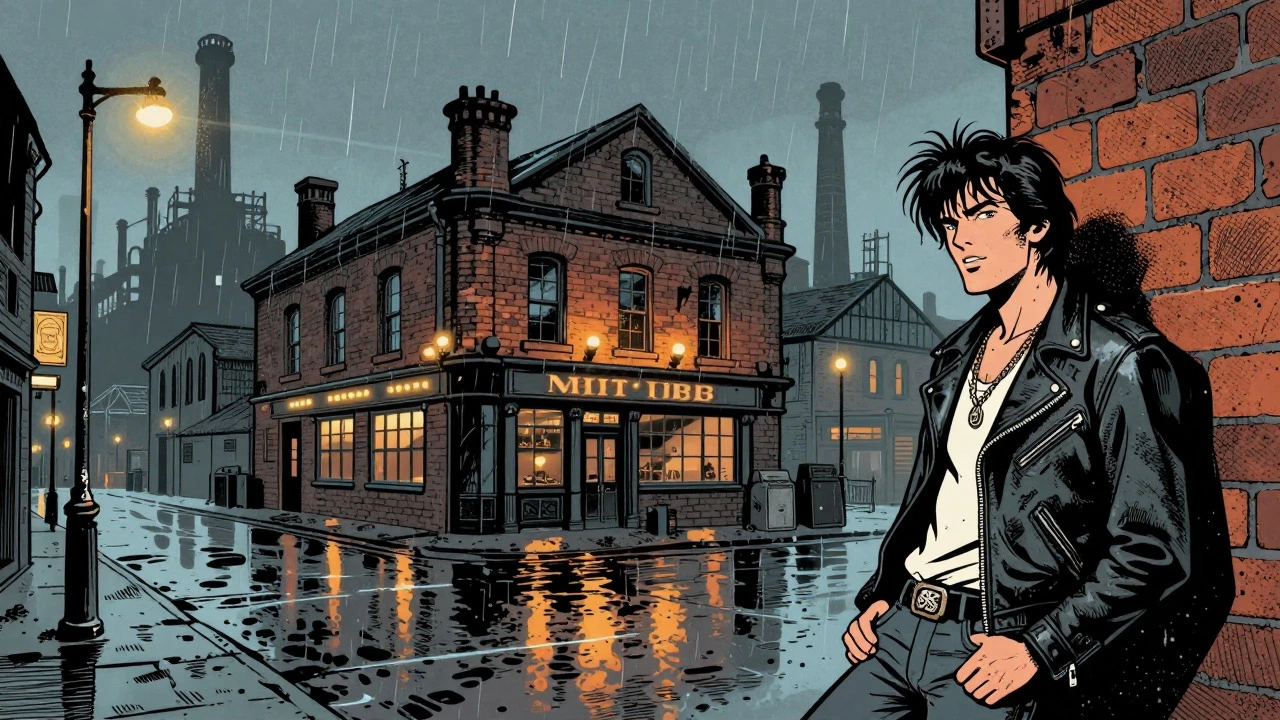

Walk down Camden High Street today and you might hear a snippet of "Song 2" or see a t-shirt featuring Liam Gallagher. But in the mid-1990s, this wasn't just nostalgia; it was the center of the musical universe. The Britpop era didn't happen in a vacuum-it was forged in the specific streets, pubs, and clubs of two very different cities: Manchester and London. While they often fought for chart supremacy, these two urban soundscapes created the movement that defined British identity for a generation.
Understanding this duality is key to grasping why Britpop felt so authentic yet so constructed. It wasn't just about guitar chords; it was about the noise of a train station in the North versus the clink of glasses in a North London pub. Let’s break down how these distinct environments shaped the sound, style, and mythology of the most significant British music movement since the Beatles.
The Manchester Soundscape: Industry, Accents, and Swagger
If London was the brain of Britpop, Manchester was its heart-and its lungs. The city’s contribution to the genre cannot be overstated, largely because its sound was rooted in industrial reality rather than metropolitan fantasy. By the early 1990s, Manchester had already established itself as a creative hub through the "Madchester" era (1988-1992), blending acid house beats with jangly guitars at venues like the Haçienda. This legacy directly fed into the Britpop wave, providing a template for combining dance rhythms with rock instrumentation.
The defining feature of the Manchester soundscape was its working-class authenticity. Bands like Oasis is a band formed in Manchester in 1991, known for their anthemic rock songs and strong regional identity. projected an image that was inseparable from the city’s physical environment. Liam Gallagher’s vocal delivery-often described as a nasal, unimpressed drawl-wasn't a performance choice; it was the accent of the council estates and local pubs where he grew up. Critics noted that this voice conveyed a mixture of alienation and bravado that resonated deeply with listeners who felt left behind by economic shifts.
- Industrial Noise: Manchester bands often incorporated sonic textures reminiscent of heavy machinery, trains, and alarms. This reflected the city’s post-industrial landscape, where factories were being converted into warehouses and clubs.
- Regional Pride: Unlike their London counterparts, Mancunian artists rarely tried to adopt a neutral or standard English accent. The local dialect was a badge of honor, signaling a refusal to assimilate into the capital's cultural norms.
- Stadium Scale: The energy of the Madchester club scene translated into arena-sized guitar rock. The goal wasn't just to fill a small room; it was to create anthems that could be shouted by thousands in a stadium.
This environment produced records that felt grounded in place. When you listened to "Definitely Maybe," released in August 1994, you weren't just hearing music; you were hearing the echo of Whitworth Street and the spirit of a city reinventing itself after industrial decline.
The London Soundscape: Media, Nightlife, and Suburban Fantasy
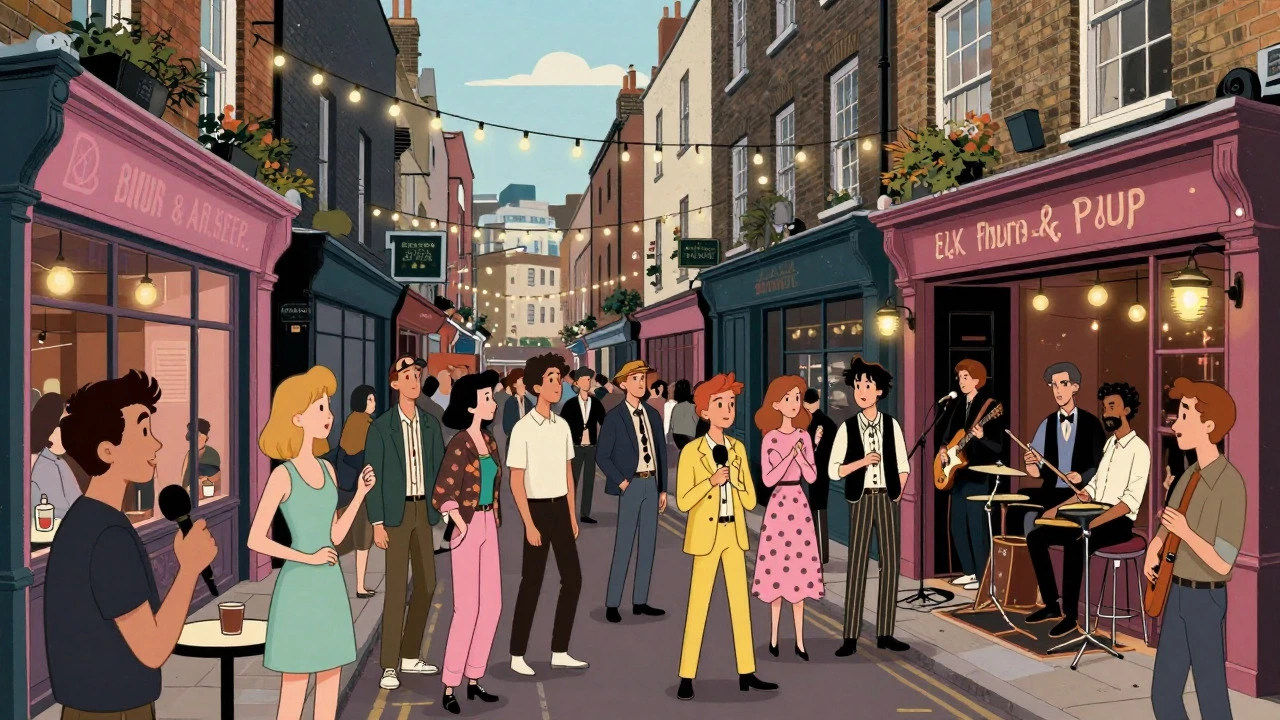
Across the country, London offered a contrasting but equally vital stage. As the national hub of the music industry, London provided the infrastructure: record labels, media offices, and a dense network of clubs. However, the specific epicenter of Britpop in London wasn't the West End or Soho, but rather the compact, walkable district of Camden Town.
In the mid-1990s, Camden became a microcosm of the entire movement. Streets like Inverness Street and Bayham Street were packed with bars and small clubs where musicians, journalists, and fans mingled. The key venue here was The Laurel Tree, which hosted the "Blow Up" club night founded by promoter Paul Tunkin. This small upstairs room, with a capacity of roughly 100-150 people, became the unofficial birthplace of Britpop. Members of Blur, Pulp, Elastica, and Suede would regularly attend, creating a tight-knit social circuit that accelerated the movement's growth.
The London soundscape was characterized by a mix of metropolitan chic and suburban relatability. Bands like Blur is a band formed in London in 1988, central to the Britpop movement, known for their melodic pop-rock and cultural commentary. drew imagery from everyday urban life: the Underground, commuter trains, and the nightlife of North London. Yet, academic analysis suggests that this "London street life" was often a middle-class fantasy. Simon Frith, a prominent musicologist, argued that British pop sensibility is largely suburban, and that Britpop’s fascination with housing estates and commuter belts masked the fact that many of these artists came from comfortable, outer-suburban backgrounds.
- Club Culture Incubator: Venues like Syndrome on Oxford Street and later Blow Up in Camden served as incubators. These spaces allowed new acts to test material before reaching a wider audience, fostering a sense of exclusivity and insider knowledge.
- Media Proximity: Being in London meant being close to the press. The intense media coverage of the "Battle of Britpop" in 1995 was fueled by the proximity of bands to journalists and TV producers, turning musical rivalry into a national spectacle.
- Fashion and Visuals: London’s role as a fashion capital influenced the visual aesthetic of Britpop. The look was more curated and stylized compared to Manchester’s ruggedness, reflecting the city's broader cultural influence on trends.
Comparing the Two Cities: A Table of Differences
To understand how these soundscapes diverged, it helps to look at specific attributes side-by-side. While both cities contributed to the same genre, the texture of their contributions was distinct.
| Attribute | Manchester | London (Camden) |
|---|---|---|
| Primary Vibe | Industrial, Working-Class, Anthemic | Metropolitan, Media-Driven, Club-Centric |
| Key Venues | Haçienda, Local Pubs, Stadiums | The Laurel Tree, The Good Mixer, Small Clubs |
| Vocal Style | Pronounced Northern Accent, Raw Delivery | Standard English, Stylish, Performative |
| Sonic Influences | Madchester Groove, Industrial Noise | Indie Pop, Shoegaze, Club Beats |
| Representative Band | Oasis | Blur |
| Cultural Narrative | Regional Pride, Anti-London Sentiment | National Identity, Suburban Fantasy |
The Clash: Chart Battles and Cultural Identity
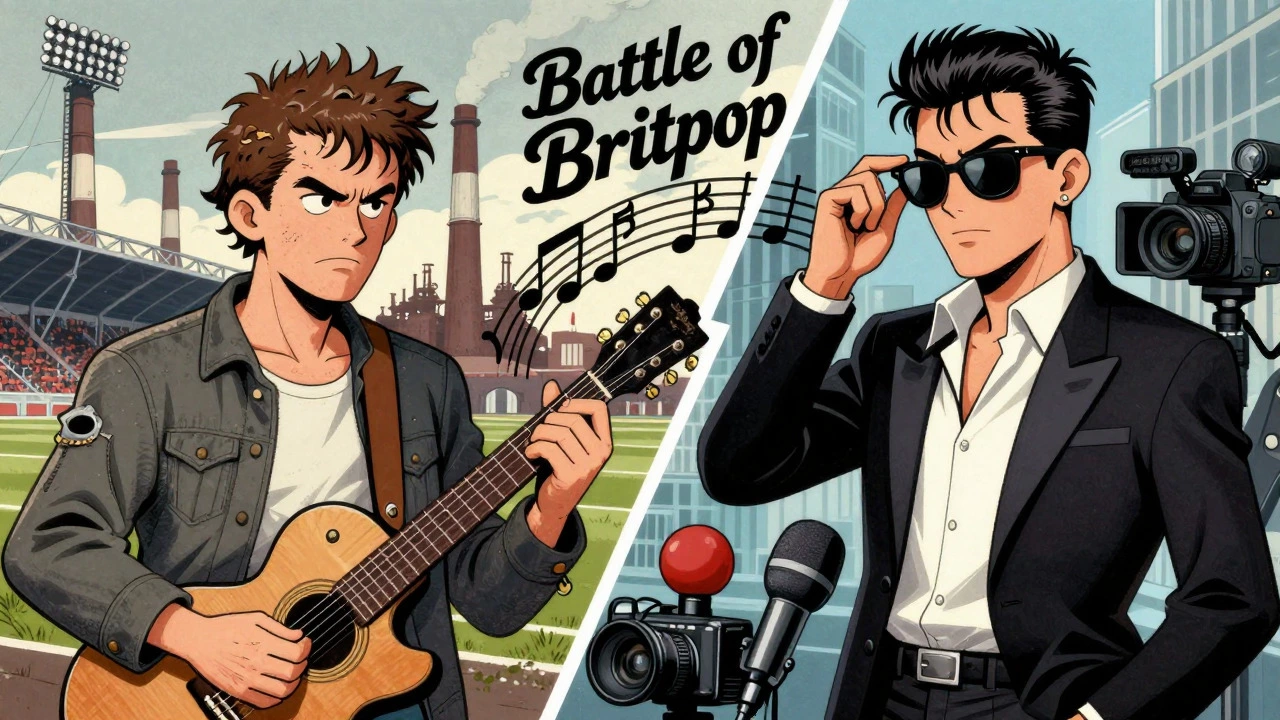
The tension between these two soundscapes reached its peak in August 1995, when Oasis released "Roll With It" and Blur countered with "Country House." This wasn't just a sales competition; it was a proxy war for British identity. Was Britain defined by the gritty, northern realism of Manchester, or by the stylish, media-savvy narrative of London?
The media played a huge role in amplifying this divide. Tabloids framed the rivalry as a battle between "the people" (Oasis) and "the posh


