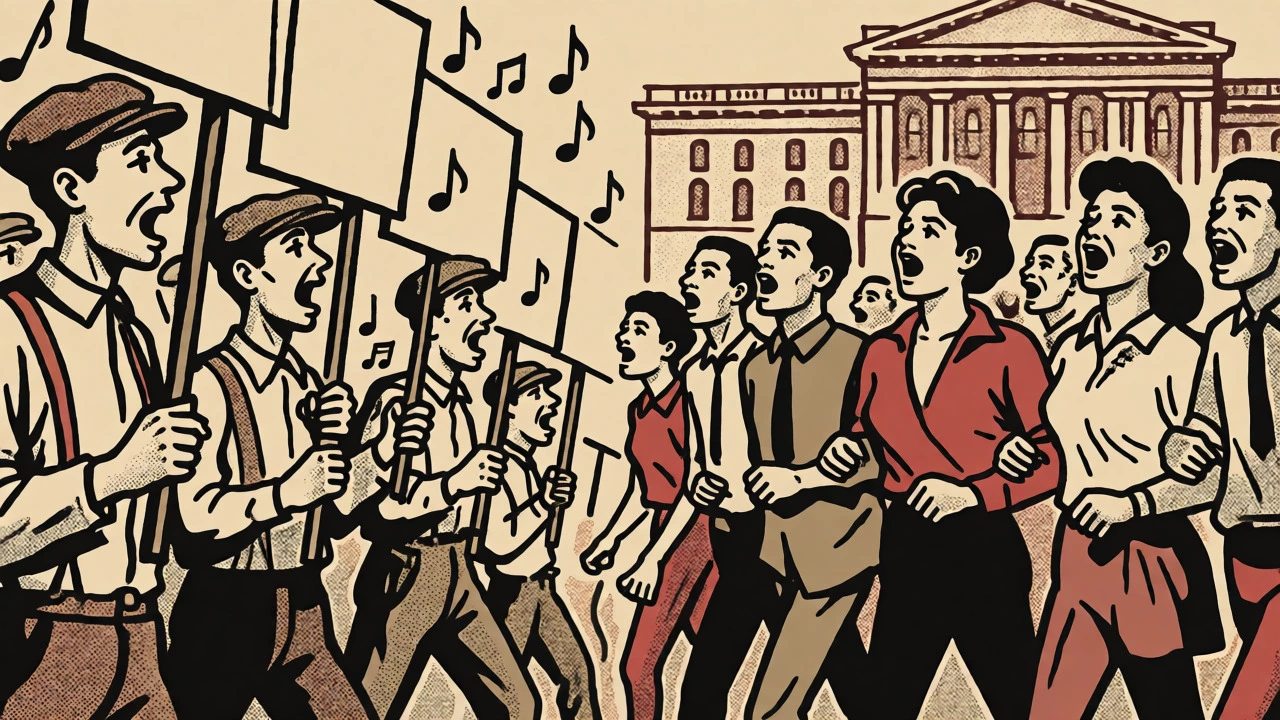

Have you ever listened to a song and felt like it captured the exact mood of your neighborhood, your job, or your country? That feeling isn't just nostalgia. It’s evidence. When we treat lyrics as testimony, we view songs not just as entertainment, but as historical records that document lived experiences, social conditions, and collective struggles. This approach bridges the gap between dry census data and the messy, emotional truth of how people actually live.
Think about the last time you heard a protest song. Did it change your mind? Or did it simply confirm what you already knew? The power of lyrics lies in their ability to do both. They preserve details that official archives often miss-the slang of a specific decade, the fear during a police raid, or the hope during a labor strike. But here is the catch: lyrics are mediated. They are shaped by genre rules, commercial pressures, and artistic personas. So, when we say a song "documents reality," we don’t mean it’s a factual transcript. We mean it’s a powerful account of how communities narrate their own lives.
The Historical Roots of Musical Witness
This idea isn’t new. Long before sociologists started analyzing Spotify streams, workers and activists used songs to make their voices heard. The Library of Congress holds a vast collection of American songs that serve as social commentary. From the colonial period to today, these tracks have criticized government policy, advocated for rights, and voiced personal grievances.
Consider the labor movements of the late 19th century. In 1872, Billy Pastor wrote "Eight Hour Strike," directly linking lyrical content to the demand for better working conditions. By 1905, the Industrial Workers of the World (IWW) had turned song into a tool for cross-industry solidarity. Tracks like "Give the Working Man a Chance" weren’t just background noise; they were portable arguments for justice. Why did this work? Because songs are easy to remember, easy to sing, and hard to ignore. They take grievances from the factory floor and bring them into the public square.
The civil rights movement took this further. Activists didn’t just write new songs; they repurposed old ones. "We Shall Overcome" is the perfect example. Its roots go back to a 1903 gospel hymn by Reverend Charles Tindley. Decades later, tobacco workers in Charleston adapted it during a strike. By 1960, folk singers Guy Carawan and Frank Hamilton helped popularize the version that became the anthem of the movement. The lyric wasn’t just a statement; it was a psychological shield. Singing together provided strength during brutal confrontations with segregationist forces.
Hip-Hop as Modern Documentary
If spirituals documented the struggle for freedom, hip-hop documents the complexity of modern urban life. Hip-hop is uniquely suited for testimony because it relies heavily on first-person narration. Artists name specific streets, describe institutional failures, and critique power structures in real-time.
Educator Christopher Emdin argues that hip-hop gives voice to those excluded from dominant historical narratives. It memorializes experiences that might otherwise be erased. For many listeners, these lyrics aren’t fiction; they’re mirrors. A qualitative study involving focus groups found that participants viewed hip-hop as a platform for marginalized communities to assert their existence. It’s not just about bragging or partying; it’s about saying, "I am here, and this is my reality."
Therapists are catching on, too. Researchers Travis Heath and Paulo Arroyo use hip-hop lyrics in narrative therapy. They find that adolescents can recognize their own stories in rap verses before they even begin formal counseling. The lyrics provide a vocabulary for organizing trauma and imagining new identities. It’s a form of "re-authoring" one’s life through shared cultural texts.
What Lyrics Actually Document
So, what exactly are we learning when we read lyrics closely? We can break it down into five key areas. First, lyrics preserve descriptive details about places and institutions. Second, they record emotional interpretations-anger, grief, pride. Third, they capture vernacular language and slang that official records ignore. Fourth, they build collective identity through communal singing. Fifth, they advocate for change.
Recent research backs this up. A 2025 review of peer-reviewed studies highlighted how linguists use tools like Systemic Functional Linguistics to analyze how verbs and nouns in lyrics encode experience. Are subjects acting upon objects? Are they being acted upon? These grammatical choices reveal who has agency in the narrator’s world.
| Dimension | Example Element | Value to Historians |
|---|---|---|
| Descriptive Detail | Named locations, job titles, prices | Reconstructs physical environment |
| Emotional Interpretation | Adjectives describing feelings | Shows moral stance and community sentiment |
| Vernacular Language | Slang, dialect, metaphors | Preserves linguistic evolution |
| Collective Identity | Choruses, "we" statements | Demonstrates group cohesion |
| Advocacy | Calls to action, demands | Reveals political goals |
The Data Behind the Beat
Is there proof that lyrics track social trends? Yes, and the numbers are striking. A major 2026 study analyzed 26,438 U.S. rap singles released between 1990 and 2015. Researchers compared lexical themes in the lyrics with national indicators like crime rates and poverty levels.
The results showed a strong positive association between references to street violence in rap lyrics and actual crime rates. The statistical model explained nearly 40% of the variance in these themes. Interestingly, the study found that rap lyrics tracked the specific lived realities of Black American communities more closely than generic national averages. Another study of over 27,000 underground and mainstream rap tracks confirmed that themes of money, drugs, and misogyny correlated with corresponding social indicators, without random cross-correlations.
However, don’t assume causality. Lyrics don’t cause crime; they reflect it. And not all popular music follows this trend. A Michigan State University study covering 38,467 songs from 1947 to 2024 found a decline in emotionally focused language in recent years. Popular music isn’t always becoming more documentary; sometimes it becomes more abstract. Context matters.
The Trap of Authenticity
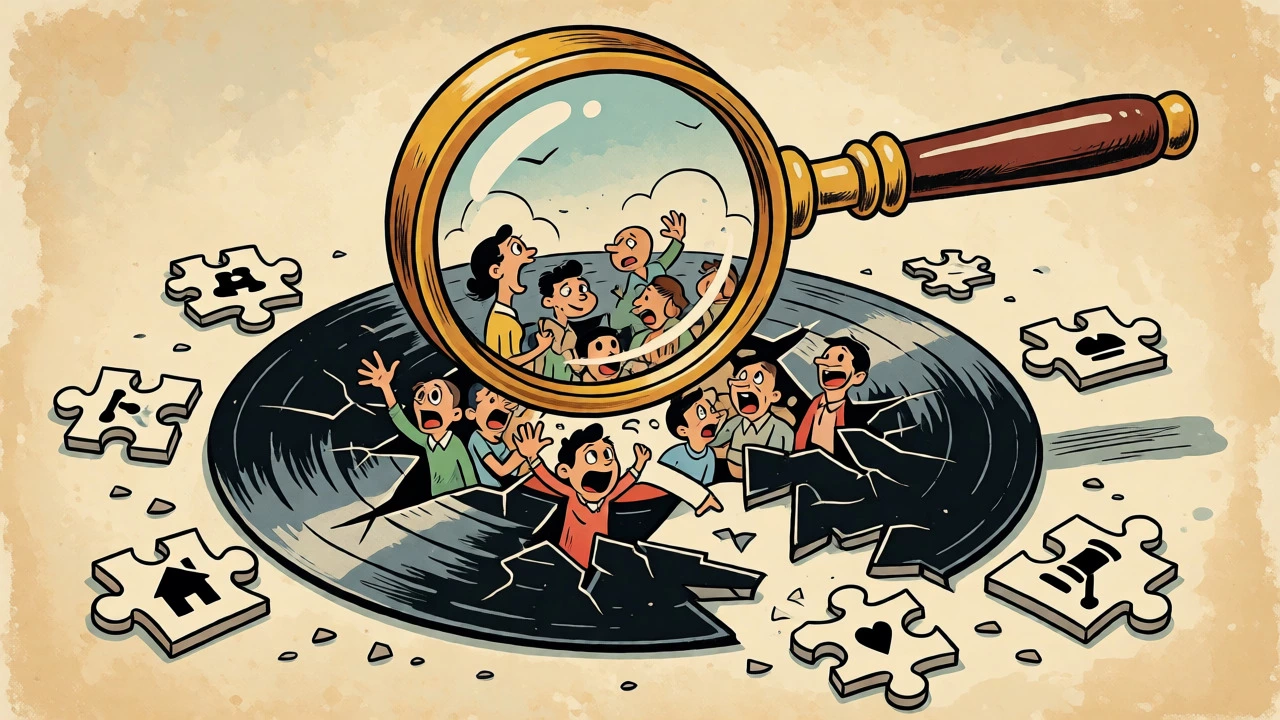
Here is where things get tricky. Just because a singer says "I" doesn’t mean they are telling the literal truth. Testimony is performative. Ethnomusicologists warn that artists often construct a public persona to establish credibility. An audience might assume that a gritty vocal tone proves a hard life, but that could be a studio effect or a character choice.
We need to distinguish between four types of claims in lyrics:
- Autobiographical: The artist is speaking from direct experience.
- Fictional Persona: The speaker is a character created by the artist.
- Community Representation: The artist speaks for a group based on affiliation or research.
- Industry Performance: The authenticity is manufactured for market appeal.
Decontextualized word counts can’t tell us which of these is happening. If you only look at the text, you might mistake a genre convention for a social fact. Rigorous analysis requires triangulation. You must compare the lyrics with interviews, historical records, and performance context. Was the song commissioned? Was it sampled from an older work? Who was the intended audience?
Why Lyrics Matter More Than Headlines
Newspapers give you dates and facts. Court records give you verdicts. Census data gives you numbers. But lyrics give you the texture of daily life. They capture the anger, the humor, and the despair that official documents sanitize. Protest songs, in particular, do more than describe problems; they propose solutions and rehearse solidarity.
When a community sings together, they aren’t just listening; they are participating in the creation of meaning. A song can turn an individual complaint into a collective demand. This is why lyrics remain vital to understanding social reality. They are imperfect, biased, and artistic-but they are undeniably human.
Can song lyrics be used as primary historical sources?
Yes, but with caution. They are best used as cultural artifacts that show how people interpreted events, rather than as independent verification of facts. They should be corroborated with other sources like newspapers, oral histories, and government records.
How does hip-hop differ from other genres in documenting social reality?
Hip-hop often uses first-person narration, specific geographic references, and direct social critique. This makes it particularly effective at documenting the lived experiences of marginalized communities, whereas other genres may rely more on metaphor or universal themes that obscure specific social contexts.
Do all protest songs accurately reflect the views of their audience?
Not necessarily. While protest songs aim to mobilize listeners, they represent the perspective of the songwriter or performer. Audience reception can vary widely, and some listeners may adopt the song’s message while others reject it. It reflects potential solidarity, not guaranteed consensus.
What is the risk of treating lyrics as literal truth?
The main risk is conflating artistic persona with biography. Artists often exaggerate, use irony, or adopt fictional characters. Treating every line as factual can lead to misinterpretations of social trends or the artist’s actual life experiences.
How has the role of lyrics changed in recent decades?
Research suggests a shift away from explicit social commentary in some popular genres, with a decline in family and friendship references. However, niche and underground scenes continue to produce highly documentary lyrics. The medium remains powerful, but its application varies by genre and market.
