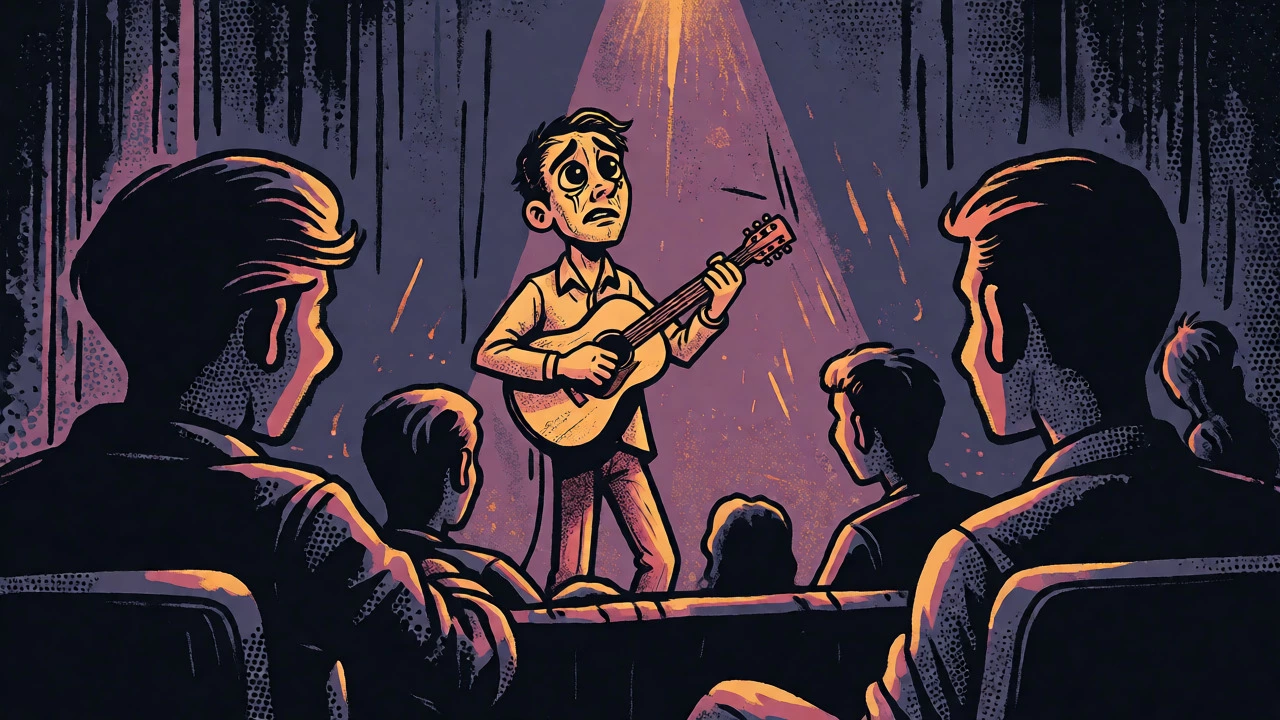

You’ve probably been there. You’re sitting in a small, dimly lit club, watching a single singer-songwriter on stage. There’s no band to hide behind, no backup dancers to distract you. Just one person, one guitar, and the raw sound of their voice. When they pause, the silence feels heavy. When they look up and catch your eye, it feels like they’re singing directly to you. But why does this feel so different from watching a massive stadium concert? Why do we crave that specific kind of closeness?
It’s not just about proximity. It’s about risk. In a live solo performance, the absence of other performers strips away the safety net. The artist has nowhere to hide. This exposure creates a unique psychological contract between the stage and the seats. Recent research confirms what every seasoned fan knows: physical co-presence triggers emotional responses that recordings simply cannot replicate. A 2026 study involving 130 participants found that live audiences reported significantly higher levels of being "moved" and positive emotional arousal compared to those watching simultaneous livestreams. The magic isn’t in the audio quality; it’s in the shared vulnerability.
The Feedback Loop That Changes Everything
To understand why solo performances hit harder, you have to look at how energy moves in a room. Erika Fischer-Lichte, a leading scholar in performance studies, calls this the "autopoietic feedback loop." Think of it as a conversation where both parties are talking at once. Whatever the performer does-changes tempo, cracks a joke, stops mid-sentence-elicits a response from the audience. A cough, a shift in posture, a held breath, or laughter immediately affects the performer. They adjust their timing, their volume, their emotion based on what they sense from you.
In an ensemble, this feedback is distributed among several people. One musician can cover for another’s mistake. But in a solo show, the feedback loop is direct and intense. If the audience is cold, the performer feels it instantly. If they lean in, the performer often leans back into that energy. This makes every night unique. You aren’t just consuming a product; you are actively shaping the event. Your attention is a tool the artist uses to build the atmosphere. If you check your phone, you break the circuit. If you listen intently, you amplify the signal.
Why Silence Doesn’t Mean Disengagement
One of the biggest misconceptions artists face is interpreting silence as failure. In a loud rock show, silence might mean boredom. But in intimate solo work, silence is often the highest form of engagement. A 2026 Cambridge study of progressive-rock fans revealed that many attendees valued attentive listening and personal evaluation over social interaction with fellow fans. They didn’t want to talk to the person next to them; they wanted to disappear into the music.
This distinction matters for both sides. Artists often panic when a crowd doesn’t cheer loudly after every song. They might think, "They don’t like me." But often, the audience is too absorbed to clap yet. They are processing the lyrics, the melody, the story. For the performer, learning to trust that quiet intensity is crucial. It allows them to take risks, to slow down, to let a moment breathe without rushing to fill the space with noise. Conversely, audiences need to realize that their stillness is a gift. It gives the artist the confidence to be vulnerable.

Designing Intimacy: It’s Not Just About Small Rooms
We tend to assume that intimacy requires a tiny venue. And yes, small rooms help. They allow for facial visibility and audible breath. But size alone doesn’t guarantee connection. You can feel distant from a performer ten feet away if they are emotionally closed off. Conversely, you can feel deeply connected to an artist in a large theater if they master the art of direct address.
Intimacy is constructed through specific techniques. Direct address-speaking or singing to "you" rather than "them"-breaks the fourth wall. Sustained but non-invasive eye contact creates a sense of recognition. Controlled silence forces the audience to lean in. Selective disclosure, where the artist shares a personal story that relates to the song, builds trust. But here is the catch: it has to be authentic. Audiences are smart. They can tell when a confession is calculated versus when it’s real. Kirsty Sedgman, a researcher in performance reception, argues that intimacy arises from how the audience interprets the performer’s vulnerability. If the artist appears too perfect, too polished, the audience remains passive. Imperfection invites connection.
| Feature | Physical Co-Presence (Live) | Mediated Experience (Livestream/Recording) |
|---|---|---|
| Emotional Impact | Higher arousal and feeling of being "moved" due to shared bodily presence. | Lower physiological arousal; easier to multitask or disengage. |
| Feedback Loop | Real-time, bidirectional. Audience reaction alters performance instantly. | Delayed or limited (chat comments). Performer adjusts less dynamically. |
| Social Connection | Shared community experience; strangers respond together simultaneously. | Isolated individual experience; connection is virtual and text-based. |
| Vulnerability Perception | High. Mistakes and imperfections are visible and humanizing. | Low. Editing and camera angles can mask flaws, reducing perceived risk. |
The Risks of Radical Vulnerability
While intimacy is powerful, it comes with risks for the artist. Solo performance places the entire cognitive and emotional load on one person. There is no bandmate to share the mental burden of remembering chords or managing transitions. This can lead to fatigue and anxiety. A University of Birmingham thesis described solo singing as an arena where the performer is isolated and vulnerable for nearly two hours, with "nowhere to hide."
Artists must balance openness with boundaries. Sharing trauma or deep personal secrets can create a bond, but it can also exploit the audience’s empathy. If the performance becomes too much like therapy, the audience may feel uncomfortable or coerced into caring. The key is consent and structure. The artist should offer intimacy, not demand it. Participation should be opt-in. If an artist asks the audience to sing along or answer a question, they must provide a graceful exit for those who prefer to observe. Respecting the audience’s right to remain silent preserves the integrity of the encounter.
Beyond the Stage: Wellbeing and Community
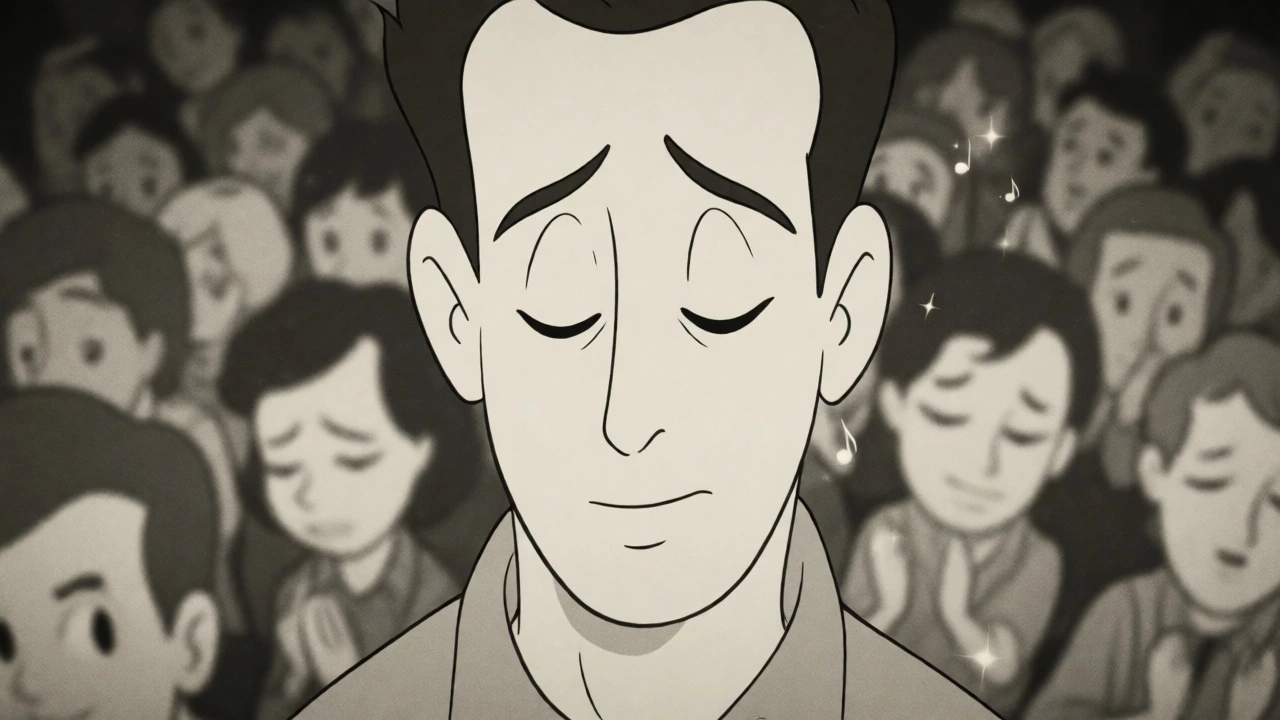
Why do we keep going back? It’s not just entertainment. It’s wellbeing. The UK HEartS Survey found that 82% of respondents linked arts engagement to social connectedness. Live music events specifically help people deal with stress, according to Music Australia’s 2025 report. For the audience, witnessing someone else’s vulnerability validates their own. It reminds us that we are not alone in our feelings.
For the performer, this connection is equally vital. Research links meaningful social and emotional connections during performance to better performer wellbeing. When an artist feels seen and heard by their audience, it counteracts the isolation of touring and the pressure of the industry. However, this relationship must be reciprocal. Artists shouldn’t rely solely on applause for self-worth, nor should audiences expect the performer to be their friend. It is a temporary, sacred space where strangers meet through art.
Frequently Asked Questions
Does a smaller venue always guarantee a more intimate performance?
Not necessarily. While small venues facilitate physical closeness and eye contact, true intimacy depends on the performer's ability to engage emotionally. A large theater can feel intimate if the artist uses direct address and responsive pacing effectively, while a small club can feel distant if the performer is emotionally closed off or technically rigid.
Why do audiences sometimes stay silent during solo performances?
Silence often indicates deep concentration and emotional absorption rather than disinterest. Studies show that many audience members value attentive listening over social interaction during concerts. They may be processing the lyrics or the musical nuances, which requires a quiet environment to fully appreciate the artistic intent.
How does live performance differ from livestreaming in terms of emotional impact?
Live performances generate higher physiological arousal and feelings of being "moved" due to physical co-presence. The shared acoustic environment and the knowledge that the event is happening in real time create a sense of urgency and community that mediated formats struggle to replicate, even with interactive chat features.
What is the "autopoietic feedback loop"?
Coined by Erika Fischer-Lichte, this concept describes the self-referential nature of live performance. It means that the performer's actions influence the audience's reactions, and the audience's reactions immediately influence the performer's subsequent actions. This continuous exchange makes each performance unique and unpredictable.
Can intimacy be faked or manufactured?
Audiences are highly perceptive. While techniques like eye contact and storytelling can simulate intimacy, genuine connection relies on perceived authenticity and vulnerability. If a performer appears overly polished or resistant to risk, the audience may remain passive. True intimacy arises from the audience's interpretation of the performer's willingness to be exposed.