
You put on a record. The needle drops. Instead of the sterile silence of a studio booth, you hear the clink of glasses, the murmur of a crowd, and the warm hum of tube amplifiers warming up. This isn't just background noise; it's the sound of a specific time and place. In the 1970s, live country albums became more than just souvenirs for fans who missed the show. They were cultural documents that captured the raw energy of a genre in transition.
Why did this format explode in popularity then? It wasn't an accident. The 1970s saw country music break out of its Nashville bubble. Artists like Waylon Jennings and Willie Nelson rejected the polished "Nashville Sound" in favor of something grittier, louder, and more honest. To sell that authenticity, they needed proof. A studio album could be fixed, overdubbed, and perfected. A live album showed you what happened when the lights went down and the band started playing. From the sticky floors of Texas dance halls to the cavernous acoustics of Detroit arenas, these records preserved the soul of the performance.
The Rise of the Outlaw Live Record
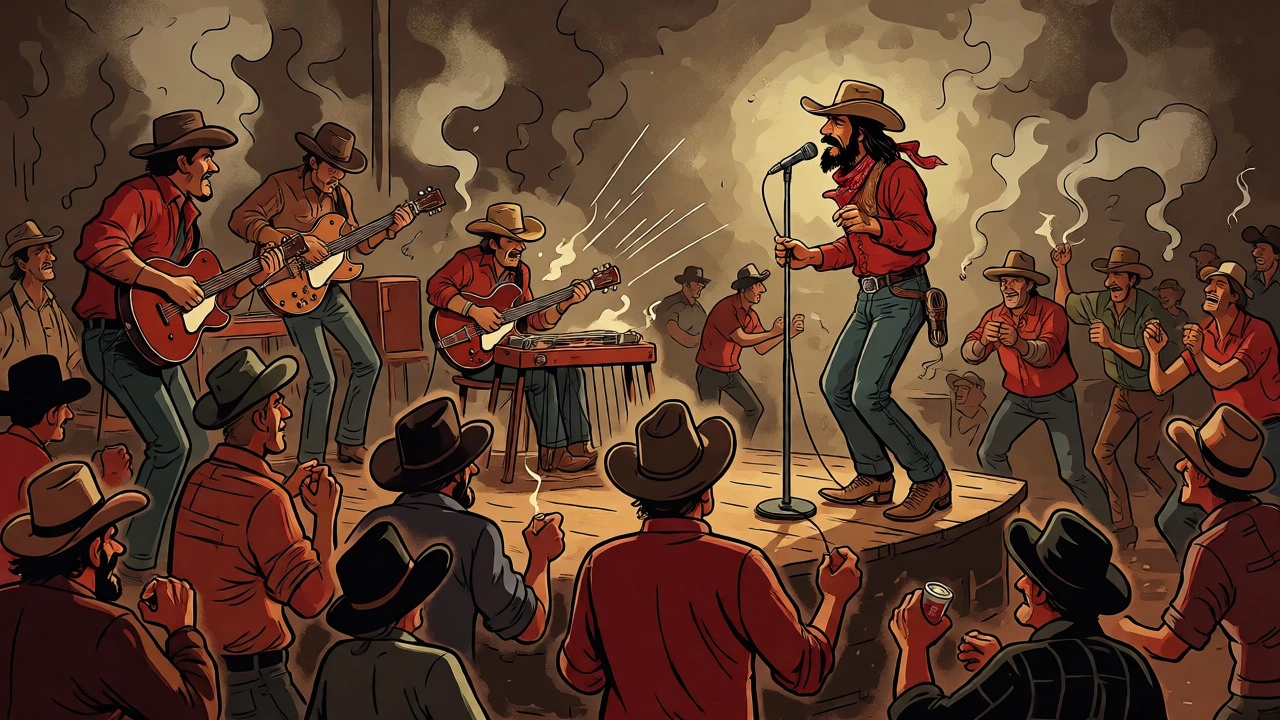
If you want to understand why outlaw country took over the charts in the mid-70s, listen to Waylon Live. Released in 1976, this double LP wasn't recorded in a fancy theater. It was captured during three shows in Texas, including two at the Texas Opry House in Austin and one at Western Place in Dallas. These weren't polite audiences. They were working people looking to dance and drink after a long week.
Jennings and his band, The Waylors, played with a tightness that studio musicians often lacked. You can hear the interplay between the electric guitar and the steel guitar, a hallmark of the Texas sound. Unlike the smooth productions of the era, this album feels dangerous. Jennings doesn't just sing; he commands the room. His voice is controlled but forceful, cutting through the mix without shouting. This album proved that country music didn't need strings and choirs to be sophisticated. It needed discipline and drive. Critics today still rank it as one of the best live albums ever made, not just in country, but in rock and roll generally. It defined the aesthetic: rough around the edges, but undeniably real.
Dance Halls vs. Institutional Theaters
Not every live country album sounded like a bar fight waiting to happen. There was a clear divide between the working-class venues and the institutional stages. On one side, you had the dance halls of Texas and the South. On the other, you had hallowed grounds like the Grand Ole Opry House in Nashville.
Ronnie Milsap Live, released in 1976, exemplifies the latter. Recorded at the Opry House, this album is polished, professional, and steeped in tradition. Milsap’s piano work is crisp, and the arrangements are complex. But here’s the twist: despite its traditional setting, it was a massive commercial success. It hit No. 2 on the Billboard Top Country Albums chart and won the CMA Album of the Year. This signaled a shift. Nashville’s establishment realized that a live album could be a mainstream product, not just a niche collector’s item.
In contrast, Jerry Lee Lewis’s Live at the International Hotel, Las Vegas (1970) sits somewhere in between. It captures Lewis’s chaotic energy, bridging the gap between rock and roll and country. The audience response is frenetic, reflecting the casino circuit where entertainment was high-stakes and high-energy. These different venues created different sonic textures. The dance hall demanded rhythm; the theater demanded reverence; the casino demanded spectacle. The live albums of the 70s mapped this geography perfectly.
Willie Nelson and the Art of Intimacy
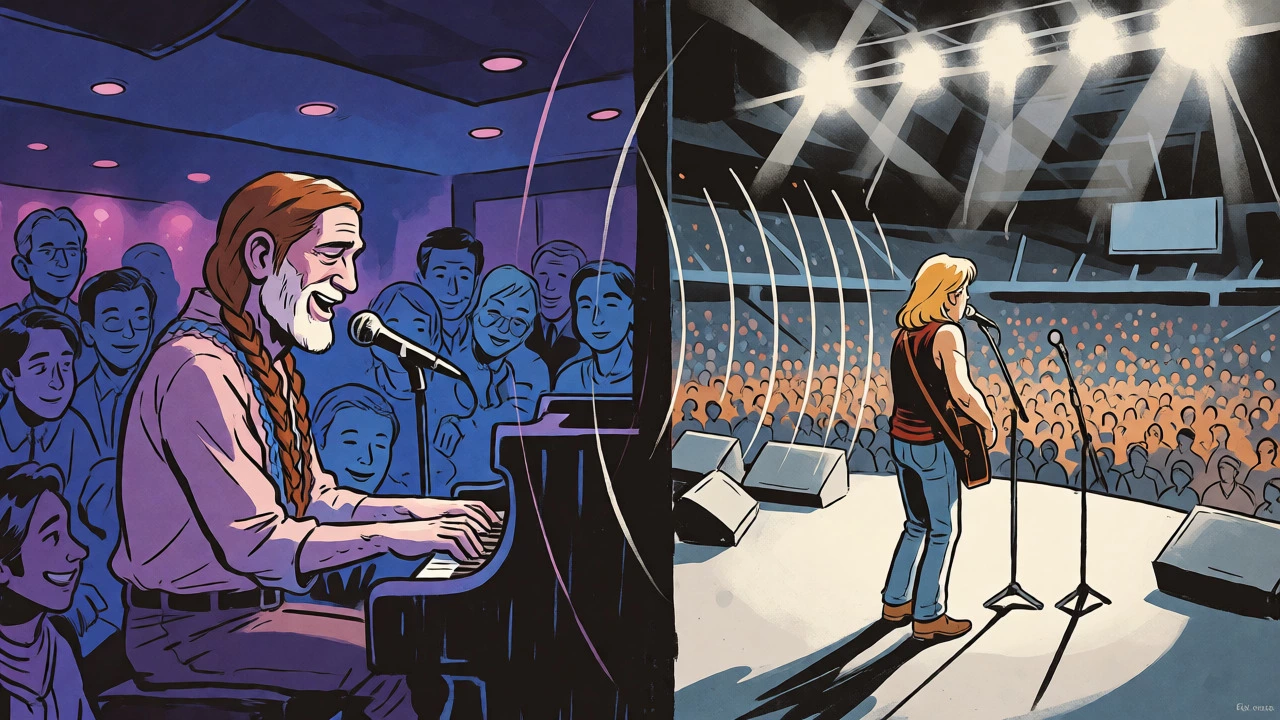
If Waylon Jennings represented the band, Willie Nelson represented the family. By 1978, Nelson was at his creative peak. He had already crossed over into pop consciousness with *Stardust*. Then came Willie and Family Live. Recorded at Harrah’s Casino in Lake Tahoe, this double album is a masterclass in pacing and intimacy.
Nelson didn’t try to overpower the audience. He invited them in. The album features extended jams, spoken-word introductions, and a relaxed vocal delivery that feels like he’s singing to a friend across the table. The "Family Band," led by his sister Bobbie Nelson on piano, provided a flexible foundation that allowed Willie to stretch songs beyond their studio lengths. This record wasn't just about hitting notes; it was about maintaining a vibe. It became his third multi-platinum album of 1978, proving that vulnerability could sell as well as bravado. Listening to it today, you realize how much space there is in the mix. You can hear the room breathe. That sense of space is something digital recordings often struggle to replicate.
Expanding the Stage: Arenas and Civic Halls
As the decade progressed, country artists stopped staying in the South. They moved into large civic centers and arenas in major northern cities. Hank Williams Jr.’s Live at Cobo Hall (recorded late 70s, released 1978) is a prime example. Cobo Hall in Detroit was a massive convention center, not a typical country venue. Recording there sent a message: country music belonged everywhere.
The sound on this album reflects that scale. The reverb is longer, the crowd noise is more diffuse, and the band has to play louder to cut through the air. Williams Jr. leans into his father’s legacy but adds a Southern Rock edge that appeals to a broader demographic. This era marked the beginning of stadium country, where the connection between artist and fan became mediated by distance and technology. Yet, even in these huge spaces, the core elements remained: storytelling, twang, and a beat you could move to.
| Album Title | Artist | Venue Type | Sonic Characteristic | Commercial Impact |
|---|---|---|---|---|
| Waylon Live | Waylon Jennings | Texas Dance Hall / Theater | Tight, rhythmic, aggressive | Critical darling, defined Outlaw image |
| Willie and Family Live | Willie Nelson | Casino Showroom | Relaxed, conversational, spacious | Multi-platinum, crossover appeal |
| Ronnie Milsap Live | Ronnie Milsap | Grand Ole Opry House | Polished, intricate, theatrical | No. 2 Country Chart, CMA Winner |
| Live at Cobo Hall | Hank Williams Jr. | Arena / Civic Center | Loud, expansive, anthemic | Expanded geographic reach |
| Live at the International Hotel | Jerry Lee Lewis | Las Vegas Casino | Chaotic, energetic, rock-influenced | Re-established Lewis as a star |
Production Realities: Not Always "Live"
Here’s a secret most collectors know: very few 1970s live albums are completely unedited. Analog tape was expensive and fragile. If a musician flubbed a solo or the crowd got too loud, producers would fix it. They might splice together takes from different nights. They might add a little reverb to make the room sound bigger. Or they might replace a weak drum track with a studio recording.
This doesn't mean the albums are fake. It means they are curated experiences. Producers like Bob Ferguson and Al Pachucki worked hard to sequence tracks so the album flowed like a story, not just a random setlist. They balanced fast honky-tonk numbers with slow ballads to keep the listener engaged. Understanding this helps you appreciate the craft involved. When you hear a perfect harmony on a live track, ask yourself: was it really sung live, or was it layered in later? Often, it was both. The goal wasn't documentary purity; it was emotional truth.
Legacy and Lasting Value
Today, we have smartphones recording every concert in 4K video. We have instant access to bootlegs. So why do we still care about these vinyl-era records? Because they capture a specific social contract between performer and audience. In the 1970s, going to a country show was a communal act. You went to dance, to drink, to forget your troubles for a few hours. The live albums preserve that feeling.
They also serve as historical evidence. You can hear how instruments evolved. The steel guitar gave way to more prominent electric leads. Drum kits became larger and more resonant. Vocal styles shifted from crooning to shouting. If you want to understand how country music became the dominant American genre of the late 20th century, don't just look at the studio hits. Listen to the live records. They tell you what actually moved people.
What defines an "Outlaw Country" live album?
An Outlaw Country live album typically features artists like Waylon Jennings or Willie Nelson performing with their own bands rather than Nashville session musicians. The sound is characterized by a rejection of the polished "Nashville Sound" production, featuring tighter rhythms, prominent electric guitars, and a more rugged, authentic stage presence that appeals to a rebellious audience.
Were 1970s live country albums completely unedited?
No, most were heavily edited. Producers often spliced together performances from multiple nights, corrected mistakes, added studio overdubs, and adjusted levels to create a cohesive listening experience. While they captured the energy of a live performance, they were curated products designed for radio and home listening, not raw documentary transcripts.
Which venue types were common for these recordings?
Recordings took place in diverse settings including intimate Texas dance halls (like Western Place), institutional theaters (like the Grand Ole Opry House), casino showrooms (like Harrah's Lake Tahoe), and large civic arenas (like Cobo Hall in Detroit). Each venue type imparted a unique acoustic character and audience dynamic to the final album.
Why was "Willie and Family Live" so successful?
Released in 1978, it captured Willie Nelson at his creative peak. Its success stemmed from its relaxed, conversational tone, the flexibility of the Family Band, and its ability to bridge country and pop audiences. As a double album, it offered substantial value and showcased Nelson's improvisational skills, becoming his third multi-platinum release that year.
How did live albums impact the commercial success of country artists?
Live albums validated an artist's reputation as a performer. For Outlaws, they proved independence from Nashville studios. For mainstream artists like Ronnie Milsap, they demonstrated broad appeal. Commercially, successful live albums expanded touring markets, introduced artists to new geographic regions, and often achieved gold or platinum status, boosting overall career sales.