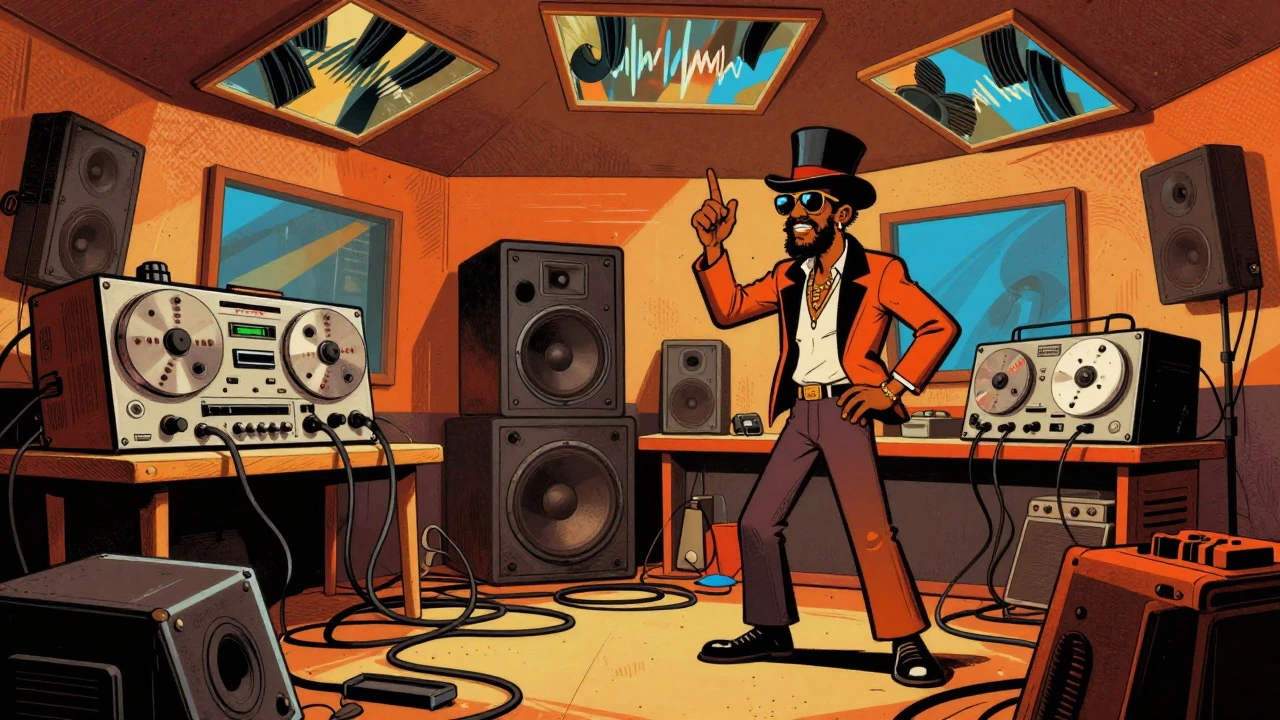

Imagine a recording studio that looks less like a professional lab and more like a chaotic art installation. There are mirrors on the ceiling to bounce sound waves around. A giant speaker sits in the middle of the room, not for monitoring, but because Lee "Scratch" Perry is a Jamaican producer and innovator who turned the studio into an instrument believed it would make the music feel bigger. The equipment is limited-just a four-track tape recorder and a handful of effects units. Yet, from this backyard shack in Kingston, Jamaica, came some of the most influential sounds in modern music history.
Perry didn't just record songs; he deconstructed them. He took the rhythm section, stripped away the vocals, drenched the drums in echo, and let the bass line breathe. This wasn't a mistake or a technical glitch. It was a deliberate artistic choice that birthed dub reggae. If you listen to modern hip-hop, electronic dance music, or even rock, you are hearing the fingerprints of the techniques Perry perfected at his famous Black Ark Studio is the legendary home studio built by Lee Perry in 1974 where he pioneered dub production techniques.
The Birth of a Sound: From Runner to Producer
To understand how Perry changed the game, you have to look at where he started. Born Rainford Hugh Perry in 1936, he entered the Jamaican music scene in the late 1950s as a studio runner. He worked for Clement "Coxsone" Dodd at Studio One, carrying tapes and spotting talent. By the mid-1960s, he had moved up to become a singer and then a producer under his own label, Upsetter Records.
In those early days, reggae was primarily about vocals and lyrics. But Perry saw something else in the tracks. He noticed that when the singer stopped, the groove between the drums and bass became hypnotic. Around 1968, alongside engineers like Osbourne "King Tubby" Ruddock, Perry began experimenting with these instrumental breaks. They started sending out "versions"-instrumental B-sides of popular singles-to DJs who could toast (talk over) them. This practice laid the groundwork for dub, but Perry took it further by making the remix itself the main event.
Inside the Black Ark: Limitations as Creative Fuel
In 1974, Perry built the Black Ark Studio in the yard behind his home in Washington Gardens, Kingston. It was a far cry from the high-end studios in London or New York. The core of the setup was a TEAC four-track reel-to-reel tape machine and a Soundcraft mixing console. That’s it. Four tracks meant he had to make tough choices. If he recorded drums, bass, guitar, and keys, he had no room left for vocals or extra instruments unless he bounced tracks together.
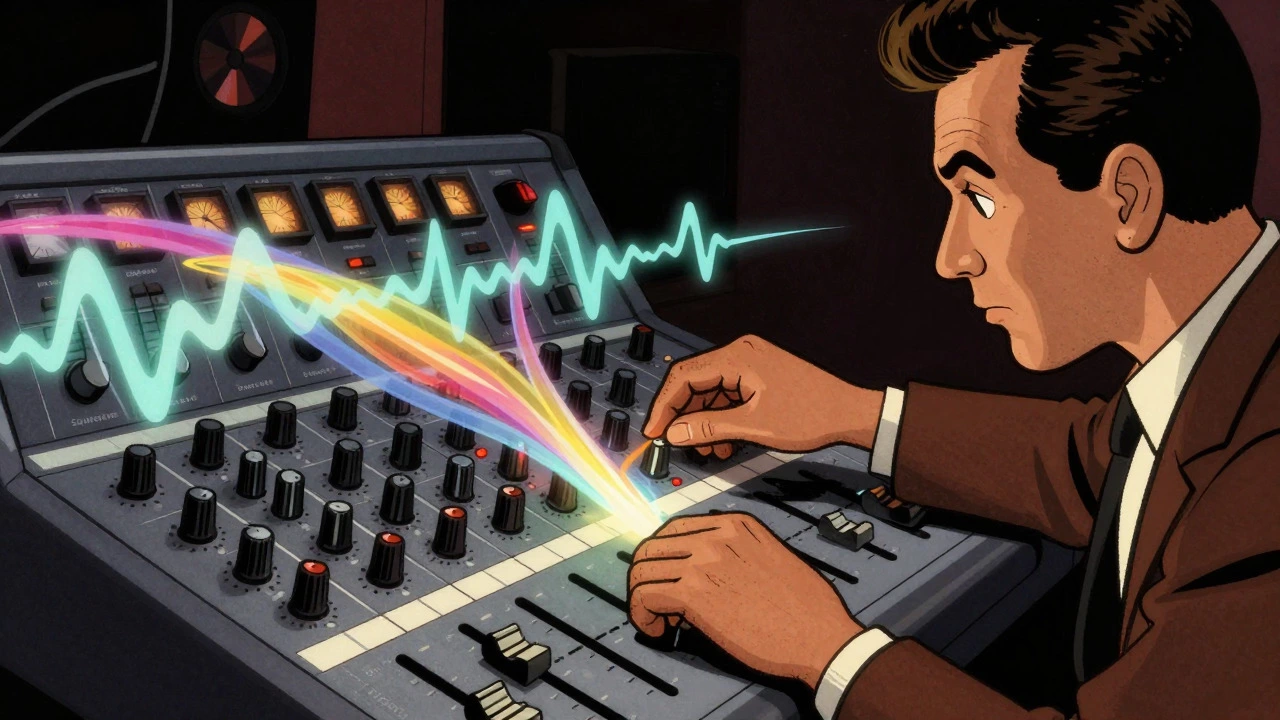
This limitation forced innovation. Instead of trying to capture a perfect live performance, Perry used the studio to build the song layer by layer. He would record a basic rhythm track, then play it back while adding new elements. But the real magic happened during the mixdown. Perry treated the mixing desk like a musical instrument. He wouldn't just set the levels and walk away. He rode the faders in real-time, dropping out guitars here, boosting the snare there, and sweeping effects across the stereo field.
| Component | Black Ark Setup (circa 1974-1979) | Modern Digital Equivalent |
|---|---|---|
| Tape Recorder | TEAC Four-Track Reel-to-Reel | Digital Audio Workstation (DAW) with unlimited tracks |
| Mixing Console | Soundcraft Analog Mixer | Software Mixing Board (e.g., Pro Tools, Logic) |
| Delay/Echo | Roland Space Echo / Echoplex | Digital Delay Plugins (with precise timing controls) |
| Phasing Effect | Mu-Tron Phaser | Modulation Effects Plugins |
| Workflow | Live manipulation during playback | Automation lanes and non-destructive editing |
The Toolkit: Echo, Phase, and Subtraction
Perry’s sound relied on a few key pieces of gear that he pushed to their limits. The Roland Space Echo and Echoplex were crucial for creating the signature dub delays. Unlike digital delays that repeat cleanly, these tape-based units added warmth and slight degradation with each repeat. Perry would route the output of the delay back into the input, creating feedback loops that swelled and decayed organically.
He also loved the Mu-Tron phaser. This device created a swirling, psychedelic effect that made guitars and keyboards sound like they were moving through space. When applied to a static bass line, it created a tension between the grounded low end and the floating high frequencies. But perhaps his most powerful tool was subtraction. In traditional mixing, you add elements to fill out the sound. Perry removed them. He would mute the vocal track entirely, leaving only the kick drum and bass, then hit the reverb button hard. The silence was just as important as the noise.
Studio as Instrument: The Live Mix
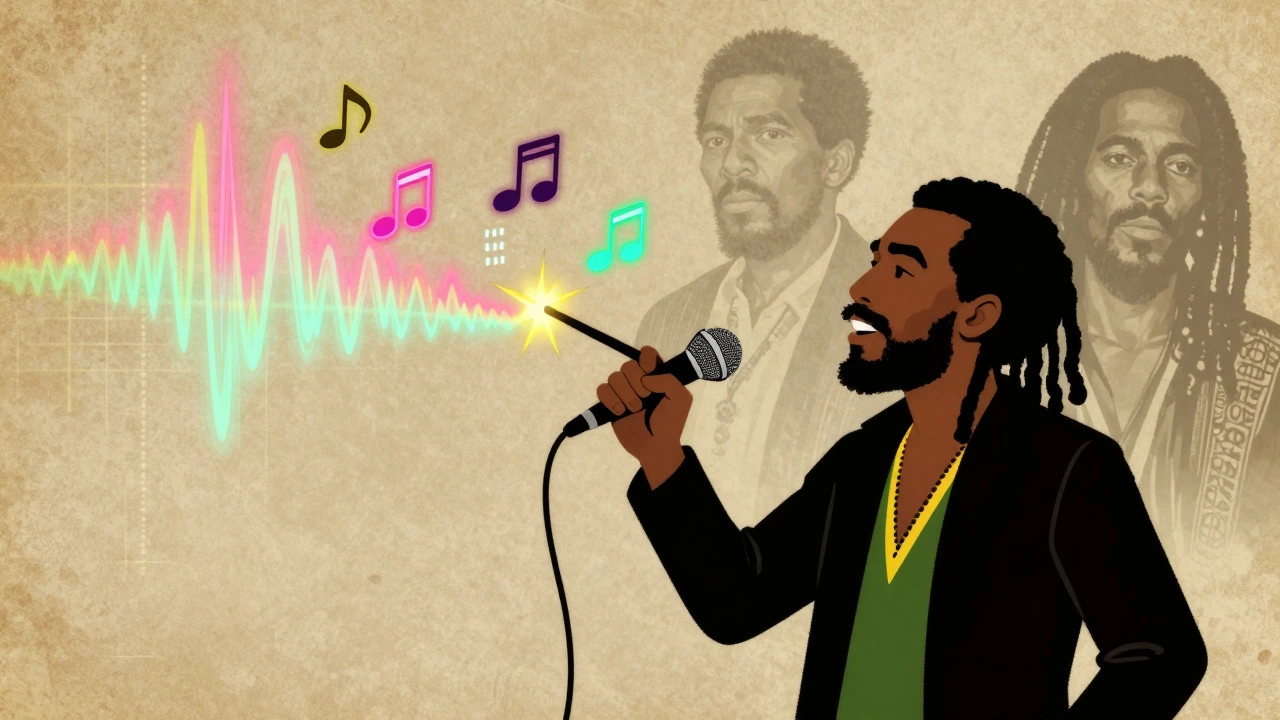
The concept of the "studio as instrument" means that the recording process is part of the composition. For Perry, the final product wasn't written on paper; it was performed on the mixing board. During sessions at Black Ark, artists like Bob Marley, Junior Byles, and Max Romeo would lay down their parts. Then, Perry would take control. He would play the tape back and improvise the mix, reacting to the music in the moment. This approach meant that every dub version was unique. Even if he mixed the same track twice, the result would be different because he was playing the faders like a musician plays a piano.
This method required intense focus and quick decision-making. With only four tracks, there was no room for error. If he messed up a bounce, he might lose the entire take. This pressure fostered a raw, energetic style that polished studios often lack. The mistakes-the hiss, the distortion, the uneven levels-became part of the aesthetic. They gave the music a human, imperfect quality that resonated with listeners.
Legacy: From Dub to Dubstep and Beyond
Perry’s influence extends far beyond reggae. The techniques he developed at Black Ark became standard tools in electronic music production. Think about a dubstep track. You hear a heavy bass drop, followed by silence, then a cascade of echoes. That structure comes directly from dub reggae. Producers in the UK and US adopted Perry’s methods of emphasizing low frequencies and using space as a rhythmic element.
Even today, producers study Perry’s work to learn how to create atmosphere. His ability to make a simple drum loop sound cosmic shows that creativity matters more than expensive gear. While Black Ark closed its doors in the late 1970s and Perry eventually destroyed much of the equipment, the ideas survived. They live on in every time a producer strips a mix down to its bones and rebuilds it with effects. Lee "Scratch" Perry didn't just make records; he taught the world how to hear differently.
What exactly is dub reggae?
Dub reggae is a subgenre of reggae music that focuses on instrumental versions of songs. It involves removing vocals and other instruments from the original track, while emphasizing the bass and drums. Producers use effects like echo, reverb, and phasing to create atmospheric soundscapes. It treats the mixing console as a musical instrument.
Why was the Black Ark Studio so important?
The Black Ark Studio was important because it was where Lee Perry perfected his dub production techniques. Despite having limited equipment, such as a four-track recorder, Perry used creative routing and live mixing to produce innovative sounds. Many classic reggae and dub albums were recorded there between 1974 and 1979.
How did Lee Perry use the mixing console as an instrument?
Perry manipulated the faders and effects knobs in real-time while the tape played. He would drop out instruments, boost the bass, and send signals through delay units to create dynamic changes in the mix. This improvisational approach meant the final track was a performance of mixing, not just a static recording.
Who else contributed to the development of dub?
While Perry is a central figure, others like King Tubby (Osbourne Ruddock) and Errol Thompson were also pioneers. King Tubby focused heavily on technical engineering and precision, while Perry brought a more theatrical and experimental approach. Together, they shaped the genre in the late 1960s and 1970s.
What equipment did Lee Perry use at Black Ark?
His primary setup included a TEAC four-track tape recorder, a Soundcraft mixing console, a Roland Space Echo for delays, and a Mu-Tron phaser. He also used various homemade devices and repurposed electronics to achieve unique sounds.
How does dub reggae influence modern music?
Dub reggae influenced genres like hip-hop, jungle, drum and bass, and dubstep. Techniques such as heavy bass emphasis, drop-outs, and extensive use of echo and reverb are now standard in electronic music production. Producers worldwide still draw inspiration from Perry's methods.