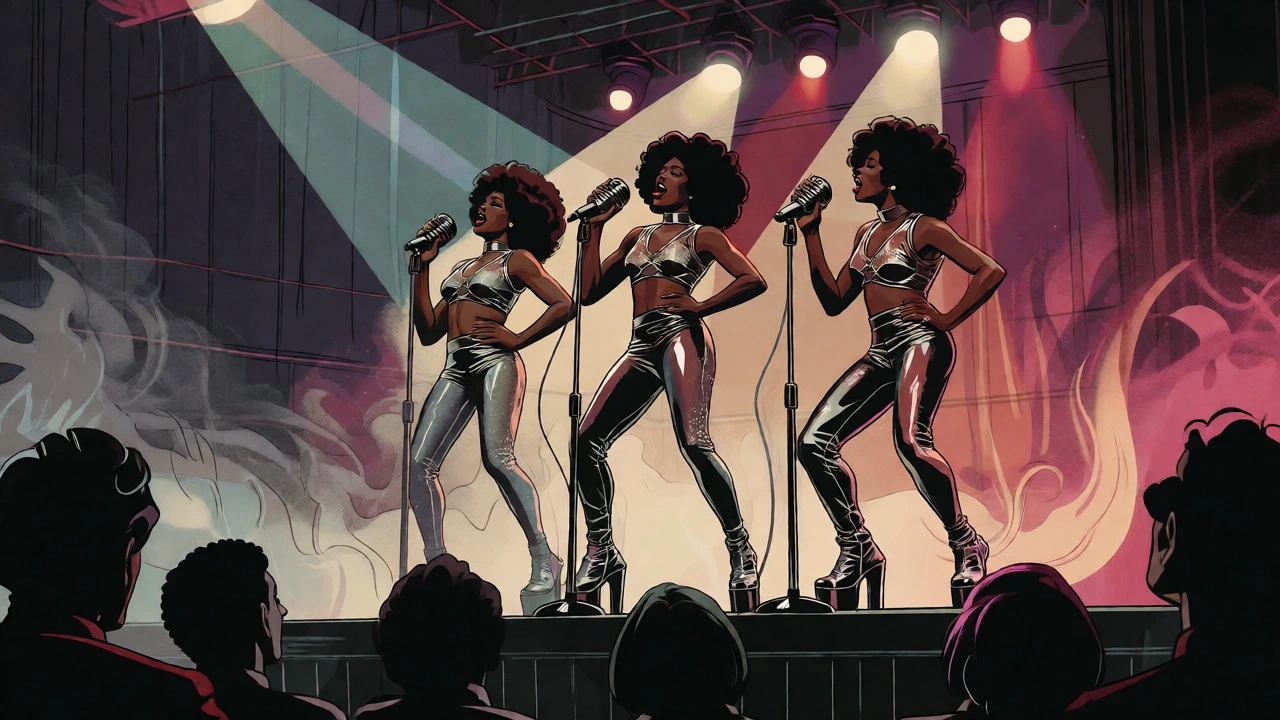

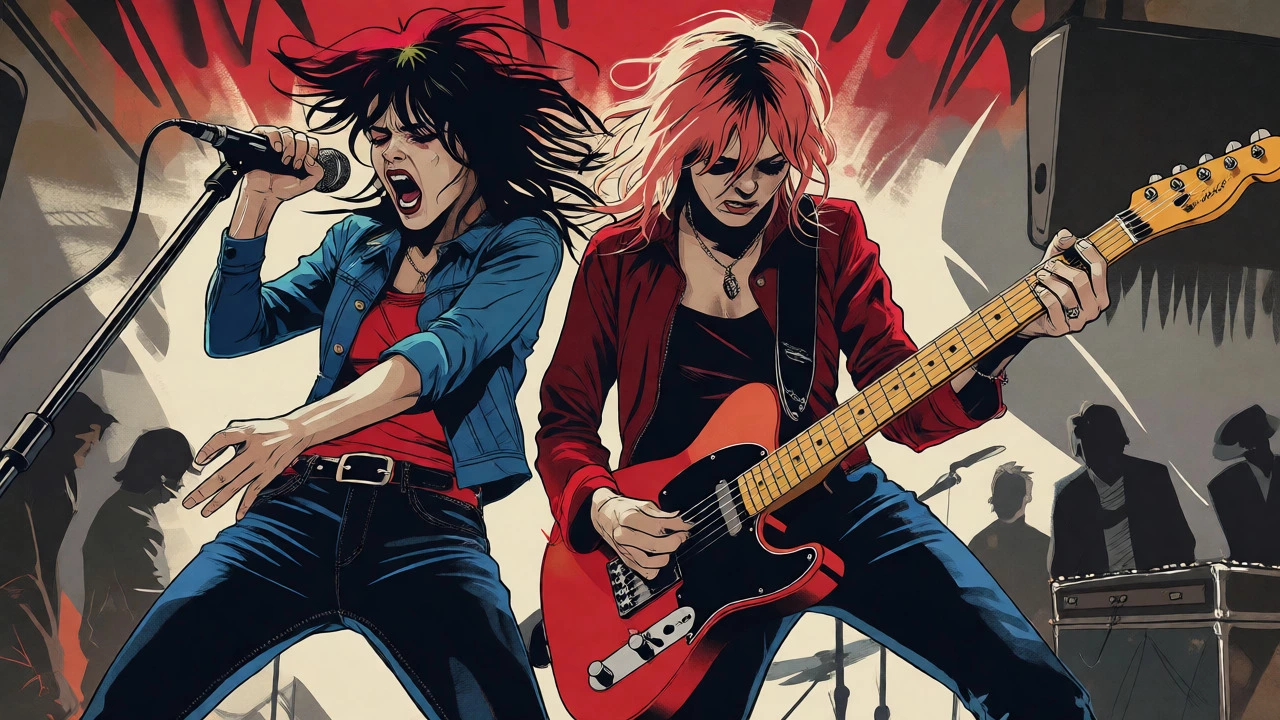
Imagine walking into a concert hall in 1974. The air is thick with cigarette smoke and anticipation. You expect to see long-haired men shredding guitar solos while women stand politely at microphones, singing backup or looking pretty. Then the lights go down. Three Black women step out in metallic space-age costumes, screaming "Voulez-vous coucher avec moi ce soir?" with a ferocity that shakes the floorboards. Or maybe it’s two sisters from Seattle, Ann and Nancy Wilson, ripping through a distorted riff on a Fender Telecaster, proving that women don’t just listen to hard rock-they write it, play it, and own it.
This wasn't just entertainment; it was a revolution. All-female bands like Labelle and Heart didn't just break glass ceilings; they shattered them with feedback and funk. They challenged the idea that rock music belonged exclusively to men. While their paths were different-one fully female, one co-ed but female-fronted-their impact on collective female power in popular music remains unmatched. Let's look at how these groups rewrote the rules.
The Afrofuturist Rebellion of Labelle
To understand the shift in female agency in music, you have to start with Labelle. Before they were a household name for "Lady Marmalade," they were Patti LaBelle and the Bluebelles, a standard girl group. But by 1971, Patti LaBelle, Nona Hendryx, and Sarah Dash had rebranded as Labelle. They ditched the matching dresses for glittery jumpsuits and platform boots. Their sound shifted from polished soul to gritty, experimental funk-rock.
Why does this matter? Because Labelle used Afrofuturism as a political tool. Scholars note that their sci-fi aesthetics weren't just for show. They represented a "politics of flight and fight." For three Black women in the early 70s, dressing like aliens and singing about sexual autonomy was a radical act. It allowed them to escape restrictive social roles. Their lyrics tackled gendered violence and erotic freedom with an honesty that was rare for the time. They weren't waiting for permission to be loud; they took up space vocally and visually, demanding attention on their own terms.
Heart: Kicking Down the Door of Hard Rock
If Labelle opened a portal to another dimension, Heart kicked down the front door of the male-dominated rock club. Formed in the early 1970s by sisters Ann Wilson (born June 19, 1950) and Nancy Wilson (born March 16, 1954), Heart faced immediate skepticism. In 1974, it was uncommon-borderline unheard of-for a rock band to be fronted by two women who also played instruments.
The media often asked if women could actually succeed in hard rock. The Wilson sisters’ answer was a resounding yes, backed by technical proficiency that rivaled any male peer. Hits like "Crazy on You," "Magic Man," and "Barracuda" weren't novelty tracks; they were complex, heavy, and commercially massive. Ann’s vocal range, capable of hitting high sustained notes with operatic precision, combined with Nancy’s sharp, melodic guitar work created a sound that was both aggressive and emotionally resonant. They didn't compromise their femininity to fit in; they expanded what femininity looked like in a stadium-sized rock context.
Defining Collective Female Power in Music
What do we mean by "collective female power"? It’s not just about having women in a band. It’s about shared creative authority. In many mixed-gender bands, the male members often held the songwriting credit or the instrumental lead, relegating women to vocalists or backing musicians. Labelle and Heart flipped this script.
- Shared Vocal Leadership: Labelle featured three distinct voices. There was no single "diva" supported by anonymous backups. Patti, Nona, and Sarah interlocked their harmonies with equal weight, creating a sonic wall that required mutual respect and coordination.
- Creative Control: Heart wrote their own songs. This is crucial. By controlling the composition, Ann and Nancy controlled the narrative. They refused to let producers dictate their image or sound, insisting on being judged as musicians first.
- Visual Autonomy: Both groups rejected the "ornamental" role often forced on female performers. Whether it was Labelle’s Afrofuturist armor or Heart’s denim-and-leather practicality, their style served their artistic vision, not just male gaze expectations.
This collective approach proved that women could sustain success without relying on a male bandleader. It offered a template for future generations: you don't need to be the "girlfriend" of the band or the "muse." You can be the engine.
Comparing Two Models of Resistance
While both bands championed female power, their methods differed significantly. Labelle operated as a fully female ensemble, whereas Heart was a co-ed band anchored by female leadership. Here is how their approaches compare in terms of impact and structure.
| Feature | Labelle | Heart |
|---|---|---|
| Formation Period | Rebranded in 1971; active until 1977 | Formed early 1970s; active continuously since |
| Band Structure | Fully female trio (Patti LaBelle, Nona Hendryx, Sarah Dash) | Co-ed band led by Ann and Nancy Wilson |
| Musical Genre | Funk, Soul, Rock, Afrofuturist Experimental | Hard Rock, Heavy Metal, Folk Rock |
| Commercial Success | High profile hits (e.g., "Lady Marmalade"); shorter active lifespan | 35-50 million albums sold; 14+ gold/platinum albums |
| Primary Legacy | Black feminist critique and Afrofuturist aesthetics | Proving women could lead hard rock at stadium scale |
Labelle’s run was intense but relatively short-lived. Their six-year peak was a concentrated burst of cultural disruption. Heart, conversely, demonstrated longevity. They stayed relevant across decades, adapting to new trends while maintaining their core identity. This shows two valid ways to exercise power: a radical, short-term intervention that changes the conversation, and a sustained presence that normalizes female leadership over time.
The Industry Backlash and Persistence
Success didn't come without pushback. The music industry in the 1970s was rife with bias. Nancy Wilson has spoken openly about how "nobody gave you any credibility" as a woman in rock. Reporters frequently questioned whether the sisters wrote their own material or if men were pulling the strings behind the scenes. The song "Barracuda" itself is often interpreted as a fierce critique of the industry executives who sexualized them and doubted their authorship.
Despite this, Heart persisted. They navigated the transition from the gritty 70s to the polished 80s, scoring massive ballads like "Alone" and "These Dreams." Even when critics accused them of selling out, the Wilson sisters maintained control over their brand. Ann Wilson has noted that contemporary pop sometimes forces women into ornamental roles again, contrasting this with Heart’s refusal to be visually subordinated. Their persistence proved that female-led rock wasn't a fad; it was a permanent fixture in the landscape.
For Labelle, the backlash was intertwined with race and genre policing. As Black women moving into rock, they faced double prejudice. Yet, their academic legacy today is immense. Scholars view their work as essential to understanding how Black feminism intersected with popular culture. They didn't just sing songs; they performed a critique of society that resonated far beyond the charts.
Legacy and Modern Influence
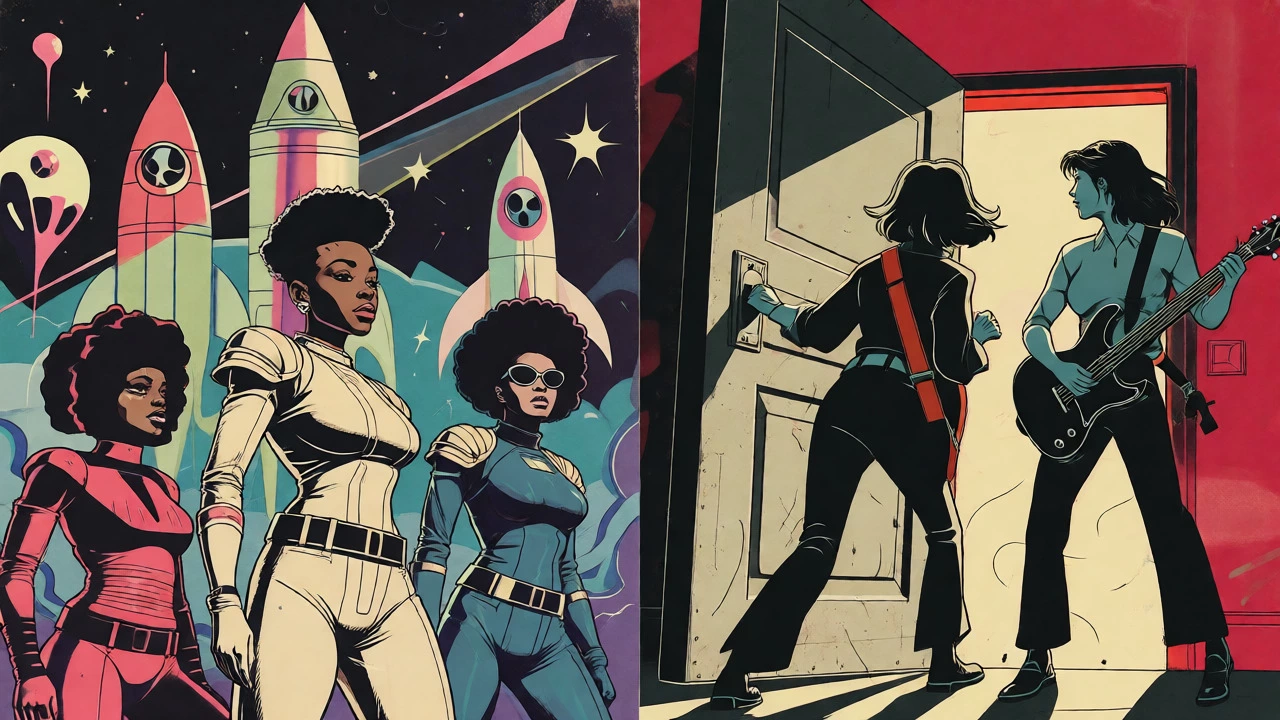
Today, the doors Labelle and Heart kicked open are wide enough for anyone to walk through. When you see bands like Paramore, Haim, or even solo artists like St. Vincent claiming space in alternative and rock genres, you’re seeing the fruits of that labor. Nancy Wilson once said that after a few women kicked the door open, others could "squeeze through." That squeeze turned into a flood.
Heart remains active, touring and engaging with fans well into the 2020s. Their story isn't just history; it's a living argument for resilience. Labelle’s influence echoes in modern artists who blend genre boundaries and use visual storytelling to challenge norms. From Beyoncé’s Renaissance tour to Janelle Monáe’s android personas, the Afrofuturist lineage of Labelle is undeniable.
So, next time you hear a female guitarist tear up a solo or a all-female choir belt out a harmony, remember the groundwork laid by Patti, Nona, Sarah, Ann, and Nancy. They didn't just make music; they made room.
Was Heart an all-female band?
No, Heart was a co-ed band with male instrumentalists. However, it was fronted and creatively led by sisters Ann and Nancy Wilson, making it a pivotal example of female leadership in a male-dominated genre.
How did Labelle differ from other girl groups of the 1960s?
Unlike traditional girl groups that focused on polished pop and matching outfits, Labelle adopted a gritty funk-rock sound, Afrofuturist aesthetics, and explicitly black feminist lyrics, challenging racial and gender norms.
What is Afrofuturism in the context of Labelle's music?
Afrofuturism in Labelle's work involved using sci-fi imagery and themes of space travel to critique race, sexuality, and gender. It allowed the members to imagine a future free from restrictive social roles.
How many albums has Heart sold?
Sources vary, but estimates range between 35 million and 50 million albums worldwide, cementing their status as one of the best-selling female-fronted rock bands in history.
Did Labelle and Heart know each other personally?
While both were prominent in the same era, there is little public record of close personal collaboration. They operated in different circles-Labelle in the funk/soul scene and Heart in the hard rock scene-but shared the broader struggle for female visibility in music.