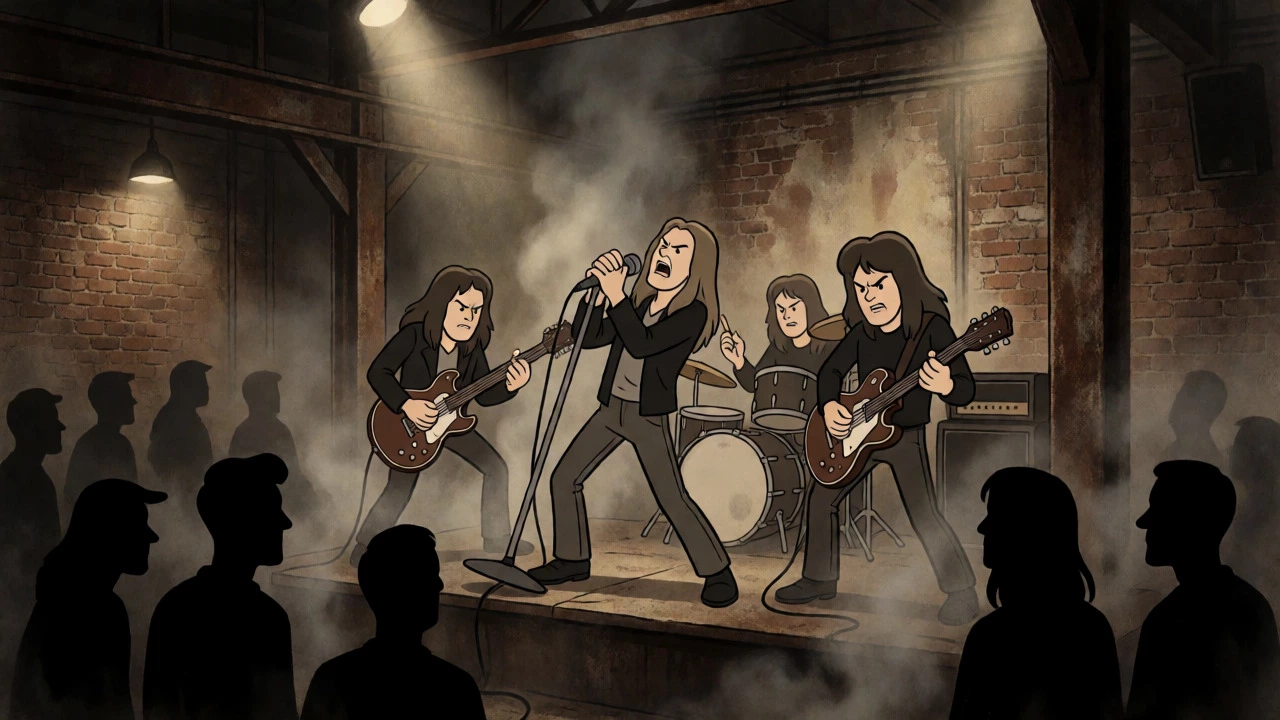

Imagine a band that started out playing in smoky Birmingham clubs, struggling to pay the rent, and ended up selling millions of records worldwide while defining what "heavy metal" actually sounds like. That is Judas Priest. They didn't just join the party; they built the venue. If you think heavy metal is just loud noise, you haven't listened closely to how this group turned industrial grit into global spectacle. Their journey from obscurity to stadium headliners isn't just a biography-it's a masterclass in branding, sonic innovation, and timing.
The Industrial Roots of a New Sound
Before they were legends, Judas Priest was a local act trying to escape the shadow of Black Sabbath. Formed in Birmingham, England, around 1969 or 1971 (sources vary on the exact start date), the band emerged from the same post-industrial landscape that produced their heavier peers. But where Sabbath leaned into doom and blues, Priest wanted speed and precision. The early lineup, featuring vocalist Rob Halford and guitarists K.K. Downing and Glenn Tipton, began stripping away the jam-heavy structures of progressive rock. They wanted songs that hit hard and fast.
Their first album, Rocka Rolla (1974), flopped commercially. It was too raw, too unpolished for the mainstream. But by 1976, with Sad Wings of Destiny, things changed. Tracks like "Victim of Changes" showcased a new blueprint: dual guitar harmonies, tight rhythmic chugging, and Halford’s operatic range. This wasn't just rock anymore; it was the birth pangs of modern heavy metal. They were refining a sound that would eventually dominate arenas, but in those early days, they were still fighting for recognition in a crowded UK scene.
Visual Identity as a Weapon
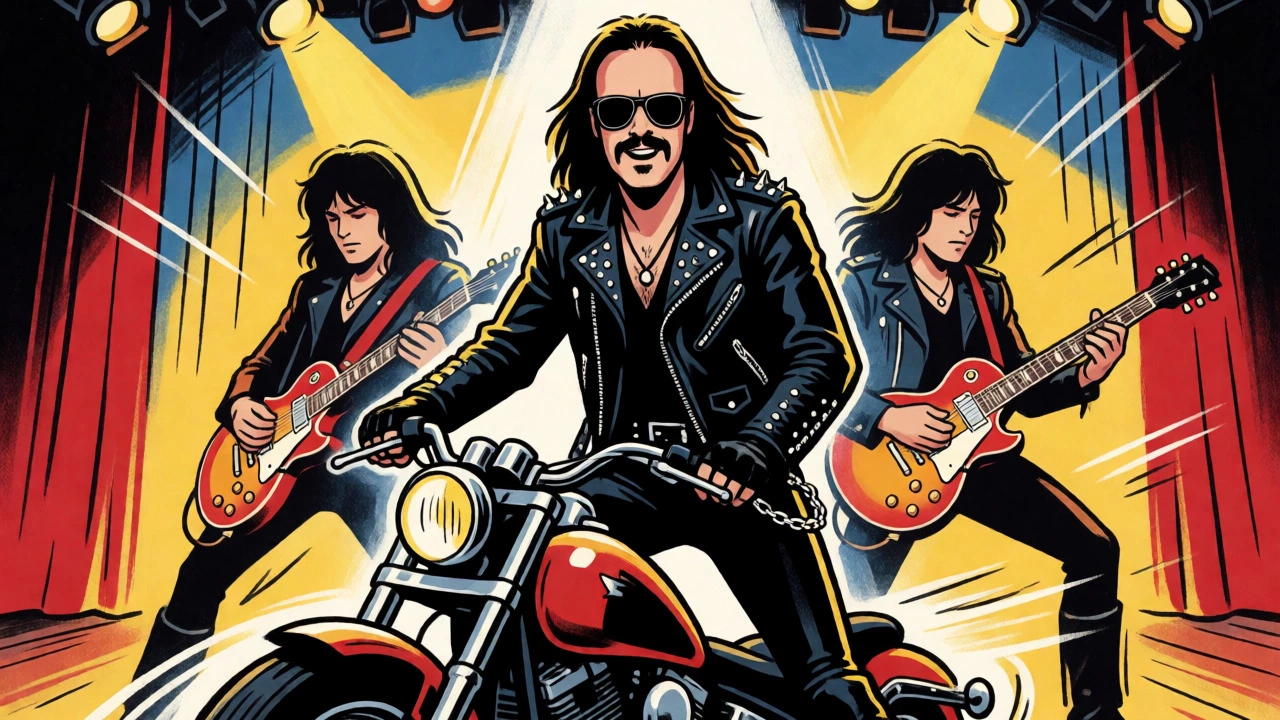
Sound alone doesn't fill stadiums. You need an image. In the late 1970s, Rob Halford made a decision that changed metal culture forever: he adopted the leather-and-studs aesthetic. Inspired by biker gangs and S&M subcultures, this look was aggressive, uniform, and instantly recognizable. It wasn't just fashion; it was branding. Fans could emulate it cheaply, creating a visual army that matched the music's intensity.
This shift coincided with the release of Hell Bent for Leather (known as Killing Machine in the UK) in 1979. The title track became a radio staple, not because it was soft, but because it was catchy within its aggression. The band realized that if you want people to sing along, you need hooks-even if those hooks are screamed over distorted guitars. This period was crucial R&D. They were testing which elements resonated with larger crowds, moving from niche club gigs to mid-sized theaters across Europe.
The British Steel Breakthrough
Everything clicked in April 1980 with the release of British Steel. Recorded at John Lennon’s former estate, Tittenhurst Park, this album is arguably the most important record in heavy metal history. Why? Because it simplified the genre without losing its power. Songs like "Breaking the Law" and "Living After Midnight" clocked in at under four minutes, making them perfect for radio play. Yet, they retained the twin-guitar attack and high-vocal intensity that defined Priest.
| Album | Release Year | Commercial Impact | Musical Innovation |
|---|---|---|---|
| Rocka Rolla | 1974 | Low sales, cult following | Blues-rock foundation |
| Sad Wings of Destiny | 1976 | Critical acclaim, moderate sales | Dual guitar harmonies introduced |
| Stained Class | 1978 | Building fanbase | Faster tempos, tighter production |
| British Steel | 1980 | UK #4, Global breakthrough | Radio-friendly metal anthems |
| Screaming for Vengeance | 1982 | Double Platinum (US) | Arena-ready choruses and solos |
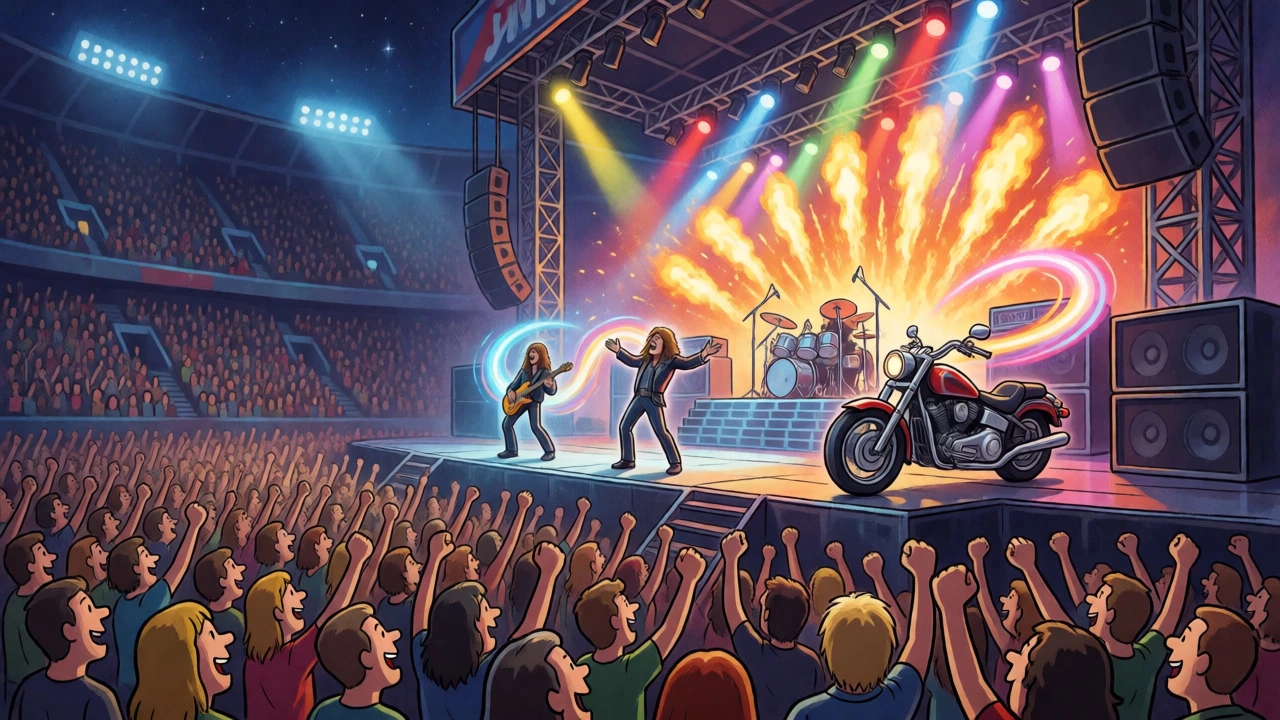
The timing was impeccable. The New Wave of British Heavy Metal (NWOBHM) was exploding, and younger bands like Iron Maiden were looking up to Priest as elder statesmen. British Steel gave the movement a commercial anchor. Suddenly, heavy metal wasn't just underground; it was charting. The band went from playing halls to headlining arenas, proving that heavy music could be mass-market entertainment.
Conquering America and MTV
While they dominated the UK, the US market remained skeptical until the early 1980s. Enter MTV. When the channel launched in 1981, it needed content, and metal videos were visually striking. Judas Priest’s theatrical stage presence-complete with motorcycles, pyrotechnics, and Halford’s commanding vocals-translated perfectly to television. Videos for tracks like "You've Got Another Thing Comin'" from Screaming for Vengeance (1982) became staples.
This exposure drove sales. Screaming for Vengeance sold over two million copies in the United States alone, earning double platinum status. The band was no longer a foreign curiosity; they were American stadium favorites. They toured relentlessly, often sharing bills with other rising acts, effectively teaching audiences how to behave at a metal concert. Headbanging wasn't just a move; it was participation in a ritual Priest had designed.
Influence Beyond Sales Figures
You might ask, "Why does this matter today?" Because almost every metal subgenre traces its lineage back to these innovations. Speed metal bands like Slayer took Priest’s tempo and added thrash aggression. Power metal groups borrowed the melodic guitar harmonies. Even glam metal acts like Mötley Crüe adopted the leather aesthetic, though they softened the sound. Judas Priest provided the template.
Technically, their influence is measurable. The use of minor keys, rapid alternate picking, and vocal ranges spanning three octaves set new standards for musicianship. Guitarists learned to listen to each other rather than compete, creating a cohesive wall of sound. Vocalists stopped shouting and started singing with power and clarity. This shift elevated the entire genre’s credibility, moving it from "noise" to "craft."
Legacy and Longevity
It’s easy to fade after a peak, but Priest stayed relevant. Lineup changes occurred-most notably Halford’s departure in the early 90s and return later-but the core identity remained. Albums like Painkiller (1990) showed they could adapt to faster, more extreme styles, while recent releases like Firepower (2018) proved they could still write compelling material decades into their career.
Their story teaches us that consistency beats novelty. By sticking to their guns on tone and image, they built a brand that transcends generations. Today, when you see a band in black leather playing twin guitars, you’re seeing the ghost of Judas Priest. They didn't just rise to dominance; they defined the rules of the game.
Frequently Asked Questions
What year did Judas Priest form?
Sources vary slightly, but most cite either 1969 or 1971 as the formation year in Birmingham, England. The discrepancy usually stems from whether one counts the initial informal gatherings or the first official lineup with a name.
Which album made Judas Priest famous?
British Steel, released in 1980, is widely considered their commercial breakthrough. It reached number 4 on the UK Albums Chart and featured hits like "Breaking the Law" and "Living After Midnight," which helped crossover heavy metal to mainstream radio.
Who is the lead singer of Judas Priest?
Rob Halford is the iconic lead vocalist, known for his wide vocal range and flamboyant stage presence. He left the band briefly in the early 1990s but returned in the 2000s and continues to perform with them.
Did Judas Priest invent heavy metal?
Not exactly. Black Sabbath is often credited with pioneering the heavier, doom-laden style. However, Judas Priest is credited with defining the classic heavy metal sound-faster tempos, twin guitar harmonies, and a distinct visual aesthetic-that influenced countless subsequent bands.
How many albums has Judas Priest sold?
The band has sold over 50 million albums worldwide. Key sellers include British Steel, Screaming for Vengeance, and Painkiller.


