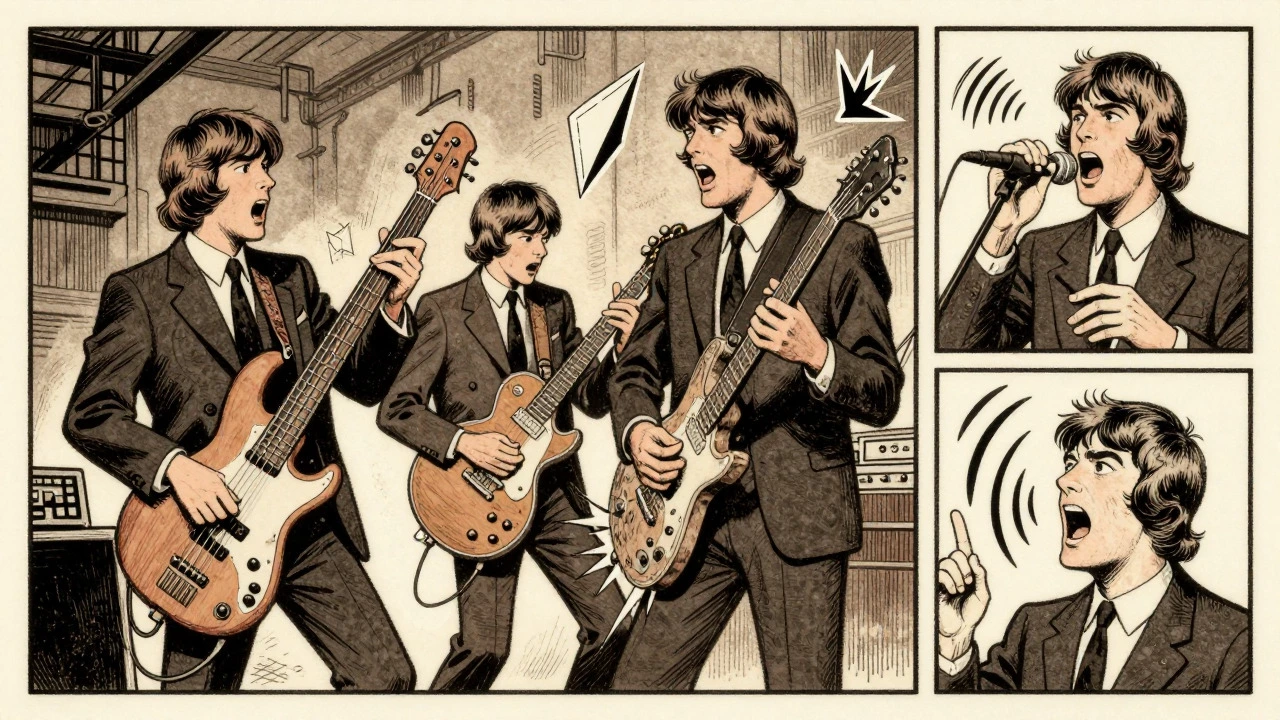

Most people think of post-punk as a reaction against the chaos of punk rock. They see it as darker, slower, and more serious. But if you look closely at the music that followed in the early 1980s, there is a direct line from the grimy clubs of Manchester to the synthesizer-heavy charts of the new wave era. That line starts with one band: Joy Division.
You might wonder how a group that only released two albums before their lead singer died could shape an entire decade of pop culture. The answer lies not just in their lyrics, but in how they built their sound. They stripped away the noise of traditional rock and replaced it with space, melody, and atmosphere. This approach didn't just define post-punk; it gave birth to the emotional depth found in new wave, gothic rock, and even modern indie.
The Blueprint: Deconstructing the Joy Division Sound
To understand why their influence spread so far, we have to look at what made them different from other bands in 1979. Punk was loud and fast. Joy Division was precise and spacious. They took the energy of punk but filtered it through art school sensibilities and European experimental rock.
The biggest change came from the bottom up. Peter Hook, the bassist, played his instrument high up on the neck. Instead of laying down low-end support for the drums, he played soaring, melodic lines that often carried the main tune. You can hear this clearly on tracks like "Transmission." This technique became a template for countless bands that followed, from Interpol to Editors. It forced guitarists to play less and leave room for the bass to shine.
Then there were the drums. Stephen Morris didn't just keep time; he created a driving, mechanical pulse. He drew inspiration from German krautrock bands like Neu! and Can. These motorik rhythms felt relentless and hypnotic. Combined with Bernard Sumner's jagged, minimal guitar chords, the result was a sound that was both aggressive and detached.
Martin Hannett and the Art of Space
If the band provided the raw materials, producer Martin Hannett built the house. His work on Unknown Pleasures changed how records were made. Before Hannett, producers tried to make studio recordings sound like live performances. Hannett did the opposite. He wanted the record to be its own unique artifact.
He used heavy reverb and delay to push instruments into different corners of the stereo field. Ian Curtis's voice often sounded like it was coming from another room. The drums were isolated and crisp, almost sounding like drum machines long before they were widely adopted. This "cold" production style became a hallmark of the new wave aesthetic. It showed that technology could enhance emotion rather than replace it. Bands across Europe looked at these records and realized they didn't need to play perfectly; they needed to sound distinct.
From Post-Punk to New Wave: Blurring the Lines
Here is where things get interesting. In the UK press of 1979, the term new wave was thrown around loosely. It covered everything from Elvis Costello's sharp suits to Orchestral Manoeuvres in the Dark's synth experiments. Joy Division fit awkwardly into this category. Their music was too dark and sparse for the pop-leaning side of new wave, yet too polished and atmospheric for pure punk.
However, their influence on the genre was undeniable. By proving that electronic textures and minimalist arrangements could carry deep emotional weight, they paved the way for the darker side of new wave. Acts like Depeche Mode and early New Order borrowed heavily from this template. They kept the melancholy and the mechanical rhythms but added brighter synths and danceable beats. Joy Division proved that you could be sad and still make people move.
| Element | Technique | Impact on New Wave/Post-Punk |
|---|---|---|
| Bass Guitar | High-register melodic lines (Peter Hook) | Shifted focus from rhythm to melody; influenced Interpol, Editors |
| Drums | Motorik rhythms, minimal fills (Stephen Morris) | Created hypnotic, danceable pulses; linked to Krautrock |
| Production | Heavy reverb, spatial isolation (Martin Hannett) | Established "atmospheric" soundscapes; standard for goth/dark wave |
| Vocals | Baritone delivery, detached tone (Ian Curtis) | Defined the brooding frontman archetype; inspired The Cure, U2 |
The Birth of New Order and Synth-Pop
When Ian Curtis died in May 1980, many thought the story was over. Instead, the remaining members formed New Order. This transition is crucial for understanding the link between post-punk and 1980s new wave. New Order didn't abandon Joy Division's sound; they evolved it.
They integrated synthesizers and drum machines directly into their post-punk framework. Songs like "Blue Monday" combined the angular guitar riffs of Joy Division with sequenced basslines and electronic beats. This fusion made alternative music commercially viable. It showed that dance music could be intelligent and emotionally complex. Without Joy Division's foundation, New Order might have just been another synth-pop act. With it, they bridged the gap between the underground club scene and mainstream radio.
Gothic Rock and Dark Wave: The Emotional Legacy
While new wave embraced pop structures, another branch of Joy Division's influence grew in the shadows. Gothic rock and dark wave bands took the band's themes of alienation and existential dread and ran with them. The Cure and Siouxsie and the Banshees are prime examples. They adopted the sparse instrumentation and the dramatic vocal styles.
Joy Division's lyrics, written by Ian Curtis, dealt with urban decay, depression, and isolation. This resonated deeply with listeners in industrial cities facing economic decline. Unlike punk's political anger, Joy Division offered a personal, internal struggle. This introspective quality became a core tenet of gothic culture. Fans didn't just listen to the music; they adopted the aesthetic-the black clothes, the stark imagery, the sense of mystery. This visual language, partly shaped by artist Peter Saville, remains iconic today.
Lasting Impact on Modern Music
Decades later, you can still hear Joy Division in modern music. Bands like The National, Interpol, and Arcade Fire cite them as major influences. Even genres like industrial rock, represented by Nine Inch Nails, owe a debt to their blend of mechanical rhythms and human vulnerability.
Their influence isn't limited to sound. It extends to fashion, film, and design. Designers like Raf Simons have referenced their imagery. Filmmakers use their music to evoke tension and melancholy. Joy Division remains a cultural touchstone because they captured a specific mood that continues to resonate. They showed that music could be both simple and profound, cold and warm, dark and beautiful.
Was Joy Division considered a new wave band?
Yes, although they are primarily known as post-punk. In the late 1970s, the term "new wave" was used broadly to describe any music that emerged after punk. Joy Division's innovative use of production techniques and atmospheric sound placed them within this evolving category, influencing the darker, more experimental side of new wave.
How did Peter Hook's bass playing influence other bands?
Peter Hook played his bass high up on the neck, creating melodic lines that often carried the song's main theme. This approach shifted the role of the bass from a supportive rhythm instrument to a lead melodic force. Many post-punk and indie bands, such as Interpol and Editors, adopted this technique to create distinctive, memorable hooks.
What is the connection between Joy Division and New Order?
New Order was formed by the surviving members of Joy Division after the death of lead singer Ian Curtis in 1980. They continued the musical legacy of Joy Division but incorporated synthesizers and drum machines, blending post-punk with dance music. This evolution helped bridge the gap between underground alternative scenes and mainstream new wave and synth-pop.
Why is Martin Hannett's production important?
Martin Hannett revolutionized studio production by using extensive reverb, delay, and spatial separation of instruments. Instead of trying to replicate a live sound, he created unique, atmospheric recordings. This approach defined the sonic landscape of post-punk and influenced producers across multiple genres, emphasizing texture and mood over fidelity.
Which modern bands are influenced by Joy Division?
Many contemporary artists cite Joy Division as a key influence. Notable examples include The National, Interpol, Arcade Fire, and Editors. Their impact is also seen in the work of Nine Inch Nails and various gothic and dark wave acts. These bands often emulate Joy Division's melodic basslines, atmospheric production, and introspective lyrical themes.