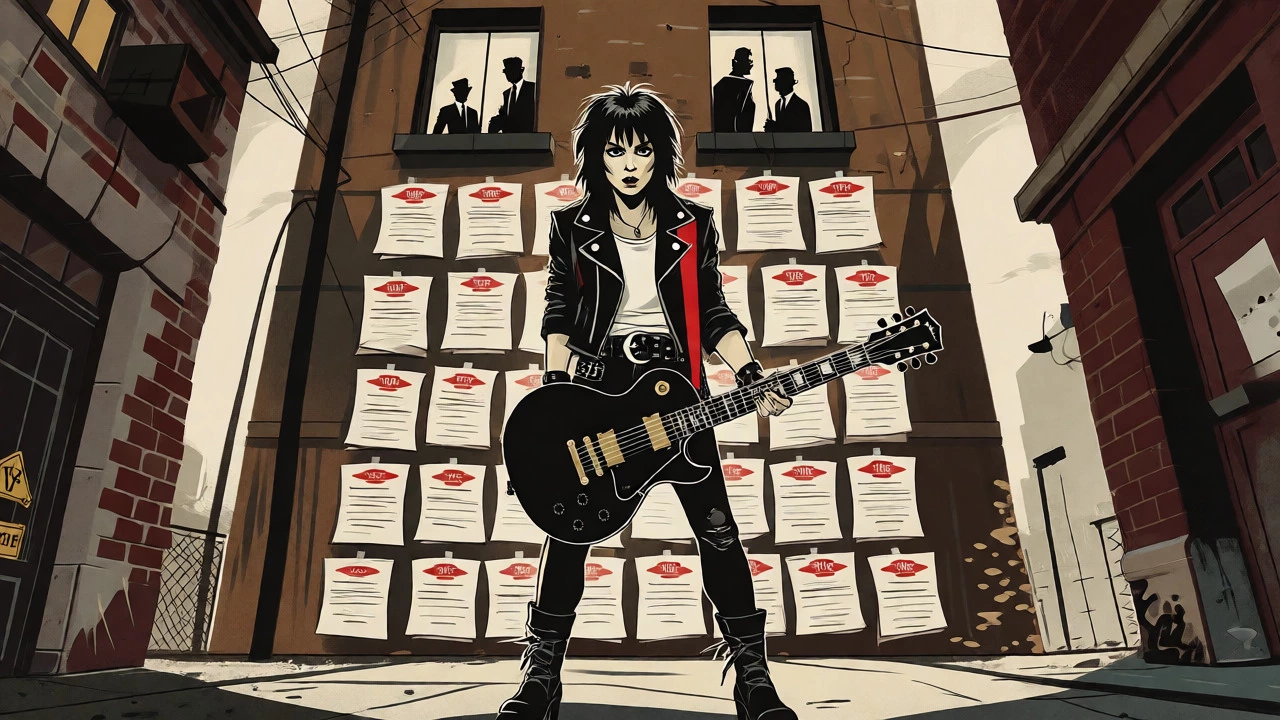

Imagine being told by twenty-three record labels that you’re not marketable. That’s exactly what happened to Joan Jett before she became a household name. She didn’t just break into the male-dominated world of rock; she built her own door when they wouldn’t open one for her. Her 1982 hit I Love Rock 'n' Roll, recorded with the Blackhearts, wasn’t just a catchy tune-it was a cultural reset that spent seven weeks at No. 1 on the Billboard Hot 100.
But here’s the twist most people miss: Joan Jett didn’t write it. And she didn’t even invent the scenario in the lyrics. So why does this song belong to her? It comes down to perspective, persistence, and the sheer power of flipping the script. This isn’t just a story about a cover song; it’s about how a teenage runaway from Los Angeles forced the music industry to take female rockers seriously.
The Arrows’ Original and the Gender Flip
To understand Jett’s triumph, you have to look back to 1975. A British band called The Arrows released a track titled "I Love Rock 'n' Roll." Written by Alan Merrill and Jake Hooker, the original version flopped. It sat as a B-side to another single, barely noticed. The lyrics described a man spotting a girl in a club who looks like she wants to dance. Pretty standard stuff for the era.
Jett first heard the song while touring the UK with her all-female band, The Runaways, in 1976. She saw The Arrows perform it on television and immediately wanted to cover it. But when she reworked the lyrics, she changed the pronouns. Instead of a guy watching a girl, it became a woman inviting a man to dance. "She said, 'Come on, baby, let me see your moves.'" That tiny shift did something massive. It placed a woman in the role of the initiator-the one with agency and desire. In 1982, that was revolutionary.
Building an Empire When Labels Said No
Before the hit, Jett’s path was brutal. After The Runaways broke up in 1979, she tried to launch a solo career. Major labels passed. Again and again. They didn’t know what to do with a tough-talking, leather-clad woman playing hard rock. One executive reportedly told her that girls don’t buy records, so there was no market for a female rocker.
So, Jett and her manager Kenny Laguna did something rare for the time: they founded their own label, Blackheart Records. They pressed the records themselves, sold them out of trunks, and toured relentlessly. This wasn’t just independence; it was survival. By controlling the means of production, Jett proved that women could run the business side of rock, too. Biography.com notes her as the first female artist to own and control an independent record company, a claim that highlights her pioneering status in both performance and entrepreneurship.
The Recording Session That Changed Everything
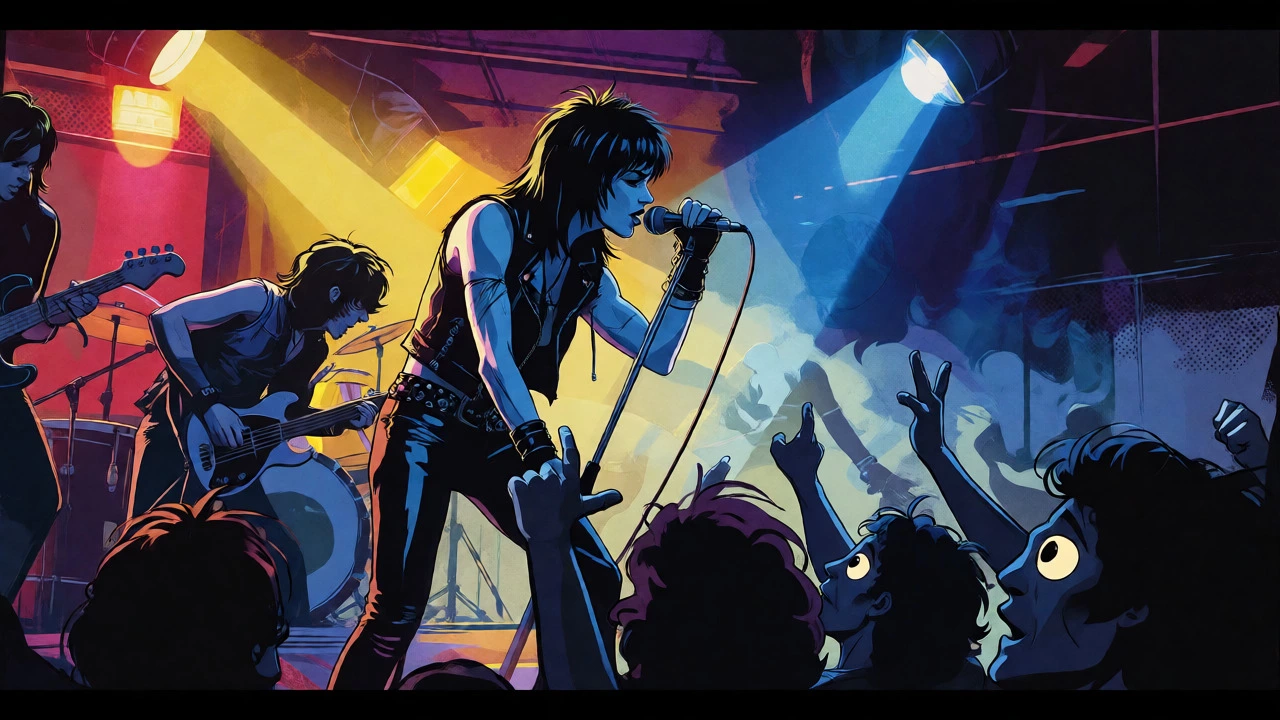
Jett had actually recorded an earlier version of the song in 1979 with members of the Sex Pistols. But it was the 1981 recording with the Blackhearts that struck gold. The lineup included Ricky Byrd on lead guitar, Gary Ryan on bass, and Lee Crystal on drums. Produced by Laguna and Ritchie Cordell, the track was recorded at Kingdom Sound in Syosset, Long Island.
The arrangement is simple but effective. It’s built around a forceful, chant-like chorus and a steady backbeat that makes you want to bang your head. Jett’s vocal delivery is direct, almost confrontational. She doesn’t ask for permission; she states a fact. "I love rock 'n' roll, so put another dime in the jukebox, baby." It’s an anthem because it’s inclusive. It invites everyone into the shared experience of music, regardless of gender or background.
| Feature | The Arrows (1975) | Joan Jett & The Blackhearts (1981) |
|---|---|---|
| Chart Performance | Did not chart significantly | No. 1 US Billboard Hot 100 (7 weeks) |
| Lyrical Perspective | Male narrator observing a woman | Female narrator initiating interaction |
| Musical Style | Glam Rock / Pop Rock | Punk-infused Hard Rock |
| Cultural Impact | Negligible initial impact | Defining anthem for female rock agency |
MTV and the Visual Revolution
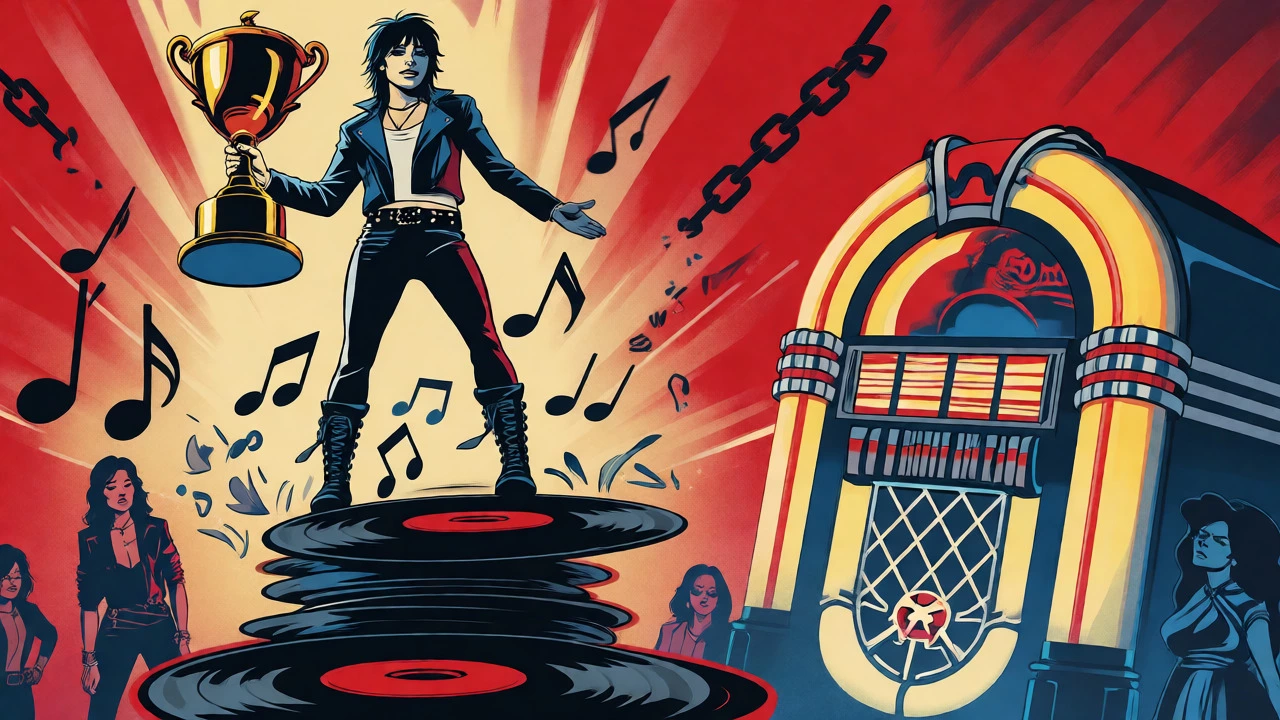
You can’t talk about the song’s success without mentioning MTV. Launched in 1981, the channel needed content, and Jett’s video provided exactly what viewers craved. The black-and-white clip featured Jett and the Blackhearts performing in a dimly lit club, surrounded by fans. It wasn’t polished or over-produced. It felt real. Heavy rotation on MTV turned the single into a visual phenomenon, helping it displace hits like the J. Geils Band’s "Centerfold."
This visibility mattered. For young girls watching TV, seeing a woman fronting a band, playing guitar, and commanding the stage was powerful representation. It showed that rock wasn’t just a boys’ club. Jett’s persona-often analyzed by scholars as "female masculinity"-didn’t mimic men; it challenged the binary. She wore leather and eyeliner simultaneously, proving you could be tough and feminine, or neither, or both.
Legacy Beyond the Chart Peak
The song stayed at No. 1 for seven weeks, eventually becoming the third-biggest song of 1982 according to Billboard’s year-end charts. But its life extended far beyond that peak. It has been covered by countless artists, including Britney Spears in 2002 for the movie *Crossroads*. Interestingly, Jett admitted in interviews that she hadn’t listened to Spears’ version, highlighting how the song had taken on a life of its own, detached from any single interpretation.
In 2015, The Rock & Roll Hall of Fame inducted Joan Jett & The Blackhearts. The citation praised them for smashing genre and gender boundaries. Today, the song remains a staple in sports arenas, bars, and classrooms. It’s more than nostalgia; it’s a reminder that persistence pays off. Jett didn’t wait for the industry to validate her. She validated herself, then made the world listen.
If you’re looking to understand why Joan Jett matters, don’t just listen to the riff. Look at the context. She took a forgotten B-side, flipped the gender dynamics, and used it to build an empire when no one else would bet on her. That’s the real rock 'n' roll story.
Who wrote "I Love Rock 'n' Roll"?
The song was written by Alan Merrill and Jake Hooker of the British band The Arrows. They released their original version in 1975, but it failed to become a hit. Joan Jett and the Blackhearts later covered it, changing the lyrical perspective to feature a female narrator.
How long did "I Love Rock 'n' Roll" stay at No. 1 on the Billboard Hot 100?
Joan Jett & the Blackhearts' version of "I Love Rock 'n' Roll" reached No. 1 on the U.S. Billboard Hot 100 on March 20, 1982. It held the top spot for seven consecutive weeks before being displaced by Vangelis's "Chariots of Fire."
Why was Joan Jett's version considered groundbreaking for women in rock?
Jett's version shifted the narrative from a male observer to a female initiator, giving women agency in the romantic and social dynamic of the song. Additionally, Jett co-founded Blackheart Records after major labels rejected her, making her a pioneer in independent music distribution for female artists.
Did Joan Jett endorse Britney Spears' cover of the song?
Not explicitly. In interviews, particularly with NME, Joan Jett mentioned that she had not actually listened to Britney Spears' 2002 rendition associated with the film *Crossroads*. While the cover introduced the song to a new generation, Jett maintained a distance from specific modern interpretations.
What was Blackheart Records?
Blackheart Records is an independent record label founded in 1980 by Joan Jett and her manager Kenny Laguna. They created it after being rejected by 23 major record labels. It allowed Jett to maintain creative and financial control over her music, releasing her early solo work and the hit album *I Love Rock 'n Roll*.