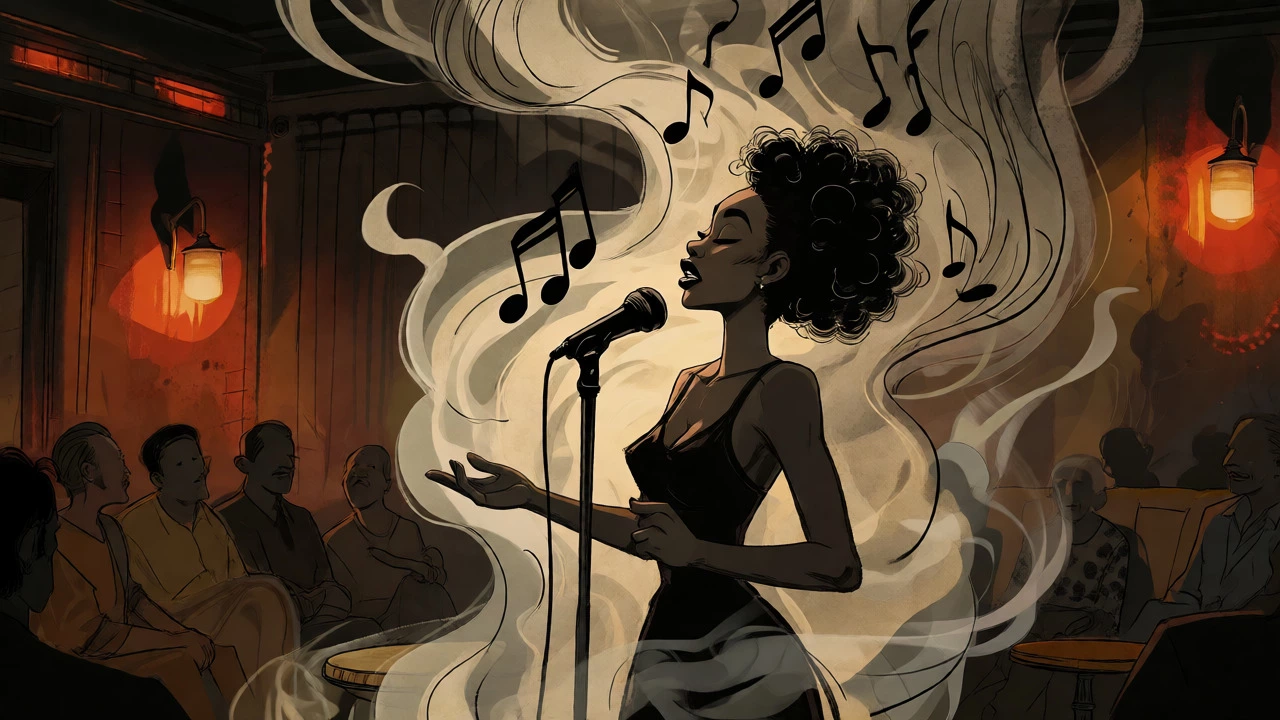

Imagine walking into a room where the air is thick with cigarette smoke and the scent of old books. You’re not at a club; you’re in a Philadelphia poetry lounge in the late 1990s. The music isn’t programmed on a grid. It breathes. It stumbles. It swings. This was the incubator for Jill Scott, an artist who would soon redefine what it meant to sing about being a Black woman in America. While mainstream R&B was becoming increasingly digital and quantized, Scott and her contemporaries were digging deeper, pulling from the dusty crates of jazz history and the raw energy of hip-hop to create something entirely new: neo-soul.
| Element | Description | Influence Source |
|---|---|---|
| Lyrics | Conversational, vernacular, philosophical | Spoken Word Poetry |
| Harmony | Extended chords (7ths, 9ths), Rhodes piano | Jazz & Gospel |
| Groove | Laid-back, behind-the-beat, human feel | Hip-Hop & Funk |
The Birth of a Movement
To understand Jill Scott, you have to understand the vacuum she filled. By the mid-1990s, popular R&B had become sleek, polished, and often emotionally sterile. Enter neo-soul, a genre that crystallized between 1994 and 1997 as a conscious reaction against this polish. It wasn’t just a musical shift; it was a cultural correction. Artists wanted warmth. They wanted imperfection. They wanted the sound of a real band playing in a real room, filtered through the sonic aesthetics of hip-hop producers like J Dilla and A Tribe Called Quest.
This movement drew heavily from the emotional honesty of Donny Hathaway and Marvin Gaye but updated it with modern production techniques. Think tape saturation, vintage microphones, and analog compression. The goal? To make the listener feel close enough to touch the singer. Scott emerged from this exact milieu, honing her craft in local jam sessions where authenticity was the only currency that mattered. Her debut album, Who Is Jill Scott?: Words and Sounds Vol. 1, released in July 2000, didn’t just join the party; it changed the conversation.
Lyrics as Everyday Philosophy
Scott’s lyrics are distinct because they refuse to be abstract. Where other artists might use metaphor to distance themselves from pain, Scott uses concrete details to invite you into it. She writes about walking down a street, arguing with a partner, or dealing with economic strain. These aren’t just stories; they are sites of philosophical reflection. Critics have noted that her writing is "earthier" than peers like Erykah Badu, grounding high-concept ideas in the dirt of daily life.
Consider her track "A Long Walk." It’s not a grand epic; it’s a negotiation. The lyrics explore the tension between desire and respectability, intimacy and public perception. Scott treats everyday experiences as worthy of deep analysis. As scholar Henry Jenkins points out, Scott’s work juxtaposes conversational speech with dense metaphor, allowing ordinary language to suddenly open onto spiritual insight. This technique mirrors the structure of a sermon or a poem, blurring the line between singing and speaking.
The Jazz Inflection
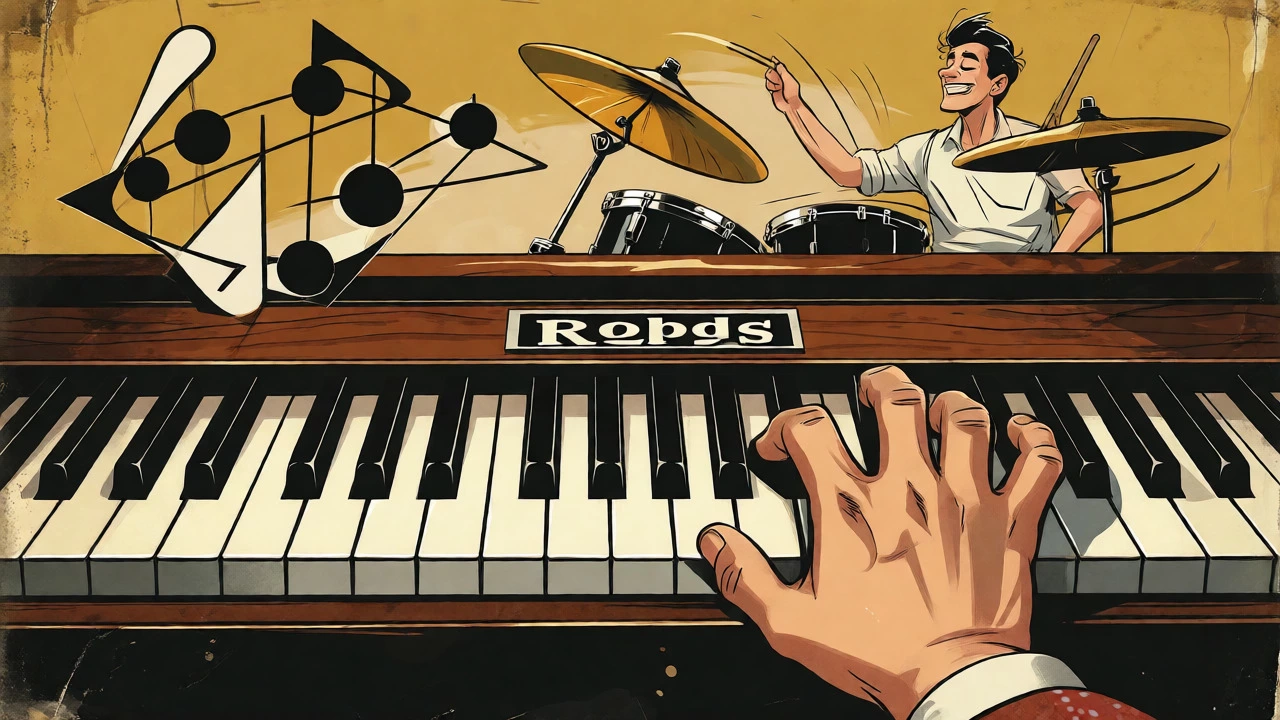
If lyrics are the mind of neo-soul, jazz harmony is its heart. Scott’s vocal phrasing is deeply indebted to jazz performance practice. She doesn’t stay locked on the beat. Instead, she floats around it, using rhythmic displacement and scat-like embellishments to convey emotion. This is evident in the "expansive, jazzy, funk-tinged" arrangements praised by the Los Angeles Times upon her debut.
Musically, this means relying on extended chords-sevenths, ninths, elevenths-that create a sense of ambiguity and longing. Unlike the straightforward major/minor resolutions of pop, these voicings leave space for interpretation. The electric piano, often a Rhodes or Wurlitzer, provides a shimmering backdrop that supports this harmonic complexity without overwhelming it. Scott’s voice sits comfortably in this pocket, moving between speech and song with ease. It’s a style that demands technical control but sounds effortless, much like a skilled improviser navigating a complex chord change.
Groove: The Hip-Hop Swing
You can’t talk about neo-soul without talking about the groove. But this isn’t the rigid, metronomic precision of late-90s R&B. It’s loose. It’s human. Scott’s rhythms borrow heavily from hip-hop’s swing, placing snares slightly behind the beat and letting hi-hats breathe. This creates a "pocket" that invites head-nodding engagement while leaving room for introspection.
Producers in this genre favored live bands over drum machines. The result is a texture that feels warm and organic. Bass lines sit deep in the mix, anchoring the track while allowing space for instrumental ad-libs. This behind-the-beat feel is crucial. It slows time down, forcing the listener to lean in. It’s a deliberate choice to contrast with the fast-paced, quantized nature of chart-topping hits. In songs like "Gettin’ In the Way," the groove acts as a container for Scott’s rapid-fire lyrical delivery, balancing energy with relaxation.

Black Feminist Poetics and Community
Scott’s work extends beyond entertainment. Academic discourse places her within a tradition of Black feminist creative expression. Her lyrics address trauma, self-love, and communal resilience. She speaks to the specific pressures faced by Black women-the pressure to look, sing, or act a certain way. In her 2026 interview with The Guardian, Scott remarked that "there’s music in words," highlighting her attention to the sonic qualities of language itself.
This perspective transforms her music into a tool for healing. Fans and community organizations use her songs in workshops and discussions, treating them as resources for emotional validation. Her resistance to the "neo-soul" label is part of this autonomy. She refuses to be boxed in, insisting on artistic freedom over marketing categories. This stance reinforces the genre’s core value: authenticity above all else.
Legacy and Continuing Influence
Decades later, the aesthetic Scott helped define remains influential. Modern producers still sample her work, seeking that warm, analog tone. Contemporary artists cite her as a blueprint for combining social commentary with accessible melodies. While the term "neo-soul" may have faded from headlines, its principles live on in any music that prioritizes human feel over digital perfection.
Scott continues to evolve, addressing contemporary issues like materialism and emotional self-sabotage in recent tracks like "The Math." Her ability to ask difficult questions-do we buy dreams to hide our lack? Do we sabotage love because of past hurt?-keeps her relevant. She remains a vital voice, reminding us that music can be both a mirror and a window.
What defines neo-soul music?
Neo-soul is a 1990s revival of live, organic soul music that blends jazz harmony, hip-hop beats, gospel textures, and spoken word. It emphasizes live instrumentation, warm analog production, and a relaxed, behind-the-beat groove over the quantized precision of mainstream R&B.
How did Jill Scott influence neo-soul lyrics?
Scott introduced a style of "earthier," conversational lyricism grounded in everyday experiences and Black womanhood. Her use of spoken-word interludes and detailed storytelling shifted the focus from abstract metaphors to tangible narratives about love, struggle, and self-acceptance.
Why is jazz important to Jill Scott’s sound?
Jazz influences Scott’s vocal phrasing, which often floats behind the beat, and her harmonic choices, which utilize extended chords (7ths, 9ths) for emotional depth. This creates a sophisticated, improvisational feel that distinguishes her from standard pop structures.
What instruments characterize neo-soul production?
Key instruments include Rhodes and Wurlitzer electric pianos, upright bass, live drum kits with analog compression, and clean electric guitars. Producers often use tape saturation to achieve a warm, intimate sonic field.
Is Jill Scott considered a neo-soul artist?
Yes, though Scott has expressed frustration with genre labels. Critics and historians widely classify her debut album as a cornerstone of the neo-soul movement due to its fusion of soul, jazz, and hip-hop elements.