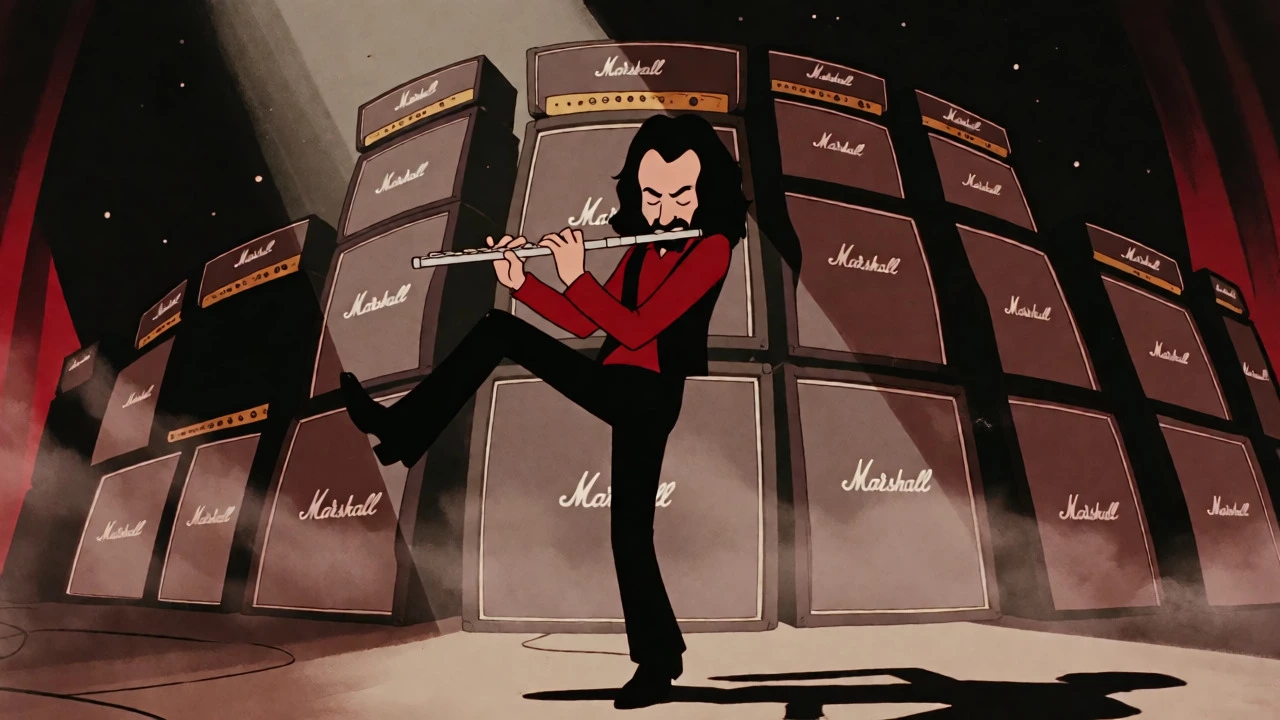

Imagine trying to make a delicate wooden flute compete with a Marshall stack and a drum kit. Most people would say it’s impossible. Yet, Jethro Tull, led by the eccentric Ian Anderson, did exactly that. They didn’t just add a flute to a rock band; they redefined what the instrument could do in an amplified setting. If you think prog rock is all about keyboards and odd time signatures, you’re missing half the story. The real magic happened when a blues guitarist decided he wasn’t good enough at guitar and picked up a flute instead.
From Blues Guitarist to Flute Innovator
Ian Anderson didn’t start out as a flautist. He was a guitarist who realized he’d never be the next Eric Clapton. So, he grabbed a flute, not because he loved classical music, but because he wanted a sound that stood out. He taught himself by treating the flute like an electric guitar. He blew hard, bent notes, and used aggressive attacks to cut through the mix. This wasn’t the polite, airy tone of an orchestra. It was raucous, breathy, and often sounded half-sung. By imitating guitar solos on a wind instrument, Anderson created a signature timbre that became instantly recognizable.
This approach was revolutionary because it shifted the flute from an ornamental background color to a lead voice. In most bands before Jethro Tull, if a flute appeared, it was decorative. Anderson made it rhythmic, melodic, and sometimes even percussive. He combined flutter-tonguing with blues-scale phrasing, creating a hybrid technique that bridged folk, jazz, and hard rock. This wasn’t just playing an instrument differently; it was changing the semantic meaning of the flute in popular music.
The Evolutionary Path: From This Was to Aqualung
To understand the innovation, you have to look at the timeline. The debut album, This Was (1968), was still heavily rooted in blues, with guitarist Mick Abrahams taking the lead. But even then, Anderson’s flute was present, offering counterpoints rather than just solos. The shift began with Stand Up (1969) and accelerated with Benefit (1970). These albums served as bridges, moving away from pure blues toward more complex arrangements.
The true pivot point was Aqualung (1971). AllMusic calls the jump from Benefit to Aqualung one of the most astonishing progressions in rock history. Here, the flute wasn’t just a guest; it was central to the identity of tracks like "Locomotive Breath" and "Cross-Eyed Mary." The album mixed searing electric riffs with acoustic folk passages and intellectual lyrics. Anderson’s flute could sound pastoral in one moment and demonic in the next, reflecting the album’s themes of religion and social struggle. This fusion of hard rock, folk, and progressive structure defined the early-1970s sound.
| Album | Year | Primary Style | Flute Role |
|---|---|---|---|
| This Was | 1968 | Blues Rock | Counterpoint & Solo |
| Stand Up | 1969 | Folk Rock / Blues | Melodic Lead |
| Aqualung | 1971 | Progressive Hard Rock | Narrative Voice & Riff |
| Thick as a Brick | 1972 | Concept Suite | Architectural Motif |
Thick as a Brick: The Peak of Progressive Ambition
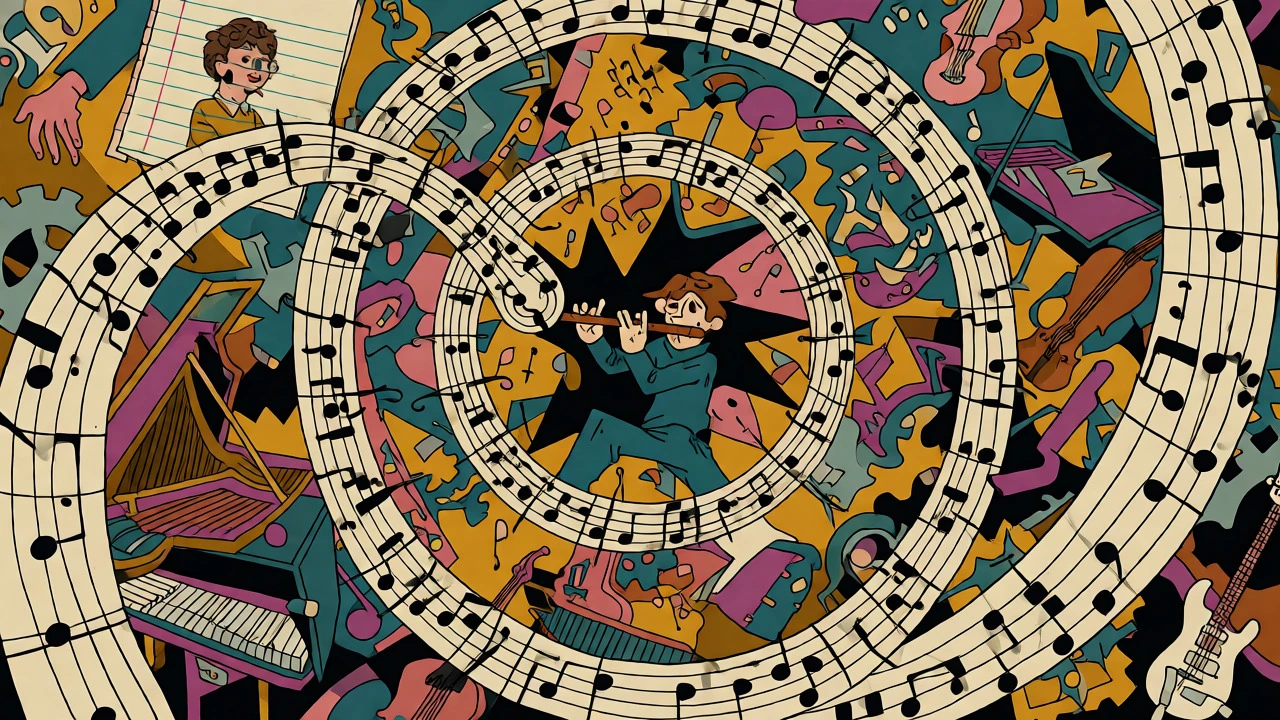
If Aqualung was the breakthrough, Thick as a Brick (1972) was the statement. This album isn’t a collection of songs; it’s a single 43-minute suite presented as a satirical concept record about a fictional child prodigy named Gerald Bostock. The musical design is intricate, with recurring themes returning in different keys and time signatures. There are no fixed divisions other than those imposed by vinyl sides.
In this large-scale architecture, the flute participates in thematic development rather than just providing isolated solos. The arrangement expands beyond the standard rock quartet to include Hammond organ, harpsichord, glockenspiel, violin, and strings. Anderson uses the flute to weave through these textures, acting as a connective tissue between disparate musical ideas. This demonstrated that a rock band could handle symphonic complexity without losing its edge. It proved that the flute could sustain interest over long-form compositions, a feat rarely attempted in rock music.
Beyond Complexity: Satire and Stagecraft
What sets Jethro Tull apart from other prog acts like Genesis or King Crimson is their commitment to satire and theatricality. While some bands prioritized extended instrumental virtuosity, Tull connected changing meters to social criticism and humor. Anderson’s stage presence-often balancing on one leg while playing-became iconic. The music incorporated blues, folk, hard rock, jazz, and Eastern influences, resisting easy classification.
This hybridity is both their strength and a common criticism. Admirers value the variety and distinctive personality, while critics sometimes find the literary density and eclecticism overextended. However, the commercial success tells another story. Aqualung reached number 4 in both the US and UK, achieving triple-platinum status in the States. Thick as a Brick hit number 1 in the UK. The band sold over 60 million albums worldwide, proving that niche innovation could achieve mainstream appeal.
Legacy and Recognition
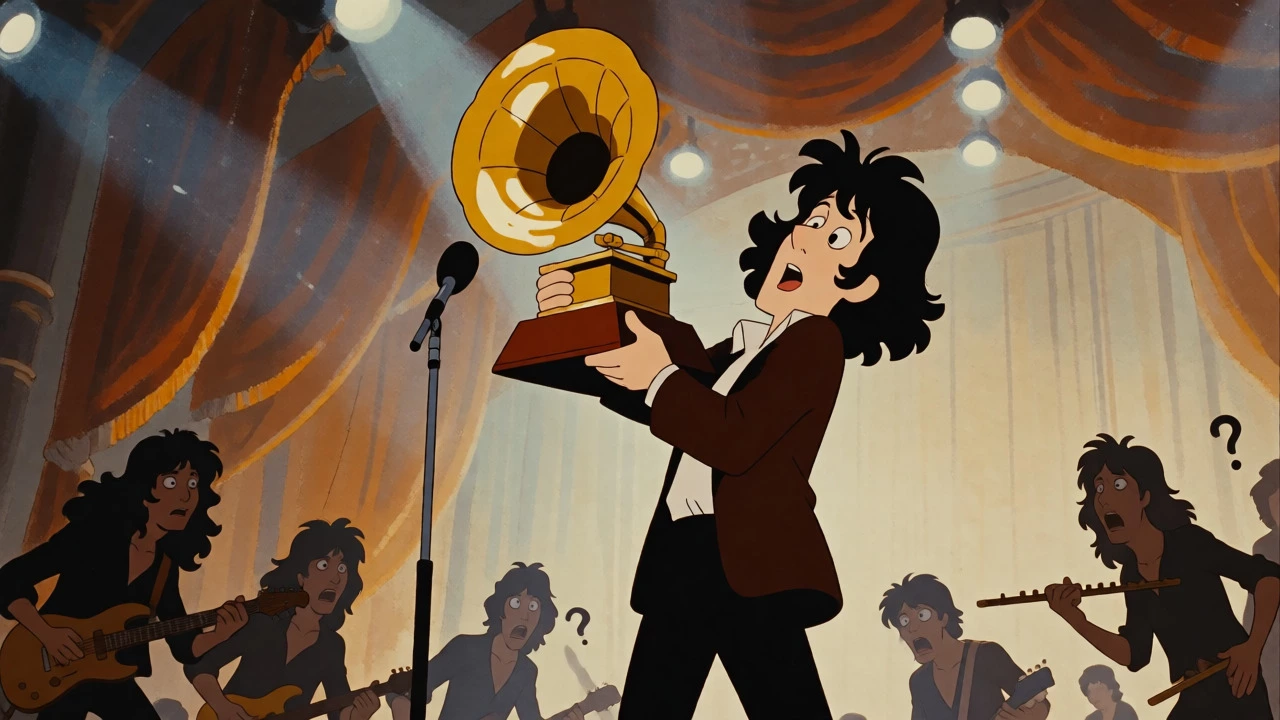
The impact of Jethro Tull’s innovation extends beyond sales figures. In 1989, they won the Grammy Award for Best Hard Rock/Metal Performance for Crest of a Knave, defeating Metallica’s ...And Justice for All. This controversial win highlighted the durability of their heavy, guitar-and-flute-driven sound. Even decades later, the band remains active, touring and recording new material like Homo Erraticus.
Anderson’s contribution wasn’t just making the flute audible in rock. He integrated an unconventional lead instrument into riff-based amplification, extended-form composition, cross-cultural technique, and narrative songwriting. For listeners wanting to explore this mastery, a chronological listen is best. Start with This Was for the blues roots, move through Aqualung for the fusion of styles, and end with Thick as a Brick for the full progressive vision. You’ll hear how a simple decision to switch instruments changed the landscape of rock music forever.
Why did Ian Anderson choose the flute?
Ian Anderson initially chose the flute because he felt he would never become as accomplished a guitarist as Eric Clapton. He approached the instrument pragmatically, teaching himself by imitating guitar solos and seeking a loud, strident sound that could compete with amplified rock instruments.
What makes Jethro Tull's flute style unique?
Anderson treats the flute like an electric guitar, using aggressive attacks, bent pitches, and blues-scale phrasing. He also developed a hybrid technique of singing while playing, creating a breathy, half-sung timbre that allowed the flute to cut through dense rock mixes.
Is Thick as a Brick a concept album?
Yes, Thick as a Brick is a satirical concept album presented as a continuous 43-minute suite. It tells the story of a fictional child prodigy named Gerald Bostock and features complex time signatures and recurring musical motifs across its movements.
Did Jethro Tull win a Grammy?
Yes, Jethro Tull won the Grammy Award for Best Hard Rock/Metal Performance Vocal or Instrumental in 1989 for their album Crest of a Knave. The win was controversial as they defeated Metallica, a band more traditionally associated with the metal genre.
Which Jethro Tull album should I listen to first?
For a comprehensive understanding of their evolution, listen chronologically starting with This Was (1968). However, Aqualung (1971) is often recommended as the best entry point due to its balance of accessible riffs, folk elements, and progressive structures.