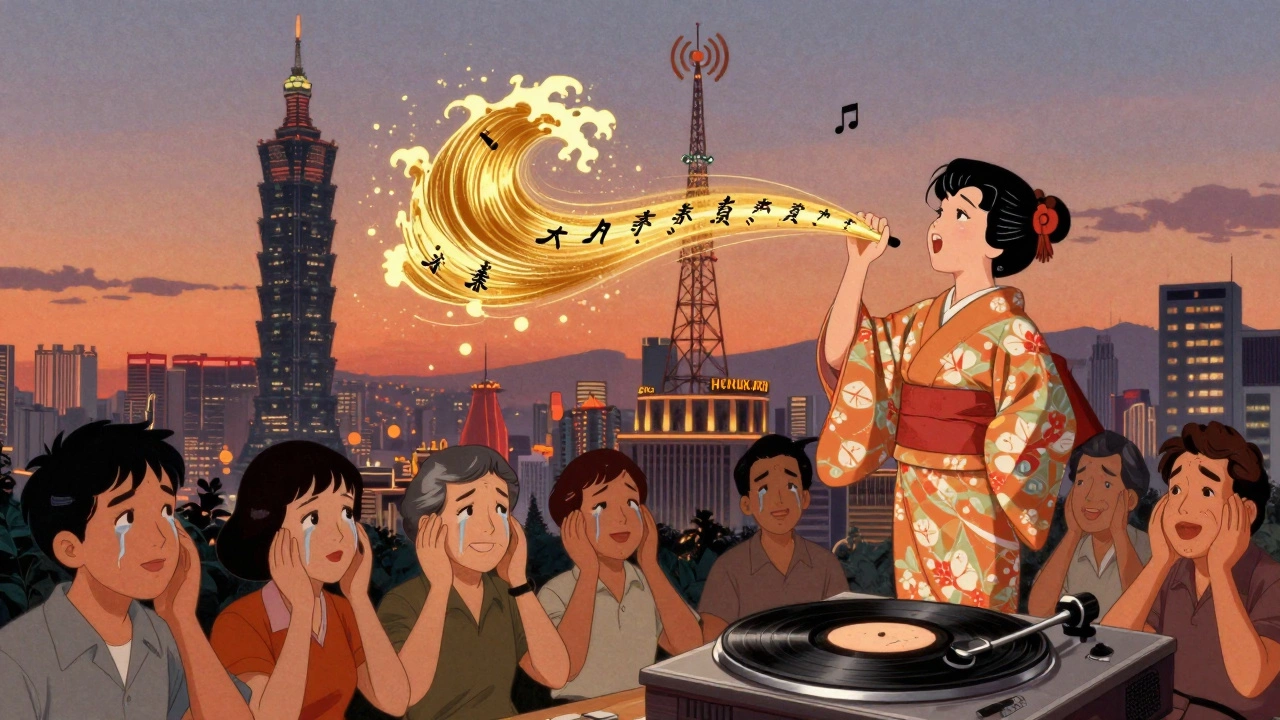

By the mid-1970s, Japan wasn’t just making electronics-it was making the soundtrack of Asia. While the world was listening to disco and punk, a quieter revolution was happening across East Asia: Japanese music was becoming the hidden force behind pop songs from Taipei to Hong Kong. It wasn’t just about language or geography. It was about a new kind of sound-one that mixed Western rock with traditional Japanese emotion, electronic experimentation with polished idol production-and it was spreading faster than anyone expected.
The Enka Wave: When Japanese Ballads Took Over Asia
Before there was K-pop, before there was BTS, there was enka. A genre of sentimental, often melancholic ballads rooted in Japanese folk traditions, enka became the backbone of pop music across Asia in the 1970s. By 1975, nearly half of all Mandarin-language pop songs were direct covers of Japanese enka tracks. Singers in Taiwan and Hong Kong didn’t just translate the lyrics-they kept the same melodies, the same vocal phrasing, even the same orchestral swells. If you grew up listening to Mandarin pop in those years, you were likely hearing a Japanese song dressed in Chinese words.Artists like Sachiko Nishida and Hibari Misora became household names across the region. Their songs told stories of lost love, longing, and quiet resilience-themes that resonated deeply in post-war societies still healing from trauma. Record stores in Bangkok and Manila stocked Japanese enka LPs alongside local releases. Radio stations played them during evening slots, and karaoke bars in Seoul began featuring Japanese ballads before they even had songs in Korean.
Rock Meets Japan: Happy End, Yazawa, and the Birth of J-Rock
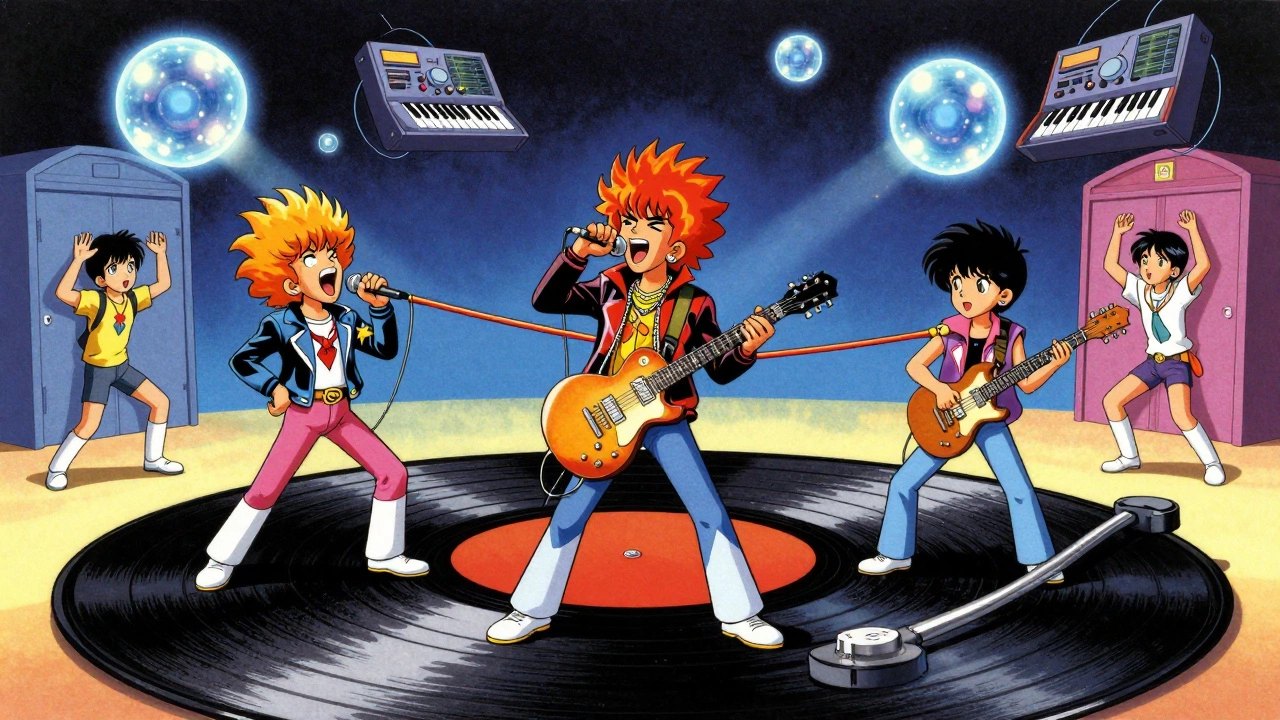
While enka was the emotional heartbeat of the decade, something louder was brewing: Japanese rock. In 1970, a band called Happy End changed everything. They took Beatles-style guitar riffs and Beach Boys harmonies-and layered them with lyrics written in Japanese, about Tokyo’s urban loneliness and rural nostalgia. Their 1971 album Happy End wasn’t just popular. It was a revelation. For the first time, Japanese youth saw themselves reflected in rock music-not as imitators of the West, but as creators with their own voice.By 1978, Eikichi Yazawa dropped Jikan yo Tomare ("Time, Stop"). It sold over 639,000 copies in Japan alone. His voice, raw and powerful, became the model for a generation of Asian rock singers. He didn’t just sing-he performed like a star. His stage presence, his fashion, his intensity: all of it was copied. In Taiwan, young bands began rehearsing his songs in garages. In Hong Kong, producers started scouting for singers with his kind of charisma.
That same year, Keisuke Kuwata formed Southern All Stars. Their debut single, Itoshi no Ellie, became an anthem. Unlike Yazawa’s solo intensity, SAS brought a playful, almost familial energy-guitars, harmonies, humor, heart. They became the blueprint for Asian boy bands: relatable, talented, and visually polished. Decades later, they still top lists of Japan’s greatest musicians.
Yellow Magic Orchestra: The Synth Revolution That Hit the World
If Happy End and Yazawa made rock Japanese, then Yellow Magic Orchestra (YMO) made it global. Formed in 1978 by Haruomi Hosono, Yukihiro Takahashi, and Ryuichi Sakamoto, YMO didn’t just play synthesizers-they redefined what music could sound like.Their 1979 album Solid State Survivor wasn’t just a hit in Japan. It cracked the charts in the UK and the US. But in Asia? It was a phenomenon. The title track Rydeen became a club staple from Manila to Mumbai. The bassline of Citizen Cain was sampled by producers in Hong Kong. In Taipei, teenagers wore YMO T-shirts and danced to their beats in underground clubs.
By 1980, YMO held the top two spots on Japan’s Oricon charts simultaneously for seven weeks-a record that still stands. They weren’t just musicians. They were cultural architects. Their music was futuristic, cold, and strangely emotional. It gave Asian youth something new: a sound that felt modern, not borrowed. They inspired a generation known as the YMO Generation-kids who grew up believing Japanese music could lead the world.
The Idol Machine: How Japan Built the Asian Pop Factory
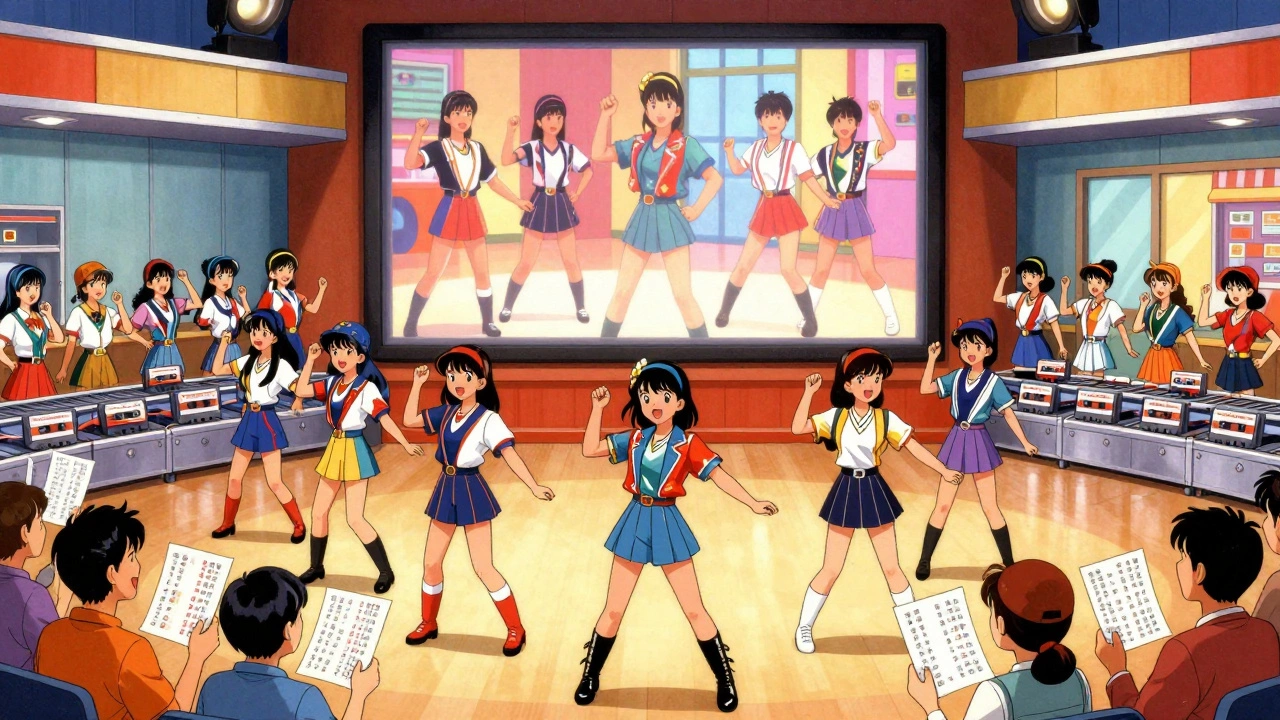
While rock and synth were changing the sound, another system was changing the stars: the Japanese idol system. It wasn’t just about singing. It was about looks, training, choreography, and image. Companies like Johnny & Associates turned teenage boys into polished performers-dancing, smiling, singing in perfect unison. Girls were trained the same way.This system didn’t stay in Japan. In Hong Kong, record labels sent their trainees to Tokyo to learn from Japanese choreographers. In Taiwan, managers began copying the exact structure: auditions, months of vocal coaching, strict public behavior rules. The result? Groups like Shonentai (boys) and Shojotai (girls) in Japan were mirrored by Little Tigers in Taiwan and Raiders in Hong Kong.
Even the names were borrowed. Many Asian idols adopted Japanese stage names or used Japanese words in their song titles. It wasn’t just marketing-it was cultural currency. If you wanted to be seen as modern, stylish, and cool in Asia during the 1980s, you needed a touch of Japan.
Dramas, Soundtracks, and the Hidden Pipeline
One of the most surprising drivers of Japanese music’s spread? TV dramas. In the late 1970s and early 1980s, Japanese TV shows-romances, family sagas, crime thrillers-started airing across Asia. And with them came the theme songs.A song like Shiawase no Iro from the drama Kami no Shizuku became a chart-topper in Indonesia. A love theme from Wakaba was played on radio stations in the Philippines. Fans didn’t know the artist’s name-they just knew the song. And when they searched for it, they found Japanese music.
Record labels noticed. They began releasing drama soundtrack albums in Asia with Japanese-language liner notes. By 1982, sales of these albums outpaced local pop releases in several markets. The connection was clear: emotional stories made Japanese music feel personal. You didn’t need to understand the lyrics to feel them.
The Legacy: How Japan’s 1970s Sound Still Echoes Today
By the 1990s, J-pop exploded again-this time with Utada Hikaru, Amuro Namie, and SMAP dominating charts from Seoul to Singapore. But none of that would’ve happened without the groundwork laid in the 1970s.The fusion of rock and enka? That’s why today’s J-pop blends electric guitars with melancholic strings. The synth experiments of YMO? That’s why K-pop producers still use analog synths for that retro-futuristic vibe. The idol system? It’s the exact model used by SM Entertainment, JYP, and other Korean agencies today.
And it wasn’t just about music. Japanese language schools in Bangkok and Manila saw enrollment spike in the 1980s-not because of business, but because fans wanted to understand the lyrics. People started learning Japanese to sing along.
Japan didn’t just export music. It exported a new way of thinking about pop: that it could be polished, emotional, experimental, and deeply personal-all at once. And for decades after, Asia didn’t just follow Japan’s lead. It built its own future on the foundation Japan laid in the 1970s.
Why did Japanese music spread so fast in Asia during the 1970s?
Japanese music spread because it offered something new: emotionally rich ballads (enka) that resonated with post-war Asian audiences, rock that felt authentic and local, and electronic sounds that felt futuristic. It was also distributed through TV dramas and cover versions, making it accessible even to those who didn’t speak Japanese. Record labels and media companies actively promoted it across borders.
Did Japanese music influence K-pop?
Yes, deeply. The idol system-training young artists in singing, dancing, and image management-was directly copied from Japanese agencies like Johnny & Associates. K-pop groups use similar choreography, visual styles, and even marketing tactics developed in Japan during the 1970s and 1980s. Many early K-pop producers trained in Japan or studied Japanese pop production methods.
What was the role of synthesizers in Japanese music’s rise?
Synthesizers gave Japanese music a futuristic edge. Yellow Magic Orchestra used cheap, accessible synths to create music that sounded unlike anything else at the time. Their sound was clean, rhythmic, and emotionally cool. This appealed to Asian youth who wanted modern music that wasn’t Western. It also inspired early electronic music scenes in Taiwan and Hong Kong.
How did Japanese dramas help spread J-pop?
Japanese dramas acted as a Trojan horse for music. Viewers fell in love with the story-and then with the theme song. Soundtrack albums sold millions across Asia because people didn’t need to understand the language to feel the emotion. This method of linking music to visual storytelling became standard in Asian entertainment industries.
Why did J-pop’s influence in Asia decline after the 2000s?
Several factors: the rise of K-pop, which offered a more aggressive, youth-driven alternative; the collapse of Japan’s music industry due to piracy; the end of the drama boom that had driven exposure; and changing tastes. But the systems Japan created-idol training, production methods, marketing-still underpin much of Asian pop today.


