
You probably think Italo disco started in 1983. You picture neon lights, cheesy English lyrics, and cheap synthesizers flooding German compilation tapes. But that’s a myth. The real story begins years earlier, in the late 1970s, when Italian producers weren’t trying to invent a new genre. They were just making hits. They wanted to beat American disco at its own game, using the cutting-edge technology coming out of Munich studios. This era-often overlooked-is where European synth-pop actually took root. It wasn’t about being "Italian"; it was about being electronic, melodic, and relentlessly danceable.
The Myth of the 1983 Start Date
Here’s the thing: nobody in 1978 called their music "Italo disco." If you asked Carmelo La Bionda or his brother Michelangelo what they were making, they’d say "disco." The term "Italo" was largely a marketing invention by Bernhard Mikulski, the founder of ZYX Records, who used it to organize and sell records from Italy to Germany in the early 1980s. Before that label existed, there was just a vibrant, chaotic network of producers connecting Milan, Bologna, and Munich.
Historical research confirms this. A 2025 academic study notes that compilations like Discoteca Italiana appeared as early as 1977, long before the genre name stuck. So, if you’re looking for the "first" Italo record, you’re chasing a ghost. The sound evolved gradually. It didn’t pop into existence with Kano’s 1980 hit "Super Extra Sexy Sign," though that track is often cited as a turning point. Instead, it emerged from a fusion of American soul, German electronic experimentation, and Italian melodic sensibilities.
Munich Was the Engine Room
To understand why Italian disco sounded so different from American disco, you have to look at Munich. In the mid-1970s, Munich became the production hub for Europe’s dance music. Why? Because of one man: Giorgio Moroder. He was an Italian producer working in Germany who realized that synthesizers could do more than just make weird noises. They could drive the rhythm.
Moroder’s work with Donna Summer on "I Feel Love" (1977) changed everything. According to the Library of Congress, apart from Summer’s vocals and the kick drum, the entire track was created using a Moog synthesizer. This was revolutionary. Previous disco relied on live bands-strings, brass, bassists, drummers. Moroder replaced them with sequenced electronic pulses. It was cleaner, colder, and hypnotic. Italian producers watched this closely. They saw that they could create lush, expensive-sounding arrangements without hiring a fifty-piece orchestra. They could build tracks piece by piece in the studio.
| Feature | American Disco (Philadelphia/NY) | European/Munich Disco |
|---|---|---|
| Primary Instrumentation | Live orchestras, electric bass, acoustic drums | Analog synthesizers, drum machines, sequencers |
| Production Method | Band performance recorded live | Layered studio construction, click-track synchronization |
| Vocal Style | Soulful, improvisational, gospel-influenced | Dreamy, detached, often non-native English speakers |
| Key Figures | Gamble & Huff, Nile Rodgers | Giorgio Moroder, La Bionda brothers |
The La Bionda Brothers and the Melodic Turn
If Moroder provided the tech, the La Bionda brothers provided the heart. Carmelo and Michelangelo La Bionda were already established in Italy’s pop scene when they pivoted to disco. Their 1978 album La Bionda featured "One for You, One for Me," which became an international smash. But here’s the nuance: Michelangelo later clarified that they considered it a standard disco track. They didn’t see themselves as pioneers of a subgenre.
What made their approach distinct was the balance. American disco was often gritty and rhythmic. Munich disco was mechanical. The La Biondas injected strong, catchy melodies that stuck in your head. They used simple hooks and romantic themes that translated across borders. This focus on melody over pure groove became a hallmark of what we now call Italo disco. It wasn’t just about moving your feet; it was about humming along. Other projects like D.D. Sound (their side project) experimented with harder electronic beats, but the core DNA remained melodic.
Technology as an Instrument
Let’s talk about the gear. In the late 70s, synthesizers were monsters. Analog Moogs were notoriously unstable. They drifted out of tune within minutes. Engineers had to constantly adjust oscillators and voltage controls. It was exhausting. Yet, Italian producers embraced this chaos because it offered something live instruments couldn’t: precision repetition.
Engineers like Robbie Wedel developed click-track solutions to keep these temperamental machines synchronized. This allowed for the creation of tight, looping basslines that never wavered. While Kraftwerk in Germany was exploring minimalism and machine aesthetics, Italian producers were using similar tools for maximum emotional impact. They layered arpeggiators, vocoders, and overdubbed vocals to create a wall of sound. It was less about artistic purity and more about club utility. Did it make people dance? Did it fit on a 12-inch single? That was the goal.
Beyond Borders: The Transnational Network
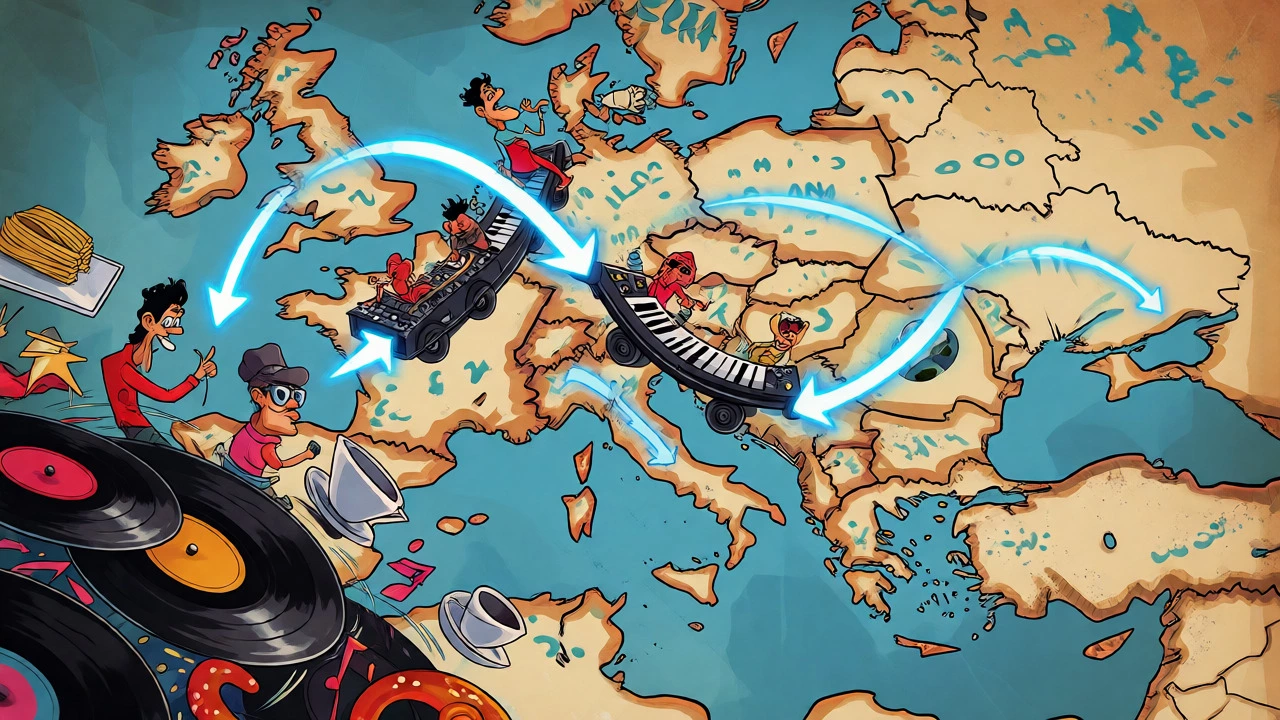
We tend to think of genres as national products. But Italian disco was inherently transnational. Producers moved between Milan, Rome, and Munich constantly. Musicians like Jürgen Koppers worked with Italians; Italians worked with Germans. Labels like Baby Records in Italy distributed Munich productions.
This cross-pollination meant that "Italian" disco wasn’t always sung by Italians or even written in Italy. It was a style defined by production techniques and market strategies. For instance, many tracks featured non-native English singers with heavy accents. This wasn’t a mistake; it was a feature. The exoticism added to the fantasy element of the music. Listeners didn’t care about perfect grammar; they cared about the vibe. This openness helped the music spread rapidly across Europe, laying the groundwork for the pan-European dance culture that exploded in the 80s.
How It Differed From Synth-Pop
You might wonder how this relates to British synth-pop. Bands like Depeche Mode or The Human League came slightly later, but they shared the same technological roots. However, the intent differed. British synth-pop often focused on post-punk angularity, irony, and album-based artistry. Italian disco was purely functional. It was designed for the 12-inch single format, extended for DJ mixing, and stripped of pretension.
Kraftwerk influenced everyone, including the Italians, but Italian producers adapted Kraftwerk’s machinery for warmth rather than coldness. They kept the four-on-the-floor kick drum, the essential heartbeat of disco. This distinction matters. Italo disco wasn’t an avant-garde experiment; it was commercial pop music that happened to use synthesizers. This pragmatism allowed it to dominate clubs while more experimental electronic acts struggled for mainstream acceptance.
Why This Era Matters Today
Understanding this pre-1980 period changes how you hear modern dance music. The template set by Moroder and La Bionda-electronic bass, sequenced rhythms, melodic hooks, and studio-as-instrument-became the blueprint for house, techno, and trance. When Daft Punk sampled these records, they weren’t just grabbing retro sounds; they were acknowledging the foundation of their own craft.
The term "Italo disco" may be a misnomer, but the music is real. It represents a crucial bridge between the organic soul of the 70s and the digital future of the 80s. It proves that innovation doesn’t always come from seeking novelty. Sometimes, it comes from taking existing tools and using them with such skill and intent that you accidentally invent a new world.
Frequently Asked Questions
Was Italo disco invented in the 1980s?
No. While the term gained popularity in the early 1980s through labels like ZYX, the musical style and production techniques originated in the late 1970s. Artists like La Bionda and Giorgio Moroder were creating the foundational sound as early as 1977-1978, well before the genre name was applied.
Did all Italo disco artists sing in Italian?
Not necessarily. Many prominent tracks featured English lyrics, often sung by non-native speakers with distinct accents. The primary goal was exportability to international markets, particularly Germany and the UK, so English was frequently chosen despite the artists' nationality.
What role did Munich play in Italian disco?
Munich served as the technical and production hub for much of European disco. Italian producers like Giorgio Moroder worked there, utilizing advanced studio equipment and engineering techniques that were not yet widely available in Italy. This collaboration created a hybrid sound that blended Italian melody with German electronic precision.
Is Kraftwerk considered part of the Italo disco movement?
Kraftwerk is related but distinct. They pioneered electronic music in Germany and influenced Italian producers significantly. However, Kraftwerk’s style was more minimalist and conceptual, whereas Italian disco focused on dance-floor functionality, melodic hooks, and extended club mixes. They are siblings in electronic music history, not members of the same specific genre.
Who coined the term "Italo disco"?
Bernhard Mikulski, founder of ZYX Records, is widely credited with popularizing and systematizing the term in the early 1980s. He used it to categorize and market Italian-produced dance music to German audiences, though the term was not used by the artists themselves during the initial creation of the music.