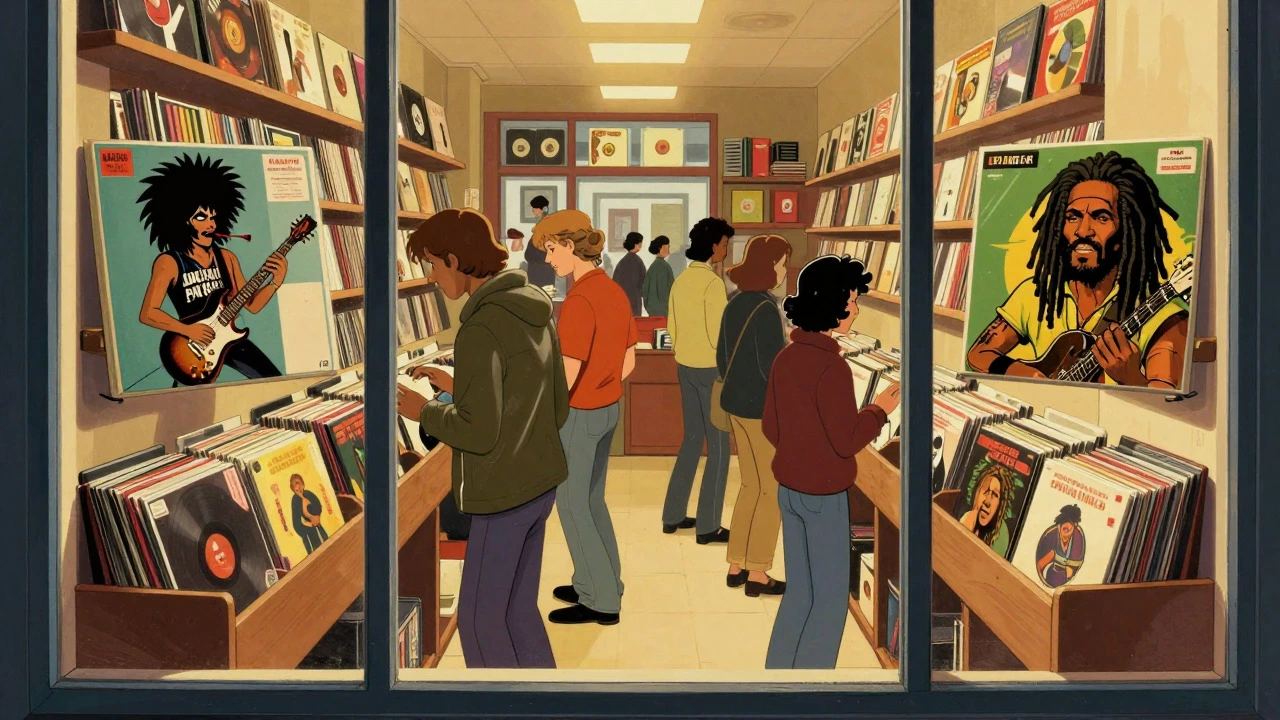

Imagine walking into a record store in London in 1975. On one shelf, you find the heavy, complex guitar solos of Jethro Tull. Right next to it sits the rhythmic, spiritual beats of Bob Marley & The Wailers. In another corner, there’s the delicate folk fingerpicking of Nick Drake. It sounds like a mistake, right? A label shouldn’t be able to hold such wildly different worlds together. But for Island Records, a British-Jamaican record label founded by Chris Blackwell in 1959 that became famous for its genre-defying roster spanning reggae, progressive rock, and pop, this wasn't a mistake. It was the entire point.
Most major labels pick a lane. They become the "rock" label or the "pop" house. Island did something else entirely. Under the vision of founder Chris Blackwell, Island built a reputation as an "artists' paradise" precisely because it refused to choose between cultures. This article breaks down how a small operation with a shoestring budget evolved into a global powerhouse by mastering the art of the crossover, and why its legacy still shapes the music industry today.
The Jamaican Roots: More Than Just a Beginning
To understand Island's diversity, you have to look at where it started. It didn't begin in a boardroom in New York or a studio in LA. It began in Kingston, Jamaica, in 1959. Chris Blackwell, a Cambridge-educated entrepreneur, saw a gap in the market. He wanted to document the local rhythm-and-blues scene and the emerging ska sound that was exploding on the island.
This early phase, often called the "Jamaican Years" (1959-1966), was crucial. It wasn't just about selling records; it was about building relationships. Blackwell worked closely with artists like Jimmy Cliff. When he moved the label to London in 1962, he brought those connections with him. He established Island as a bridge, connecting the West Indian community in the UK with the broader British music market.
By focusing on ska, rocksteady, and early reggae first, Island developed a specific ear for rhythm and production quality. This foundation allowed them to approach other genres later with a unique perspective. They weren't just looking for catchy hooks; they were looking for cultural resonance.
| Era | Time Period | Primary Focus | Key Artists |
|---|---|---|---|
| Jamaican Years | 1959 - 1966 | Ska, Rocksteady, Early Reggae | Jimmy Cliff, Desmond Dekker |
| New Ground Years | 1967 - 1980 | Progressive Rock, Folk, Psychedelia | Jethro Tull, Fairport Convention, Cat Stevens |
| Consolidation Years | 1980 - Present | Stadium Rock, Pop, Hip Hop, EDM | U2, Bon Jovi, Shawn Mendes, Chappell Roan |
The Pink Label and the Progressive Explosion
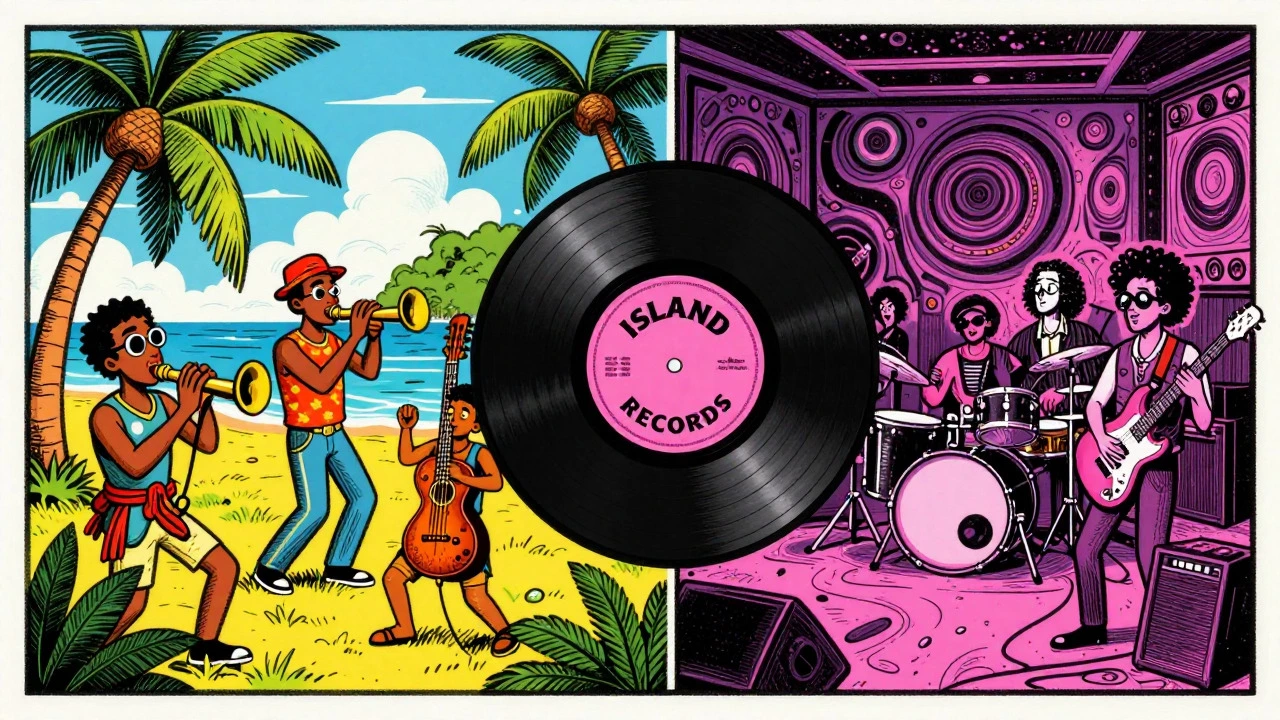
In 1967, Island made a visual and musical statement that changed its trajectory forever. They introduced the now-iconic pink label. While the original blue label remained associated with their Caribbean roots, the pink label was created for a "giddy array" of new sounds. This was Island’s entry into the psychedelic and progressive rock boom.
Why was this significant? Because major labels were still cautious about experimental rock. Island took risks. They signed acts like Free, Traffic, and Fairport Convention. These weren't safe, radio-friendly choices at the time. They were complex, long-form musical explorations. By housing these artists alongside their reggae catalog, Island created a bipolar identity that served two distinct audiences simultaneously: Black British listeners seeking authentic Caribbean music and white rock fans looking for sophisticated art-rock.
This strategy required immense confidence from Blackwell. He treated prog-rock and reggae as equals in terms of artistic merit. The result was a catalog that included legends like Roxy Music, Nick Drake, and John Martyn. Island became a conduit for underground scenes to reach commercial distribution, proving that niche genres could thrive under one roof if given creative freedom.
Marrying the Sides: The Bob Marley Strategy
The true genius of Island’s model emerged when they stopped treating their genres as separate silos and started blending them. The most famous example of this is Bob Marley & The Wailers.
When Island signed Bob Marley in the mid-1970s, they didn't just release his music to reggae fans. They produced albums like Catch a Fire specifically to appeal to rock audiences. They used high-quality studio production techniques familiar to rock listeners while keeping the raw energy of roots reggae intact. As noted in retrospective analyses, this move effectively "married both sides of the Island label."
This wasn't just a marketing trick; it was a cultural shift. It showed that reggae could be global. It paved the way for other artists to cross over. Later, the label continued this practice by featuring African world-music artists like King Sunny Adé and Baaba Maal alongside British singer-songwriters. This willingness to position genre-blending acts within global markets set Island apart from competitors who stuck to rigid demographic targeting.
From U2 to Sabrina Carpenter: Modern Diversity
As Island grew, so did its definition of "progressive." After being integrated into Universal Music Group (UMG) in the 1990s, the label maintained its dual UK and US rosters. But the definition of diverse expanded to include stadium rock, hip hop, electronic dance music (EDM), and mainstream pop.
In the 1980s and 90s, Island secured massive hits with U2, Frankie Goes to Hollywood, and Grace Jones. These artists pushed boundaries in their own ways-politically, sexually, and sonically. Today, the roster looks very different but follows the same logic. Current stars include Mumford & Sons (folk-rock), Hozier (soul/folk), The Killers (alternative rock), and Sabrina Carpenter (pop).
Even in the streaming era, Island avoids putting all its eggs in one basket. Their 2024-2026 roster includes:
- Pop Sensations: Sabrina Carpenter, Shawn Mendes, Demi Lovato
- Alternative/Indie: The Last Dinner Party, Remi Wolf, Brittany Howard
- Legacy Acts: Bon Jovi, The Killers
- Rising Stars: Chappell Roan, Wyatt Flores
This mix ensures that whether you are listening to TikTok trends or classic rock radio, Island has a presence. It demonstrates that the label’s core value proposition-artist-centered development across genres-remains viable even in a fragmented digital landscape.
Why Island Stands Out in a Crowded Market
So, what makes Island’s approach work when others fail? It comes down to curation and respect. Critics and historians often describe Island as an "artists' paradise." This isn't just hype. It refers to Blackwell’s early policy of giving artists significant creative control.
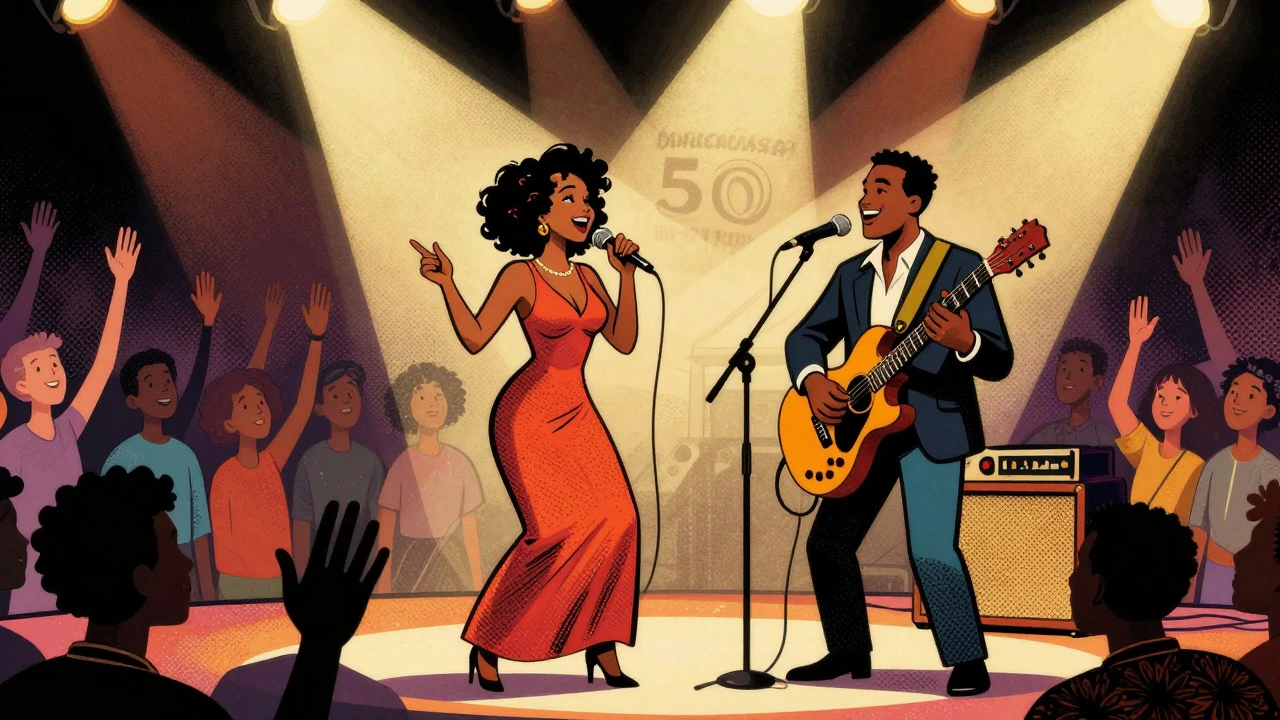
Consider the 50th-anniversary concerts in 2009. The lineup featured Paul Weller sharing a stage with Jamaican jazz guitarist Ernest Ranglin. Amy Winehouse performed before reggae legends Toots & The Maytals. These pairings weren't random. They highlighted the shared DNA between soul, rock, and reggae. Island understood that these genres were not hierarchical; they were interconnected.
In contrast, many modern labels focus heavily on data-driven A&R, signing artists only if algorithms predict success. Island’s historical strength lies in its human element. They bet on people who might not fit a mold but had undeniable talent. From Tom Waits’ avant-garde vocals to Florence + the Machine’s theatrical rock, the label consistently backs idiosyncratic voices.
The Legacy of Genre-Bending
Looking back at the last six decades, Island Records proves that diversity is not a weakness-it’s a strategic advantage. By refusing to pigeonhole itself, the label survived shifts in technology, culture, and consumer behavior. It went from a small Jamaican imprint to a frontline brand for Universal Music Group.
For musicians today, Island represents a rare opportunity. It’s a label that understands how to package a folk artist for a global audience or how to introduce a pop star to rock radio. For fans, it means a catalog that offers endless discovery. You can start with a Jethro Tull album and end up loving Bob Marley, all because one label decided that good music doesn't need borders.
As we move further into the 2020s, with new artists like The Last Dinner Party and Chappell Roan joining the ranks, Island continues to evolve. But the core remains the same: a commitment to the weird, the wonderful, and the culturally rich. That is the true meaning of a progressive roster.
Who founded Island Records and when?
Island Records was founded by Chris Blackwell in 1959 in Kingston, Jamaica. He started the label with a small budget to release local rhythm-and-blues and ska music.
What is the significance of the Island pink label?
The pink label was introduced in 1967 to distinguish Island's progressive rock, folk, and psychedelic releases from its Caribbean reggae catalog, which used the blue label. It signaled the label's expansion into experimental rock genres.
How did Island Records help popularize reggae globally?
Island played a key role by signing Bob Marley & The Wailers and producing albums like Catch a Fire with high-quality production aimed at rock audiences. This strategy bridged the gap between Caribbean music and Western rock fans.
Which major company owns Island Records today?
Island Records is currently owned by Universal Music Group (UMG). It operates as a frontline label with distinct rosters in the UK and the US.
Can you name some current artists on Island Records?
As of 2024-2026, Island's roster includes Sabrina Carpenter, Shawn Mendes, Chappell Roan, The Killers, Mumford & Sons, Hozier, and The Last Dinner Party, among others.
Why is Island Records considered "progressive"?
Island is called progressive because it historically supported experimental genres like prog-rock and world music while maintaining its reggae roots. It gave artists creative freedom and avoided sticking to a single commercial niche.


