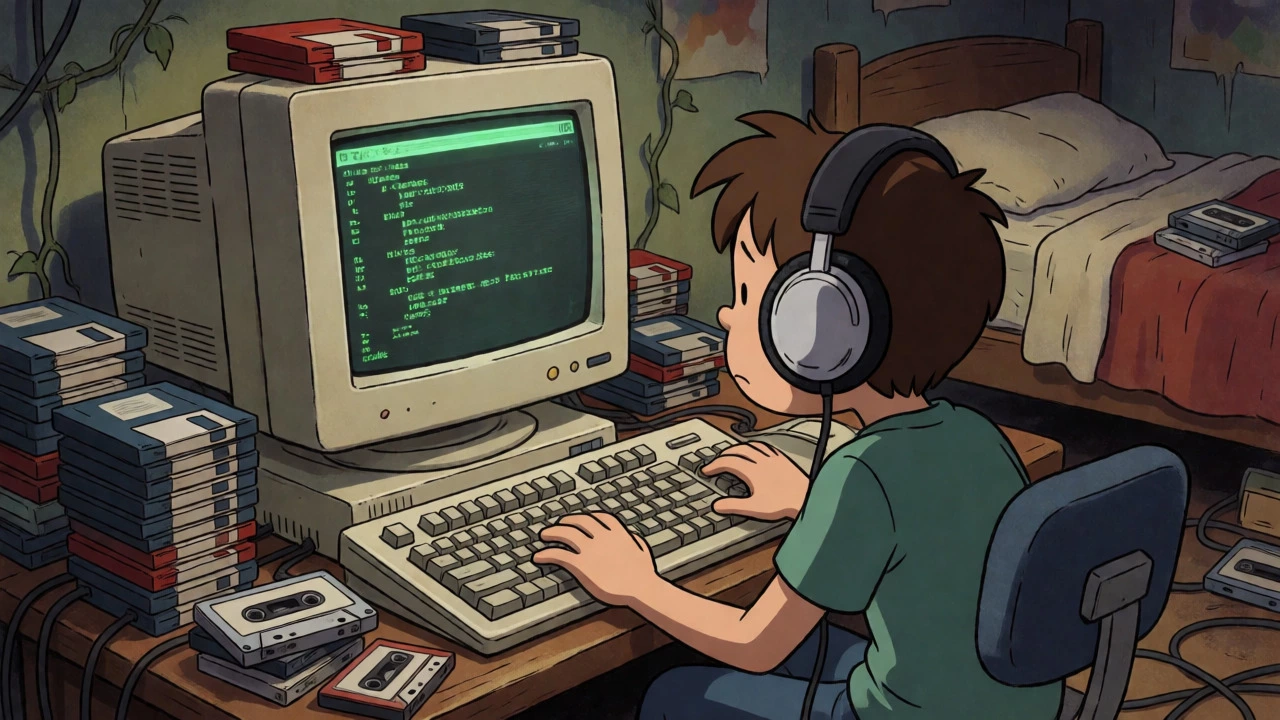

Before Napster made file sharing a household term in 1999, there was a wild, technical underground where music moved not through slick apps, but through command lines, text-based chats, and slow-moving mailing lists. If you were a serious music fan in the mid-90s, your library wasn’t built by clicking "download." It was built by logging into Internet Relay Chat (IRC), typing cryptic codes into bots, and negotiating trades on Usenet newsgroups with strangers across the globe. This era wasn't just about stealing songs; it was the foundational infrastructure of digital culture.
The story begins with a technical breakthrough that most people today take for granted: compression. In July 1994, the Fraunhofer Society released the l3enc encoder, making it possible to shrink CD-quality audio into manageable files. By September 1995, the WinPlay3 player allowed ordinary Windows users to actually listen to them. Suddenly, a three-minute song could fit on a floppy disk or be transferred over a university network without taking all night. But how did these files get from one person to another? Enter IRC and forums.
The Technical Backbone: How IRC Moved Music
Internet Relay Chat started as a way for people to talk, but in 1990, developer Michael Sandrof added a feature called CTCP (Client-to-Client Protocol) to the ircII client. This small update changed everything. It allowed direct connections between users, bypassing the central server for data transfer. This evolved into DCC (Direct Client-to-Client), which meant you could send binary files-like an MP3-directly to another user’s computer.
Imagine trying to download an album today, but instead of a progress bar, you had to type commands like /dcc send [nickname] filename.mp3. You had to know who had the file, hope they were online, and pray their connection didn’t drop halfway through. It was clumsy, but it worked. On August 10, 1996, a user named NetFrack released a rip of Metallica’s "Until It Sleeps" via an IRC channel. Historians often cite this as the symbolic start of large-scale online music piracy. It wasn't just a leak; it was a demonstration that high-quality audio could travel the world in seconds.
IRC is a real-time internet chat protocol that became the social and technical backbone for organized MP3 distribution in the 1990s. Unlike modern platforms, IRC required users to interact with scripts and bots to manage file transfers, creating a steep learning curve that filtered out casual listeners.
The Rise of the 'Scene': Bots, Rules, and Hierarchy
As more people joined, chaos threatened to overwhelm the system. Who decided what was a good rip? Who got credit for releasing an album first? To solve this, the "MP3 Scene" emerged. This wasn't a single website; it was a decentralized network of release groups, FTP servers (called topsites), and regulatory bodies.
In 1998, senior members formed the MP3 Council. Think of them as the union bosses of digital piracy. They set strict rules on naming conventions, bitrate quality, and duplication. If two groups ripped the same album, the one that uploaded it first won, and the other was marked as a "dupe" and often ignored. This hierarchy ensured efficiency. Release groups would rip pre-release CDs using contacts inside record labels, upload them to topsites, and then announce them on IRC channels within seconds.
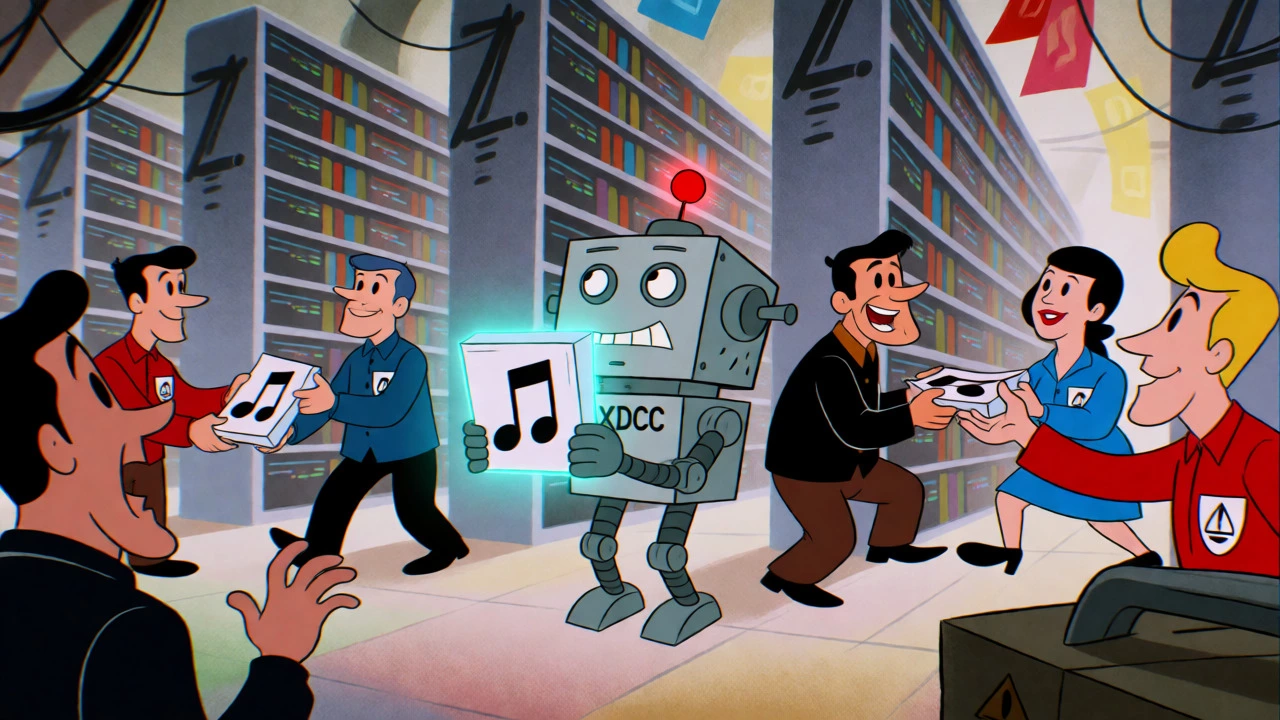
For the average user, this system was accessed through XDCC bots. These automated programs sat in public channels, waiting for commands. You’d type something like /msg BotName xdcc send #123, and if you were lucky and had enough bandwidth, the bot would queue your download. It was less like browsing a store and more like ordering from a catalog via telegraph.
Usenet and Forums: The Slow Burn of Community
While IRC offered speed, it lacked memory. Chats disappeared. For long-term organization, fans turned to Usenet newsgroups and email listservs. Groups like alt.music.rem or rec.music.country.old-time weren't just for chatting; they were libraries. Fans posted detailed lists of concert bootlegs they owned, arranged swaps via postal mail, and built reputations over years.
This analog-digital hybrid was crucial. Before MP3s dominated, tape trading was king. A fan in Portland might trade a Grateful Dead live recording with someone in London. They’d coordinate the swap on a forum, then mail physical cassettes. When MP3s arrived, these same communities migrated online. They used forums to vet partners, discuss recording quality (audience vs. soundboard), and share links to rare files. Trust was the currency here. You didn't trade with randoms on IRC; you traded with people whose handles you recognized from months of forum posts.
Comparison: IRC vs. Forums in the 90s Ecosystem
To understand why both existed, look at their distinct roles. IRC was for immediacy; forums were for continuity. One was a stock market ticker; the other was a newspaper archive.
| Feature | IRC (Real-Time) | Forums/Usenet (Persistent) |
|---|---|---|
| Primary Function | Instant file transfer & discovery | Community building & collection management |
| Speed | Seconds to minutes | Days to weeks |
| Technical Barrier | High (required script knowledge) | Low (basic email/web access) |
| Content Type | New releases, popular hits | Rare bootlegs, historical archives |
| Social Structure | Hierarchical (Release Groups/Bots) | Egalitarian (Peer-to-Peer Reputation) |
The Human Cost: Patience, Bandwidth, and Risk
We romanticize the 90s, but let's be honest: it was hard work. Getting started meant installing clients like mIRC or ircII, configuring firewalls, and finding a server with decent uptime. Most users were stuck on 56k dial-up modems, meaning a single album could take hours to download. If your mom picked up the phone, you lost the file.
University students and corporate employees had it easier. Their T1 lines provided the bandwidth needed to run XDCC bots or host personal FTP servers. Some enthusiasts, like a user known as FekLar, wrote scripts that advertised thousands of tracks in their channel banner, turning their personal hard drive into a searchable database. But even then, you were at the mercy of the queue. Waiting behind ten other people for a copy of Radiohead’s *OK Computer* was normal.
There was also risk. Legal pressure began to mount. While Napster faced lawsuits later, IRC channels and private FTP sites operated in the shadows. Many public channels privatized around 2000, requiring invites or specific software to enter. The open, chaotic energy of the early scene gave way to gated communities.
Legacy: From Command Lines to Clouds
By 2000, the landscape shifted. Sean Fanning, who used the nickname "Napster" on an IRC channel called w00w00, created a program that combined the searchability of a database with the ease of a GUI. He didn't invent file sharing; he simplified it. He took the concepts pioneered in IRC-searching, downloading, sharing-and wrapped them in an interface my grandmother could use.
Yet, the DNA of the 90s remains. Today’s BitTorrent trackers are descendants of IRC topsites. Reddit’s niche subreddits for vinyl collectors mirror the old Usenet groups. Even streaming services rely on metadata standards that were debated and refined by the MP3 Council decades ago. The 1990s proved that technology alone doesn't build a culture; community norms do. IRC and forums didn't just move bits; they taught us how to trust strangers in a digital space.
What was the difference between IRC and Napster?
IRC was a text-based chat protocol that required users to manually connect to servers and use commands to request files from bots or other users. Napster was a centralized peer-to-peer application with a graphical interface that automatically indexed files and handled searches, making it accessible to non-technical users.
Why did people use Usenet for music trading?
Usenet newsgroups provided persistent storage for discussions and lists. Unlike ephemeral IRC chats, Usenet posts remained visible, allowing fans to build long-term reputations, organize complex tape trades via mail, and archive information about rare recordings and trading etiquette.
What was the MP3 Council?
The MP3 Council was a self-appointed regulatory body formed in 1998 by senior members of release groups. It established standards for file naming, audio quality, and release procedures to prevent duplicates and ensure consistency across the underground MP3 scene.
How fast was music trading in the 1990s?
It depended heavily on bandwidth. University networks with T1 lines could transfer albums in minutes. However, most home users on 56k dial-up modems faced wait times of several hours per album, often interrupted by dropped connections or family phone usage.
Did IRC require special software?
Yes, users typically installed clients like mIRC or ircII. Advanced traders also used scripts such as SPR Jukebox to automate searching across multiple channels and manage download queues, adding a layer of complexity beyond basic chat functionality.


